




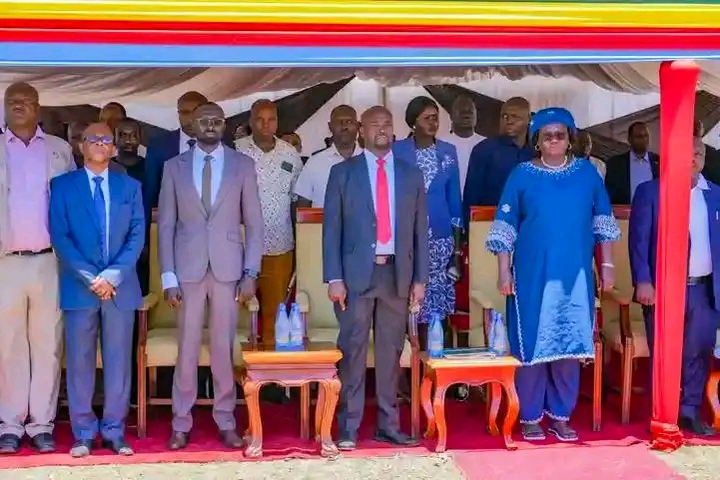
15th Mara Day Ends in Bomet: Kenya and Tanzania Make Fresh Pledge to Save the Lifeline of the Mara River
The 15th Mara Day celebrations concluded on Tuesday, September 15, 2026, at Bomet Stadium, bringing together Kenyan and Tanzanian leaders, environmental experts, conservation organisations and local communities to discuss the protection of the Mara River ecosystem. Key leaders included EAC Affairs and Regional Development CS Beatrice Askul Moe, Water CS Eric Muuga, Bomet Governor Prof. Hillary Barchok and Tanzania’s Mara Region representative Gerald Kusaya. Speakers stressed that the Mara River is a shared resource requiring close Kenya–Tanzania cooperation, while highlighting threats such as deforestation, pollution, unsustainable water abstraction, degradation of wetlands and riparian areas, soil erosion and climate change. Leaders also discussed heavy-rainfall and flooding risks and the need for improved monitoring and early-warning systems. The celebrations called for stronger catchment restoration, responsible water use, community participation and nature-based livelihoods, with stakeholders emphasising that Mara Day commitments must translate into practical conservation action throughout the year.
The 15th Mara Day celebrations officially concluded on Tuesday, September 15, 2026, at Bomet Stadium in Bomet County, bringing together government officials, environmental experts, conservation organisations, community representatives and other stakeholders from Kenya and Tanzania. The four-day event, which ran from September 12 to September 15, focused on the protection and sustainable management of the Mara River and its wider ecosystem. The celebrations were organised through the Lake Victoria Basin Commission (LVBC) under the East African Community (EAC), with this year's theme being “Mara River, Diverse Lives: Keep It Thriving,” also expressed in Swahili as “Mto Mara, Uhai wa Viumbe, Tuuutunze.”
The climax at Bomet Stadium marked an important milestone because Mara Day has now reached its 15th anniversary. Mara Day was established by the EAC in 2012 to draw attention to the importance of the Mara River and the need for Kenya and Tanzania to cooperate in protecting the shared ecosystem. The celebrations are held on a rotational basis between the two countries, with the previous edition hosted in Tanzania's Butiama District in 2025.
Leaders who attended the celebrations
Among the prominent leaders present at the conclusion of the celebrations were Cabinet Secretary for EAC Affairs and Regional Development Beatrice Askul Moe, Cabinet Secretary for Water, Sanitation and Irrigation Eric Muuga, and Bomet Governor Prof. Hillary Barchok. The event also brought together representatives from Tanzania, including Gerald Kusaya, the Regional Administrative Secretary for Tanzania's Mara Region. Other participants included officials from the LVBC, environmental organisations, the International Union for Conservation of Nature (IUCN), WWF-Kenya, the Water Resources Authority and representatives of communities living within the Mara Basin.
The presence of both Kenyan and Tanzanian officials underlined the transboundary nature of the Mara River. The river begins in Kenya's Mau Forest Complex, passes through the Maasai Mara ecosystem and eventually crosses into Tanzania, where it supports the Serengeti ecosystem. It therefore cannot be effectively managed by one country acting independently.
The event also attracted environmentalists, scientists, community leaders, youth and women representatives. Their participation was important because the conservation of the Mara depends not only on national governments but also on people who live, farm and keep livestock within the basin.
Masinde Bwire calls for action beyond celebrations
One of the strongest messages at the conclusion came from Dr Masinde Bwire, Executive Secretary of the Lake Victoria Basin Commission.
Bwire warned that Mara Day should not become an annual occasion where governments and stakeholders make conservation promises that are forgotten after the celebrations. He called for practical and sustained action to protect the river and its catchment.
According to Bwire, stakeholders must move from commitments to measurable interventions. He emphasised the importance of protecting the catchment, restoring degraded ecosystems, safeguarding water resources, reducing pollution, promoting climate-smart activities and empowering communities.
He also stressed that investment in conservation must produce lasting results rather than short-term interventions. His message was that the future of the Mara River will be determined by decisions being made today.
Bwire described the Mara as more than simply a river, emphasising its importance to millions of people and wildlife in Kenya and Tanzania. He called for the theme of this year's Mara Day to become a practical commitment to future generations rather than remaining a slogan.
Beatrice Moe highlights cross-border responsibility
Cabinet Secretary Beatrice Askul Moe also emphasised the importance of Kenya-Tanzania cooperation.
She noted that the Mara River does not follow political boundaries and therefore conservation efforts cannot be restricted to one side of the border. According to remarks reported during the celebrations, the river faces several pressures, including declining water quality, unsustainable land use, degradation of upstream watersheds and increasing demand for water.
Moe called for stronger cooperation between Kenya and Tanzania in areas such as catchment protection, restoration of degraded land, climate resilience and responsible use of water.
Her message was particularly significant because activities taking place upstream in Kenya can have consequences for communities and ecosystems downstream, including areas in Tanzania.
Eric Muuga warns about heavy rains and flooding
Water, Sanitation and Irrigation Cabinet Secretary Eric Muuga brought another important issue into the discussions: the possibility of above-normal rainfall and increased flood risks along the Mara River.
Muuga said the government was monitoring the river using hydrometric and gauging stations. These systems are intended to provide information about changes in river levels and help authorities issue early warnings to communities living in areas vulnerable to flooding.
He explained that the Mara supports livestock, agriculture, tourism and wildlife in Kenya before flowing into Tanzania. Because of this, he stressed that Kenya and Tanzania must manage the river collectively.
The rainfall warning added a climate dimension to this year's Mara Day discussions. Conservation is not only about protecting forests and preventing pollution; it is also about preparing communities for changing weather patterns, floods, droughts and changing river flows.
Bomet Governor Hillary Barchok's message
Bomet Governor Prof. Hillary Barchok was among the leaders representing the host county.
Bomet occupies an important position in the Mara River system because parts of the county are within the upper catchment. This makes activities such as farming, tree cutting, soil conservation and protection of water sources important to the health of the river further downstream.
Stakeholders emphasised the importance of putting communities at the centre of conservation decisions. Bomet Deputy Governor Dr Shadrack Rotich, who also participated in the discussions, said conservation initiatives should involve communities that interact with forests, rivers and farms every day. He also called for discussions to result in measurable action and stronger links between scientific knowledge, government policy and local experience. �
Kenya Times
Tanzania renews its commitment
Representing Tanzania, Gerald Kusaya, Regional Administrative Secretary for Mara Region, reaffirmed Tanzania's commitment to protecting the shared river.
The Tanzanian delegation emphasised that conservation should be considered an investment in future generations and in communities whose livelihoods depend on the Mara ecosystem.
The participation of Tanzanian officials was particularly important because the river's ecological importance extends far beyond Kenya. After crossing the border, the Mara supports the Serengeti ecosystem and contributes to the natural environment associated with the annual wildebeest migration.
The two countries therefore have a shared interest in maintaining adequate water flows, protecting wetlands and forests and reducing pollution.
WWF and IUCN call for stronger conservation measures
Kevin Gichangi of WWF-Kenya described the Mara as a lifeline connecting people, forests, grasslands, wildlife and economies across Kenya and Tanzania.
He pointed to deforestation, unsustainable agriculture, degradation of wetlands and riparian areas, increased water abstraction, pollution and climate change as some of the challenges facing the basin.
Gichangi argued that fragmented approaches weaken conservation because activities in one part of the ecosystem can affect another part. He called for stronger cooperation and collective responsibility.
Damas Mbaga, IUCN Transboundary Basin Coordinator for the Mara River Basin, also called for stronger environmental institutions, improved enforcement and greater public awareness.
The discussions further involved Dr Joash Oruta, Deputy Director for Regional Coordination at the Water Resources Authority, who called for stronger implementation of water-allocation plans and protection of environmental flows.
Major environmental threats discussed
The four-day celebrations provided an opportunity for stakeholders to examine the challenges affecting the Mara River.
Among the major concerns identified were:
Deforestation and degradation of the Mau Forest catchment.
Encroachment on riparian areas and wetlands.
Pollution and poor waste management.
Excessive water abstraction.
Soil erosion and sedimentation.
Unsustainable agricultural practices.
Expansion of settlements.
Agricultural chemicals entering waterways.
Climate change and unpredictable rainfall.
Increasing demand for water from communities, agriculture and other economic activities.
Stakeholders also raised concerns about sewage discharge, vehicle washing in rivers and declining vegetation cover in some sections of the basin.
Communities placed at the centre
Another important message from the celebrations was that conservation cannot succeed without the participation of local communities.
Women and youth representatives highlighted the effects of changing rainfall patterns, water scarcity and unemployment on households. Participants proposed nature-based economic activities such as beekeeping and bamboo production as ways of supporting livelihoods while encouraging environmental protection.
There were also calls for Payment for Ecosystem Services programmes, through which communities that protect forests, water sources and other important ecosystems could receive economic benefits.
The argument behind such programmes is that people living around important catchment areas should have incentives to protect natural resources rather than being left to carry the economic costs of conservation alone.
Resolutions reached at the conclusion
The closing session also focused on the resolutions reached by stakeholders from Kenya and Tanzania.
The LVBC reported that stakeholders agreed to strengthen collaboration and reaffirmed their commitment to conservation and sustainable management of the Mara ecosystem. The resolutions are intended to provide a framework for continued cooperation after the celebrations end.
The key direction was stronger cross-border cooperation, better implementation of conservation policies, protection of catchment areas, responsible water use, restoration of degraded ecosystems and greater community participation.
This was significant because the 15th anniversary was not presented merely as a celebration of the past. Leaders and experts repeatedly emphasised that the coming years will require concrete action to ensure that the Mara remains capable of supporting people, agriculture, tourism and wildlife.
Why the conclusion matters
The conclusion of the 15th Mara Day celebrations in Bomet was therefore both a celebration and a reminder of the responsibilities facing Kenya and Tanzania.
The Mara River supports communities, agriculture, livestock, tourism and wildlife. Its ecological importance is also connected to the Maasai Mara and Serengeti ecosystems and the annual wildebeest migration. The river's health therefore has implications extending beyond the communities living immediately along its banks.
The central message emerging from Bomet was that conservation requires action throughout the year, not only during Mara Day. The leaders and stakeholders called for commitments to be translated into policies, enforcement, investments, restoration projects and community programmes.
As the 15th edition came to a close at Bomet Stadium, Kenya and Tanzania renewed their shared responsibility for the Mara ecosystem. The success of the commitments made during the celebrations will ultimately depend on what happens after the banners are removed and the delegations return home—particularly whether catchment restoration, pollution control, water management and community conservation programmes are implemented effectively.

You Might Also Like
-
The KUPPET protest and calls for justice in Kericho have brought renewed attention to the death of teacher Martina Chepkemoi Ruto. Her disappearance, followed by the recovery of her body near the Kimugu River and reports of multiple chest stab wounds, has left her family, colleagues and the communit
-
Former Migori Governor Okoth Obado is back in the Milimani High Court on September 16, 2026, for sentencing following his conviction over the 2018 murder of Rongo University student Sharon Otieno. Obado, alongside his former personal assistant Michael Juma Oyamo and former Migori County official Cas
-
The announcement that Nairobi will host the 2029 World Athletics Championships has been met with considerable excitement in Eldoret, particularly among upcoming athletes, coaches and residents who identify strongly with Kenya's athletics tradition. Young athletes see the championships as a potentia
-
 President Ruto's reaction to Nairobi winning the 2029 World Athletics Championships has centred on national pride, Africa's historic opportunity and recognition of Kenya's athletics heritage. He has described the victory as belonging to Kenya, Africa and generations of athletes who have made the cou
 -
The story of Mercy Kanini of Juja, Kiambu County, is both extraordinary and heartbreaking. She made headlines after delivering five babies through normal delivery at Thika Level Five Hospital, an event described as extremely rare in Kenya. The babies were subsequently transferred to Kenyatta Nationa
-
President William Ruto's September 15, 2026 visit to Siaya marks the third day of his current Nyanza development tour and represents one of the most politically significant stages of the regional visit. The day is centred on Dhogoye Bridge, Sihayi-Bar Ober-Sega Road, Alego Usonga Affordable Housing