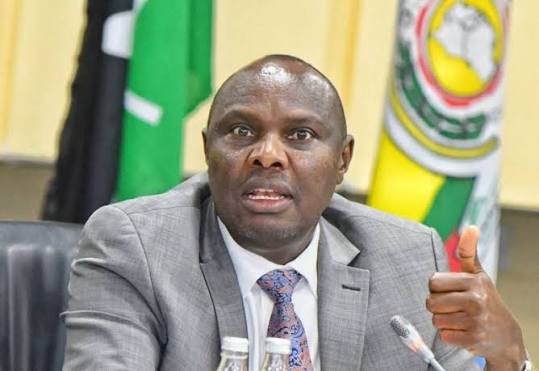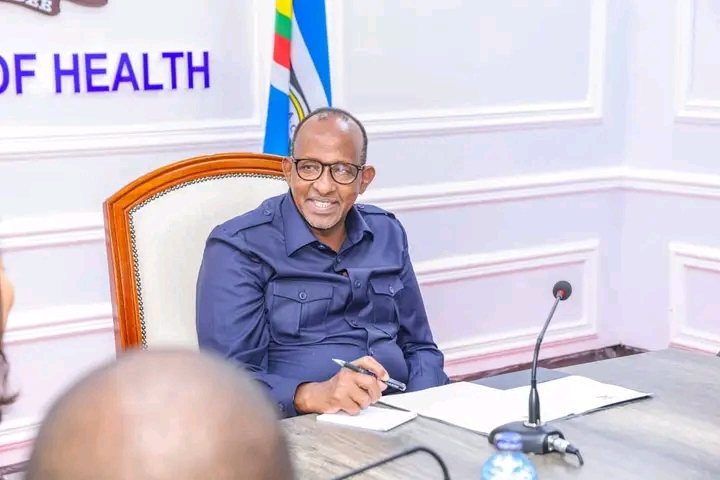
Aden Duale Faces Senate Heat Over Strict 2026 Ebola Rules as Lawmakers Scrutinise Quarantine, Screening and Burial Regulations
Health Cabinet Secretary Aden Duale is facing the Senate's Committee on Delegated Legislation over the 2026 Ebola Disease Rules and the Public Health (Declaration of Formidable Epidemic Disease) Order, which were introduced to strengthen Kenya's preparedness against dangerous infectious diseases. The committee is expected to examine the legality of the regulations, public participation, mandatory screening, the 21-day quarantine requirement, isolation procedures, contact tracing and special burial arrangements for Ebola victims. The scrutiny comes after Kenya recorded nine confirmed Bundibugyo Ebola cases, including two deaths, with seven patients recovering. Duale and the Ministry of Health are expected to explain how the government will enforce the regulations while protecting citizens' constitutional rights, maintaining public safety and strengthening the country's preparedness as Kenya begins its 42-day countdown towards being declared Ebola-free.
Kenya's Cabinet Secretary for Health, Aden Duale, is facing parliamentary scrutiny over the 2026 Ebola Disease Rules and the Public Health (Declaration of Formidable Epidemic Disease) Order, two legal instruments introduced by the government to strengthen the country's preparedness and response to the Ebola outbreak.The regulations have attracted attention because they introduce strict public health measures, including mandatory screening, medical assessment, isolation, quarantine, contact tracing and special procedures for handling bodies of people who die from Ebola. The parliamentary engagement is also expected to address questions surrounding the formulation of the regulations, public participation, the protection of individual rights and the powers granted to public health officers.
According to the parliamentary schedule for Tuesday, November 17, 2026, the Cabinet Secretary for Health is scheduled to appear before the Committee on Delegated Legislation at Bunge Tower to deliberate on the two instruments. The documents are Legal Notice No. 203 and Legal Notice No. 204 of 2026. Why Duale is facing the Senate committee
The Senate's interest in the regulations follows the government's decision to introduce emergency legal measures after Kenya confirmed its first imported case of Ebola on October 6, 2026.
The two legal instruments were submitted to the Senate by the Ministry of Health through a letter dated October 15, 2026, while Parliament was on recess.On November 3, 2026, Senate Speaker Amason Kingi formally referred the instruments to the Select Committee on Delegated Legislation for consideration. The Speaker urged the committee to expedite the process because of the urgent need to prevent, control and suppress the spread of Ebola.
Under Section 15(2) of the Statutory Instruments Act, the committee is required to complete its consideration and submit a report to the Senate within 28 sitting days after referral.
The committee's responsibility is to examine whether the regulations comply with the Constitution and the relevant laws governing the introduction of statutory instruments.
Duale is therefore expected to explain the legal foundation of the regulations, why the government considered them necessary and how the Ministry intends to implement them without violating the rights of Kenyans.The rules require people entering or departing from Kenya to comply with screening requirements and provide accurate information about their health and travel history.
Travellers suspected of having been exposed to Ebola may be separated from other passengers and subjected to further medical assessment and testing.
Port health officers are empowered to arrange medical examinations and referrals where there are reasonable grounds to suspect an infection.
The measures also cover people travelling through Kenya, particularly where health authorities identify a possible risk of transmission.
However, the regulations do not mean that every person arriving from an Ebola-affected country must automatically be quarantined.This declaration provides the legal foundation for introducing special measures to prevent and control the spread of the disease.
The second instrument is the Public Health (Ebola Disease) Rules, 2026, published as Legal Notice No. 204 of 2026.
These rules provide detailed procedures for managing suspected and confirmed Ebola infections, screening travellers, conducting medical assessments, isolating patients, tracing contacts and handling deaths associated with the disease.
The two instruments were developed by the Ministry of Health in collaboration with county governments and the Office of the Attorney-General.They are monitored for 21 days from their last relevant exposure because this is the observation period used to identify possible development of Ebola symptoms.
The rules also provide for early release where an individual obtains two negative diagnostic test results in accordance with the applicable medical protocols.
People suspected of having Ebola are expected to undergo immediate medical assessment, testing and isolation where necessary.
The government has maintained that quarantine is intended to prevent possible transmission rather than punish individuals who may have been exposed.
During his earlier appearance before the National Assembly's Delegated Legislation Committee, Duale explained that people placed under quarantine were receiving accommodation, food, medication and medical attention.Under the provisions, bodies of people who die from suspected or confirmed Ebola infections must be handled by trained personnel wearing appropriate protective equipment.
The bodies must be placed in sealed, leak-resistant body bags and kept in designated secure facilities where necessary.
The regulations prohibit traditional washing, embalming and redressing of bodies for funeral purposes because these activities may expose other people to infected bodily fluids.
They also prohibit the repatriation to Kenya of bodies of people who have died from Ebola outside the country.
However, the regulations provide for relatives to participate in burial arrangements in a manner that follows public health requirements.
During his earlier parliamentary appearance, Duale defended the importance of ensuring that families are allowed to give their loved ones dignified burials while observing the necessary safety precautions.During his November 3 appearance before the National Assembly's Delegated Legislation Committee, Duale defended the limited public participation, explaining that the government could not afford lengthy consultations while responding to a serious public health threat.
He maintained that the urgency surrounding the outbreak justified the immediate publication of the regulations under the applicable provisions of the Statutory Instruments Act.
The Ministry also explained that Section 5A(2) of the Act provided for the urgent publication of the instruments without prior consultation.Medical officers of health are also empowered to seek police assistance when necessary to enforce public health measures.
According to the reported provisions, offenders may face penalties under Section 164 of the Public Health Act, including fines of up to KSh50,000 or imprisonment for up to six months.
The enforcement provisions are intended to discourage behaviour that could expose other people to infection.
However, the Senate will have an important responsibility to consider how these powers will be exercised and whether enforcement agencies will respect the rights of affected individuals.Following confirmation of the infection, health authorities launched contact tracing and surveillance operations to identify people who may have been exposed.
Kenya eventually recorded nine confirmed cases, including two deaths.
Eight of the cases were secondary infections involving four family members and four healthcare workers linked to the initial patient.
The World Health Organization reported on November 6 that all the Kenyan cases were connected to one transmission cluster and that there was no evidence of transmission outside that cluster.
The last confirmed infection was reported on October 19.The Ministry also reported that laboratory testing turnaround times had been reduced to approximately six to eight hours.
These measures were intended to ensure that suspected infections could be detected, investigated and managed quickly.
The Ministry further highlighted collaboration with county governments, the Kenya National Public Health Institute, the World Health Organization and other development partners.
The preparedness measures demonstrate the scale of coordination required to respond to an infectious disease outbreak, particularly one that can spread through direct contact with infected bodily fluids.The country subsequently began the 42-day countdown towards being declared free of Ebola, starting November 12.
If no new infections are reported during the monitoring period, Kenya is expected to reach the milestone around December 23, 2026.
Duale maintained that the government would continue surveillance and preventive measures despite the discharge of the last patient.
The Ministry has also maintained that the absence of new infections does not mean that the country should immediately abandon its public health precautions.
This is because health authorities must remain alert throughout the required monitoring period to identify any previously undetected infections.On November 11, 2026, Health CS Aden Duale announced the discharge of the last patient who had been receiving treatment for Bundibugyo Ebola disease.
The government confirmed that seven patients had recovered, while two people had died during the outbreak.
The country subsequently began the 42-day countdown towards being declared free of Ebola, starting November 12.
If no new infections are reported during the monitoring period, Kenya is expected to reach the milestone around December 23, 2026.
Duale maintained that the government would continue surveillance and preventive measures despite the discharge of the last patient.
The Ministry has also maintained that the absence of new infections does not mean that the country should immediately abandon its public health precautions.Among the key matters requiring consideration are whether the Ministry followed the correct legal procedures, whether the emergency provisions are sufficiently justified and whether the regulations contain adequate safeguards for people affected by quarantine, isolation and travel restrictions.
The committee may also examine the resources available to the Ministry, the coordination between national and county governments and the practical ability of health authorities to implement the regulations across the country.
Another important consideration is the protection of families and communities affected by Ebola, particularly regarding burial arrangements, access to medical care and the treatment of recovered patients.

You Might Also Like
-
Linda Mwananchi Movement leader and Nairobi Senator Edwin Sifuna is set to begin his United States tour in New Jersey, where he will officially open the movement’s diaspora office as part of efforts to strengthen its presence and organisational structures among Kenyans living abroad. The planned v
-
Medical Services Principal Secretary Ouma Oluga has called for expanded access to HIV prevention services, particularly among populations considered to be at higher risk of infection, as the government intensifies efforts to strengthen the country’s response to HIV. Oluga emphasised the need to en
-
Education Cabinet Secretary Julius Ogamba has reaffirmed the government’s commitment to strengthening girls’ education across the country through expanded access to quality learning, competency-based education, scholarships, mentorship programmes and stronger school re-entry policies. The commit
-
The Teachers Service Commission (TSC) has dismissed allegations of tribalism raised by former Deputy President Rigathi Gachagua over the appointment of Cheptumo Ayabei as its new Chief Executive Officer, maintaining that the recruitment exercise was conducted through a transparent, professional and
-
Head of Public Service Felix Koskei has announced that this year’s Jamhuri Day celebrations will focus on showcasing how investments in infrastructure and innovation are contributing to Kenya’s economic transformation. The celebrations will highlight the role of development projects in creating
-
Medical Services Principal Secretary Ouma Oluga has called for stronger collaboration among government departments to strengthen the implementation of health sector programmes, emphasising that investment in healthcare is essential to improving the well-being of Kenyans and supporting sustainable ec