



Aden Duale Inspects Kenya’s First Ebola Quarantine Centre as Government Intensifies Measures to Contain Virus
Aden Duale's leadership in checking Kenya's Ebola preparedness comes at a crucial time following the country's first confirmed imported Ebola case and the death of the patient in Nairobi. The development has tested systems that the government had been preparing for months. Authorities are now concentrating on contact tracing, monitoring exposed individuals, screening travellers and ensuring that isolation facilities are capable of handling suspected cases. While the confirmation of an Ebola case has understandably caused concern, the government has insisted that Kenya is dealing with an imported incident rather than a widespread outbreak. Duale has called for vigilance rather than panic, while emphasizing the importance of early detection and containment. The renewed focus on quarantine centres also highlights the importance of having functional emergency health infrastructure before a crisis occurs. As Kenya continues monitoring contacts and strengthening its response, the effectiveness of the country's isolation facilities, trained health workers, laboratories and surveillance systems will remain central to preventing the virus from spreading further.
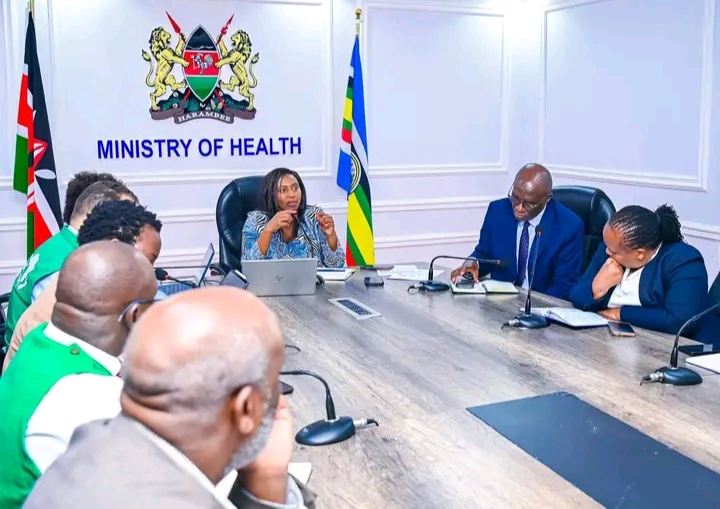
Health Cabinet Secretary Aden Duale has taken the lead in Kenya’s intensified response to Ebola, with the government focusing on quarantine, isolation, contact tracing, screening and strengthening preparedness facilities following the country’s first confirmed imported case of the disease.
The development comes at a critical moment for Kenya after the Ministry of Health confirmed on October 6, 2026, that a Kenyan citizen who had been living in the Democratic Republic of Congo (DRC) had tested positive for the Bundibugyo strain of Ebola and subsequently died while receiving treatment at Nairobi Hospital.
Duale’s involvement in checking the country’s Ebola preparedness centres is intended to establish whether facilities, health workers, isolation capacity and emergency response systems are ready to deal with suspected cases and prevent further transmission.
The inspection and preparedness efforts have attracted renewed attention because Kenya had already established quarantine and isolation arrangements several months before the first imported case was confirmed. The government had been preparing for the possibility that Ebola could cross into Kenya because of the continuing outbreak in the DRC and the movement of people between East African countries.
Kenya confirms first Ebola case
The Ministry of Health confirmed that the patient had been living in the DRC for about seven years. He became ill approximately one month before returning to Kenya and had sought treatment at several health facilities in the DRC.
He later travelled by road from the DRC to Kampala, Uganda, before boarding Jambojet flight 8523 to Nairobi. He arrived at Jomo Kenyatta International Airport on Saturday, October 3, at about 1:10 p.m.
According to the Ministry of Health, the man underwent routine screening at the airport before proceeding through immigration. He was then picked up by a relative and a friend and taken directly to Nairobi Hospital.
At the hospital, he was isolated after presenting with symptoms that included fever, chills, severe fatigue, weakness, muscle pain, painful swallowing, sore throat and bleeding beneath the skin at injection sites.
Because of his symptoms and travel history, doctors collected a sample for testing. The sample subsequently returned positive for Ebola.
The patient was transferred to the hospital's East Wing Isolation Facility, where he received supportive treatment. He later died at approximately 11:30 p.m. on Monday, October 5.
Duale says Kenya was prepared
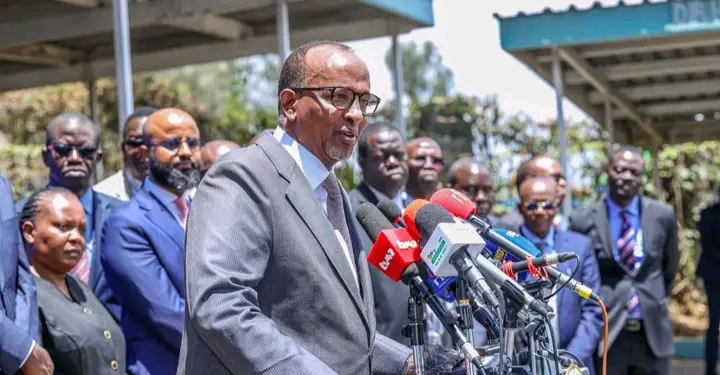
Duale has maintained that the government was not caught off guard by the confirmation of the case.
Speaking on Wednesday, October 7, the Health CS said Kenya had begun strengthening its Ebola preparedness measures months before the first case was reported in the country. He explained that the government had acted after the Ebola outbreak was confirmed in the DRC in May.
Duale said Kenya had screened hundreds of thousands of travellers through its points of entry and trained thousands of health workers to identify and manage suspected Ebola cases.
Reports indicate that approximately 650,000 travellers had been screened, while about 4,900 health workers had received training on Ebola management.
The government has also increased surveillance at airports and other points of entry, particularly because Kenya is a major regional transport hub connecting East and Central Africa.
Why quarantine centres are important
The inspection of Ebola quarantine and isolation facilities comes as health authorities seek to ensure that suspected cases can be separated from the general population.
Quarantine is particularly important for people who may have been exposed to Ebola but have not yet developed symptoms. Isolation, on the other hand, is used for people who are suspected or confirmed to have the infection.
Health officials are particularly concerned because Ebola can spread through direct contact with the blood or other bodily fluids of an infected person, as well as contaminated materials.
This means health facilities need properly trained personnel, protective equipment, dedicated isolation areas and procedures for safely transporting and handling suspected patients.
Kenya has reportedly established numerous isolation and treatment facilities across the country. The Daily Nation reported that the Ministry of Health had identified 23 isolation and treatment centres, including facilities at Kenyatta National Hospital, the National Police Service Hospital and Moi Teaching and Referral Hospital, while several counties also have isolation capacity.
The Laikipia Ebola centre controversy
The issue of Ebola quarantine facilities in Kenya has previously generated significant public debate.
One of the most controversial facilities is the US-backed quarantine centre at Laikipia Air Base near Nanyuki. The facility was planned as a 50-bed centre during the regional Ebola threat.
The project faced legal challenges and protests, with critics raising concerns about transparency, public consultation and the possibility of exposing communities to the virus.
The High Court subsequently issued orders stopping construction, and Duale later ordered the construction work halted after appearing in court over the matter. �
The first confirmed Ebola case has now brought the facility debate back into the national spotlight.
Reports on October 6 indicated there was little activity at the US-funded centre when news of Kenya's first Ebola case emerged.
The government, however, has emphasized that Laikipia is only one component of Kenya's broader preparedness system and that the country has other isolation facilities.
Contact tracing takes centre stage
Following confirmation of the case, health officials immediately began tracing people who may have come into contact with the deceased.
Duale said contacts included family members and healthcare workers who attended to the patient.
Authorities have also been trying to trace passengers and crew members who travelled on the same flight from Uganda to Nairobi.
The Ministry of Health has emphasized that identifying contacts quickly is essential because people who have been exposed to Ebola need to be monitored during the incubation period.
Those identified as contacts can be placed under quarantine or close monitoring to ensure that any symptoms are detected early.
The government has also introduced dedicated communication channels to allow members of the public to report suspected cases or seek information. A hotline and text-based service were announced as part of the response.
Duale urges Kenyans not to panic
Despite the confirmation of Kenya's first imported case, Duale has urged the public to remain calm.
On Wednesday, he stressed that Kenya should not be described as experiencing a widespread Ebola outbreak. He characterized the incident as an imported case involving a person who had travelled from the DRC.
He said the government had prepared for such a possibility and had systems in place to detect, isolate and manage suspected cases.
The CS's message is aimed at preventing fear and misinformation while encouraging Kenyans to follow public health guidance.
Health authorities are also expected to continue public education on Ebola symptoms and methods of transmission.
No border closure planned
Duale has also ruled out closing Kenya's borders following the confirmation of the case.
Instead, the government intends to strengthen screening, testing and surveillance at points of entry.
The CS argued that closing borders could encourage travellers to use unofficial crossing points, making it more difficult for authorities to screen and monitor them.
He said Kenya's approach would therefore focus on ensuring that airports and other entry points have adequate infrastructure for screening and testing.
This is particularly important because Kenya shares borders with countries that have experienced Ebola-related threats and has extensive road and air connections across the region.
Regional Ebola threat
Kenya's first imported case is connected to the ongoing Ebola situation in the DRC.
The outbreak involves the Bundibugyo strain and has become a major regional health concern. The DRC has reported thousands of confirmed cases and deaths since the outbreak began.
The situation has also affected neighbouring countries, increasing concerns about cross-border transmission.
Kenya's geographical position and its role as a regional transport and business hub mean that health authorities have had to maintain heightened surveillance.
Government's wider preparedness measures
Duale's inspection of Ebola preparedness facilities therefore forms part of a much wider response.
The government is focusing on four major areas: surveillance, laboratory testing, contact tracing and isolation.
Surveillance is designed to identify suspected cases early, particularly at airports, border crossings and health facilities.
Laboratory testing is necessary to confirm whether suspected patients have Ebola.
Contact tracing helps authorities identify people who may have been exposed.
Isolation and quarantine facilities provide safe locations for managing suspected or confirmed cases while protecting other patients, healthcare workers and members of the public.
Kenya has also worked with international health organizations, including the World Health Organization and Africa Centres for Disease Control and Prevention, as part of its preparedness and response efforts.

You Might Also Like
-
Former President Uhuru Kenyatta steps down as Azimio council chair, with James Orengo and Rigathi Gachagua emerging in discussions over the coalition’s future leadership.
-
Kenya's Ebola response has entered a critical surveillance and contact-tracing phase following confirmation of the country's first imported Bundibugyo Ebola case. PS Mary Muthoni says 57 contacts have been identified, with 10 already placed under quarantine, while health officers across the country
-
Deputy President Kithure Kindiki's appearance at Jamhuri Park on October 7 placed agriculture and food security at the centre of the national economic transformation conversation. He outlined government figures on farmer registration, fertiliser prices, livestock vaccination, milk production, meat e
-
A passenger travelling aboard a Kenya Airways flight from Nairobi to Lagos, Nigeria, has died after suffering a medical emergency shortly before the aircraft landed at Murtala Muhammed International Airport. The passenger reportedly became unresponsive about 20 minutes before landing, prompting cabi
-
NCIC's latest actions against CS Geoffrey Ruku and its handling of nominated MP Joseph Wainaina Iraya underline the commission's growing focus on political language and national cohesion ahead of the 2027 elections. Ruku has been directed to stop repeating remarks that NCIC found divisive, respond w
-
President William Ruto says Raila Odinga’s mausoleum at Kang’o Ka Jaramogi honours his contribution to Kenya’s democratic journey and will help preserve his legacy for future generations.