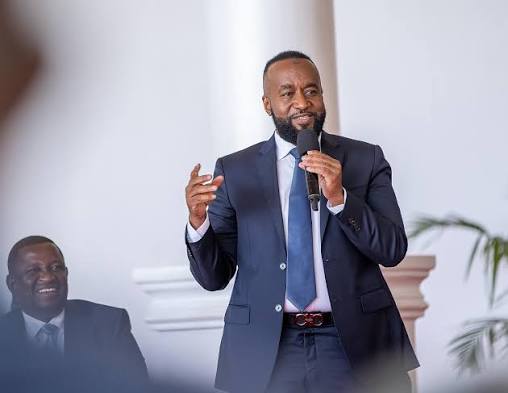
Ali Hassan Joho Declares ODM Must Produce Kenya’s Next President After Ruto
Former Mombasa Governor Ali Hassan Joho has declared that the next President of Kenya after William Ruto should come from the Orange Democratic Movement (ODM). His remarks have reignited discussions about ODM's presidential ambitions and its political direction ahead of the 2027 General Election. Joho believes the party should position itself to take the country's top leadership rather than remain a supporting partner in future political arrangements. The declaration comes at a time when ODM is navigating a leadership transition following the death of former Prime Minister Raila Odinga, while different political leaders continue to position themselves for the next elections. His statement is expected to spark debate within ODM and across the country's political landscape over who should lead the party's presidential ambitions.
Ali Hassan Joho has declared that the next President of Kenya after William Ruto should come from the Orange Democratic Movement (ODM), expressing confidence in the party's political strength and its ability to produce the country's next head of state. His remarks have added to the growing political discussions surrounding the 2027 General Election and the future leadership of Kenya, particularly as political parties begin positioning themselves for the next electoral contest.
Joho's statement reflects ODM's long-standing ambition to occupy the country's highest political office and strengthen its influence in national leadership. The former Mombasa Governor has maintained that the party has the political experience, national structures and leadership capacity required to produce a president after Ruto's tenure.
His remarks come at a time when political realignments are gaining momentum, with leaders from different political formations seeking to establish new partnerships and strengthen their influence ahead of the next General Election. The political environment has increasingly focused on the future of major parties, the formation of alliances and the individuals likely to lead different political coalitions.
ODM has remained one of Kenya's most influential political parties, having played a significant role in national politics for many years. The party has built a strong political presence through its participation in presidential elections, parliamentary contests and negotiations involving different political formations.
Joho's position suggests that ODM should not limit itself to supporting other political leaders but should also pursue the opportunity to produce a president. His remarks could strengthen conversations within the party about its future direction and the need to establish a clear strategy for the next presidential contest.
The party has traditionally presented itself as a national political movement with supporters across different regions. Its leadership has frequently emphasised the importance of expanding its political reach beyond its traditional strongholds to attract support from a wider section of the Kenyan electorate.
Producing a president would require ODM to build a broad national coalition capable of bringing together different communities, political interests and regional voting blocs. The party would also need to identify a candidate who can appeal to voters beyond its established support base.
Joho's declaration therefore raises questions about the political arrangements that could emerge before the 2027 elections and whether ODM will seek to lead a coalition or enter into negotiations with other parties from a position of strength.
The former Mombasa Governor has remained an influential figure within the party, having served in different leadership capacities and participated in major political activities. His political influence, particularly along the Coast region, has contributed to his position as one of the prominent voices in discussions about ODM's future.
His statement also comes amid changes in Kenya's political landscape following the death of former Prime Minister Raila Odinga, who was central to ODM's formation, growth and national political identity.
Raila played a major role in shaping the party's political direction and mobilising support across the country. For many years, he remained ODM's most recognisable national leader and its presidential candidate in several General Elections.
His absence has created a significant leadership transition within the party, with different leaders expected to contribute to defining its future political strategy. The question of who will guide ODM into the next election has therefore become an important issue for its members and supporters.
Joho's remarks may be viewed as part of the broader conversation about the party's ambitions following Raila's departure from the political stage. They highlight the expectation among some ODM leaders that the party should maintain its national influence and work towards securing the presidency.
The political future of ODM will depend partly on how effectively its leaders manage internal discussions and agree on a common direction. Different leaders within the party have their own political ambitions, support bases and perspectives on the alliances that should be pursued ahead of 2027.
Managing these interests will require consultations and a clear understanding of the party's priorities. Political observers have often pointed out that disagreements over leadership and electoral strategy can affect the stability of political parties, particularly during periods of transition.
For ODM, the challenge will be to maintain unity while preparing for a highly competitive election. The party will need to strengthen its structures, mobilise supporters and develop a strategy that can attract voters from different parts of the country.
Joho's declaration that the next president should come from ODM also raises questions about the party's relationship with other political formations. Kenya's presidential elections have frequently been influenced by coalitions, with parties joining forces to increase their chances of securing national leadership.
ODM may therefore need to consider whether it can independently build sufficient support to win the presidency or whether it should enter into a broader political arrangement with other parties.
Any coalition negotiations are likely to involve discussions about leadership positions, presidential candidates, policy priorities and the distribution of political responsibilities. Such negotiations could become particularly important as different leaders seek to position themselves for the 2027 contest.
Joho's position could also influence discussions about the relationship between ODM and the current political establishment. The party has been involved in different political arrangements over the years, including periods of cooperation and competition with parties forming the government.
The evolving political relationship between ODM and other national leaders is expected to remain a major issue as the country approaches the next election. Leaders will have to determine whether their political interests are best served through independent campaigns, alliances or negotiated partnerships.
The former Mombasa Governor's statement also reflects the broader ambition among political parties to demonstrate that they can produce national leaders rather than remain junior partners in electoral coalitions.
For a party with ODM's history, the presidency remains a significant political objective. Its participation in national politics has been shaped by repeated attempts to secure the country's top leadership position, making Joho's declaration an expression of an ambition that has existed within the party for many years.
However, securing the presidency requires more than political confidence or the strength of party structures. A successful presidential campaign depends on the candidate's popularity, national appeal, campaign organisation, financial resources and ability to establish alliances with other political interests.
ODM will also have to address the expectations of its supporters, many of whom may want the party to present a strong candidate capable of competing against other established political formations.
The party's ability to attract younger voters and respond to changing political priorities could also influence its performance. Issues such as unemployment, the cost of living, education, healthcare, taxation and economic opportunities are likely to feature prominently in the next election campaign.
Voters are increasingly interested in how political leaders intend to address the challenges affecting households and businesses. Parties seeking national leadership will therefore need to present policies that respond to these concerns.
Joho's statement could encourage ODM members to begin considering the leadership qualities required in a presidential candidate. The party will need an individual who can unite its supporters, attract new voters and maintain strong relationships with political partners across the country.
The question of regional representation may also become important during coalition negotiations. Kenya's political landscape is shaped by diverse communities and regional interests, making broad-based partnerships an important part of presidential campaigns.
ODM's traditional support in the Coast and other regions could provide a foundation for a wider national campaign, but the party would need to expand its influence to secure support across the country.
Joho's remarks also come at a time when politicians are increasingly making statements about the leadership arrangements expected after the 2027 elections. Such declarations are likely to generate debate within political parties and among supporters as different groups begin assessing their chances.
While some leaders may favour a candidate from their own political formations, others may prioritise coalition arrangements that offer a stronger chance of winning the presidency. These competing positions could shape the negotiations taking place in the coming months.

You Might Also Like
-
A court has summoned Inspector General of Police Douglas Kanja to appear and provide information regarding the alleged abduction of Tanzanian activist Twaha Mwaipaya. The police chief is expected to clarify what the National Police Service knows about the incident and the steps taken to establish th
-
A Nairobi court has ordered four suspects arrested in connection with the murder of 86-year-old Dorita Macharia to remain in police custody for 10 days as detectives continue investigations. The suspects, Thande Malaika Gitau, Emmanuel Munyeki, Jimmy Macharia and Regina Wangui Macharia, will be held
-
 The accident along the Narok-Nakuru Highway near Enengetia Centre has left six people dead and five others seriously injured, marking another painful moment for families affected by road tragedies in Kenya. The Isuzu FRR lorry was travelling from Nakuru towards Narok when it reportedly lost control
-
CS Geoffrey Ruku's impromptu visit to government offices in Kajiado on November 2, 2026, has renewed the national conversation about accountability and discipline in the public service. The reported discovery that more than 70 per cent of public servants were absent from their workstations, alongsi
-
Democratic Party of Kenya leader Justin Muturi has urged opposition leaders to put aside personal ambitions, political supremacy battles and internal disagreements as they prepare for the 2027 General Election. Muturi maintains that no single politician or community can independently secure the pres
-
Agriculture Cabinet Secretary Mutahi Kagwe has highlighted opportunities for Kenya and Australia to strengthen cooperation in agricultural research, livestock technology and youth skills development. The proposed partnership could help Kenya benefit from Australia's agricultural expertise through sc