



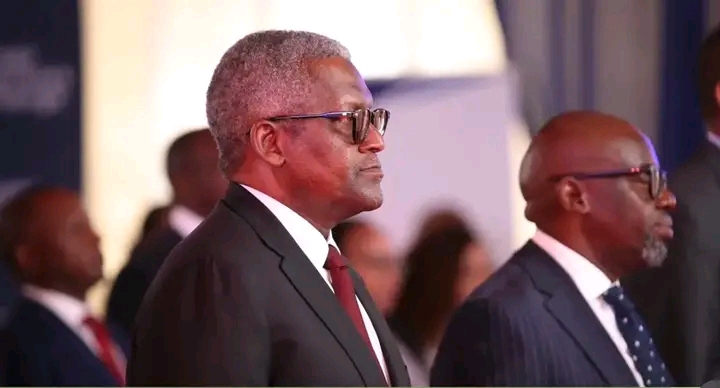
Aliko Dangote Makes Major NSE Announcement: Billionaire Unveils Plans to Bring Lamu Refinery to Kenyan Investors
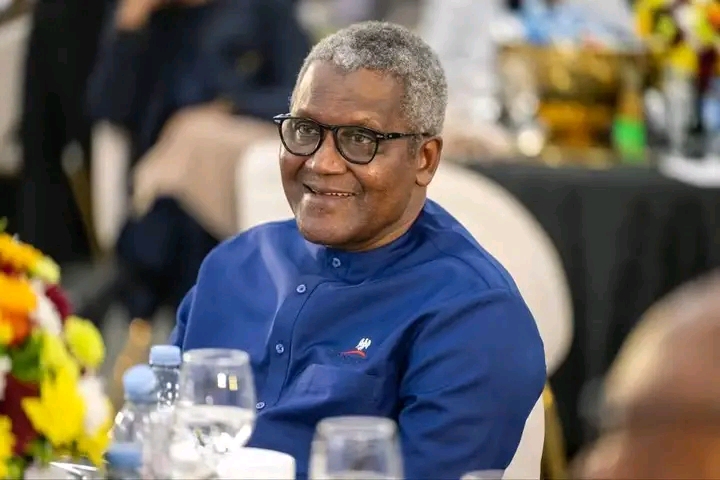
Aliko Dangote's meeting with investors and stakeholders at the Nairobi Securities Exchange on September 29, 2026, has placed African ownership and capital-market participation at the centre of discussions surrounding his expanding investments. The key announcement was his commitment to pursue a Nairobi Securities Exchange listing for the proposed East African refinery in Lamu. The meeting also covered plans to list Dangote Fertiliser, develop a shipping business and increase African participation in ownership of major enterprises. The meeting came just one day before the planned groundbreaking of the 700,000-barrel-per-day Lamu refinery. President William Ruto has separately said Kenyans will be allowed to participate in the refinery's ownership through the NSE. The announcements therefore mark an important development in Kenya's investment and capital-markets landscape, although the precise structure, timing and regulatory requirements for any future listings remain matters that investors will need to follow closely.
The Nairobi Securities Exchange meeting brought together Dangote and investors at an important moment for his business expansion across Africa. The discussions centred on capital markets, ownership of major African enterprises, the proposed Lamu refinery, Dangote's fertiliser business and plans for a new shipping company.
One of the most significant announcements from the meeting was Dangote's commitment that the proposed East African refinery in Lamu should eventually be listed on the Nairobi Securities Exchange. He said the objective was to provide Africans, including Kenyan investors, with an opportunity to participate directly in ownership of the project.
Dangote commits to Nairobi listing
Speaking during the investor meeting, Dangote said he was making a commitment that the East African refinery would be listed on the Nairobi bourse.
The proposed refinery is expected to have a capacity of 700,000 barrels of crude oil per day. The planned facility is expected to become one of the largest industrial investments in East Africa if implemented as announced.
Dangote's comments are significant because they move the conversation beyond simply building a refinery in Kenya. A future NSE listing would potentially give Kenyan and other regional investors a mechanism through which they could acquire an ownership interest in the enterprise.
The idea also fits into Dangote's wider argument that African businesses should increasingly be owned by Africans rather than relying predominantly on foreign capital.
According to reports from the meeting, Dangote said listing businesses on African exchanges could allow more people on the continent to participate in their ownership. He also argued that bringing more shareholders into companies could strengthen accountability because shareholders would have a formal role in corporate governance.
Focus on African ownership
A major theme of Dangote's presentation was the need for Africans to participate more actively in owning major companies operating on the continent.
Dangote has traditionally expanded his businesses using a model in which profits are reinvested into further growth. At the NSE meeting, however, he discussed a broader ownership approach in which ordinary investors could acquire shares in some of his businesses.
He indicated that greater public ownership could also make company management more accountable to shareholders.
The businessman pointed to annual general meetings and shareholder voting as mechanisms through which investors could influence corporate leadership. His argument was that ownership should not be concentrated among a small number of wealthy individuals or institutions when African capital markets can provide opportunities for wider participation.
This approach could potentially deepen African capital markets by encouraging large privately controlled enterprises to seek funding and ownership participation through local stock exchanges.
Lamu refinery remains at the centre of attention
The NSE meeting occurred as Dangote prepares for the next major stage of his Kenyan investment plans.
The planned Lamu refinery is scheduled for a groundbreaking ceremony on Wednesday, September 30, 2026. The facility is expected to have a processing capacity of 700,000 barrels per day.
The refinery is expected to serve Kenya and the wider East African market by increasing regional refining capacity and reducing dependence on imported refined petroleum products.
The project has also attracted significant government attention. President William Ruto has said the investment will be open to Kenyan investors through the Nairobi Securities Exchange, allowing citizens to participate in ownership.
Ruto said on Tuesday that the government would also take a stake in the project and that ordinary Kenyans should have an opportunity to buy shares rather than ownership being restricted to a small group of investors.
The President's comments reinforce the ownership message Dangote delivered at the NSE.
Proposed investment could create opportunities for investors
The proposed NSE listing could create an avenue for Kenyan investors to participate in a large industrial project without necessarily having to invest directly in the construction or operation of the refinery.
However, a future listing would still have to comply with Kenyan capital-market rules, including regulatory requirements and approvals.
It is therefore important to distinguish Dangote's announcement of an intended listing from an immediately available investment opportunity. The refinery has not simply become a listed NSE company as a result of Tuesday's announcement.
Details such as the timing of a listing, the percentage of shares that would be offered to the public, the valuation, the share price, the ownership structure and regulatory approvals would need to be established before investors could participate through a public offering.
Dangote's Nigerian refinery IPO
The Nairobi meeting also comes at a time when Dangote is seeking to broaden ownership of his Nigerian refinery.
Dangote Petroleum Refinery and Petrochemicals is currently conducting an initial public offering in Nigeria. The company is offering 4.1 billion shares, representing a three per cent stake, at 525 Nigerian naira per share. The offering is seeking approximately $1.6 billion.
The IPO has attracted interest from investors outside Nigeria, including Kenya.
Earlier reports indicated that the Nigerian refinery IPO was not initially approved as a Kenyan public offering. The Capital Markets Authority has also cautioned potential investors to verify investment information and ensure they are dealing with authorised parties.
The Nairobi meeting therefore provides important context because Dangote's latest comments point towards a broader strategy of using African capital markets to expand ownership of his businesses.
Possible access for Kenyan investors
Another important development discussed around the NSE meeting concerns the possibility of Kenyan investors gaining access to Dangote's Nigerian refinery through instruments connected to the Nigerian shares.
Reports from Tuesday's meeting said Renaissance Capital CEO Stanley Kariuki indicated that global depositary receipts linked to the Nigerian refinery IPO could potentially trade on the Nairobi Securities Exchange. The underlying shares would remain in custody in Nigeria while the receipts could provide investors in Kenya and the wider region with access.
However, regulatory approval remains an important consideration. The Capital Markets Authority had previously stated that the Nigerian refinery offer had not been submitted to it for approval as a Kenyan public offer.
Consequently, investors should not interpret discussions at the NSE as confirmation that the Nigerian IPO is already approved for unrestricted public subscription in Kenya.
Dangote Fertiliser plans
Dangote also used the investor meeting to discuss his fertiliser business.
He announced plans to list Dangote Fertiliser Ltd sometime in 2027, saying the objective was to allow the company to be owned by the public.
The fertiliser business is planning substantial expansion. Dangote said the company intends to build six production lines, with delivery expected between late 2028 and early 2029. The target is to reach annual production of approximately 12 million metric tonnes.
The proposed listing would add another major Dangote business to the African capital-markets story.
It also demonstrates that the billionaire's strategy is not limited to the Lamu refinery. His comments suggest an intention to use public markets to bring outside investors into different areas of his business empire.
New shipping company
Shipping was another issue raised during the NSE meeting.
Dangote said his group had established a new shipping business to address some of the high costs associated with moving goods between African countries.
He cited intra-African transportation challenges as one of the barriers to expanding trade on the continent. According to reports, he gave the example of transporting clinker between Nigeria and Ghana, arguing that shipping costs could make trade within Africa more expensive than importing certain commodities from outside the continent.
Dangote said the new shipping company would also be opened to African investors.
The plan could potentially connect the shipping business to his wider strategy of encouraging Africans to own companies serving African markets.
Broader significance for Kenya
Dangote's appearance at the NSE comes as Kenya seeks to attract large-scale foreign investment and strengthen its capital markets.
The proposed refinery represents a major potential investment in Kenya's energy sector. Beyond the direct construction and operation of the facility, such a project could create opportunities across logistics, transportation, engineering, construction, petroleum distribution and other related sectors.
The government's position is that the project could contribute to energy security and industrialisation.
President Ruto has also emphasised that Kenyans should be able to participate in ownership of the refinery through the capital markets. He described the planned investment as open and transparent and said the government would educate ordinary citizens about how they could participate.
Legal and regulatory issues
The developments surrounding the refinery are also taking place against a legal backdrop.
Reuters reported on Tuesday that a Kenyan court ruling involving a land-rights dispute would not stop the planned groundbreaking ceremony, although it could affect some site activities. Dangote Group said it intended to proceed with the official launch while complying with the legal situation.
This means that while the NSE meeting highlighted investment and ownership opportunities, the project still has regulatory and legal considerations that will need to be addressed as construction progresses.
What the NSE meeting means for ordinary Kenyans
For ordinary Kenyans, the most important part of the meeting is the possibility of wider participation in major African businesses.
Dangote's proposal to list the Lamu refinery on the NSE could eventually give retail investors an opportunity to own shares in the project, subject to the final structure and regulatory approvals.
The same principle applies to the proposed listing of Dangote Fertiliser and the planned shipping company.
However, potential investors will need to distinguish between a public announcement about future plans and an actual investment offer. Before buying shares, investors should rely on official NSE, CMA and company information concerning approvals, prospectuses, offer dates, pricing and authorised intermediaries.

You Might Also Like
-
Ameliah Cherotich from Keringet, Kuresoi South, is battling a serious heart condition and urgently needs specialised treatment in India. Her family is seeking KSh 2.5 million and is appealing to leaders, well-wishers and the community for support.
-
The government is targeting the issuance of at least 500,000 more title deeds in the Coastal region, building on an ongoing programme aimed at strengthening land ownership, resolving historical disputes and improving security of tenure.
-
The latest NTSA developments show that Kenya's matatu sector is entering another phase of regulatory and professional reforms. The authority is currently emphasizing qualified drivers and crew, roadworthy vehicles, proper licensing, maintenance records, authorised routes and responsible management o
-
Kenyan TikTok personality Patrick Mbacio, popularly known as “Patrick The Truth,” has died after being found dead inside his home in Nakuru, bringing to an abrupt end the life of a social-media figure who rose to fame through viral videos about his relationships, lifestyle and interactions with
-
Aliko Dangote's journey has moved from commodity trading to one of Africa's largest industrial empires. His businesses now span cement, fertiliser, sugar, food products, petrochemicals, oil refining, logistics and related industries. Forbes currently estimates his wealth at approximately $31.4 billi
-
Lang’ata MP Jalang’o has announced a candle-lighting ceremony at Uhuru Park this Friday to commemorate the life and legacy of the late Raila Odinga.