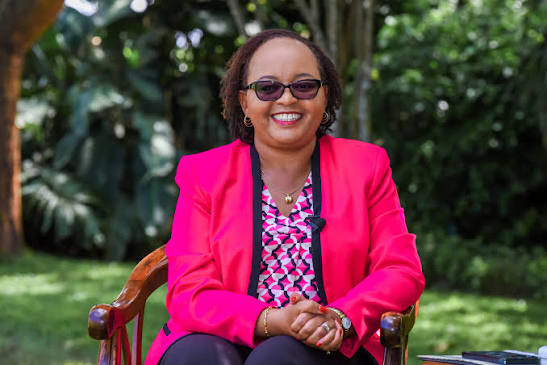
Anne Waiguru Leads Kindiki and Gladys Wanga in Race for Ruto’s Potential 2027 Running Mate
A recent poll on President William Ruto’s potential running mate for the 2027 General Election places Kirinyaga Governor Anne Waiguru at 43% support, ahead of Deputy President Kithure Kindiki at 30% and Homa Bay Governor Gladys Wanga at 13%. The findings have sparked fresh discussion about possible leadership arrangements ahead of the next election. However, the results reflect the preferences measured by the survey and do not confirm who will ultimately be selected. The final decision will depend on political consultations, party dynamics and coalition considerations as the election approaches.
Governor Anne Waiguru has emerged with the highest level of support in a recent poll assessing preferences for President William Ruto’s potential running mate in the 2027 General Election. According to the reported findings, Waiguru commands 43 per cent support, placing her ahead of Deputy President Kithure Kindiki, who records 30 per cent, and Homa Bay Governor Gladys Wanga, who attracts 13 per cent. The figures have renewed discussion about the possible composition of the presidential ticket as political leaders and their supporters begin considering the next electoral contest.
The survey places Waiguru 13 percentage points ahead of Kindiki and 30 percentage points ahead of Wanga among the respondents covered by the poll. Although the results provide an indication of the preferences measured by the survey, they do not establish who President Ruto will ultimately select as his running mate. The decision will depend on political considerations, consultations, party arrangements and other factors that may shape the administration’s preparations for the 2027 elections.
The position of running mate is an important component of a presidential campaign because it can influence political alliances, party unity and efforts to appeal to voters across different regions. In Kenya, where national elections involve competition among political coalitions representing diverse interests, the selection of a deputy presidential candidate often attracts considerable attention. The individual chosen must work alongside the presidential candidate while also helping communicate the coalition’s agenda to different groups of voters.
Waiguru’s reported 43 per cent support places her at the top of the three names highlighted in the survey. As Governor of Kirinyaga County, she has experience in county-level leadership and national politics. Her political career has included involvement in government and the administration of devolved functions, experiences that form part of the public discussion surrounding her political future. However, the poll figures alone do not explain why respondents selected her or establish the particular qualities that influenced their preferences.
Kindiki, who records 30 per cent in the reported findings, is also a central figure in discussions about the possible 2027 presidential ticket. Serving as Deputy President, he occupies a senior position within the national executive and is involved in the administration’s political and government activities. His position gives him direct experience in the office that would be at stake if the ruling political formation sought to retain the presidency. Nevertheless, the survey suggests that support for the three potential candidates differs among the respondents who participated.
Wanga, who attracts 13 per cent in the reported poll, brings a different political profile to the discussion. As Governor of Homa Bay County, she has built her political career in the devolved system and remains a prominent figure in national political conversations. Her inclusion among the names assessed by the survey reflects the broader interest in which leaders could potentially be considered for senior positions in future political arrangements. The poll result, however, does not provide sufficient information to determine the full extent of her support beyond the reported figure.
The three figures add up to 86 per cent, leaving 14 per cent unaccounted for in the summary provided. That portion could reflect other candidates, undecided respondents, people who declined to answer or categories not included in the reported results. Without the full poll report, it is not possible to establish how the remaining percentage was distributed. Details such as the sample size, dates of fieldwork, geographical coverage, respondent selection and margin of error would also be necessary to assess the findings more fully.
Polls are commonly used to measure public attitudes at a particular moment, but their results should be interpreted within the limits of their methodology. A survey can indicate how a selected group of respondents answered a specific question, yet its findings do not automatically represent every voter in the country. The reliability of a poll depends on how respondents were selected, how questions were phrased, whether the sample reflected the population being studied and how the data was collected and analysed.
The wording of the question is particularly important in a survey about a potential running mate. Asking respondents whom they would prefer for a particular position may produce different results from asking whom they believe a political leader is likely to select. Personal preference and expectations about a politician’s final decision are not necessarily the same. The reported figures should therefore be understood as a measure of the preferences described by the survey, rather than confirmation of an impending political appointment.
The discussion surrounding the running mate position also reflects the importance of regional representation in Kenyan electoral politics. Presidential coalitions often seek to bring together leaders and communities from different parts of the country to build broader political support. A running mate may be expected to help strengthen alliances, mobilise supporters and communicate the coalition’s priorities. However, regional considerations are only one possible factor in political negotiations, and the final decision may involve several competing interests.
Party loyalty, relationships among political leaders, policy priorities and the need to maintain cohesion within a governing coalition can also influence the selection process. Political leaders may consult party officials, elected representatives, grassroots organisers and other stakeholders before reaching an agreement. Such discussions can continue for months, and the names receiving attention at an early stage may change as political circumstances develop.
The 2027 General Election is expected to generate increasing debate about leadership positions, party nominations and coalition arrangements as the electoral period approaches. The running mate question is likely to remain part of that discussion because the position carries constitutional responsibilities and political significance. Under Kenya’s presidential system, the Deputy President is elected alongside the President on a joint ticket, making the selection of a running mate an important element of the broader campaign strategy.
At the same time, public interest in possible candidates does not mean that a final decision has been made. Political speculation can intensify when polls circulate, leaders make public appearances or supporters promote particular individuals. Such developments may contribute to the national conversation, but they should be distinguished from formal announcements by the relevant political parties or presidential candidate.
For Waiguru, Kindiki and Wanga, the reported survey provides a snapshot of how respondents assessed their potential suitability for the position at the time the poll was conducted. It does not determine their future political roles or establish whether any of them will formally seek or receive consideration for the position. Their political prospects will depend on developments within their respective political networks and the decisions made as the next election approaches.
The findings may also prompt questions about the factors respondents considered when selecting their preferred candidate. Voters can evaluate potential leaders on the basis of experience, public performance, leadership style, political alliances, policy positions and their ability to represent different interests. However, unless the poll includes additional questions addressing these issues, it would be premature to attribute the reported support levels to any single factor.
For the public, the figures provide an opportunity to examine how potential leadership arrangements are being discussed ahead of the election. Citizens can assess such findings alongside candidates’ public records, policy proposals and statements about national priorities. Comparing these factors can help voters develop a clearer understanding of the choices that may emerge as the electoral process progresses.
Political parties and coalitions also face the task of maintaining internal cohesion while considering competing ambitions. When several leaders are associated with a high-profile position, their supporters may campaign for their preferred candidate, creating pressure on political decision-makers. Managing these expectations requires consultation and clear communication, particularly where different groups believe they should be represented in the final arrangement.
The reported poll does not, by itself, establish how party members or elected representatives would respond to the possible candidates. Public opinion surveys and internal party consultations measure different things, and their outcomes may not always align. A candidate who performs strongly in a public survey may still face political considerations that are not captured by the poll, while other candidates may have support within influential party structures that is not fully reflected in public opinion figures.
As the 2027 election approaches, further surveys may offer additional insight into public preferences, provided their methodologies and findings are made available for scrutiny. Comparing multiple polls conducted at different times can help show whether opinions are changing, although differences in sampling methods and questions must also be considered.

You Might Also Like
-
Dr Juma Mukhwana's call for Africa to stop relying excessively on raw-material exports and begin manufacturing more of its own products highlights a major challenge facing the continent's economic development. The opening of the fifth KCA University Innovation Week and Industry Summit in Nairobi br
-
The Independent Electoral and Boundaries Commission (IEBC) has shortlisted nine candidates for the position of Commission Secretary and Chief Executive Officer. The interviews are scheduled for November 12 and 13, 2026, as the commission advances its recruitment process. The successful candidate wil
-
The Universities Fund has raised concerns over a KSh 16 billion funding shortfall for university scholarships in the 2026/2027 financial year amid growing demand for higher education financing. The gap has sparked concerns about the availability of financial support for students pursuing university
-
Kipchumba Murkomen's message at the Second Eastern Africa Dialogue Platform on Anticipatory Action centred on the need for stronger preparedness, regional cooperation and early intervention in the face of climate-related disasters. His call for IGAD member states to strengthen early action is parti
-
The Eastleigh building collapse remains a serious emergency, with rescue teams continuing to search for people who may be trapped beneath the rubble. The detection of two possible life signals by China's Blue Sky Rescue team has provided fresh hope, although their condition and the outcome of effort
-
Moi Teaching and Referral Hospital CEO Philip Kirwa has confirmed that 10 people who had been isolated for Ebola monitoring have been discharged after testing negative for the virus. The development offers reassurance as health authorities continue strengthening surveillance and disease prevention m