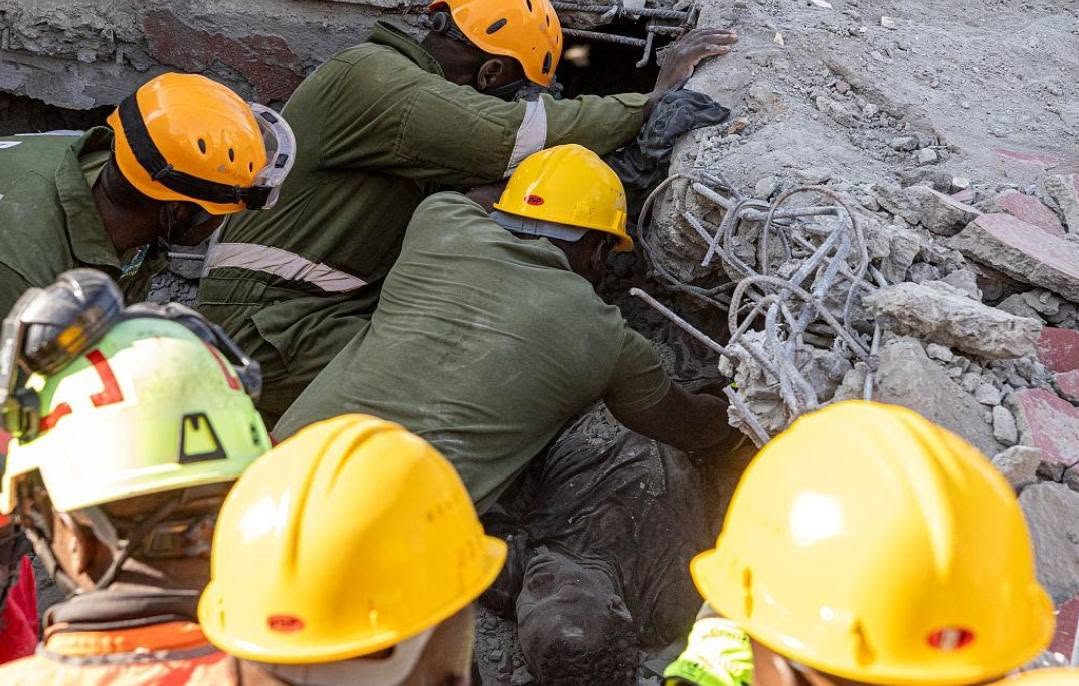
Authorities have confirmed that 20 people are still missing following the collapse of a multi-storey building in Eastleigh, Nairobi.
Authorities have confirmed that 20 people remain unaccounted for following the collapse of a multi-storey building in Eastleigh, Nairobi. The incident has raised concerns over building safety and emergency response as efforts continue to establish the whereabouts of those missing. The tragedy has renewed calls for stricter enforcement of construction regulations, proper building inspections and accountability in the construction sector. Families are anxiously awaiting updates as authorities work to determine the circumstances surrounding the collapse.
The collapse of a multi-storey building in Eastleigh, Nairobi, has raised fresh concerns over building safety, emergency response and the need for stronger enforcement of construction regulations. Authorities have confirmed that 20 people remain unaccounted for following the incident, as attention remains focused on the search for those who may still be trapped beneath the debris.
The incident has brought renewed attention to the dangers associated with building collapses in densely populated urban areas, where residential and commercial structures stand close together and large numbers of people move through buildings every day. As emergency teams continue responding to the aftermath, families and members of the public are awaiting further information about the missing individuals.
Eastleigh is one of Nairobi's busy commercial and residential neighbourhoods, attracting traders, shoppers, workers and residents from different parts of the city and beyond. The area experiences significant daily activity, making incidents involving buildings particularly concerning because they can affect people inside the structures as well as those nearby.
The confirmation that 20 people remain unaccounted for underscores the uncertainty facing families who are still waiting to establish the whereabouts of their relatives, friends or colleagues. For those affected, every update from authorities is important as they seek answers and hope for news about the missing people.
Building collapses can create complicated rescue situations. Concrete slabs, steel reinforcement, bricks and other construction materials may form unstable piles that make it difficult for rescuers to access spaces where survivors could be trapped. Emergency teams must work carefully to avoid further movement of debris that could endanger anyone who remains inside the structure.
Search and rescue operations following such incidents generally require coordination among firefighters, police officers, medical personnel, disaster response teams and other agencies. Each team plays a different role, from securing the scene and assessing structural risks to searching for survivors and providing medical assistance where necessary.
The safety of rescuers is also a major consideration. Damaged buildings may contain unstable sections that could collapse without warning, while nearby structures can also be exposed to risks if the incident affects adjoining foundations or walls. Specialists may therefore need to assess the site before certain areas can be accessed safely.
Medical teams are often positioned near the scene of a building collapse to provide immediate treatment to anyone rescued from the rubble. People who survive such incidents may suffer injuries caused by falling materials, crushing forces, dust inhalation or prolonged confinement. The availability of prompt medical care can be critical, particularly when rescue operations involve several casualties.
Authorities are expected to provide verified updates as more information becomes available about the Eastleigh incident. Establishing the number of people missing, identifying those who have been rescued and accounting for everyone believed to have been inside the building are essential steps in understanding the full impact of the collapse.
The process of accounting for missing people can be challenging, especially during the early stages of a disaster. Investigators and emergency officials may need to collect information from relatives, building occupants, neighbours, business owners and people who were present shortly before the incident. Such information can help determine who may have been inside the structure when it collapsed.
Families affected by the incident face an anxious wait as rescue and assessment efforts continue. The uncertainty surrounding missing relatives can be emotionally distressing, particularly when authorities have not yet established whether those individuals escaped, were injured or remain trapped. Clear communication from emergency agencies can help families understand the situation and avoid the spread of unverified information.
The incident has also renewed questions about the safety of multi-storey buildings in Nairobi and other rapidly growing urban centres across Kenya. As cities expand, the demand for residential accommodation, commercial premises and rental properties continues to place pressure on the construction sector. This makes compliance with approved building plans and safety standards increasingly important.
Proper construction begins with professional planning, including structural designs that account for the intended use of a building, the expected loads and the conditions of the construction site. Qualified professionals must ensure that foundations, columns, beams and other structural elements are designed and installed according to the applicable standards.
The quality of construction materials is equally important. Cement, steel reinforcement, concrete and other components must meet the specifications required for the structure. Poor-quality materials, incorrect mixing procedures or improper installation can compromise structural integrity and increase the risk of failure.
Construction supervision is another important safeguard. Building projects require appropriate inspections at different stages to establish whether work follows approved designs and technical requirements. Identifying defects before a project is completed can allow corrective measures to be taken before people occupy the building.
Local authorities also have an important responsibility in the approval and monitoring of construction projects. Their role includes assessing applications, verifying compliance with planning requirements and ensuring that buildings meet relevant safety standards. Effective enforcement can help prevent unauthorised alterations and other practices that may place occupants at risk.
However, building safety cannot depend on approvals alone. Regular inspections and accountability are necessary throughout a structure's lifespan, especially where buildings undergo extensions, changes in use or modifications that could affect their stability. A structure originally designed for one purpose may require additional assessments before it can safely accommodate different activities or heavier loads.
The Eastleigh collapse therefore highlights the importance of examining the circumstances surrounding such incidents carefully. Investigations into building failures can help establish whether structural defects, construction practices, unauthorised changes, maintenance problems or other factors contributed to the collapse. The specific cause of the Eastleigh incident should be established through technical assessments and official investigations rather than speculation.
Where evidence establishes that safety regulations were violated, the responsible parties should be held accountable in accordance with the law. At the same time, investigations should distinguish between verified findings and allegations, ensuring that conclusions are based on professional assessments and reliable evidence.
The incident also highlights the need for better emergency preparedness in densely populated neighbourhoods. Rescue teams require suitable equipment, trained personnel and clear coordination procedures to respond effectively when buildings collapse. Access routes must be managed to allow emergency vehicles to reach affected areas while keeping unnecessary crowds away from dangerous zones.
Members of the public can also play a role by following instructions from emergency responders and avoiding unstable structures. Crowding around a rescue scene may obstruct emergency vehicles and interfere with the work of specialists. People who have information about occupants or the circumstances leading to an incident should share it with the relevant authorities.
Beyond the immediate rescue effort, affected families and survivors may require assistance with medical expenses, temporary accommodation, counselling and other essential needs. Building collapses can disrupt livelihoods when homes, workplaces or businesses are destroyed. The wider consequences may continue long after the initial emergency response has ended.
For Nairobi, the incident presents another opportunity to strengthen public confidence in building regulation and urban safety. Residents need assurance that construction standards are being enforced consistently and that concerns about potentially dangerous structures are taken seriously. Transparent investigations and timely communication can help the public understand what happened and what measures are being taken to prevent similar incidents.
The construction industry also has a role to play by maintaining professional standards and prioritising safety over shortcuts. Developers, contractors, engineers and other professionals involved in building projects must recognise that structural decisions directly affect the lives of people who will eventually occupy or visit those buildings.
As authorities work to establish the whereabouts of the 20 people reported missing in Eastleigh, the immediate priority remains the safety of rescue personnel and the search for anyone who may still be trapped. Further verified information will be important in determining the scale of the incident and guiding the next steps.
The collapse serves as a reminder that building safety is a shared responsibility involving developers, professionals, regulators and the public. Strong oversight, proper construction practices, regular inspections and effective emergency planning are essential to protecting lives in rapidly expanding urban areas.
Now, families continue to await answers as authorities respond to the incident. The hope remains that search efforts will establish the fate of those unaccounted for, while subsequent investigations provide clarity on the circumstances surrounding the collapse and identify any necessary corrective action.

You Might Also Like
-
Chief Justice Martha Koome’s call for adequate funding and stronger institutional preparation highlights the important role the Judiciary will play in Kenya’s 2027 General Election. Her announcement on October 28, 2026, of specialised training targeting more than 400 judicial officers demonstrat
-
A Nairobi court has declined to review the bail terms of a manyoka stunt matatu driver accused of causing a fatal crash along Enterprise Road in June. The accident claimed the lives of three passengers and left several others injured, raising renewed concerns about reckless driving and passenger saf
-
President William Ruto's visit to Moscow for the Third Russia–Africa Summit and Economic and Humanitarian Forum is an important diplomatic engagement for Kenya. The government is seeking to expand export markets, attract Russian investment, strengthen manufacturing, explore energy and infrastructu
-
 Musalia Mudavadi’s engagement with senior management at Sberbank’s headquarters in Moscow highlights Kenya’s efforts to strengthen economic diplomacy during the Third Russia–Africa Summit period. The meeting provides a potential platform for exploring financial services, digital innovation,
-
KEMSA's call for all 47 counties to allow SHA to facilitate payments for medicines highlights the need for a more dependable healthcare financing system in Kenya. The proposal seeks to improve the flow of money to the medical supply chain, reduce payment difficulties and help healthcare facilities m
-
William Owuor Ochieng’, popularly known on Facebook as “William Jahome,” has been arrested in Nairobi’s Central Business District over allegations of online threats, incitement to violence and ethnic hostility. The arrest has renewed attention on the growing concerns surrounding the misuse o