



Aviation Workers Revolt Against KAWU Strike Threat: Employees Demand Dialogue as Fresh Showdown Looms
The pushback against KAWU's latest strike threat has revealed a significant division within Kenya's aviation workforce. While KAWU leadership continues to raise concerns about unresolved labour matters, a section of aviation workers has publicly rejected another industrial action and called for dialogue instead. The disagreement follows the August 30–September 1 strike, which caused substantial disruption at JKIA and other airports before being ended through a Return-to-Work Agreement. The latest development does not eliminate the underlying labour questions. Instead, it places greater emphasis on negotiations and on whether the commitments contained in the Return-to-Work Agreement will be implemented. As the government, KAWU, KAA, KCAA, Kenya Airways and Jambojet continue their engagements, the central issue will be finding a way to protect workers' rights while maintaining reliable aviation services. The competing positions now being expressed by aviation employees show that there is a strong demand for the disputes to be addressed, but disagreement remains over whether industrial action or continued dialogue is the appropriate route.
A fresh dispute is emerging within Kenya’s aviation sector after a section of aviation workers publicly distanced themselves from strike threats issued by the Kenya Aviation Workers Union (KAWU), arguing that some of the grievances can be resolved through dialogue rather than industrial action. The development has exposed divisions among aviation employees at a time when the sector is still dealing with the effects of a two-day strike that disrupted flights at Jomo Kenyatta International Airport (JKIA) and other airports at the end of August.
The latest disagreement is particularly significant because aviation is a highly interconnected sector. A dispute involving airport workers, regulators, airlines, security personnel or other essential employees can quickly affect passengers, cargo operators and airlines. The workers opposing the latest strike threat therefore say industrial action should be considered only after other avenues for resolving workplace disputes have been exhausted.
Workers distance themselves from the strike threat
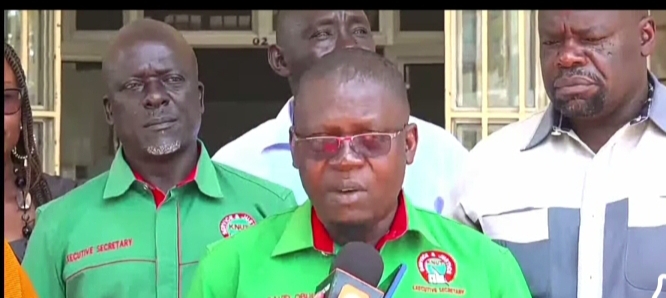
On September 16, 2026, a section of workers at the Kenya Airports Authority (KAA) held a press briefing in Nairobi where they rejected the latest seven-day strike notice associated with KAWU. The workers described themselves as representing what they called the “silent majority” and said they preferred negotiations and dialogue to another strike.
Aviation Security, Infrastructure and Training Coordinator Joyce Kaburu was among those who spoke against industrial action. She argued that some of the matters being presented as reasons for a strike, including questions surrounding agency fees, uniforms and shift arrangements, could be handled through discussions between workers and management.
The workers also argued that aviation is too sensitive to be repeatedly disrupted by industrial disputes. Airports handle passengers, cargo, aircraft movements and security operations, meaning prolonged industrial action can have consequences beyond the employees directly involved in the dispute.
Their position does not necessarily mean that all aviation workers are satisfied with working conditions. Rather, it highlights disagreement over the appropriate method of addressing those grievances.
KAWU's position
KAWU, led by Secretary-General Moss Ndiema, has repeatedly maintained that aviation workers have legitimate unresolved labour grievances. The union has previously accused employers and aviation institutions of failing to honour collective bargaining agreements and other commitments made to workers.
The union's disputes have involved the Kenya Civil Aviation Authority (KCAA), Kenya Airports Authority, Kenya Airways and Jambojet. Earlier strike notices also raised concerns about collective bargaining, union recognition, employment conditions and job security.
The latest disagreement comes shortly after the sector experienced an actual strike. On August 30, aviation workers began industrial action that affected airport operations. The strike was called off on September 1 following negotiations with the government and the signing of a Return-to-Work Agreement.
The agreement was intended to create a framework for resolving outstanding disputes rather than leaving them to repeated industrial action.
*What happened during the recent strike?*
The August 30 strike demonstrated how quickly aviation labour disputes can affect ordinary travellers.
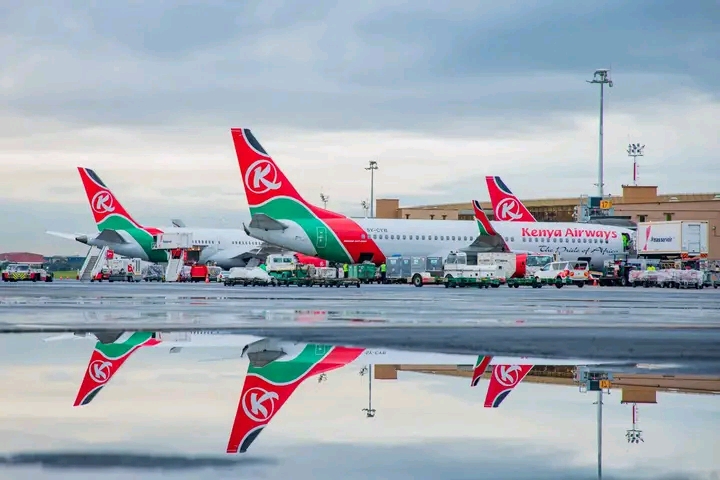
Flights were delayed and cancelled at JKIA and other airports, with passengers reporting long waits and difficulties getting information about their flights. Reuters reported that the industrial action affected air travel not only within Kenya but also routes connecting Kenya with countries including Rwanda, Burundi, Tanzania, Uganda, Somalia and Mauritius.
The disruption provided a practical illustration of why some aviation workers are now warning against frequent strike threats.
Passengers depend on airport workers for numerous services that must operate together. These include passenger processing, aviation security, baggage handling, aircraft movement coordination and other ground and operational services. When significant numbers of workers withdraw their labour, airlines can find it difficult to maintain normal schedules even when aircraft and pilots are available.
The effects can then spread throughout the travel industry.
Hotels may have to accommodate stranded passengers, airlines may incur additional costs, cargo shipments may be delayed and passengers can miss connecting flights or important appointments.
Return-to-Work Agreement
The September 1 Return-to-Work Agreement became an important development in the dispute.
According to the agreement, KAWU and KCAA were to begin negotiations on a Collective Bargaining Agreement. The agreement also addressed issues involving agency fees, the union recognition dispute involving Jambojet and protections for workers who participated in the strike.
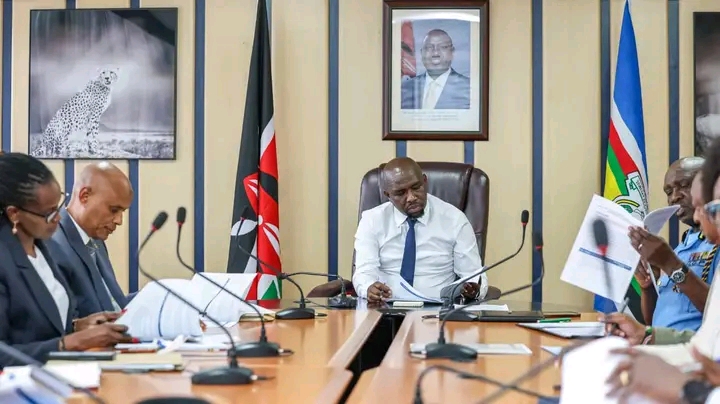
The Ministry of Roads and Transport has subsequently said that the government is working to address the long-running labour disputes in the aviation industry through social dialogue and engagement among the relevant parties. A stakeholder consultative meeting was held on September 7 involving KAWU, KAA, KCAA, Kenya Airways and Jambojet.
The government's approach is therefore focused on keeping negotiations open while preventing a repeat of the widespread disruption witnessed during the August strike.
Concerns about KAA leadership
Another issue emerging from the latest dispute concerns the leadership of the Kenya Airports Authority.
According to reports, some workers opposing the strike have defended KAA Managing Director Moses Wekesa and argued that he should be given time to implement his plans for the authority. This comes after KAWU leadership called for his resignation.
The workers opposing the strike have therefore taken a position that differs from the union leadership's approach.
They argue that disagreements with management should not automatically translate into demands for resignation or industrial action. Instead, they want workplace concerns to be handled through institutional mechanisms.
This disagreement could become an important part of the wider labour debate because it raises questions about representation: whether union leadership speaks for all employees, and how differences within a workforce should be managed.
Calls for fresh union elections
The group opposing the strike has also raised questions about the internal organisation of KAWU.
According to reports, some of the workers are demanding fresh union elections and the establishment of a KAWU branch at KAA. They argue that workplace disputes should have an effective branch-level structure through which employees can participate in decision-making and raise grievances.
Such demands point to an internal labour-management issue that goes beyond the immediate question of whether workers should strike.
A trade union's effectiveness depends partly on communication between its leadership and members. If sections of the membership feel that decisions are being made without adequate consultation, disagreements can develop over the union's strategy.
That appears to be one of the central issues in the latest aviation dispute.
Uniforms and working conditions
Uniforms have also emerged as one of the grievances mentioned in the current dispute.
For aviation workers, uniforms can have practical importance. Employees working in security, airport operations and other public-facing positions need to be easily identifiable. Appropriate work clothing can also form part of workplace safety and professional standards.
However, workers opposing the strike have argued that issues such as uniforms should be addressed through dialogue rather than immediately leading to industrial action.
The disagreement therefore concerns both the substance of workplace complaints and the method used to resolve them.
Shift arrangements and agency fees
Shift arrangements are another area cited by workers distancing themselves from the strike.
Airport operations run for extended hours, with many services operating around the clock. Changes in shifts can therefore affect employees' working hours, rest periods and family arrangements.
Agency fees have also featured in the recent labour negotiations. The Return-to-Work Agreement signed on September 1 specifically included agency-fee issues among the matters addressed.
The fact that these issues are being discussed through the formal negotiation process indicates that the current dispute has several separate components rather than one single disagreement.
The larger issue of collective bargaining
One of KAWU's long-running complaints concerns Collective Bargaining Agreements.
A CBA provides a formal framework for negotiating employment terms between workers and employers. KAWU has argued that some aviation workers have operated for years without updated agreements.
In July, the union specifically raised concerns at KCAA over the failure to conclude a new CBA, with reports stating that the previous agreement had lapsed in 2015.
This is an important part of understanding the union's position. While some workers are now questioning the use of strikes, the underlying labour issues raised by KAWU did not emerge suddenly.
The government's September engagements are consequently aimed at finding longer-term mechanisms for handling such disputes.
Job security remains another concern
Job security has also been central to aviation labour disputes this year.
KAWU previously objected to the deployment of National Youth Service personnel in airport security-related roles, arguing that such arrangements could threaten existing workers' jobs. The union identified employment security as one of the major concerns behind its strike position.
The issue illustrates why labour disputes in aviation can become complicated. Management and government agencies may have operational, security or staffing considerations, while employees are concerned about protecting their existing employment.
Resolving such disagreements requires clear communication about the responsibilities of different categories of workers.
*Why the latest pushback matters*
The latest pushback is important because it shows that the aviation workforce does not necessarily have a single position on industrial action.
KAWU leadership has threatened strikes over what it considers unresolved labour issues, while another section of workers is asking for dialogue and opposing the strike approach.
This distinction is important when reporting on the dispute. A strike threat issued by union leadership should not automatically be interpreted as unanimous support from every aviation employee.
At the same time, opposition to a strike does not necessarily mean that the workers challenging KAWU believe all workplace problems have been solved.
Their argument is primarily about how the problems should be addressed.
The government's role
The government now faces the challenge of preventing another major disruption while ensuring that genuine labour grievances are addressed.
The Ministry of Roads and Transport says it is pursuing social dialogue and reforms based on the September 1 Return-to-Work Agreement. The ministry has brought together the union, aviation authorities and airlines in an effort to create a more stable industrial-relations framework.
This process could be important because repeated short-term agreements may not be enough if the underlying disputes remain unresolved.
A sustainable solution would require clear timelines for negotiations, implementation of agreed terms and mechanisms for resolving disagreements before they escalate into strikes.
*What happens next?*
The immediate focus will likely be on whether the competing sides can return to negotiations and whether the outstanding issues can be settled without another disruption to airport operations.
For aviation workers, the key questions include collective bargaining, working conditions, union representation, job security, uniforms, shift arrangements and agency fees.
For management and government, the challenge is balancing employees' labour rights with the need to maintain reliable and secure aviation services.
For passengers, the most important concern is continuity. Another major strike could once again result in delays, cancellations and uncertainty for travellers.
The recent events have therefore placed considerable pressure on all parties to find a negotiated solution.

You Might Also Like
-
The Kapiti Plains accident has left five people dead and seven others injured following a devastating collision between a Kinatwa Sacco Toyota Hiace matatu and an Isuzu FH lorry along the Nairobi–Mombasa Highway in Machakos County. The crash occurred at about 7:40 p.m. on Wednesday, September 16,
-
The Kisii accident of September 16, 2026, has left five people dead and around 20 injured, according to the latest reports. The crash occurred along the Kisii CBD–Daraja Mbili road near Chomachoma, after a lorry reportedly lost control and struck pedestrians and other road users. The injured were
-
Kenya's current milk shortage is putting pressure on consumers, farmers, processors and retailers. Formal milk deliveries have declined, while prolonged dry conditions have reduced pasture and increased the cost of animal feeds. At the retail level, some areas have recorded substantial price increas
-
The differences between KNUT and KUPPET over Junior School largely arise from competing interpretations of where Junior School teachers belong within Kenya's changing education system. KUPPET has consistently emphasised that Junior School teachers perform a post-primary teaching role and should the
-
Interior CS Kipchumba Murkomen's disclosure that 1,189 people have been jailed for political goonism since 2022 has brought renewed attention to the problem of politically linked violence in Kenya. The figure consists of 1,053 men and 136 women, according to information presented to the Senate. Th
-
Kericho and Bomet are seeing the kind of rainfall activity forecast for parts of the Rift Valley, while Nandi has a stronger indication of showers and thunderstorms later today. Narok is currently less likely to receive significant rain today, although rainfall is expected in the wider county over t