Bloodbath in Isiolo: Five Killed, Four Injured in Brutal Bandit Attack as Fresh Violence Sparks Fear of Revenge Attacks
The killing of five people and injury of four others in the deadly bandit attack in Burat Ward, Isiolo County, has once again exposed the persistent insecurity affecting northern Kenya. The incident has triggered fear among residents, attracted condemnation from local leaders and renewed calls for urgent government intervention. With additional reports of killings, livestock theft and destruction of property in neighbouring areas, security agencies face growing pressure to restore peace and protect innocent families. The government is being urged to investigate the attacks, recover illegal firearms, strengthen security operations and bring those responsible to justice. Residents are also being encouraged to avoid retaliatory violence and embrace dialogue as the search for a lasting solution continues.
A wave of fear and tension has gripped residents of Isiolo County following a deadly bandit attack in Burat Ward that left five people dead and four others seriously injured. The incident, which occurred in the Maili Saba area on Sunday, November 22, 2026, has renewed concerns about the persistent insecurity, livestock theft and inter-community tensions affecting Isiolo and neighbouring counties.
The attack has shocked residents, with families rushing to the Isiolo County Referral Hospital to establish the condition of their relatives and identify those who had lost their lives. The incident has also attracted condemnation from local leaders, who have called on the national government and security agencies to take immediate action to prevent further bloodshed.
According to reports, the five victims were shot dead during a raid linked to livestock theft. Four other people sustained gunshot injuries and were rushed to hospital for treatment. The attack has raised fresh questions about the effectiveness of security interventions in the region, particularly because it happened shortly after a parliamentary security committee visited Isiolo to listen to residents' concerns about banditry and cattle rustling.Isiolo County Chief Officer for Health, Mohamud Abdikadir, confirmed the casualties and provided information about the condition of the injured.
According to the health official, four people sustained gunshot injuries. One of the patients required specialised medical attention after a bullet lodged near the kidney, prompting arrangements for referral to a medical facility in Meru County.
The attack left families and residents devastated, with many gathering at the hospital to establish the identities of the deceased and check on the condition of those receiving treatment.The Isiolo County Referral Hospital became a major gathering point following the incident, as relatives, friends and concerned residents arrived to seek information about their loved ones.
The four injured victims required medical attention for gunshot wounds. Health officials indicated that one patient had sustained particularly serious injuries and needed specialised treatment outside the county.
The situation has raised concerns about access to emergency healthcare in areas affected by insecurity, especially when victims require urgent transportation to medical facilities.
The county health department has been involved in coordinating the treatment of the survivors and handling the bodies of those who died.
The incident has also placed emotional and financial pressure on affected families, many of whom now face the difficult task of arranging burials, supporting injured relatives and dealing with the consequences of the violence.The leaders expressed concern over the repeated attacks and the loss of innocent lives in the county. They called on the police and other security agencies to investigate the incident, identify those responsible and ensure that the suspects are arrested and prosecuted.
The Deputy Governor also raised concerns about livestock movements involving herders from neighbouring counties, arguing that such movements could contribute to tensions and provide opportunities for criminals involved in livestock theft.
He observed that rainfall had returned to Isiolo and neighbouring areas, meaning livestock that had moved into the county during difficult climatic conditions should return to their respective regions.He emphasised that the allegations should not be ignored and that anyone found to have participated in criminal activities should face the law.
Burat MCA Nicholas Lorot and Ngaremara MCA Peter Losu also supported calls for a thorough investigation.
Lorot questioned the circumstances surrounding the killings, claiming that some of the victims appeared to have been shot from behind.
He argued that the circumstances required professional investigation to establish what happened, identify the attackers and determine whether the victims had an opportunity to defend themselves.Reports indicated that two people were subsequently killed in a suspected retaliatory attack in the Elsa area, where seven houses were also reportedly set on fire.
The developments have increased anxiety among residents, who fear that revenge attacks could trigger further killings and destruction of property.
Retaliatory violence is particularly dangerous because it can extend beyond the individuals directly involved in an initial incident. Families and entire communities may become affected when anger and suspicion replace dialogue and cooperation.
The latest developments demonstrate the need for security agencies to respond quickly whenever an attack occurs.
Local leaders and elders have an important role to play in encouraging communities to remain calm, avoid revenge and allow investigations to establish responsibility.During the engagement, residents raised concerns about the continued loss of lives and livestock, accusing the government of failing to provide adequate security despite repeated reports of attacks.
They called for increased police deployment, improved intelligence gathering and stronger security operations in areas frequently affected by banditry.
The committee was also urged to consider improving road infrastructure in remote areas because poor road networks can make it difficult for security officers to respond quickly when attacks occur.
Residents argued that insecurity has affected their economic activities, disrupted pastoralist livelihoods and made some areas unsafe for ordinary movement.
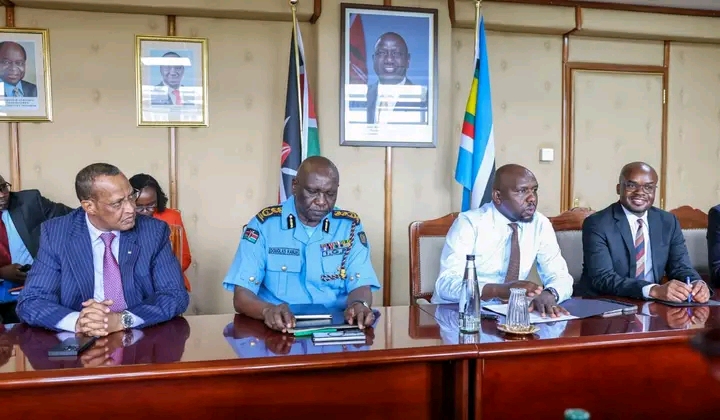
They also demanded compensation amounting to approximately KSh1.5 billion for losses associated with livestock theft and deaths linked to banditry over the previous five years.According to Murkomen, the objective is to strengthen security operations, improve the capacity of officers and ensure that communities affected by banditry receive better protection.
He also indicated that formed-up security units were being deployed to affected areas to deal with armed criminals.
Another major government priority is recovering illegal firearms believed to be used in livestock theft and other violent attacks.
Murkomen said an operation targeting illegal firearms was ongoing in parts of Samburu East and Isiolo.Livestock theft remains one of the major factors associated with insecurity in Isiolo and neighbouring counties.
Pastoralist communities depend heavily on livestock for their livelihoods, making cattle, goats, sheep and camels important economic assets.
When animals are stolen, families can lose their main source of income, food security and financial stability.
In some situations, the theft of livestock triggers retaliatory raids as affected families and communities attempt to recover their animals.
These confrontations can result in deaths, injuries and destruction of property.
Competition over pasture and water can also contribute to tensions, particularly during periods of drought when pastoralists move their animals in search of resources.There were also reports of two people being killed and seven houses being burned in the Elsa area of Isiolo in a suspected retaliatory attack.
Another incident was reported at Shab Hills, where a herder looking after camels was reportedly killed by raiders.
These incidents demonstrate the seriousness of the security challenges affecting the wider region.
They have also increased pressure on the government to strengthen security along county boundaries and grazing areas where livestock theft and armed confrontations have frequently occurred.The residents want the government to strengthen police patrols, increase the number of security officers in vulnerable areas and improve intelligence gathering.
They are also calling for investigations into previous killings to ensure that suspects are identified and prosecuted.
Community leaders have an important responsibility to discourage revenge attacks and encourage peaceful coexistence between neighbouring communities.
Religious leaders, elders, elected representatives and security officers can work together to establish dialogue platforms that address disagreements before they develop into violent confrontations.

You Might Also Like
-
**HEADLINE:** IEBC CHAIRPERSON ETHEKON QUESTIONS PRACTICALITY AND COST OF LIVESTREAMING RESULTS FROM 50,000 POLLING STATIONS **NEWS ARTICLE:** Independent Electoral and Boundaries Commission (IEBC) Chairperson Erastus Ethekon has questioned the practicality of livestreaming electoral activi
-
The meeting convened by Interior Cabinet Secretary Kipchumba Murkomen, attended by PS Raymond Omollo, IG Douglas Kanja, DIG Eliud Lagat, DIG Gilbert Masengeli and leaders from Isiolo and Garissa, marks an important government intervention following the recent deadly inter-community clashes. The eig
-
Football Kenya Federation (FKF) has partnered with the Kenya Red Cross Society in an agreement valued at approximately KSh54 million aimed at strengthening medical preparedness and emergency response across Kenyan football. The collaboration seeks to improve the safety and welfare of players, coache
-
President William Ruto has announced an increase in Hustler Fund borrowing limits for approximately 4.5 million Kenyans who have demonstrated responsible repayment behaviour. The move is aimed at expanding access to affordable credit, supporting small-scale traders and entrepreneurs, and strengtheni
-
The 17th anniversary celebrations of Joyful Women Organization at State House on November 24, 2026, mark an important chapter in Kenya's efforts to promote women's economic independence. With President William Ruto leading the celebrations, the occasion recognises an organisation that began with app
-
By combining KIMC's expertise in media and communication with TSC's responsibility for teacher development, the initiative seeks to prepare educators for emerging learning areas under the Competency-Based Education curriculum. The training in Media Technology, Theatre and Film, Creative Arts, Music