Clinical Officers Give Government 7 Days to Resolve Labour Disputes or Face Nationwide Strike That Could Paralyse Public Hospitals
The seven-day strike ultimatum issued by the Kenya Union of Clinical Officers on November 25, 2026, has placed the government, the Council of Governors and several county administrations under pressure to resolve longstanding labour disputes. KUCO is demanding full implementation of the January 28, 2026, Collective Bargaining Agreement, payment of enhanced Health Risk Allowances and accumulated arrears, implementation of return-to-work agreements and the signing of pending CBAs in four counties. The union has also raised concerns involving Kenyatta National Hospital, particularly statutory deductions, pension deficits and outstanding third-party deductions. Although KUCO says it remains open to dialogue, it has warned that failure to meet its demands within seven days will lead to mobilisation for another nationwide strike. The coming days will therefore be crucial in determining whether the parties can reach an agreement and prevent another disruption of healthcare services across Kenya.
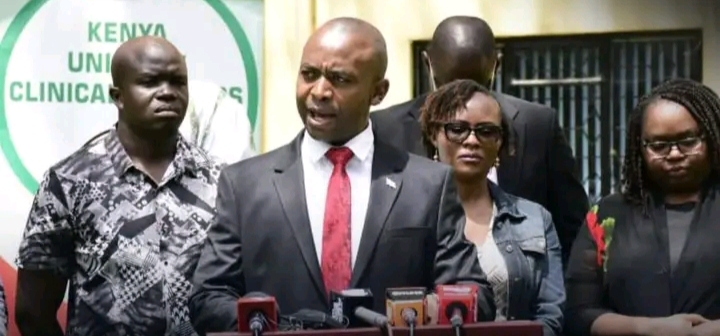
Clinical officers across Kenya have issued the government and county administrations with a seven-day ultimatum to address longstanding employment grievances, warning that they could organise another nationwide strike if their demands are not met within the stipulated period.
The warning was issued on Wednesday, November 25, 2026, by the Kenya Union of Clinical Officers (KUCO), following what the union described as repeated delays in implementing agreements reached with the government and county governments to end previous industrial action.The union expressed dissatisfaction with the failure of several county administrations and national government agencies to honour commitments made during negotiations. According to KUCO, clinical officers had demonstrated goodwill by returning to work after previous agreements were reached, but their employers had not fulfilled their corresponding obligations.
The announcement places renewed pressure on the Council of Governors (CoG), the Ministry of Public Service and Human Capital Development, the National Treasury and affected county governments to resolve the outstanding disputes before the deadline expires.
The union warned that failure to address the issues within seven days would leave it with no alternative but to mobilise its members for another nationwide industrial action, potentially disrupting healthcare services in public hospitals and other government health facilities.The union maintained that it had made several attempts to resolve the disputes through formal communication and negotiations with the relevant government institutions. However, it accused the responsible authorities of failing to provide satisfactory responses or implement agreements already signed.
KUCO specifically directed its concerns to the Council of Governors and the Ministry of Public Service and Human Capital Development, demanding that the outstanding matters be addressed in full within seven days.
The union stated that its members had fulfilled their responsibilities under the previous return-to-work arrangements and expected the government to honour the commitments made during negotiations.
It warned that industrial peace could not be maintained through promises that were never implemented.A Collective Bargaining Agreement is an arrangement between an employer and employees, represented by their union, that establishes employment conditions, salaries, allowances, benefits and other workplace responsibilities.
KUCO wants the full implementation of the CBA dated January 28, 2026, alongside the outstanding Return-to-Work Agreements.
The union argues that the agreement was part of the arrangements made to resolve the previous nationwide strike and allow clinical officers to resume their duties.
However, it says several provisions remain unfulfilled despite the passage of months since the agreements were reached.
The union is particularly concerned that some county governments have not completed the necessary processes to implement the negotiated employment benefits.Clinical officers work in demanding healthcare environments where they are exposed to occupational risks, including infectious diseases, hazardous medical materials and other workplace dangers.
KUCO argues that the enhanced allowance was negotiated to recognise the risks and responsibilities associated with their work.
Under the negotiated arrangements, the union wants the enhanced allowance reflected in the November 2026 payslips. It is also demanding payment of all accumulated arrears owed to its members.
The union says county governments had committed themselves to implementing the payments, but the process has been delayed by administrative and payroll challenges.
One of the obstacles involves the configuration of the Integrated Personnel and Payroll Database (IPPD), which is used in managing public-sector employee records and payments.KUCO accused the county government of failing to implement a Return-to-Work Agreement signed on May 5, 2026.
According to the union, the agreement was subsequently adopted as a court decree, but several months later, its provisions had still not been fully implemented.
The union expressed disappointment that an agreement reached to resolve an industrial dispute had not translated into the expected improvements for its members.
Return-to-Work Agreements are important in resolving industrial disputes because they establish the conditions under which employees resume their duties and outline the responsibilities of employers after negotiations.
Such agreements can include commitments on outstanding allowances, employment conditions, promotions and other workplace concerns.Four counties asked to sign pending CBAs
KUCO has also demanded that four county governments complete the signing of pending Collective Bargaining Agreements.
The counties identified are:Wajir County.
Mandera County.
Baringo County.
The union says the January 2026 return-to-work arrangements provided for the execution of the negotiated agreements in February.
However, it maintains that the four counties have not completed the required process.
The delay has become a major concern because clinical officers working in these counties want their employment terms and benefits formally recognised.
The union believes that signing the agreements would provide a clearer framework for resolving employment disputes and ensuring that workers receive the benefits negotiated through collective representation.
The Council of Governors is expected to play an important role in facilitating discussions between the county administrations and KUCO.Apart from county governments, KUCO has raised concerns involving the management of Kenyatta National Hospital (KNH), Kenya's major national referral hospital.
The union says several employment-related issues affecting clinical officers at the institution remain unresolved.
KUCO had issued a separate strike notice to KNH management on November 7, 2026, over outstanding concerns involving statutory deductions, pension arrangements and other employee financial obligations.
Among the issues raised are:
Statutory deductions: The union wants the hospital to address concerns surrounding deductions made from employees' salaries and ensure that the relevant amounts are properly remitted.
Pension scheme deficit: KUCO has raised concerns about the deficit affecting the defined-benefit pension scheme and wants management to address the outstanding matter.Third-party deductions: The union is also demanding action on outstanding third-party deductions made from employees' salaries.
Accumulated interest and penalties: It wants the hospital to address related interest, penalties and charges associated with the outstanding financial obligations.
These matters are important because employees depend on proper management of their salaries, pension contributions and other financial deductions.
The union wants KNH management to provide a clear response and take steps to resolve the grievances.
The involvement of a national referral hospital in the dispute demonstrates that the concerns extend beyond individual county administrations and require attention from national-level institutions as well. The union has also named the Ministry of Public Service and Human Capital Development and Kenyatta National Hospital management among the institutions expected to address the outstanding issues.
The situation is particularly significant because county governments are responsible for managing most public healthcare facilities in Kenya.
Their ability to maintain good working relationships with healthcare workers is therefore essential to the delivery of medical services.
When employment disputes remain unresolved, the consequences can extend beyond workers and employers to patients, families and communities that depend on public hospitals.The strike created difficulties for patients who depended on public hospitals for treatment and other essential medical services.
In September 2026, KUCO officials said that clinical officers in several counties were still participating in industrial action because of disagreements over the signing and implementation of the CBA.
At the time, the union reported that 15 counties were still fully affected by the strike, although progress had been made in signing agreements with different county governments.
The union also complained about delays in implementing approved allowances and concerns affecting healthcare workers employed under Universal Health Coverage programmes.Since the dispute involves several counties, the council is expected to facilitate discussions and encourage the affected administrations to honour their commitments.
The Ministry of Public Service and Human Capital Development also has an important responsibility in addressing the national public-service payroll and administrative matters raised by the union.
The National Treasury is another important institution because the implementation of enhanced allowances and accumulated arrears may require financial and payroll coordination.
The affected county governments must also demonstrate their willingness to resolve the specific grievances raised by clinical officers working within their health departments.Its position is that industrial action should not become necessary if employers fulfil their obligations and engage healthcare workers in good faith.
However, KUCO has insisted that continued dialogue must produce meaningful results.
The union argues that clinical officers cannot be expected to continue working under unresolved employment conditions while agreements made with their employers remain unfulfilled.
The leadership wants the government to understand that sustainable industrial relations depend on mutual respect, accountability and the implementation of negotiated commitments.
The seven-day deadline is therefore intended to provide the relevant authorities with an opportunity to prevent another nationwide healthcare disruption.
If the demands are not addressed within the stipulated period, KUCO has warned that it will mobilise its members for another nationwide strike.The parties could still prevent another industrial confrontation by holding urgent negotiations and agreeing on a practical implementation timetable.
However, failure to reach an agreement could increase tensions between the union and its employers.
For patients, the most important outcome would be an amicable resolution that allows healthcare workers to continue providing essential services without interruptions.
The government must also recognise that maintaining a functional healthcare system requires investment in both medical infrastructure and the welfare of healthcare professionals.

You Might Also Like
-
Aden Duale's meeting with Aga Khan University President and Vice-Chancellor Dr. Sulaiman Shahabuddin and Pakistan's Federal Health Minister Syed Mustafa Kamal in Karachi marks an important engagement in Kenya's efforts to strengthen international healthcare partnerships. The discussions focused on
-
Edwin Sifuna's engagement with Kenyans in the diaspora in Maryland, USA, marks an important part of the Linda Mwananchi Movement's international outreach programme ahead of the 2027 General Election.Through meetings with businesspeople, Maryland elected officials, Afri Thrive, women, the 6.25 Moveme
-
President William Ruto has held bilateral talks with German President Frank-Walter Steinmeier at State House, Nairobi, during his official visit to Kenya, with discussions focusing on strengthening diplomatic relations and expanding economic cooperation between the two countries. A key highlight was
-
The Kenya National Highways Authority (KeNHA) has announced temporary traffic disruptions at the Lower Kabete–Ndumbuini–Kapenguria–Uthiru Road Interchange from November 26 to December 31, 2026, to facilitate reconstruction works on ramps, loops and slip roads. The planned works are expected to
-
South African President Cyril Ramaphosa has secured a significant legal victory after the Western Cape High Court overturned a parliamentary panel report linking him to the controversial theft of $580,000 (approximately KSh75.5 million) from his Phala Phala game farm in 2020. The court declared the
-
Veteran Nigerian actor Pete Edochie has passed away at the age of 79 following a prolonged battle with prostate cancer. His family confirmed that the legendary Nollywood star died at 12:30 a.m. on Wednesday, November 25, 2026, in Enugu, Nigeria. Born on March 7, 1947, in Zaria, Kaduna State, Edochie