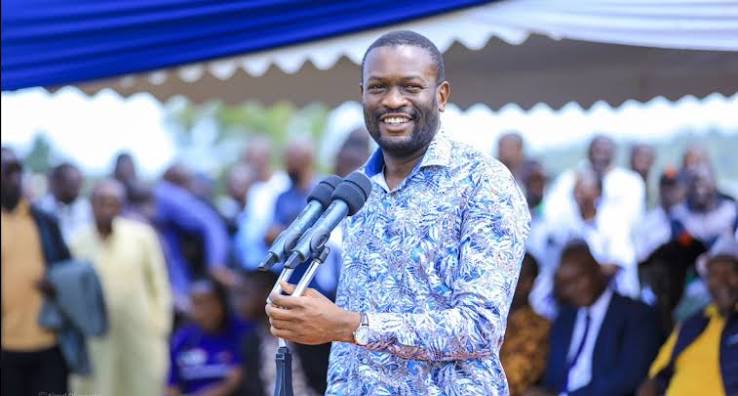
Court Orders IG Douglas Kanja to Immediately Reinstate George Natembeya’s Security Detail After Declaring Withdrawal Unconstitutional
The High Court's decision ordering Inspector General Douglas Kanja to immediately reinstate George Natembeya's armed security detail marks a significant development in Kenya's constitutional and political landscape. Justice Roselyn Aburili declared the withdrawal unconstitutional, finding that the governor had been denied fair administrative action and that the State had failed to provide sufficient justification for its decision. The court further warned against the misuse of police powers for political or punitive purposes, emphasising that public institutions exist to serve Kenyans rather than punish individuals. The judgment reinforces the importance of accountability, professionalism and respect for constitutional rights within the National Police Service. It also sends a strong message that elected leaders are entitled to fair treatment under the law, regardless of their political positions or disagreements with the government. Natembeya's security dispute is therefore more than a disagreement over police officers; it has become an important test of constitutional accountability and the rule of law in Kenya.
The High Court has ordered Inspector General of Police Douglas Kanja to immediately reinstate the security detail assigned to Trans Nzoia Governor George Natembeya after ruling that the decision to withdraw his armed police officers was illegal, unconstitutional and procedurally unfair. The ruling, delivered on November 16, 2026, by Justice Roselyn Aburili, is a major development in the ongoing dispute between the governor and the National Police Service over his personal security. The court found that Natembeya's security had been withdrawn without providing him with proper reasons or giving him an opportunity to challenge the decision. It further warned that police powers should never be used to punish public leaders because of their political positions, activities or differences with the government. The judge emphasised that every public institution must operate within the Constitution and respect the rights of individuals, regardless of their political affiliations.Natembeya, who was elected governor in 2022, had enjoyed armed police protection as part of the security arrangements provided to governors and other senior public officials.
However, the situation became controversial in November 2025 when the governor reported that his security officers had been withdrawn. The decision prompted him to seek legal intervention, arguing that the withdrawal exposed him to potential security threats and violated his constitutional rights.
On December 4, 2025, the High Court issued conservatory orders directing the Inspector General of Police to immediately reinstate Natembeya's security detail pending further orders of the court.
The earlier court orders were important because they established that the governor's security should not be withdrawn arbitrarily while the legal dispute remained unresolved.
The matter subsequently returned to court as the parties presented their arguments concerning the legality of the withdrawal.The judge observed that the allegations presented by the State concerning violence during political campaigns were not sufficient evidence to establish that the governor was responsible for any acts of violence.
The court therefore rejected the argument that the withdrawal was justified by incidents witnessed during by-election campaigns in Western Kenya.
Justice Aburili maintained that decisions affecting the rights and security of individuals must be supported by evidence and must follow the procedures established by law.
The ruling makes it clear that police authorities cannot make decisions affecting an individual's protection based on unsubstantiated allegations.In this case, the order places an obligation on the National Police Service leadership to comply with the court's decision and restore the governor's security.
The judge also issued an order prohibiting the Inspector General from arbitrarily withdrawing or recalling the officers assigned to Natembeya without lawful justification and adherence to the required procedures.
This means that any future decision to review the governor's security arrangements must be based on legitimate reasons and must respect his constitutional rights.
The ruling is particularly important because it addresses not only the immediate restoration of security but also the manner in which future security decisions should be handled.Natembeya had argued that withdrawing his armed police protection exposed him to security risks, especially considering his position as an elected county governor.
The court recognised the importance of protecting individuals against decisions that could unnecessarily compromise their personal security.
Article 47: Fair administrative action
Article 47 guarantees every person the right to administrative action that is lawful, reasonable and procedurally fair.
It also provides that a person whose rights are adversely affected by an administrative decision is entitled to written reasons.
Justice Aburili found that the Inspector General had failed to follow these requirements before withdrawing Natembeya's security.
The court explained that even where the Inspector General has the authority to review security arrangements, that power must be exercised within the law.The judge declared that any attempt by the Inspector General or anyone acting under his command to use police powers for political or punitive purposes would be unlawful and unconstitutional.
This was among the strongest messages delivered in the judgment.
The court emphasised that the National Police Service is a constitutional institution established to serve the public rather than punish individuals because of their political opinions or disagreements with those in government.
The warning is particularly relevant in Kenya, where questions about police independence and the relationship between law enforcement agencies and political leadership frequently attract public debate.
The Constitution requires the police service to operate professionally, independently and without improper political interference.
The ruling therefore serves as a reminder that public institutions must remain committed to their constitutional responsibilities.Natembeya has increasingly positioned himself as a vocal critic of certain government policies and political decisions.
His political activities have also attracted attention as leaders begin preparing for the 2027 General Election.
In his court petition, the governor linked the withdrawal of his security to his political activities during the Kabuchai Constituency by-election campaigns.
He argued that his criticism of the government and support for a candidate opposed to the ruling party had placed him in conflict with State machinery.
However, these were allegations advanced by the governor and were not independently established as the motive behind the withdrawal.Legitimate expectation is an important administrative law principle that protects individuals against arbitrary changes in established arrangements where they have reasonable grounds to expect fair and consistent treatment.
The court did not suggest that a governor's security arrangements could never be reviewed.
Rather, it emphasised that any review must be justified, reasonable and conducted according to the law.
This means that the Inspector General retains the responsibility to assess security requirements and make appropriate decisions where circumstances genuinely demand changes.
However, such decisions must not be arbitrary or discriminatory.Government institutions operate using public resources collected from taxpayers, and decisions made by public officers can sometimes expose the government to unnecessary legal expenses.
The court consequently directed that each party should bear its own costs in the petition.
The remarks also highlighted the importance of public officers understanding that their decisions must comply with constitutional and legal requirements.
Where government officials exercise their authority unlawfully, their actions can create financial and administrative challenges for the institutions they serve.The judgment is expected to renew discussions about the independence of the National Police Service and the responsibility of the Inspector General when making decisions affecting public officials.
The Inspector General is responsible for overseeing police operations and ensuring that the service carries out its constitutional mandate.
However, the position does not give the office unlimited powers.
The Constitution requires the police service to respect human rights, uphold the rule of law and maintain professionalism when carrying out its duties.
The ruling demonstrates that even senior police officials are answerable to the law and that their administrative decisions can be challenged in court.
It also reinforces the importance of transparency when making decisions involving security arrangements for elected leaders.Understanding the separate October 2026 security dispute
It is important to distinguish the November 16 judgment from the separate dispute that arose after Natembeya reported another withdrawal of his security on October 14, 2026.
On October 16, the governor approached the High Court seeking urgent intervention over the latest incident.
However, on October 19, Justice Aburili declined to introduce the new dispute into the earlier petition because it involved different circumstances and events.
She directed Natembeya to file a fresh petition to challenge the October withdrawal.
The November 16 judgment dealt with the earlier security withdrawal that formed the subject of the original petition.

You Might Also Like
-
Linda Mwananchi Movement leader and Nairobi Senator Edwin Sifuna is set to begin his United States tour in New Jersey, where he will officially open the movement’s diaspora office as part of efforts to strengthen its presence and organisational structures among Kenyans living abroad. The planned v
-
Medical Services Principal Secretary Ouma Oluga has called for expanded access to HIV prevention services, particularly among populations considered to be at higher risk of infection, as the government intensifies efforts to strengthen the country’s response to HIV. Oluga emphasised the need to en
-
Education Cabinet Secretary Julius Ogamba has reaffirmed the government’s commitment to strengthening girls’ education across the country through expanded access to quality learning, competency-based education, scholarships, mentorship programmes and stronger school re-entry policies. The commit
-
The Teachers Service Commission (TSC) has dismissed allegations of tribalism raised by former Deputy President Rigathi Gachagua over the appointment of Cheptumo Ayabei as its new Chief Executive Officer, maintaining that the recruitment exercise was conducted through a transparent, professional and
-
Head of Public Service Felix Koskei has announced that this year’s Jamhuri Day celebrations will focus on showcasing how investments in infrastructure and innovation are contributing to Kenya’s economic transformation. The celebrations will highlight the role of development projects in creating
-
Medical Services Principal Secretary Ouma Oluga has called for stronger collaboration among government departments to strengthen the implementation of health sector programmes, emphasising that investment in healthcare is essential to improving the well-being of Kenyans and supporting sustainable ec