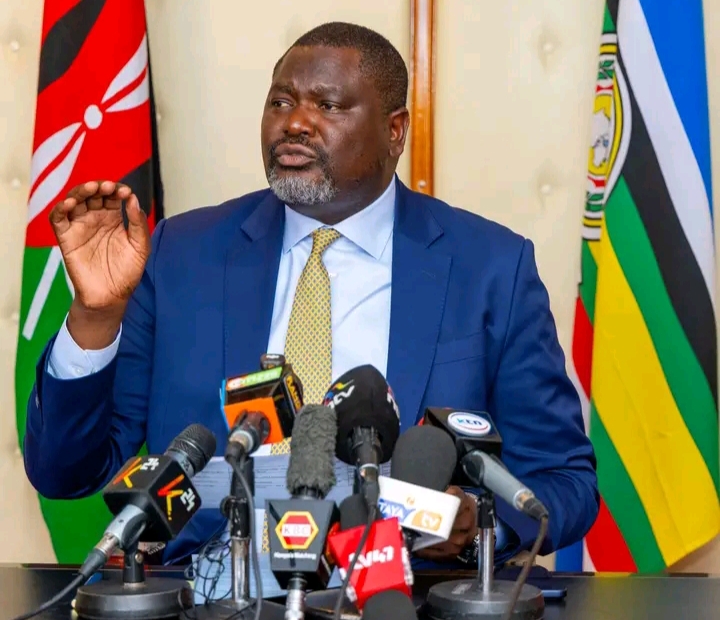
CS Geoffrey Ruku Issues Stern Warning to Public Servants as Government Probes Suspected KSh 6.2 Billion Payroll Fraud
CS Geoffrey Ruku's public address on October 16, 2026, centred on accountability, prudent management of public resources and action against suspected irregularities in government payroll systems. His decision to order 84 human resource officers to step aside for 30 working days, revoke their payroll access and deploy replacement personnel was presented as part of the government's response to an investigation involving suspected irregularities estimated at KSh 6.2 billion. The announcement underscores the importance of protecting public funds, maintaining reliable payroll systems and ensuring that government services continue during investigations.
Public Service Cabinet Secretary (CS) Geoffrey Ruku on Friday, October 16, 2026, addressed the public on accountability in government institutions, following investigations into suspected irregularities in the public service payroll. He announced administrative measures targeting 84 human resource officers from the Kenya Prisons Service, Kenya Police Service and the Ministry of Health as investigators examine transactions that may have resulted in the loss of public funds.
The announcement placed the management of public resources, integrity in government offices and the responsibility of public officers at the centre of the national conversation. Ruku emphasised that public servants have a constitutional obligation to manage government resources prudently and that officers found responsible for violations must be held accountable.Ruku's message on accountability in public service
During his press briefing at Harambee House in Nairobi, Ruku made it clear that public officers must be responsible for the management of government resources. He said public servants have a constitutional duty to use public money carefully and account for actions or omissions that could lead to losses.
His remarks came as the government intensified investigations into suspected manipulation of payroll systems in several public institutions. According to reporting by The Star, Ruku warned that officers who violate the Constitution and laws governing public resources must be held accountable. Eighty-four human resource officers ordered to step aside
One of the major announcements from Ruku's address was the directive requiring 84 human resource officers to take mandatory leave for 30 working days while investigations continue.
The affected officers are drawn from the Kenya Prisons Service, Kenya Police Service and two departments within the Ministry of Health. Their payroll-system access rights were withdrawn as part of the administrative measures intended to protect government systems during the investigation. Investigation into suspected KSh 6.2 billion payroll fraud
Another major issue highlighted in the address was the suspected loss of approximately KSh 6.2 billion through irregularities involving government payroll systems.
According to Citizen Digital, the investigation followed concerns raised by a government payroll audit and a subsequent DCI report dated October 7, 2026. The suspected irregularities involve the Ministry of Health, Kenya Police Service and Kenya Prisons Service. Payroll systems are particularly important because they determine how government employees are recorded and paid. Weaknesses in employee verification, authorisation procedures or transaction monitoring can expose public institutions to financial losses.
Investigators are expected to establish the nature of the suspected transactions, identify any individuals responsible and determine whether public money was lost.
The KSh 6.2 billion figure should therefore be understood as the reported amount associated with the suspected irregularities under investigation, rather than a final judicial determination of the amount stolen by specific individuals.Withdrawal of access to government payroll systems
Ruku also announced that the 84 affected officers had lost their access rights to the government payroll system.
The restriction is intended to prevent further transactions by the officers concerned while investigators examine the suspected irregularities.
The decision highlights the importance of controlling access to sensitive government information systems.
In a properly managed public institution, access to a payroll platform should be limited to authorised personnel, with transactions subject to verification, supervision and appropriate audit trails.Possible arrests as investigations continue
Ruku indicated that arrests could take place before the end of the 30-working-day period as detectives continue investigating the suspected payroll irregularities.
People Daily reported that he said investigators were examining transactions and accounts through which the money was allegedly channelled. The report also indicated that authorities were pursuing evidence relating to the affected departments.
The possibility of arrests means the inquiry could move beyond administrative action if investigators gather sufficient evidence to support criminal proceedings.The responsibility of principal secretaries and accounting officers
Ruku directed principal secretaries and accounting officers in the affected departments to ensure the officers proceeded on leave and that the necessary administrative measures were implemented in accordance with the law.
This instruction highlights the role of senior government officials in implementing public service policies and maintaining effective internal controls.Why the announcement matters to ordinary Kenyans
The management of public funds has a direct connection to the services citizens receive.
When public resources are used appropriately, government institutions have more capacity to support hospitals, security services, schools, infrastructure and social programmes. Suspected financial irregularities can raise questions about whether money allocated to public needs is being properly protected.Strengthening public confidence in government institutions
Public trust depends partly on whether government institutions demonstrate transparency and respond appropriately when credible concerns emerge.
By ordering the withdrawal of payroll access and the temporary removal of the affected officers from their duties, Ruku announced measures intended to protect the system while the inquiry proceeds.The effectiveness of those measures will depend on the quality of the investigation, the protection of relevant evidence and the government's willingness to act on verified findings.For ordinary Kenyans, the central concern is whether public institutions can demonstrate that money collected through taxes and other government revenues is managed transparently.
The investigation could help establish whether weaknesses in payroll administration contributed to the suspected irregularities and what corrective measures are needed.
It could also inform future improvements in employee verification, payroll auditing and the monitoring of public expenditure.
Nevertheless, the investigation must establish the facts before conclusions can be reached about individual responsibility or the precise financial impact.
Transparency is also important. Citizens need accurate information about the progress of major investigations, while the rights of those under investigation must be respected.
If evidence establishes that public resources were unlawfully diverted, the appropriate authorities can pursue recovery and legal accountability through the relevant procedures.
If the investigation does not establish wrongdoing against particular individuals, the outcome should reflect that evidence as well.
A credible accountability process must be guided by facts and the law rather than assumptions or public pressure.What happens next?
The immediate next step is for investigators to examine the suspected payroll transactions and determine how the irregularities occurred.
The government has also indicated that replacement human resource officers will take over the affected duties so that payroll operations can continue while the investigation proceeds. Further administrative or criminal action will depend on the evidence and applicable legal requirements.Important questions we need to ask:
What weaknesses, if any, existed in the verification and authorisation systems?
Who ultimately benefited from the suspicious payments?
What amount, if any, can investigators establish was unlawfully lost?
What measures will prevent similar irregularities in other government departments?
The answers will help determine whether the problem arose from individual misconduct, weaknesses in administrative controls or a combination of factors.
They will also help identify the reforms needed to protect public money in the future.

You Might Also Like
-
Kenya's confirmation of its third Ebola case on October 16, 2026, marks another important development in the country's response to the Bundibugyo virus outbreak. The patient, a 65-year-old woman and close relative of the first two patients, developed symptoms while in quarantine and subsequently te
-
Principal Secretary Dr Raymond Omollo met members of the Homa Bay business community in Ndhiwa East Sub-County on October 17, 2026. The meeting brought a senior government official into contact with local entrepreneurs at a time when traders in the county have raised concerns about insecurity, poor
-
President William Ruto’s October 17, 2026, engagements in Nandi Hills are part of a wider North Rift development tour focused on infrastructure, education, housing and economic opportunities. The major initiatives associated with the Nandi Hills programme include the development of Koitaleel Samo
-
The deputy president Kithure Kindiki in Tharaka constituency,Tharaka nithi county, Saturday 17 th October 2026. He launched construction of the 24 kilometer Marimanti- Kibung’a- Makandune- Mukuuni/ Gacibi road that connects Tharaka and Imenti Central Constituencies. He directed relevant authori
-
The reported turnout of thousands of job seekers at Wajose Smart Wears in Kericho has highlighted the urgency of addressing unemployment and the intense competition for available opportunities. While the precise details of the recruitment exercise remain independently unverified, the wider employmen
-
The National Transport and Safety Authority (NTSA) has urged motorists whose Smart Driving Licences are ready for collection to pick them up from their designated centres. The authority has also warned Kenyans against dealing with brokers and unauthorised intermediaries who claim to offer assistance