



CS Geoffrey Ruku Leads NYS Graduation in Gilgil as 15,363 Recruits Pass Out After Rigorous Training
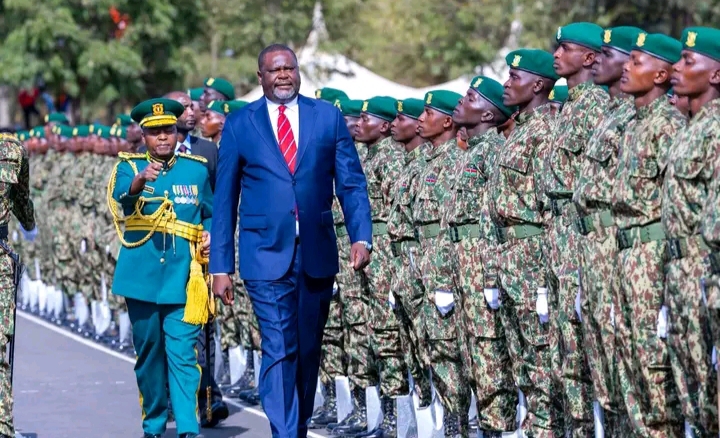
Public Service Cabinet Secretary Geoffrey Ruku represented President William Ruto at the NYS passing-out parade at the Paramilitary Academy in Gilgil on October 2, 2026, where 15,363 recruits from the 01/2026 cohort graduated after six months of intensive training. The class included 11,527 men, 3,835 women and 15 recruits living with disabilities. Ruku highlighted NYS contributions to tree planting, disaster response, agriculture, infrastructure and employment, noting that more than 71.8 million trees had been planted through NYS programmes since 2022 and that 12,760 former members had transitioned into vetted employment opportunities since 2024. He also announced that the government has approved KSh6.4 billion for NYS infrastructure expansion as Kenya works toward increasing annual recruitment to 100,000 youths by 2028.
Public Service Cabinet Secretary Geoffrey Ruku represented President William Ruto at the National Youth Service (NYS) passing-out parade held on October 2, 2026, at the NYS Paramilitary Academy in Gilgil, Nakuru County, where 15,363 recruits graduated after six months of intensive training. The ceremony highlighted the government's plans to expand NYS, equip young people with practical skills and use the Service more extensively in national development, environmental conservation, infrastructure and employment programmes.
Ruku represents President Ruto at Gilgil ceremony
The passing-out parade brought together NYS officials, government representatives, instructors, families and the graduating recruits. Ruku attended the ceremony on behalf of President William Ruto and delivered the government's message on the importance of national service and youth empowerment.
The ceremony marked the completion of six months of basic paramilitary training by the 01/2026 cohort. According to information from the National Youth Service, basic paramilitary training is designed to develop discipline, resilience and patriotism among young Kenyans before they proceed to the national service phase.
The graduating class consisted of 11,527 male recruits, 3,835 female recruits and 15 recruits living with disabilities, demonstrating the participation of young people from different backgrounds in the programme.
For the recruits, the passing-out ceremony represented the end of an intensive period involving physical training, discipline, drills and preparation for national service. Their graduation now opens the next stage of their NYS journey, where they can participate in programmes and activities aimed at serving communities and supporting national development.
Ruku highlights the purpose of national service
During his speech, Ruku emphasized that the National Youth Service is not only about paramilitary training. He described the Service as an avenue through which young people can acquire discipline and practical skills while contributing to communities.
He said NYS has increasingly been involved in activities including environmental conservation, infrastructure development, disaster response, agriculture and employment initiatives.
According to Ruku, the experience gained through NYS can help young people become more prepared for employment and other economic opportunities after completing their service.
The CS encouraged the graduating recruits to carry the values and technical skills they acquired during their training into their next stage of life.
His message placed emphasis on service to the country, discipline and responsibility, with the graduating recruits being encouraged to use their skills beyond the academy.
15,363 recruits graduate
One of the major highlights of the ceremony was the graduation of 15,363 recruits following six months of intensive training at the Gilgil academy.
The graduating cohort included thousands of young men and women who underwent structured training designed to prepare them for national service.
The graduation also included recognition of recruits who excelled in different areas.
Bravin Omondi, Service Number 288611, was named the best all-round recruit. John Sergon, Service Number 278654, emerged as the best recruit in drills, while Luciana Mwake, Service Number 273586, was recognized as the best recruit in academics. Rose Ndirangu, Service Number 287194, was named the best recruit in sports.
The awards provided recognition for recruits who demonstrated strong performance in different aspects of their training.
NYS and environmental conservation
Ruku also used the ceremony to highlight the role NYS has played in environmental conservation.
He said NYS programmes have contributed to the planting of more than 71.8 million trees since 2022. The Service has also been involved in activities such as river restoration and other environmental interventions through programmes including Climate WorX.
The involvement of NYS personnel in environmental programmes forms part of the government's wider efforts to increase tree cover and address environmental challenges.
The recruits' training in discipline and organized field operations allows the Service to deploy personnel to projects that require coordinated manpower.
Ruku's remarks therefore presented NYS as an institution whose responsibilities extend beyond traditional training and into practical development programmes.
NYS involvement in disaster response
Another area highlighted by Ruku was disaster response.
He cited the work being carried out by NYS personnel in Chesongoch, Elgeyo Marakwet County, where members of the Service have been helping rebuild homes destroyed by landslides.
According to the CS, 56 houses were targeted for reconstruction, with between 80 and 90 per cent of the work completed at the time of his remarks.
The example demonstrates how NYS personnel can be deployed to assist communities facing emergencies and natural disasters.
For the government, such programmes provide an opportunity to combine youth training with practical service delivery, while giving NYS members experience in construction and community-based projects.
Employment opportunities for NYS graduates
Employment was another major issue raised during the ceremony.
Ruku said 12,760 former NYS members have transitioned into vetted employment opportunities since 2024. He added that 5,720 of them secured placements in countries including the United Kingdom, Israel, Qatar, Saudi Arabia, the United Arab Emirates and Australia.
The figures were presented in connection with the government's Labour Mobility Programme, commonly associated with Kazi Majuu, which seeks to connect suitably skilled Kenyan workers with employment opportunities outside the country.
For NYS graduates, the emphasis on employment pathways is significant because the Service is increasingly being positioned as not only a national service institution but also a platform for skills development.
The government's stated objective is to ensure that young people leaving NYS have skills that can be useful in the labour market.
Government plans to expand NYS
Ruku also announced that the government has approved KSh6.4 billion to expand NYS infrastructure.
The funding is expected to support additional classrooms, workshops, barracks, kitchens and administrative facilities across NYS stations. According to Ruku, the expanded infrastructure should eventually have the capacity to accommodate and equip approximately 50,000 serving men and women at a given time.
The infrastructure expansion is connected to the government's broader plan to increase NYS recruitment.
Ruku said President Ruto had directed that recruitment should progressively move toward 100,000 young people annually by 2028. He stressed that increasing recruitment must be accompanied by additional training facilities, equipment, infrastructure and human-resource capacity.
The plans represent a significant expansion from the current scale of recruitment and would require substantial investment in training facilities.
More equipment for NYS
The CS further said the Service is procuring additional heavy equipment to strengthen its ability to participate in construction and other development activities.
The planned equipment includes 50 large tipper trucks and two-wheel loaders, with another 50 excavators expected.
Such equipment is expected to support road construction, infrastructure development and other activities undertaken by NYS.
The government is also expanding technical training within the Service so that recruits can graduate with practical competencies that are relevant to employment.
This reflects an attempt to connect paramilitary training with technical and vocational skills, potentially giving NYS graduates a wider range of opportunities after their service.
Agriculture and other NYS programmes
Ruku also highlighted the Service's involvement in agriculture.
He said NYS has partnered with the National Irrigation Authority to bring 3,000 acres under cultivation in the Tana Basin. The Service is also involved in potato seed multiplication in Turbo and has plans for at least 100 acres dedicated to producing clean, disease-free potato seed.
These agricultural activities demonstrate the government's intention to use NYS personnel in productive sectors of the economy.
NYS has also been developing enterprises in areas such as milling, water bottling and construction, according to the government's latest plans.
The importance of Gilgil Academy
The NYS Paramilitary Academy in Gilgil remains an important training centre for the Service.
The National Youth Service states that recruits between the ages of 18 and 24 are enlisted through an annual recruitment process and undergo six months of basic paramilitary training at NYS paramilitary academies in Gilgil and Naivasha. After completing the basic training, they enter the national service phase before progressing to technical and vocational education and training.
The government has therefore identified the expansion of training infrastructure as necessary if NYS recruitment is to increase substantially.
Ruku had previously visited the Gilgil academy and assessed preparations for increased recruitment. In June 2025, he said the government intended to expand the academy's capacity as part of plans to eventually recruit more than 100,000 young people annually.
Message to the graduating recruits
The passing-out ceremony was ultimately about the recruits who had completed their training.
Ruku urged them to take the skills they acquired at the academy into their communities and future workplaces. He emphasized that national service comes with both opportunities and responsibilities.
The graduating recruits are expected to proceed to the next stages of the NYS programme, where they can participate in national development activities while continuing to develop practical skills.
The October 2 ceremony therefore marked more than the completion of six months of training. It also provided an opportunity for the government to outline its broader vision for NYS — one involving youth training, employment, environmental conservation, agriculture, infrastructure development and technical skills.
As thousands of recruits left the Gilgil academy following the passing-out parade, the government's focus shifted toward how the expanded NYS programme can translate training into practical opportunities and national service

You Might Also Like
-
Rigathi Gachagua has arrived in Boston, Massachusetts, as he enters the final phase of his extensive United States tour, where he is engaging Kenyans in the diaspora on matters of national development, investment, leadership and Kenya’s political future. Accompanied by his wife, Pastor Dorcas Riga
-
Deputy President Kithure Kindiki's announcement in Kiambu on October 2, 2026, signals a renewed phase in the government's campaign against illicit and harmful alcoholic drinks. The fresh inspections will target alcohol manufacturing premises to determine whether they comply with health, safety, qual
-
Kenya has begun preparations to host the 2029 World Athletics Championships, with World Athletics official Pierce O’Callaghan inspecting Kasarani, Nyayo and Ulinzi Sports Complex to guide infrastructure upgrades ahead of the global event.
-
President William Ruto on October 2, 2026, presided over the issuance of about 5,000 title deeds to residents of Mombasa County at the Mama Ngina Drive Grounds, as part of a wider government programme aimed at resolving longstanding land ownership and squatter problems at the Coast. The Mombasa issu
-
Nairobi Governor Johnson Sakaja has given contractors 14 days to complete flood-control projects, as the county steps up efforts to improve drainage and tackle flooding across the city.
-
Counter-protests erupted outside Standard Group headquarters after pro-government supporters demonstrated over the media house’s coverage of President Ruto’s administration, drawing a response from human rights activists.