CS Julius Ogamba Witnesses Distribution of KJSEA Learning Materials to Candidates in Sotik Sub-County
Education Cabinet Secretary Julius Migos Ogamba's visit to Sotik Sub-County on Friday, October 30, 2026, to witness the distribution of learning materials to KJSEA candidates highlights the government's continued attention to education and the successful implementation of the Competency-Based Education system. The exercise comes as Grade 9 learners across Kenya complete the 2026 KJSEA assessment, which is an important stage in their transition from junior school to senior school. With more than 1.2 million candidates registered nationally, the assessment represents a major undertaking for the Ministry of Education, KNEC and other government agencies.
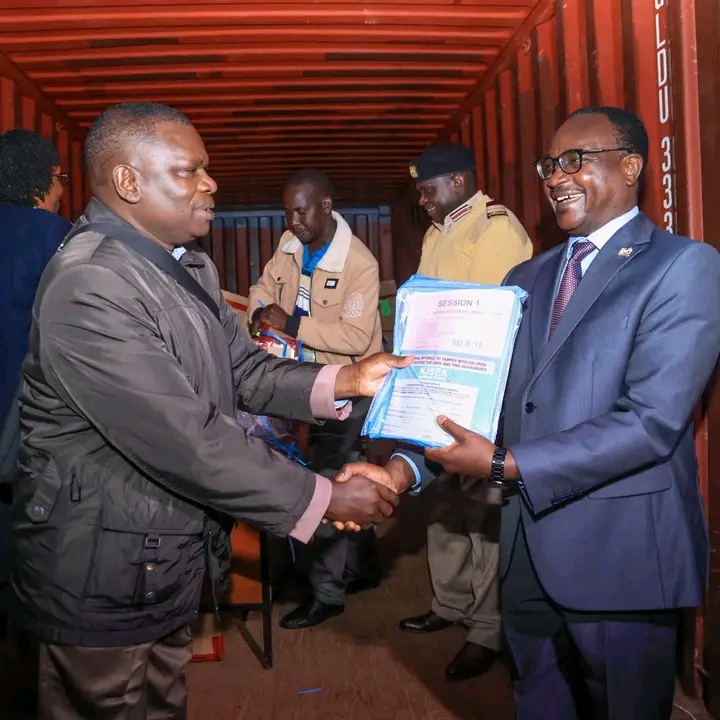
Education Cabinet Secretary Julius Migos Ogamba has today, Friday, October 30, 2026, witnessed the distribution of learning and assessment materials to Kenya Junior School Education Assessment (KJSEA) candidates in Sotik Sub-County, Bomet County, as the government continues to oversee the administration of the 2026 national assessments.The visit highlights the government's commitment to ensuring that learners undertaking the Competency-Based Education (CBE) assessments receive the necessary support and that examination materials are distributed through an organised and secure process.
The exercise comes at an important moment for Grade 9 learners across the country, who are undertaking KJSEA as they prepare to transition from junior school to senior school. Ogamba's presence in Sotik also demonstrates the Ministry of Education's continued involvement in monitoring assessment arrangements at the grassroots level.
The distribution of learning materials is an important part of ensuring that candidates have the resources required to participate in the assessment process without unnecessary logistical challenges.During the exercise, Ogamba's presence provided an opportunity to observe how learning and assessment materials were being made available to candidates and to appreciate the efforts of education officials, teachers and other stakeholders involved in supporting learners.
The distribution exercise is particularly important because access to appropriate learning resources plays a major role in supporting learners as they complete their junior school education. Candidates need a conducive environment, proper guidance and the necessary educational support to demonstrate the competencies they have acquired throughout their studies.
The Ministry of Education has continued to emphasise the importance of ensuring that all learners, regardless of their geographical location or background, receive equal opportunities to participate in national assessments.According to figures released by the Ministry of Education and the Kenya National Examinations Council (KNEC), a total of 1,206,028 candidates registered for the 2026 KJSEA assessment across the country.
The assessment is part of the government's broader effort to evaluate learners' competencies, identify their strengths and establish areas where additional educational support may be required.
The 2026 assessment began on Monday, October 26, and is scheduled to conclude on Friday, October 30.
The exercise involves thousands of assessment centres and requires close coordination between education officials, school administrators, examination supervisors and security agencies.The distribution of learning materials to KJSEA candidates in Sotik Sub-County highlights the importance of ensuring that learners have access to educational resources during this critical stage of their academic journey.
Learning materials help candidates strengthen their understanding of different subjects and improve their ability to apply the knowledge and skills acquired in the classroom.
Under the Competency-Based Education system, learning is not limited to memorising information. Learners are expected to develop practical skills, creativity, critical thinking, communication abilities and problem-solving skills.
This means that educational resources are important in supporting the development of well-rounded learners who can apply their knowledge in real-life situations.
The government has continued to encourage schools and education stakeholders to provide learners with the necessary support to make the transition through different levels of the education system successful.Earlier in the assessment period, Ogamba assured parents, teachers and candidates that the government had put comprehensive measures in place to ensure the smooth administration of national assessments.
While overseeing the opening of a KNEC examination container and distribution of assessment materials in Makindu, Makueni County, on October 26, the CS said the government had strengthened security arrangements to protect assessment materials.
He highlighted the introduction of smart electronic padlocks in examination storage containers, colour coding of assessment materials and personalised question papers as some of the measures intended to strengthen examination security.
He also explained that the government had expanded the network of examination storage containers to improve accessibility and reduce the distance examination officials travel when collecting materials.Under the new system, learners are encouraged to develop talents and competencies in different areas, including sports, creative arts, science, technology and communication.
Grade 9 is particularly important because it marks the end of junior school before learners proceed to senior school.
The KJSEA assessment helps establish the competencies learners have acquired during their junior school education. Its outcomes contribute to the process of guiding learners towards appropriate senior school pathways.
The government has therefore continued to emphasise the need for proper preparation, effective teaching and adequate learning resources to support the implementation of the new curriculum.Ogamba has particularly cautioned parents against fraudsters claiming to possess examination papers before they are officially administered.
The CS warned that individuals demanding money in exchange for purported advance access to examination papers were engaging in fraudulent activities.
He urged members of the public to report anyone involved in such schemes to the relevant authorities.
The government has also emphasised that centre managers, supervisors, invigilators and other examination officials must maintain the highest standards of professionalism.
These measures are important because every candidate deserves a fair opportunity to demonstrate their abilities without interference or unfair advantages.
The assessment results must reflect learners' actual competencies rather than dishonest practices.Teachers remain central to the implementation of Competency-Based Education because they guide learners through classroom activities, practical assignments and other learning experiences.
Parents and guardians also have an important responsibility to provide emotional support and encourage their children to remain focused.
Candidates undertaking KJSEA should be encouraged to approach the assessment with confidence and avoid unnecessary pressure.
The Ministry of Education has previously urged parents to support learners throughout the assessment period rather than placing excessive expectations on them.
A supportive learning environment helps candidates remain confident and demonstrate the knowledge and competencies they have developed during their studies.Education provides young people with opportunities to develop their abilities, acquire practical knowledge and prepare for future responsibilities.
The government's continued involvement in education activities at the sub-county level is important because it allows national education policies to reach schools and learners across different parts of the country.
Ogamba's presence during the distribution exercise also brings attention to the need for cooperation between national government administrators, education officers, teachers and school communities.
Such cooperation is essential in addressing challenges affecting schools and ensuring that educational programmes are implemented effectively.

You Might Also Like
-
The Council of Governors' call for regular workforce audits highlights the importance of accountability, transparency and effective human resource management in Kenya's public institutions. With concerns over payroll irregularities, recruitment practices, rising wage bills and staffing gaps, regula
-
The reported killing of Benard Kiplangat Ngetich near Jambo Kenya has raised concerns among residents and local leaders in the Kipkelion area. According to a report published on October 24, 2026, Ngetich was attacked while walking home with his friend Wilson Rono, who survived with injuries. The rep
-
The displacement of approximately 40,000 Ethiopians into Marsabit County has created an urgent humanitarian challenge for Kenya. Families fleeing violence around Moyale need food, safe water, shelter, healthcare and protection, while the communities hosting them require additional resources to preve
-
The President wants Russian companies to go beyond selling goods to Kenyan consumers and instead establish factories, invest in local industries, process resources and create employment. He has identified manufacturing, agriculture, energy, infrastructure, mining, engineering and technology as areas
-
The High Court has rejected the Teachers Service Commission’s (TSC) request to lift orders stopping the implementation of its circular regulating teachers’ conduct on social media. The decision means the rules remain suspended as the legal case continues. The dispute has attracted attention amon
-
Duncan Kimathi, a former student at the United States International University-Africa (USIU-Africa), has been sentenced to death after being convicted of murdering fellow student Sarah Aruwa in the Kiamako area of Kiambu County in 2012. The case brings renewed attention to the pursuit of justice for