CS Mutahi Kagwe Opens World Potato Day Celebrations, Urges Farmers to Increase Production and Reduce Imports
Agriculture Cabinet Secretary Mutahi Kagwe's support for the World Potato Congress comes at a time when Kenya is seeking to strengthen local food production and reduce dependence on imports. Potatoes offer significant opportunities to improve food security, increase farmers' incomes, create jobs and support agro-processing. Achieving these goals will require more than encouraging farmers to plant additional crops. Kenya needs reliable quality seed, stronger research and extension services, affordable inputs, better storage and transport, fair markets and investment in local processing. The historic congress in Naivasha offers an opportunity to bring these priorities together through international cooperation and practical innovation.
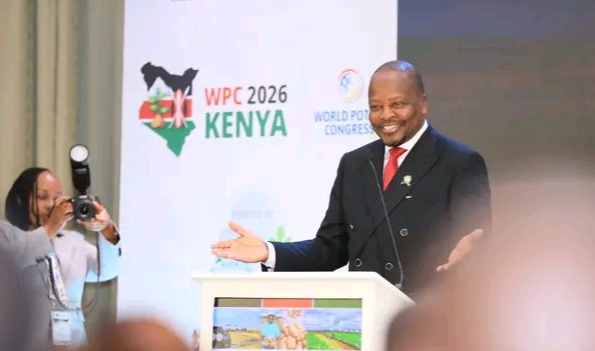
Kenya’s agriculture sector has received renewed attention following Agriculture and Livestock Development Cabinet Secretary Mutahi Kagwe’s participation in activities marking World Potato Day, where the importance of increasing local potato production and reducing reliance on imported potato products was highlighted. The occasion provides an opportunity for the government, farmers, researchers, agricultural institutions and private-sector players to examine ways of strengthening Kenya’s potato value chain and improving the livelihoods of farming communities.
Potatoes are among Kenya’s important food crops, serving as a source of income for farmers and providing affordable food for millions of households. They are also widely used by restaurants, hotels, food-processing companies and fast-food businesses. Increasing production, improving quality and investing in local processing could help Kenya meet more of its domestic demand while creating employment and expanding opportunities for farmers.The event taking place in Naivasha from October 26 to 30, 2026, is the 13th World Potato Congress, a major international gathering being held in Sub-Saharan Africa for the first time. The congress is hosted at Sawela Lodges and Convention Centre under the theme “Global Potato Partnership for Enhanced Food Systems, Nutrition Security and Trade.” It is expected to bring together more than 1,000 delegates from over 60 countries.
Agriculture Cabinet Secretary Mutahi Kagwe has previously endorsed the congress and called on its organisers to ensure that Kenyan farmers and the wider economy benefit from the international gathering through knowledge exchange, investment, partnerships and better market access.
The meeting comes at a time when Kenya is seeking to strengthen domestic food production, reduce costly food imports and create more opportunities for farmers and agricultural businesses.Increasing local agricultural production has been a key part of Kagwe's broader message on food security. In April 2026, he called for greater local production to reduce the country's food import bill, arguing that Kenya should use its agricultural potential to supply more of its own food requirements.
Potatoes are an important crop in this effort. With suitable seed varieties, good farming practices, reliable markets and investment in processing, Kenyan farmers can increase the volume and quality of potatoes they produce.
Higher production would help supply local markets and food-processing businesses. It could also reduce shortages that encourage businesses to seek products from outside the country.Why potatoes matter to Kenya's economy
Potatoes are widely grown by small-scale farmers, particularly in highland agricultural areas. They contribute to household food supplies and provide income for farmers, traders, transporters, retailers and food processors.
The National Potato Council of Kenya has described potatoes as the country's second most important food and cash crop after maize. Its 2026 industry handbook estimates that the sector benefits more than 1.3 million smallholder farmers, supports approximately 3.5 million people through marketing channels and contributes over KSh70 billion to the national economy. Reducing imports through local production
One of the major objectives associated with the drive to increase local production is to reduce dependence on imported food and agricultural products.
Kenya's food import bill has been a concern for the government. Kagwe has previously argued that excessive food imports drain foreign exchange, limit opportunities for local businesses and deny Kenyan farmers the benefits of supplying domestic demand.
In the potato sector, reducing imports requires understanding which products are being imported, why local suppliers cannot adequately meet demand and what changes would allow Kenyan producers and processors to compete.Research into improved varieties can provide crops that perform better under changing weather conditions and have greater resistance to important pests and diseases. Digital agricultural services can also help farmers access information about weather, input suppliers and market opportunities.
The World Potato Congress programme includes discussions and activities concerning seed systems, genetics, sustainable crop management, soil and water management, pests and diseases, smart farming and climate resilience.Tackling pests, diseases and climate challenges
Potato farming faces risks from pests, crop diseases, unpredictable rainfall and soil degradation. Such challenges can reduce harvests, raise production costs and make it difficult for farmers to supply markets consistently.
Farmers need training in crop rotation, soil fertility management, proper spacing, timely planting and appropriate pest and disease control.
Climate-smart farming practices are also important. Depending on local conditions, farmers may benefit from improved water management, soil conservation, suitable planting schedules and varieties adapted to changing weather patterns.Increased production alone will not solve the problems facing potato farmers. The crop must also reach consumers and processors in good condition.
Poor storage facilities, inadequate transport infrastructure and weak links between farmers and buyers can lead to losses after harvesting. A sudden increase in supply may also cause prices to fall, leaving farmers with little reward for their efforts.
The government, county administrations, cooperatives and private investors can support improvements in collection centres, storage, sorting, packaging and transport.
The National Potato Council of Kenya has also highlighted market reforms as a priority for the sector. Value addition and the growth of local processing
Value addition offers another route to expanding the potato industry and reducing reliance on imported products.
Instead of selling all potatoes as raw produce, businesses can process suitable varieties into chips, crisps, frozen potato products, flour and other food products.
Such investments can create jobs in processing, packaging, quality control, logistics and marketing. They can also provide farmers with more dependable markets, provided processors enter into fair and sustainable purchasing arrangements.Opportunities for young people and women
The potato value chain can create opportunities for young people and women, particularly in rural communities where employment options may be limited.
Young entrepreneurs can participate in seed distribution, mechanised farm services, digital agricultural platforms, transport, food processing and retail businesses.
Women, who play important roles in agricultural production and food marketing, can benefit from improved access to land, finance, training, technology and markets.Hosting the World Potato Congress is an important international milestone for Kenya. The event brings global attention to the country's agricultural potential and creates opportunities to learn from potato-producing countries around the world.
The gathering is expected to include technical discussions, exhibitions, field visits and networking activities. On October 29, the programme includes a Farmers Field Day at FreshCrop in Mau Narok, where participants will see demonstrations of potato varieties, crop nutrition, crop protection and other production approaches.
For Kenya, the real test will be whether these activities lead to measurable improvements after the delegates leave.
Farmers should benefit from practical training, improved access to quality seed, stronger links with processors and better market opportunities. Researchers and businesses should be encouraged to develop partnerships that address real production challenges.

You Might Also Like
-
Chief Justice Martha Koome’s call for adequate funding and stronger institutional preparation highlights the important role the Judiciary will play in Kenya’s 2027 General Election. Her announcement on October 28, 2026, of specialised training targeting more than 400 judicial officers demonstrat
-
A Nairobi court has declined to review the bail terms of a manyoka stunt matatu driver accused of causing a fatal crash along Enterprise Road in June. The accident claimed the lives of three passengers and left several others injured, raising renewed concerns about reckless driving and passenger saf
-
President William Ruto's visit to Moscow for the Third Russia–Africa Summit and Economic and Humanitarian Forum is an important diplomatic engagement for Kenya. The government is seeking to expand export markets, attract Russian investment, strengthen manufacturing, explore energy and infrastructu
-
 Musalia Mudavadi’s engagement with senior management at Sberbank’s headquarters in Moscow highlights Kenya’s efforts to strengthen economic diplomacy during the Third Russia–Africa Summit period. The meeting provides a potential platform for exploring financial services, digital innovation,
-
KEMSA's call for all 47 counties to allow SHA to facilitate payments for medicines highlights the need for a more dependable healthcare financing system in Kenya. The proposal seeks to improve the flow of money to the medical supply chain, reduce payment difficulties and help healthcare facilities m
-
William Owuor Ochieng’, popularly known on Facebook as “William Jahome,” has been arrested in Nairobi’s Central Business District over allegations of online threats, incitement to violence and ethnic hostility. The arrest has renewed attention on the growing concerns surrounding the misuse o