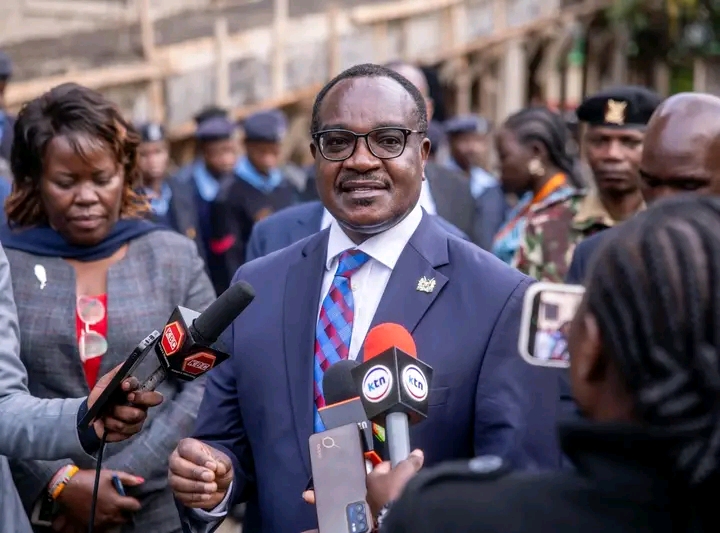
CS Ogamba Sounds Tough Warning to KCSE Cheaters as He Oversees Examination Distribution in Kibra
Education Cabinet Secretary Julius Migos Ogamba's visit to Kibra on Wednesday morning, November 4, demonstrates the government's continued commitment to monitoring the 2026 KCSE examinations and protecting their credibility. By witnessing the opening of the KNEC examination container and overseeing the distribution of examination materials before visiting State House Girls Senior School, the Cabinet Secretary reinforced the importance of proper supervision and accountability. His repeated warnings against examination impersonation, collusion, mobile phone possession and other irregularities serve as a reminder that cheating will not be tolerated. With 1,048,355 candidates sitting this year's examinations, the government faces an important responsibility to ensure that every learner receives a fair opportunity to demonstrate their academic abilities.
Education Cabinet Secretary Julius Migos Ogamba has intensified the government's efforts to safeguard the integrity of the 2026 Kenya Certificate of Secondary Education (KCSE) examinations after overseeing the opening of an examination container and distribution of examination materials in Kibra Sub-County, Nairobi County, on Wednesday morning, November 4, 2026.
The Cabinet Secretary witnessed the opening of the Kenya National Examinations Council (KNEC) examination container at the Kibra Sub-County Deputy County Commissioner's Office, where examination materials were distributed to designated examination centres under strict security arrangements.
His visit was part of the government's ongoing efforts to monitor the administration of national examinations, ensure that examination papers reach candidates on time and prevent any attempts to compromise the credibility of the exercise.After overseeing the distribution exercise, Ogamba proceeded to State House Girls Senior School, where he monitored the administration of the ongoing KCSE examinations and assessed how examination officials were managing the process.
The visit came at a critical moment when thousands of candidates across the country were continuing with their examinations, which began earlier in October with practical and oral papers before the main written examinations commenced on November 2.
The Education Ministry has maintained that every candidate deserves a fair opportunity to demonstrate the knowledge and skills acquired during their years of learning.Ogamba has repeatedly warned candidates, teachers, examination centre managers, supervisors and invigilators against engaging in activities that could compromise the integrity of national examinations.
The Cabinet Secretary has made it clear that the government will not tolerate examination irregularities, whether committed by candidates or individuals entrusted with managing the examination process.
Among the practices that the government is determined to eliminate are examination impersonation, collusion between candidates, possession of unauthorised examination materials and attempts to access examination papers before the officially scheduled time.
These practices undermine the credibility of national examinations and disadvantage candidates who have spent years preparing honestly for their final secondary school assessments.Candidates and examination personnel are prohibited from possessing or using personal mobile phones during examination sessions in accordance with KNEC regulations.
The government considers mobile phones a serious security concern because they can be used to communicate examination information, share photographs of question papers or facilitate access to unauthorised assistance.
The Cabinet Secretary has warned that anyone found violating examination regulations will face appropriate action in accordance with the law.
His warning is also directed at teachers and examination officials who might be tempted to assist candidates in cheating or participate in activities intended to compromise examination standards.
The government wants every examination centre to operate professionally, with officials following established procedures and ensuring that candidates complete their papers without interference.During Wednesday morning's exercise, Ogamba's first major activity was witnessing the opening of the KNEC examination container at the Kibra Sub-County Deputy County Commissioner's Office.
The opening and distribution process is an important part of the national examination administration because it ensures that examination materials are released through authorised government procedures.
The exercise involves examination officials and security personnel who are responsible for ensuring that examination papers are handled carefully from the storage facilities to the respective examination centres.
Following the distribution exercise, the Cabinet Secretary visited State House Girls Senior School to assess the ongoing administration of the examinations.
The visit allowed him to observe the examination process and evaluate the preparedness of officials responsible for supervising candidates.Apart from examination security, the government has also focused on the welfare of candidates during the examination period.
Ogamba has reaffirmed that the Ministry of Education is working to ensure that candidates who require medical attention are supported.
Some candidates may experience medical emergencies or other challenges that could interfere with their ability to sit examinations under normal circumstances.
The Ministry has therefore indicated that special arrangements will be facilitated where necessary to protect the interests of affected learners.The government has also promised to strengthen security in areas facing challenges that could interfere with the smooth administration of examinations.
This approach is important because national examinations should provide equal opportunities for all candidates, regardless of their location or individual circumstances.
Education officials are expected to communicate emerging challenges promptly so that appropriate interventions can be organised.
The Ministry has also continued coordinating with other government agencies to address logistical difficulties and ensure that examinations proceed as scheduled.Some regions experience difficult weather conditions that can affect road transport, accessibility to examination centres and the movement of examination materials.
Ogamba has previously stated that the Ministry of Education is working closely with KNEC, the Ministry of Interior and National Administration and other relevant agencies to monitor weather conditions.
The government has promised to coordinate interventions whenever flooding or other weather-related challenges threaten the smooth administration of examinations.
The priority is to ensure that candidates and examination personnel remain safe while examination materials reach their intended destinations.Some fraudsters may attempt to convince parents or candidates that they can provide examination papers before the scheduled examination sessions in exchange for money.
Such claims should be treated with caution because they may be attempts to defraud unsuspecting members of the public.
Candidates are being encouraged to concentrate on their preparations rather than engage with individuals promising leaked examination papers or unauthorised assistance.
Parents have also been urged to discourage their children from participating in examination malpractice.
Members of the public who have credible information about suspected examination irregularities can report the matter directly to KNEC.They are also used by employers and other institutions when assessing the academic qualifications of individuals.
Allowing examination malpractice to take place could undermine public confidence in these certificates and create unfair competition among candidates.
Students who prepare honestly deserve recognition for their efforts, and their performance should not be compromised by individuals who seek shortcuts through cheating.
The government therefore considers examination security a national responsibility that requires cooperation between education officials, security agencies, teachers, parents and learners.

You Might Also Like
-
Former Deputy President Rigathi Gachagua has expressed his ambition to build a strong political movement, saying he hopes to emulate the late Raila Odinga’s political organisation and grassroots mobilisation. Gachagua has highlighted the importance of creating a movement that brings together leade
-
Deputy President Kithure Kindiki's message at the 28th Commonwealth Heads of Government Meeting in Antigua and Barbuda reflects Kenya's determination to strengthen international trade, attract foreign investment and expand economic partnerships. By advocating for increased trade within the Commonwe
-
Kenyan Professor Phoebe Okowa has been re-elected as a judge of the International Court of Justice (ICJ) for another nine-year term, extending Kenya’s representation at the United Nations’ principal judicial organ until 2036. Her re-election marks a significant achievement for Kenya and its lega
-
The recovery of the second body from the collapsed Eastleigh building is a painful reminder of the devastating consequences of the October 23 disaster. As rescue teams continue clearing the rubble, families remain anxious about their missing relatives and are calling for faster efforts to establish
-
Police and Kenya Pipeline Corporation officials have uncovered a suspected major fuel-siphoning syndicate in Migadini, Changamwe, Mombasa County, after discovering an illegal connection to the corporation’s main petroleum pipeline inside a condemned building. The discovery has raised concerns over
-
A Narok man has been sentenced to life imprisonment after being convicted of sexually abusing his 10-year-old daughter on several occasions between 2024 and February 2026 in the Bulla Kipangas area of Narok Central. The sentence was delivered by Chief Magistrate H. Nyaberi following a successful pro