Democrats Seize Control of Both Chambers of US Congress in Major Midterm Election Upset, Dealing Blow to Trump
Democrats have taken control of both the United States House of Representatives and the Senate following the November 3, 2026 midterm elections, marking a major political setback for President Donald Trump and the Republican Party. The Democratic victories across several states have shifted the balance of power in Washington, giving the party greater influence over legislation, government spending and congressional investigations. The results also create new challenges for Trump's administration, which will now have to work with an opposition-controlled Congress. Economic concerns, rising fuel prices, healthcare costs and the war with Iran featured prominently in the election debate. As Democrats prepare to assume leadership in January 2027, attention is turning to their plans to address the cost of living, strengthen government accountability and scrutinise the administration's policies ahead of the 2028 presidential elections.
The 2026 United States midterm elections have become a major political event, drawing attention across the country and around the world. The elections, held halfway through President Donald Trump's four-year presidential term, are important because they determine which political party controls the two chambers of Congress: the House of Representatives and the Senate.
The reported Democratic gains raise important questions about the balance of political power in Washington, the future of President Trump's legislative agenda and the direction of American politics ahead of the 2028 presidential election.
The United States Congress plays a central role in governing the country. It is responsible for passing federal laws, approving government spending, overseeing the executive branch and examining major national policies. Consequently, a change in congressional control can significantly affect how the government operates, even when the president remains in office.How Democrats Managed to Win Control of Both Chambers
The Democratic Party's victory marked a major reversal in American congressional politics. Before the November 3, 2026 elections, Republicans controlled both the House of Representatives and the Senate, giving President Trump and his party considerable influence over legislation, government spending and federal appointments.
However, voters delivered a different outcome, with Democratic candidates recording victories across several states, including areas that had traditionally supported Republican candidates.
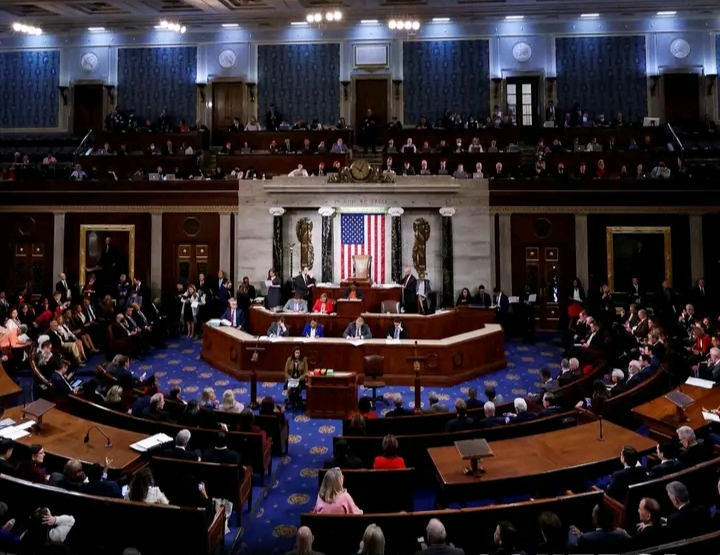
According to the Associated Press, Democrats secured the House after reaching the required 218 seats. They also regained control of the Senate following a series of victories in closely watched races. The results gave Democrats control of both chambers for the first time during Trump's second presidential term. The Senate victory was particularly significant because Democrats flipped seven Republican-held seats. These included important contests in North Carolina, South Carolina, Texas, Kansas, Iowa, Ohio and Maine.
Some of these victories came in states where Republicans had enjoyed considerable electoral support for decades. Kansas, for example, elected a Democratic senator for the first time in nearly a century, while the results in Texas represented a major change in the state's political landscape.
In Maine, Democrat Troy Jackson defeated Republican Senator Susan Collins, ending her nearly three-decade career in the Senate. Other Democratic victories in traditionally Republican areas demonstrated the geographical scale of the party's gains.
The House of Representatives also experienced a significant political transformation. Democrats won several competitive congressional districts, including seats in North Carolina, Pennsylvania, Texas, Michigan, New York, Ohio, Kentucky and Colorado.One of the major issues surrounding the 2026 midterm elections was the state of the American economy. The cost of living, fuel prices, groceries, healthcare and household expenses featured prominently in the political debate.
Many voters expressed dissatisfaction with the rising cost of essential goods and the financial pressure facing ordinary American families. Democrats made affordability a central part of their campaign, promising to prioritise policies aimed at reducing household expenses.
The party also criticised the Trump administration's economic policies, including tariffs, arguing that these measures had contributed to financial uncertainty and increased costs for consumers.
Republicans, on the other hand, defended their economic approach and argued that their policies were intended to protect American industries, strengthen domestic production and improve the country's long-term economic position.Another major issue that influenced the elections was the United States' involvement in the war with Iran.
The conflict, which had continued for more than eight months by the time of the elections, became a significant subject of public discussion. Its economic consequences, particularly rising fuel prices, attracted criticism from voters concerned about their household budgets.
The Trump administration faced questions about the financial and political costs of the conflict, while Democrats argued that the government's approach had placed additional pressure on American families.
Following the Democratic victory, President Trump acknowledged that the Iran war had affected the Republican Party's electoral performance. He also recognised that higher fuel prices had contributed to voter dissatisfaction.During the previous two years, Republicans controlled both chambers, allowing the president to work with congressional leaders from his own party on legislation and government priorities.
The situation will change when the new Congress takes office.
Democrats will control the committees responsible for examining government departments, conducting investigations and reviewing federal spending. They will also have greater influence over which bills are introduced, debated and passed.
The Senate victory is especially important because the chamber has constitutional authority to confirm presidential nominations, including senior government officials, ambassadors and federal judges.With Democrats controlling the Senate, Trump's administration could face greater difficulties securing confirmation for some nominees.
The Senate can also conduct hearings and demand explanations from government officials about major policy decisions.
However, the president will retain important constitutional powers, including the ability to veto legislation passed by Congress. Congress can override a presidential veto with a two-thirds majority in both chambers, making cooperation between the political branches important.
The result is therefore expected to create a divided government, where the president and the congressional majority represent different political parties. Historic Developments in the New Congress
The 2026 elections also produced several historic developments involving representation in the United States Senate.
Democrat Abdul El-Sayed of Michigan is set to become the first Muslim to serve in the US Senate. His victory represents an important milestone in the country's political representation.
Peggy Flanagan of Minnesota is expected to become the first Native American woman to serve as a senator.
Illinois Democrat Juliana Stratton's election will also mean that the Senate has three Black women serving simultaneously.
Additionally, Chris Pappas of New Hampshire is set to become the first openly gay male senator.The Republican Party now faces the responsibility of reviewing its electoral performance and determining how to rebuild its political strength.
Losing control of both congressional chambers is a major setback for a party whose members had previously enjoyed significant influence over national legislation.
Republican leaders will need to examine why their candidates lost in several traditionally conservative states and competitive congressional districts.
The results have also raised questions about the influence of President Trump's political endorsements. Several candidates backed by the president failed to secure victories, while Democrats recorded gains in areas where Republicans had previously maintained strong support.Vice President JD Vance has also faced scrutiny over the election outcome, particularly because of his position within the administration and his potential political ambitions ahead of the 2028 presidential election.
However, the Republican Party continues to have a substantial political presence across the country, including in state governments and other elected offices.
The coming months will therefore be important as Republicans organise their congressional leadership and consider their strategy for the next national elections. The Democratic victory is also expected to influence preparations for the 2028 presidential elections.
The midterms have provided both major parties with important information about voter concerns, political support and the effectiveness of their campaign strategies.
For Democrats, controlling Congress creates an opportunity to demonstrate how their legislative priorities can address issues affecting American households.
For Republicans, the results present a challenge to reassess their approach to voters, particularly on economic issues, foreign policy and the cost of living.
The outcome could also influence the emergence of potential presidential candidates within both parties.
President Trump cannot seek a third presidential term under the US Constitution, meaning that the 2028 election will involve a new presidential contest.What Happens Next?
The outgoing Congress will continue handling its responsibilities until the new congressional session begins in January 2027.
During this transition period, lawmakers will have to address pending legislative matters, government funding and other national responsibilities.
The Democratic Party will prepare to assume control of the House and Senate, while Republicans will reorganise themselves as the congressional minority.
The transition will also involve internal party elections to determine committee leadership and other important congressional positions.
Americans will be watching closely to see whether the new Democratic majority can deliver on its promises concerning affordability, healthcare, accountability and government oversight.The United States plays a major role in international trade, security cooperation, diplomacy and global economic affairs. Changes in congressional leadership can therefore influence discussions about foreign aid, military funding, international agreements and relations with other countries.
For African nations, including Kenya, developments in Washington are particularly important because the United States is a major development partner, trade destination and security ally.
Congressional decisions can affect funding for development programmes, health initiatives, security partnerships and economic cooperation with African countries.
Kenya and other African governments will therefore be interested in how the new Congress approaches America's international partnerships and foreign policy priorities.

You Might Also Like
-
The Government of Kenya has launched the NYOTA Access to Government Procurement Opportunities (AGPO) digital training programme targeting at least 600,000 entrepreneurs across the country, in a major initiative aimed at empowering young people, women and persons with disabilities to access governmen
-
Residents of Manyatta B in Kisumu County have been left shocked following the discovery of the body of an unidentified man dumped inside a damaged septic tank near Yellow Bridge on November 3, 2026. The discovery was reportedly made by a local resident, Willy Otiende, who was searching for his missi
-
The Seventh Principal Secretaries’ Forum of 2026 in Malindi, Kilifi County, was an important government coordination meeting focused on national development, accountability and improved service delivery. Chaired by Chief of Staff and Head of Public Service Felix Koskei, the forum addressed critic
-
Kipchumba Murkomen's appearance before the National Assembly on November 4, 2026, brought attention to the government's wider security and service delivery agenda. Among the measures he highlighted were the 16-month security roadmap ahead of the 2027 General Election, efforts to dismantle criminal
-
University lecturers have threatened to resume strike action if the government fails to address concerns over funding and unpaid bills. The warning comes days after they ended a month-long strike and returned to classrooms following a KSh20 billion agreement with the government. The deal covers the
-
Transport Cabinet Secretary Davis Chirchir's warning to motorists at Kimende on Wednesday, November 4, 2026, highlights the importance of road safety as construction continues along the Rironi–Mau Summit Highway. While the government is working to expand the highway and improve transportation, mot