Deputy President Kithure Kindiki Leads High-Level Cabinet Committee Meeting in Karen to Streamline Development Partner-Funded Projects
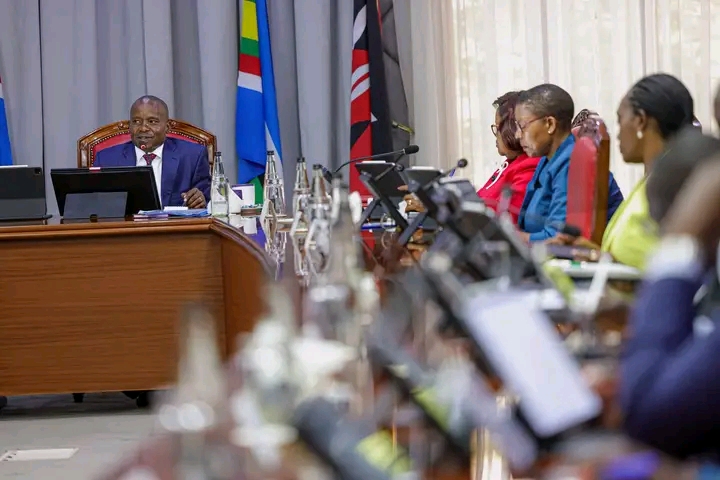
Deputy President Kithure Kindiki's meeting with the Cabinet Committee in Karen on October 22, 2026, focuses on reviewing policy recommendations intended to streamline development partner-funded programmes and projects across government. The exercise addresses an important public policy question: how can Kenya ensure that international development assistance and government resources are coordinated effectively and translated into tangible results? Previous development partnership discussions have highlighted concerns about funding delays, the absorption of available resources, fragmented implementation and the need to align external support with national priorities.
Kenya's Deputy President, Professor Kithure Kindiki, is at the centre of government efforts to improve the coordination, implementation and monitoring of development programmes funded by international development partners. The meeting with the Cabinet Committee in Karen, Nairobi, focuses on reviewing policy recommendations intended to streamline development partner-funded programmes and projects across government.
The discussions are important because Kenya relies on development cooperation to support projects and programmes in sectors such as health, education, agriculture, infrastructure, water, energy and public service delivery. Ensuring that these programmes are properly coordinated can help the government reduce duplication, improve the use of available resources and deliver better results for citizens.
The Karen meeting provides an opportunity for senior government officials to examine existing arrangements, identify weaknesses and consider policy measures that could make development assistance more effective, transparent and consistent with Kenya's national development priorities.The central issue behind the meeting is how Kenya can ensure that programmes supported by development partners are planned, financed and implemented in a coordinated manner. Development partners include international institutions, bilateral governments, multilateral agencies and other organisations that provide financial assistance, technical expertise or other forms of support for development.
These partnerships can help the government finance projects that might otherwise face funding constraints. However, their success depends on effective coordination between the institutions providing support and the government agencies responsible for delivering the programmes.Why development partner funding matters to Kenya
Kenya works with development partners to support economic growth, public services and social development. These partnerships can provide financing for large infrastructure projects, agricultural transformation, healthcare programmes, educational initiatives, environmental protection and employment opportunities.
One important example is the National Youth Opportunities Towards Advancement (NYOTA) programme, which Deputy President Kindiki discussed during the 15th Development Partnership Forum on September 16, 2026. According to the United Nations in Kenya, the programme combines government and World Bank support to provide young people with business start-up assistance, skills training, mentorship and market connections. At the September 2026 Development Partnership Forum, Kindiki highlighted concerns about the difference between development assistance committed by partners and resources actually disbursed and absorbed by government agencies and county governments. He called for greater efficiency in using development assistance so that it produces tangible results for Kenyans.
The issue matters because delays can affect the delivery of essential services. A road project may require coordinated financing across several financial years, while a healthcare initiative may depend on timely procurement of equipment and supplies. If the necessary funding or administrative approvals are delayed, implementation can fall behind schedule.Kenya's development programmes are spread across numerous ministries, departments and agencies. Some projects also require collaboration between national government institutions, county governments and external partners.
Without clear coordination, different institutions may face overlapping responsibilities, inconsistent reporting requirements or difficulties sharing information.
For example, a programme intended to improve agricultural productivity may require cooperation between agencies responsible for farming, irrigation, roads, trade and access to finance. Each institution may have a different responsibility, but the overall programme can only succeed if those responsibilities are aligned.Strengthening accountability and transparency
Accountability is another important consideration in the management of development partner-funded programmes. Public institutions must be able to explain how resources are allocated, how projects are implemented and whether the intended beneficiaries are receiving the expected benefits.
A stronger coordination framework could help the government maintain reliable information about ongoing projects, including their financing arrangements, implementation stages, expenditure and results.Lessons from previous development partnership discussions
The October meeting also comes against the background of earlier government efforts to address weaknesses in development financing and programme implementation.
On September 16, 2026, the United Nations reported that Kenya's 15th Development Partnership Forum had examined the gap between committed development assistance and the funds ultimately disbursed and absorbed.
The forum also discussed the performance of Joint Sector Working Groups, which bring government institutions and development partners together to address sector-specific priorities and implementation challenges. According to a report, 17 of 22 groups had met during the previous financial year, compared with seven in the preceding period. For residents in rural communities, well-coordinated projects can contribute to better roads, agricultural support, irrigation and improved access to markets. For families in urban areas, effective programmes can support housing, sanitation, healthcare and employment opportunities.
Young people may benefit when education, skills development and enterprise programmes are coordinated with labour-market needs. Farmers may benefit when agricultural support is linked to reliable infrastructure, financing and access to buyers.
Similarly, improved coordination of healthcare programmes can help reduce fragmentation in service delivery and ensure that resources reach the facilities and communities that need them.The importance of follow-up after the Karen meeting
Once policy recommendations have been reviewed, the next critical step is determining how any agreed measures will be implemented.
This could involve assigning responsibilities to relevant ministries, establishing timelines, identifying resources required for implementation and developing monitoring mechanisms. Where reforms require Cabinet approval, legislative changes or administrative directives, the appropriate procedures would also need to be followed.
Regular progress reviews would help determine whether the reforms are addressing the challenges they were designed to resolve.

You Might Also Like
-
The arrest of 76 suspects in Kitale over alleged criminal activities has brought renewed attention to security in Trans Nzoia County and to the troubling disappearance of Lilly Cherono Kimutai, wife of retired police officer Michael Kimutai. The reported arrest of two suspects linked to the case of
-
The Anti-Counterfeit Authority's push for stronger regional cooperation and more consistent legal frameworks reflects the reality that counterfeit trade crosses borders and cannot be defeated by isolated national action. Kenya's engagements with Tanzania, Uganda, WIPO and other African partners dem
-
France's announcement on October 22, 2026, of the first documented human infection with Shamonda virus is a significant development in infectious disease research. The virus, previously associated primarily with livestock, was detected in a severely immunocompromised patient receiving treatment in L
-
Rescue operations are underway following a deadly quarry collapse at Mutonga in Imenti South, Meru County, that left one person dead and several others feared trapped beneath the rubble. Emergency teams and local residents are working to locate the missing individuals as concerns grow over quarr
-
President William Ruto, speaking at the COMESA Summit in Zimbabwe on October 22, 2026, calls for African countries to be treated as equal partners in global affairs, emphasising fairness, mutual respect and equal opportunities in international trade, investment and decision-making. He urges COMESA m
-
President William Ruto's remarks at the 25th COMESA Summit in Harare highlighted the importance of stronger African economic cooperation, increased production, greater investment and expanded trade within the region. His message that African countries should produce more, invest more and trade more