



Dr Joyce Kithure’s Powerful Call to Kenya’s Youth: Turn Your Phones Into Weapons for Climate Action
Dr Joyce Kithure's call for young people to use digital media for climate action places Kenya's youth at an important intersection between technology, environmental conservation and public advocacy. Speaking during the launch of the Youth Climate Policy and Advocacy Training programme at KISE, she highlighted the strong digital abilities of young people and encouraged them to use those abilities to spread environmental awareness. She also emphasised that today's youth have a direct stake in the future because they will experience the long-term consequences of decisions made about the environment today. The event also highlighted the importance of science, innovation, government support and community participation. Prof David Kariuki called attention to scientific innovation, while Prof Dickson Andala encouraged young people to seek support from government institutions for climate-related programmes. The message emerging from the summit is that climate action requires participation at many levels. Digital platforms can help young people educate and mobilise communities, scientific institutions can provide knowledge and innovation, while government and other partners can provide policy and strategic support. For Kenya's young population, the challenge is therefore to transform digital influence into constructive environmental engagement. Through informed online communication, community activities, scientific innovation and policy participation, young people can become active contributors to efforts aimed at protecting the environment and strengthening resilience to climate change.
Kenyan youth have been challenged to use their growing influence and digital skills to promote climate action, environmental conservation and public awareness as the country continues to confront the effects of climate change.
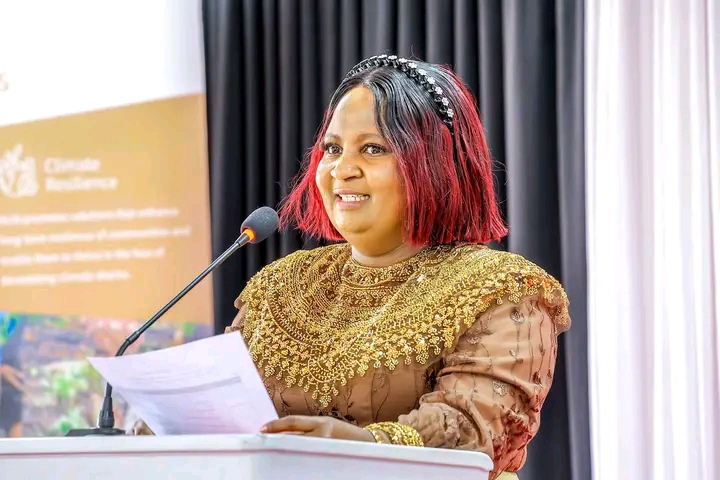
The call was made by Dr Joyce Kithure, the Spouse of the Deputy President, during the launch of the Youth Climate Policy and Advocacy Training programme at the Kenya Institute of Special Education (KISE). The programme seeks to strengthen the capacity of young people to understand climate issues, participate in policy discussions and advocate for practical solutions to environmental challenges.
Dr Joyce's message placed particular emphasis on the power of digital communication. She noted that young people possess strong digital skills and can use social media and other online platforms to communicate environmental messages to a much wider audience. Her remarks come at a time when digital platforms have become important spaces for public education, advocacy, networking and mobilisation.
According to reports from the event, Dr Joyce said young people have a special interest in the future because they will live long enough to experience either the benefits of a protected environment or the consequences of environmental neglect. She therefore encouraged them to take an active role in shaping the environmental future of Kenya rather than leaving climate-related decisions entirely to older generations.
Digital platforms as tools for climate awareness
The rapid growth of social media has created opportunities for young people to communicate environmental information almost instantly. Platforms such as TikTok, Facebook, Instagram, YouTube and X can allow climate advocates to reach audiences beyond their immediate communities.
Dr Joyce's call therefore goes beyond simply asking young people to spend more time online. The emphasis is on using digital communication for constructive purposes, particularly educating communities about environmental protection and encouraging practical action.
Young people can, for example, use short videos to explain the effects of pollution, demonstrate proper waste management, promote tree planting, discuss water conservation or highlight community projects aimed at protecting the environment. Digital storytelling can also make complicated climate issues easier for ordinary citizens to understand.
The Youth Climate Policy and Advocacy Training programme provides an avenue for young people to develop knowledge that can then be translated into digital content. Instead of climate discussions remaining limited to conference rooms and policy meetings, participants can communicate what they learn to their peers and communities.
This approach can also help bridge the gap between scientific information and everyday experiences. Climate change can sometimes appear to be a technical subject involving scientific terminology and international negotiations. Digital content created in accessible language can connect those discussions with issues that communities experience directly, including changing weather patterns, flooding, drought, food insecurity, pollution and environmental degradation.
Youth positioned at the centre of the climate conversation
The message from the KISE event also highlighted the important position of young people in Kenya's climate agenda.
Young people are among those who will experience the long-term consequences of decisions made today. At the same time, they constitute a significant part of Kenya's digitally connected population. Their ability to communicate, organise and mobilise through digital platforms gives them an opportunity to contribute to climate discussions in ways that were not available to previous generations.
The argument that young people have a direct stake in the future is also reflected in wider climate discussions in Kenya. A 2025 BMJ Paediatrics Open viewpoint involving African climate and child-health issues noted that young people in Kenya have expressed concerns about how climate change will affect their future while also viewing themselves as contributors to climate solutions.
The challenge, therefore, is to transform concern into meaningful participation.
Training programmes such as the one launched at KISE can help young people understand how climate policies are developed, how advocacy works and how communities can participate in environmental decision-making. Once equipped with this knowledge, digital platforms can become channels for sharing information and encouraging wider participation.
Connecting climate advocacy with policy
Another important aspect of the programme is its focus on policy and advocacy.
Climate action is not limited to individual activities such as planting trees or cleaning neighbourhoods. Government policies, institutional decisions, scientific research, financing and community participation all influence the country's ability to respond to climate change.
By training young people in climate policy and advocacy, organisers are seeking to equip them to engage with these broader issues.
Dr Joyce's message about digital media can therefore be understood within this wider context. Social media can provide young people with a way of explaining policies, raising questions, sharing research and bringing community concerns to the attention of decision-makers.
Digital advocacy can also help young people connect with one another. A climate activist in one county can learn from another young person working on environmental conservation elsewhere in the country. Networks can make it easier to exchange ideas, organise campaigns and share successful community initiatives.
However, digital advocacy also requires responsibility. Climate information shared online needs to be accurate and understandable. Young people participating in climate conversations have an opportunity to counter misinformation by relying on scientific evidence and credible institutions.
SaVE Communities and environmental sustainability
Dr Joyce's environmental message is also connected to her work through SaVE Communities, an initiative whose name refers to Science Adding Value to the Environment and the Communities.
At a World Environment Day event in Kibra in June 2026, she described climate change as a present reality affecting weather patterns, health, food systems and livelihoods. She also highlighted environmental activities involving communities and youth groups, including clean-up exercises in informal settlements such as Dandora and Kawangware.
Her previous environmental advocacy has also linked conservation with economic empowerment. She has highlighted initiatives involving climate-resilient and smart agriculture, with the objective of helping farmers improve productivity while becoming more resilient to climate-related challenges.
This background gives additional context to her message at the Youth Climate Policy and Advocacy Training programme. The emphasis is not only on discussing climate change but also on encouraging practical community-level action.
Scientists call for innovation
The KISE event also brought together voices from the scientific and research community.
Prof David Kariuki, chairman of the Department of Chemistry at the University of Nairobi, stressed the importance of scientific innovation and new discoveries in addressing climate change. His contribution reinforced the connection between youth advocacy, scientific knowledge and technological innovation.
Climate challenges require more than awareness campaigns. Scientific research can contribute to the development of cleaner technologies, better agricultural practices, improved waste-management systems, renewable-energy solutions and other approaches to climate adaptation and mitigation.
For young people, this creates opportunities beyond traditional environmental activism. Students and young professionals can participate in research, technology development, entrepreneurship and communication while contributing to climate solutions.
The National Research Fund CEO, Prof Dickson Andala, also encouraged young people to make use of government institutions and seek strategic support for programmes focused on climate-change mitigation.
His message points to another important element of youth climate action: access to partnerships and resources.
Young people may have ideas for environmental projects but lack funding, technical assistance or institutional support. Connecting them with research institutions, government agencies and other organisations can help turn ideas into practical programmes.
From online conversations to action
One of the major challenges facing digital climate advocacy is ensuring that online conversations lead to action outside the internet.
Posting a video about tree planting, for example, can raise awareness, but the greater impact comes when people use that information to participate in tree-growing activities or protect existing forests.
Similarly, online discussions about waste management can become more meaningful when they encourage communities to reduce littering, separate waste, recycle materials or participate in clean-up activities.
This is why training and practical community engagement are important components of climate advocacy. Digital media can attract attention, educate audiences and mobilise people, while community activities provide an opportunity to turn awareness into measurable action.
Dr Joyce's appeal to young people therefore places digital communication within a broader climate-action framework. The objective is to use technology as a bridge between information, advocacy and community participation.
The economic dimension of climate action
Climate change is also closely connected to livelihoods. In Kenya, agriculture, tourism, water resources and other sectors depend heavily on environmental conditions.
Young people therefore have a role to play in developing businesses and innovations that respond to environmental challenges. Digital skills can be combined with entrepreneurship to create climate-focused enterprises in areas such as renewable energy, recycling, sustainable agriculture, environmental education and green technology.
Climate action can consequently become both an environmental and economic opportunity.
The training of young advocates can help create a generation that understands the relationship between environmental protection, economic development and community wellbeing.
Importance of responsible digital communication
While encouraging young people to use digital media, climate advocates also face the responsibility of ensuring that information shared online is credible.
Climate change is a subject that can attract misinformation and exaggerated claims. Young digital communicators therefore need to distinguish between scientific evidence, personal opinions and unverified information.
Responsible communication can involve consulting scientists, government agencies, research institutions and credible environmental organisations before publishing claims. It can also involve explaining uncertainty where scientific evidence is still developing.
Such an approach can strengthen public confidence in climate information and help prevent misinformation from undermining legitimate environmental action.
A growing role for young climate advocates
The Youth Climate Policy and Advocacy Training programme comes as young people across Kenya continue to participate in climate-related discussions and initiatives.
For the participants, the programme offers an opportunity to gain knowledge, build networks and understand how climate policy can be connected with community needs.
The message from Dr Joyce Kithure adds a digital dimension to this engagement: young people do not have to wait until they hold formal positions of authority before contributing to climate awareness. Their existing communication skills can be used to educate peers, document environmental challenges and highlight solutions.
The wider climate conversation in Kenya increasingly involves questions about adaptation, environmental conservation, sustainable development, scientific research and community resilience. Young people can participate in each of these areas.

You Might Also Like
-
President William Ruto responds to Kalonzo Musyoka, saying the Tsiekuru road is among many infrastructure projects his administration is pursuing across the country.
-
Former Deputy President Rigathi Gachagua has pledged to intensify the fight against drug trafficking, promising tougher border controls to prevent heroin, cocaine and cannabis from entering Kenya within the first year of his administration.
-
President William Ruto's September 26, 2026 visit to Taita Taveta County focused on development, with particular attention to technical education, land ownership and infrastructure. The President laid the foundation stone for Wumingu Technical and Vocational College, participated in the Coast-wide t
-
Mike Bloomberg's discussions with President William Samoei Ruto bring attention to three important dimensions of Kenya's development agenda: healthier food choices, the clean-energy transition and ocean conservation. The front-of-package warning-label debate is focused on giving Kenyan consumers cl
-
The Koitaleel Samoei University College main campus in Nandi Hills is now approaching a major milestone after years of delays. The latest September 2026 reports place construction at about 85 per cent, with an administration block and 14 lecture halls forming key components of the development. Finis
-
President William Ruto's engagement with the Africa Finance Corporation and the establishment of AFC's Nairobi regional office represent an important development in Kenya's relationship with one of Africa's major infrastructure finance institutions. While AFC remains headquartered in Lagos, the ope