Eastleigh building rescue operation set to end as 16 remain missing
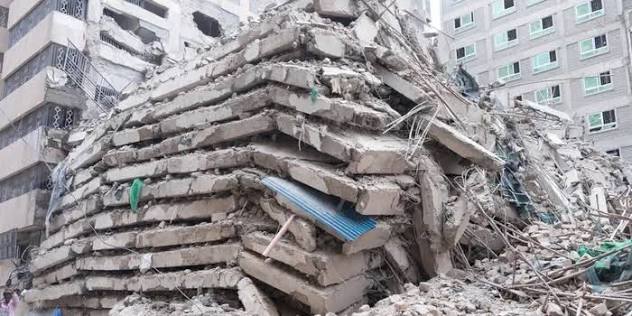
The multi-agency rescue operation at the collapsed 18-storey building in Nairobi’s Eastleigh is expected to conclude today after approximately 90% of the rubble was cleared. Rescue teams are now concentrating on the rear section and basement, where missing persons are believed to be trapped. Six people have so far been rescued alive, while one body has been recovered, with 16 others still unaccounted for. Meanwhile, hope has been renewed for 22-year-old Aurelia Wanjiku after her phone, unreachable for eight days, became reachable on Saturday. The DCI is tracing the signal to establish its location as families continue waiting anxiously for news of their loved ones.
The multi-agency rescue operation at the collapsed 18-storey building along 9th Street, Yusuf Haji Avenue in Nairobi's Eastleigh area, is expected to come to an end today following days of intensive efforts to locate people believed to be trapped beneath the rubble. Rescue teams have made significant progress in clearing debris from the site, with approximately 90 per cent of the rubble already removed. Authorities have indicated that the remaining operation will concentrate on the rear section of the building and the basement, where some of the missing individuals are believed to have been trapped following the devastating collapse.
The operation has involved several government agencies, emergency response teams, security officers and humanitarian organisations working together to establish whether anyone remains beneath the debris. National Disaster Management Unit Director Duncan Ochieng and Nairobi North Regional Commissioner Simon Osumba have indicated that the rescue teams are approaching the final stages of the exercise after clearing most of the collapsed structure.
The building came crashing down on Friday, October 23, while construction activities were ongoing, triggering an emergency response that brought together different agencies to search for survivors and recover those who may have lost their lives. The incident raised serious concerns about construction safety and the effectiveness of building inspection procedures, particularly in Nairobi, where high-rise developments have increased significantly over the years.
Since the collapse, six people have been rescued alive from the debris, providing moments of relief amid the difficult rescue operation. However, the recovery of one woman's body on Friday morning added to the tragedy surrounding the incident. The body was subsequently transported to City Mortuary, where DNA identification procedures are expected to assist authorities in establishing her identity and notifying her family.
The latest verification conducted by the Kenya Red Cross and the Directorate of Criminal Investigations indicates that 16 people remain unaccounted for. This number has become central to the ongoing search operation as rescue teams work to establish the whereabouts of everyone reported missing following the disaster.
Phone signal analysis has also provided investigators with additional information regarding the possible presence of some of the missing individuals at the construction site when the building collapsed. According to the available information, signals from nine of the missing persons' phones indicated that they were at the site at the time of the incident.
The information has helped narrow the search as emergency teams concentrate their efforts on sections of the collapsed building where people could potentially remain trapped. However, the search has been complicated by the massive amount of concrete, steel and other construction materials covering the site.
Rescue operations involving collapsed buildings require careful coordination because the removal of debris can create additional risks for anyone who may still be trapped underneath. Heavy machinery must therefore be operated cautiously, particularly when clearing sections where survivors could potentially be located.
Excavators and other specialised equipment have been deployed to remove the rubble, while emergency personnel continue examining the remaining sections of the structure. The rear portion and basement have been identified as priority areas during the final stages of the operation.
Families of the missing individuals have continued gathering at the site, hoping to receive information about their loved ones. For many of them, the days following the collapse have been filled with uncertainty, anxiety and emotional distress as they wait for confirmation about the fate of relatives who were reportedly inside or around the building when it came down.
Some families have maintained their presence near the rescue site, following developments and communicating with authorities as the operation progresses. Their continued wait reflects the emotional toll of disasters involving missing persons, particularly when relatives have no clear information about whether their loved ones survived.
Hope was renewed on Saturday morning after the family of 22-year-old Aurelia Wanjiku reported that her mobile phone, which had remained unreachable for eight days, suddenly became reachable.
The development attracted attention because her family had been unable to establish contact with her since the building collapsed. According to the family, they also heard sounds resembling excavators in the background during the communication, raising hopes that she could potentially be near the area where rescue teams were working.
The reported phone activity has prompted additional interest from investigators, with the Directorate of Criminal Investigations tracing the signal to establish its location and determine whether it could provide useful information about Wanjiku's whereabouts.
The development has given her family renewed hope as they continue waiting for information about her condition. However, the activation of a mobile phone signal alone does not establish whether the owner is alive or whether the device is still in the same location where it was last used.
Investigators will therefore need to establish the origin of the signal and assess whether it is connected to the missing woman. The information could assist in directing attention to particular sections of the site if its location can be reliably established.
The case has also highlighted the growing importance of digital technology in modern rescue operations. Mobile phone records, communication data and signal analysis can sometimes provide useful leads when locating people who disappear during major disasters.
However, such information must be carefully analysed and verified before rescue teams can rely on it to determine where to concentrate their efforts. Investigators must also work closely with telecommunications providers and relevant authorities to establish accurate location information.
The ongoing operation has attracted considerable public attention because of the number of people initially reported missing and the possibility that some could still be alive beneath the rubble. Every new development has therefore been closely followed by families, residents and members of the public hoping for positive news.
The collapse has also renewed discussions about building safety and the risks associated with construction activities in densely populated urban areas. Eastleigh is among Nairobi's busy commercial and residential neighbourhoods, with numerous buildings accommodating businesses, residents and other economic activities.
The incident has raised questions about the structural integrity of buildings under construction, the supervision of construction projects and compliance with approved building plans. It has also increased calls for stronger enforcement of construction regulations to prevent similar tragedies in the future.
Building collapses can result from several factors, including structural weaknesses, poor construction practices, substandard materials, inadequate foundations and failure to comply with approved engineering designs. However, the specific cause of the Eastleigh collapse will need to be established through appropriate technical investigations.
Authorities will be expected to examine the building's construction history, approved architectural and structural plans, materials used and the supervision arrangements in place before the incident.
Such investigations are important in determining whether construction standards were followed and whether any negligence or regulatory failures contributed to the disaster.
The incident has also placed renewed attention on the responsibilities of developers, contractors, engineers and government agencies involved in approving and supervising construction projects.
Construction professionals are expected to ensure that buildings meet the required engineering standards and that all activities are conducted according to approved designs. Regulatory authorities, on the other hand, have a responsibility to conduct inspections and take action where violations are identified.
The tragedy has demonstrated the consequences that can arise when building safety is compromised, particularly in areas where large numbers of people live and work close to construction sites.
For the families waiting at the Eastleigh site, however, the immediate concern remains finding their missing relatives and receiving clear answers about what happened to them.
The anticipated conclusion of the multi-agency rescue operation today marks an important stage in the response to the disaster. Nevertheless, the final search of the rear section and basement remains critical, given that 16 people are still listed as unaccounted for.
Authorities will also need to provide families with accurate updates regarding the recovery operation, the identification of recovered remains and the verification of the missing persons' records.

You Might Also Like
-
Energy and Petroleum Cabinet Secretary Opiyo Wandayi has urged ODM leaders to abandon hardline demands and support President William Ruto’s re-election bid unconditionally ahead of the 2027 General Election. His remarks come amid growing debate within ODM over a possible pre-election agreement wit
-
The eight East African Community Partner States have adopted a regional Artificial Intelligence Strategy and approved a new AI learning module for universities. The initiative seeks to integrate artificial intelligence education into both technical and non-technical degree programmes. Students will
-
ODM has reportedly endorsed President William Ruto as its preferred presidential candidate for the 2027 General Election. The party has also reached an agreement with UDA to establish a joint campaign committee and operate a shared treasury account. However, negotiations over the sharing of governme
-
Members of the National Assembly have rejected Senate amendments on the tallying and electronic transmission of presidential election results ahead of the 2027 General Election. The proposed changes, negotiated by teams representing President William Ruto and the late Raila Odinga, sought to introdu
-
Kenya has challenged Saudi Arabia’s decision to suspend travel by its citizens to Kenya and halt visa issuance to Kenyan travellers amid the Ebola outbreak. Health Cabinet Secretary Aden Duale has termed the restrictions excessive, arguing that they are not supported by the prevailing epidemiologi
-
Detectives have arrested two additional suspects in connection with the murder of 65-year-old Evelyne Mukiri Mbaabu, who was killed at her home in Kithoka Village, Meru County, on August 7, 2026. The newly arrested suspects, identified as the deceased's brother and sister-in-law, are alleged to have