



Ebola Alert in Kenya: 57 Contacts Traced as 10 People Are Quarantined, PS Mary Muthoni Gives Update
Kenya's Ebola response has entered a critical surveillance and contact-tracing phase following confirmation of the country's first imported Bundibugyo Ebola case. PS Mary Muthoni says 57 contacts have been identified, with 10 already placed under quarantine, while health officers across the country have been activated. The Ministry is strengthening surveillance at 15 points of entry, preparing additional isolation capacity and working with county and international partners. Although the confirmed case has raised concern among Kenyans, the Ministry maintains that the country is not experiencing an Ebola outbreak. The focus now is on tracing every possible contact, monitoring those under quarantine and ensuring that any new suspected case is detected, isolated and tested quickly
Kenya has intensified its response to Ebola after the Ministry of Health confirmed the country’s first imported case of Bundibugyo Ebola Virus Disease. Public Health and Professional Standards Principal Secretary Mary Muthoni has announced that 57 contacts have so far been identified, with 10 people placed under quarantine as health authorities work to prevent further transmission. The Ministry has stressed that Kenya is not experiencing a widespread Ebola outbreak, but is managing an imported case while strengthening surveillance, contact tracing and preparedness across the country.
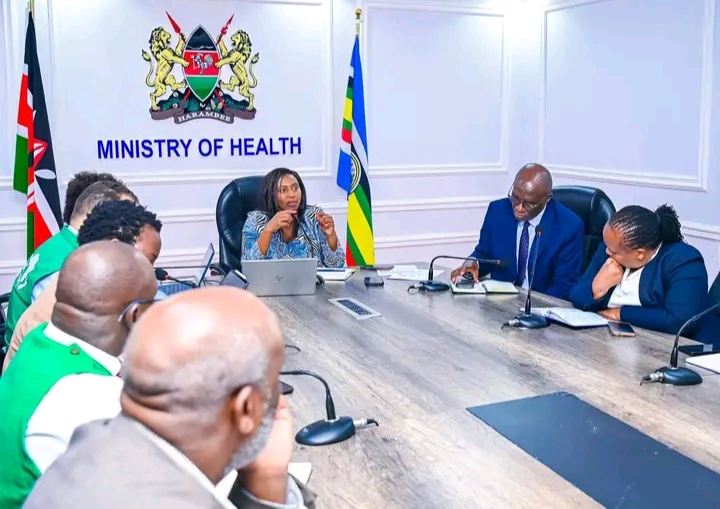
The announcement was made as the Ministry of Health stepped up its national response following the death of the confirmed patient. PS Muthoni chaired a stakeholder meeting at the Ministry of Health headquarters in Nairobi on Wednesday, October 7, where she said health officers across the country had been activated to ensure that any suspected case is identified and handled promptly.
57 contacts identified, 10 quarantined
According to PS Mary Muthoni, health authorities have identified 57 people who may have been in contact with the confirmed Ebola patient. Ten of these contacts have so far been accounted for and placed under quarantine, while efforts to trace and monitor the remaining contacts continue.
The Ministry has warned that the number of contacts could increase as investigators continue reconstructing the patient's movements and identifying people who may have interacted with him or his relatives.
Quarantine is being used as a precautionary public-health measure. Being quarantined does not automatically mean that the 10 people have Ebola. Instead, they are being separated and monitored because they may have been exposed to the virus.
The Ministry's objective is to identify any person who develops symptoms as early as possible and prevent potential transmission to the wider population.
The 10 people are currently under quarantine at the National Police Service Hospital in Nairobi, according to the Ministry's latest update.
PS Mary Muthoni reassures Kenyans
PS Muthoni has sought to reassure Kenyans that the confirmation of one imported case should not be interpreted as evidence of a widespread outbreak.
She said Kenya does not have an Ebola outbreak, but is managing an imported case. The statement is intended to prevent unnecessary panic while encouraging Kenyans to take the necessary health precautions.
Muthoni said the Ministry is working closely with county governments and faith-based health facilities to strengthen preparedness and ensure the country can respond effectively if the number of suspected or confirmed cases increases.
She also said health officers across the country have been activated and remain on alert to respond to suspected cases.
This means that surveillance is not restricted to Nairobi. Health facilities and public-health teams in different counties are expected to report and respond quickly to people presenting symptoms that could be associated with Ebola.
The confirmed patient
The confirmed case involved a Kenyan citizen who had been living in the Democratic Republic of Congo (DRC). According to the Ministry of Health, the patient had become ill while in the DRC and had received treatment at several health facilities there.
He later travelled by road to Kampala, Uganda, before taking Jambojet flight 8523 to Nairobi on October 3, 2026. He arrived at Jomo Kenyatta International Airport at about 1:10 p.m. and was subsequently taken to Nairobi Hospital.
At Nairobi Hospital, medical personnel assessed him and isolated him after noting symptoms and considering his travel history.
The symptoms reported by the Ministry included fever, chills, fatigue, muscle pain, painful swallowing, sore throat and bleeding under the skin at injection sites. A sample was collected and tested by the National Virology Reference Laboratory and the Kenya Medical Research Institute, with both laboratories confirming Bundibugyo Ebola Virus Disease.
The patient received supportive treatment but later died on October 6.
His death prompted an immediate expansion of contact tracing and surveillance efforts.
Tracing people who travelled with the patient
The Ministry of Health is not only investigating the patient's immediate contacts but is also tracing people who travelled with him.
The Ministry previously identified 23 passengers and four crew members who were on the same Jambojet flight from Kampala to Nairobi. These individuals are being followed as part of the contact-tracing process.
This exercise is important because health officials need to establish who may have been exposed to the patient during the journey or shortly after his arrival in Kenya.
Authorities are also investigating his movements after arriving at JKIA and the people who may have transported or interacted with him.
Surveillance intensified at 15 points of entry
The Ministry has intensified surveillance at 15 points of entry into Kenya. Treatment centres are also being activated in counties bordering neighbouring countries to ensure suspected cases can be assessed and managed closer to where they are detected.
The government has also increased screening at JKIA. According to the Ministry, passengers arriving from the DRC, Uganda, Tanzania, Ethiopia, Angola, Zambia, Rwanda, Burundi, the Central African Republic and South Sudan are subject to intensified screening at a designated gate.
The measures are intended to strengthen early detection and ensure that travellers who may have symptoms or a relevant exposure history are identified before they enter the wider community.
The Ministry has also urged travellers to complete health declaration forms truthfully and provide accurate information to health officials.
Kenya's Ebola preparedness
The latest case comes after months of preparedness by Kenya because of the Ebola situation in the region.
The Ministry of Health says that, as of October 6, more than 652,000 travellers had been screened, while 267 samples had been tested through five laboratories. These include the National Virology Reference Laboratory, KEMRI laboratories in Nairobi and Kisumu, and mobile laboratories at Busia and Lwakhakha.
The government also says that 4,971 healthcare workers at national and county levels have received training in Ebola prevention and case management.
The training is intended to ensure that healthcare workers can recognise suspected Ebola cases, apply infection-prevention measures, safely handle patients and specimens, and immediately notify public-health authorities.
Quarantine capacity increased
Health Director-General Dr Patrick Amoth has said the country's health system remains on high alert.
According to the Ministry, adequate quarantine capacity has been put in place, with the possibility of establishing additional temporary facilities if the situation requires it.
The Ministry has identified several facilities capable of managing suspected or confirmed cases.
These include Kenyatta National Hospital, Moi Teaching and Referral Hospital, National Police Service Hospital, Port Reitz Hospital and Nairobi Hospital. The government says capacity can be expanded if necessary.
Nairobi Hospital's Ebola isolation unit has 133 beds, including high-dependency and intensive-care capacity, according to the Ministry.
Public urged not to panic
The Ministry of Health has repeatedly urged Kenyans to remain vigilant without panicking.
Ebola is a serious viral disease that can spread through direct contact with the blood or other bodily fluids of an infected person or someone who has died from the disease. This makes infection prevention and control especially important when caring for suspected patients.
Kenyans have been encouraged to practise regular hand hygiene, avoid unnecessary contact with people who may be sick and seek medical attention if they develop concerning symptoms, particularly after possible exposure.
The Ministry has also asked Kenyans to avoid spreading unverified information on social media.
Instead, members of the public are encouraged to follow updates from the Ministry of Health and other recognised health authorities.
Government working with counties and partners
PS Muthoni said the Ministry is working with county governments and faith-based health facilities to strengthen preparedness.
This cooperation is important because county health facilities are often the first point of contact for people who become sick.
The Ministry is also working with international and regional partners, including the World Health Organization, Africa CDC, World Bank, United States Government and IGAD, to strengthen Kenya's preparedness and response capabilities.
The government's approach is based on early detection, rapid diagnosis, isolation, appropriate treatment and contact tracing.
What happens next
The immediate priority is to complete the tracing of all people who may have been exposed to the confirmed patient.
The 57 contacts already identified will continue to be monitored, while the 10 people in quarantine will remain under close observation. Health officials will also continue following up on people linked to the patient's journey, family and healthcare interactions.
The Ministry expects the contact list to change as investigations continue.
PS Mary Muthoni has therefore called for continued vigilance, cooperation with health officials and reliance on accurate information.
The Ministry's position remains that Kenya is managing an imported Ebola case rather than experiencing a widespread Ebola outbreak. Nevertheless, the government is treating the situation seriously because early action is essential in preventing a single imported infection from developing into wider community transmission.
Kenyans who have concerns about Ebola or other public-health issues can contact the Ministry of Health through the toll-free 719 health information line.

You Might Also Like
-
Former President Uhuru Kenyatta steps down as Azimio council chair, with James Orengo and Rigathi Gachagua emerging in discussions over the coalition’s future leadership.
-
Deputy President Kithure Kindiki's appearance at Jamhuri Park on October 7 placed agriculture and food security at the centre of the national economic transformation conversation. He outlined government figures on farmer registration, fertiliser prices, livestock vaccination, milk production, meat e
-
A passenger travelling aboard a Kenya Airways flight from Nairobi to Lagos, Nigeria, has died after suffering a medical emergency shortly before the aircraft landed at Murtala Muhammed International Airport. The passenger reportedly became unresponsive about 20 minutes before landing, prompting cabi
-
NCIC's latest actions against CS Geoffrey Ruku and its handling of nominated MP Joseph Wainaina Iraya underline the commission's growing focus on political language and national cohesion ahead of the 2027 elections. Ruku has been directed to stop repeating remarks that NCIC found divisive, respond w
-
President William Ruto says Raila Odinga’s mausoleum at Kang’o Ka Jaramogi honours his contribution to Kenya’s democratic journey and will help preserve his legacy for future generations.
-
Aden Duale's leadership in checking Kenya's Ebola preparedness comes at a crucial time following the country's first confirmed imported Ebola case and the death of the patient in Nairobi. The development has tested systems that the government had been preparing for months. Authorities are now conce