




Eldoret Takes Centre Stage: How the Agro-Business Expo Is Turning the Rift Valley into Kenya’s Next Tourism Hotspot
The agro-business expo during Day Three of World Tourism Week at the University of Eldoret has highlighted an important opportunity for the Rift Valley: using agriculture as part of the region's tourism story. By connecting farmers, entrepreneurs, food producers, hospitality businesses, students, innovators and tourism operators, the expo demonstrates how different sectors can contribute to a stronger tourism economy. The wider 2026 UN World Tourism Week in Eldoret is specifically designed to showcase the North Rift's tourism potential while promoting culture, sports, gastronomy, conservation, digital innovation and new tourism experiences. For the Rift Valley, this creates an opportunity to tell a broader story—one that includes farms alongside hotels, local food alongside tourism attractions, agricultural innovation alongside technology, and community enterprise alongside established tourism businesses. If these connections continue beyond World Tourism Week, Eldoret and the wider Rift Valley can build a tourism identity that reflects the full diversity of the region and gives local communities more opportunities to participate in the visitor economy.
The third day of the 2026 UN World Tourism Week celebrations in Eldoret has provided an important platform for showcasing how agriculture and tourism can work together to strengthen the economy of the Rift Valley. The celebrations are being hosted at the University of Eldoret grounds, with the wider World Tourism Week running toward World Tourism Day on September 27. The Ministry of Tourism and Wildlife says the programme is designed to showcase tourism, culture, sports, conservation, gastronomy and digital innovation, with particular attention to the North Rift region.
One of the important aspects of the tourism celebrations is the exhibition of products and enterprises that demonstrate the diversity of the region. The agro-business focus is especially significant for the Rift Valley because agriculture is deeply connected to food, culture, hospitality, trade and the livelihoods of communities. By bringing agricultural enterprises closer to tourism stakeholders and visitors, the expo demonstrates that tourism in the region can extend beyond traditional attractions and include farming experiences, local food, agricultural innovation and rural enterprise.
University of Eldoret becomes a tourism meeting point
The University of Eldoret has provided a strategic setting for the celebrations, bringing together different stakeholders under one roof. The official programme for the 2026 UN World Tourism Week places the main activities at the University of Eldoret grounds and highlights the North Rift's tourism potential.
The event has created an opportunity for farmers, entrepreneurs, students, tourism operators, innovators, investors and members of the public to interact. Exhibitions allow businesses to present what they produce while visitors learn about opportunities available within the region.
For the Rift Valley, this kind of interaction is important because tourism does not operate in isolation. Hotels require food supplies, tourists require transport and accommodation, communities produce cultural products, farmers supply agricultural products and entrepreneurs create experiences that visitors can purchase.
The agro-business expo therefore fits into a broader tourism value chain.
Agriculture and tourism coming together
Agriculture can be transformed into a tourism experience in many different ways. Visitors can participate in farm tours, learn about food production, visit agricultural demonstration centres, experience traditional farming practices and taste locally produced foods.
The Rift Valley has extensive agricultural activities, ranging from dairy farming and horticulture to maize production, livestock keeping and other forms of commercial and small-scale agriculture.
These activities can become part of destination tourism when they are properly packaged and promoted.
For example, a visitor coming to Eldoret for a sporting event could also be offered a farm experience. A tourist interested in food could visit a farm, learn about local production and enjoy meals prepared using locally sourced ingredients. A student visiting the region could participate in an educational agricultural tour.
This creates additional reasons for visitors to spend more time in the region.
Making the Rift Valley more than an athletics destination
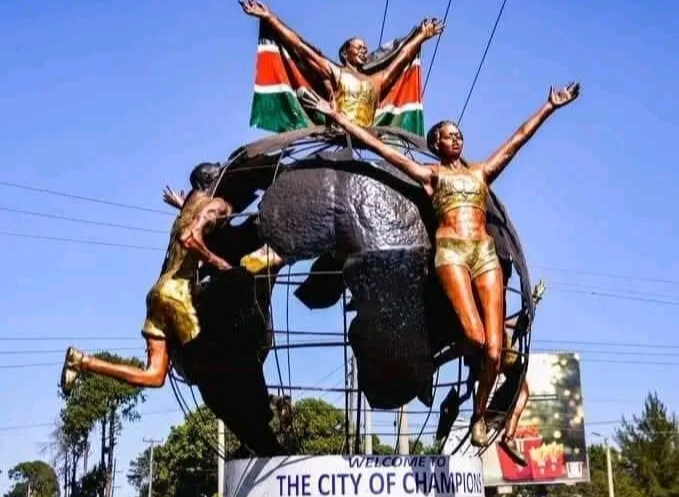
Eldoret is internationally associated with athletics and is widely promoted as the "home of champions." However, the tourism celebrations are providing an opportunity to present a broader picture of what the North Rift has to offer.
The Ministry of Tourism says the week is intended to showcase the rich tourism attractions of Eldoret and the wider Rift Valley, while also highlighting areas such as culture, sports, gastronomy, conservation and digital innovation.
Agribusiness can become another important component of that tourism identity.
Visitors can discover that the region is not only a place where world-class athletes train but also an area with agricultural landscapes, food traditions, enterprises, cultural communities and innovative businesses.
That diversification can help create a more complete tourism experience.
Food as a tourism attraction
One of the strongest connections between agriculture and tourism is food.
Tourists want to experience local cuisine, and local cuisine depends on agricultural production. Farmers produce the milk, vegetables, fruits, cereals, meat and other products that eventually reach hotels, restaurants and households.
An agro-business expo allows producers to demonstrate this connection.
The tourism industry can create markets for local farmers by encouraging hotels and restaurants to source more products locally. At the same time, farmers can benefit from learning what visitors and hospitality businesses want.
This can encourage production of high-quality, distinctive and locally branded food products.
The combination of agriculture, gastronomy and tourism can consequently create opportunities for farmers, food processors, chefs, restaurants and hospitality businesses.
Opportunities for young people
The presence of young people and students is another important dimension of the expo.
Agriculture and tourism both require new ideas, technology and entrepreneurship. Young people can participate in agribusiness through food processing, digital marketing, farm technology, logistics, hospitality, photography, tour guiding and content creation.
The tourism week itself places significant emphasis on digital technology and artificial intelligence. The Ministry says the event will highlight how digital technology and AI can transform tourism.
This creates opportunities for young entrepreneurs to use social media, websites, digital mapping, online booking systems and AI-powered tools to market agricultural and tourism experiences.
A young entrepreneur could, for instance, develop an online platform promoting farm visits around the North Rift or use short videos to show visitors what they can experience in different parts of the region.
Creating rural tourism opportunities
The benefits of tourism do not have to remain concentrated in major towns.
Agricultural tourism can help direct visitors into rural areas where farming is the main economic activity. This can create additional income for communities while encouraging the preservation of local traditions and landscapes.
Farm stays, cultural experiences, food tours and agricultural demonstrations can all become part of rural tourism.
When communities participate directly, tourism can provide markets for locally produced goods and services.
This approach also supports the idea of community-based tourism, in which local residents are not simply spectators but active participants in the tourism economy.
A platform for innovation
The expo also provides a space for agricultural innovation.
Modern agriculture is increasingly influenced by technology, including irrigation systems, improved farm machinery, digital marketplaces, climate-smart farming methods and data-based decision-making.
When such innovations are displayed alongside tourism products, visitors can see another side of the Rift Valley's development.
The wider tourism programme includes exhibitions featuring tourism products, technologies, cultural expressions and creative enterprises, creating opportunities for networking and business connections.
For businesses, these connections can be as important as the exhibition itself. An agricultural producer can meet a hotelier. A tourism operator can connect with a transport company. A technology entrepreneur can meet a farmer looking for a digital solution.
Such relationships can eventually create new products and services.
Eldoret as a gateway to the North Rift
The celebrations also provide an opportunity to position Eldoret as a gateway through which visitors can explore the wider North Rift.
A visitor arriving in Eldoret can potentially combine several experiences: sports tourism, cultural tourism, food experiences, nature-based tourism, agricultural tourism and entertainment.
The official programme includes destination experiences and road trips designed to expose participants to tourism sites around the North Rift.
This wider approach is important because tourism becomes stronger when visitors have several activities to choose from.
Instead of spending a short period in one location, tourists can be encouraged to build itineraries covering different destinations and experiences.
Business and investment opportunities
The agro-business expo can also contribute to investment discussions.
Tourism requires a network of businesses, including accommodation facilities, restaurants, transport operators, tour companies, food processors, entertainment providers and suppliers.
Agriculture adds another layer to this network.
Investors can identify opportunities in food processing, cold storage, farm experiences, hospitality supply chains, agricultural technology and local product branding.
The tourism week's emphasis on business networking and investment provides an environment where such conversations can take place. The event is bringing together government representatives, investors, innovators, tourism stakeholders, academics and members of the public.
Protecting the environment
Tourism development must also be linked to environmental sustainability.
Agriculture and tourism both depend heavily on natural resources. Soil, water, forests, landscapes and biodiversity are important to both sectors.
The tourism programme includes environmental activities such as tree planting and community clean-up initiatives, reinforcing the importance of sustainability.
For the Rift Valley to develop as a tourism destination, environmental conservation will remain important. Attractive landscapes, clean towns, healthy ecosystems and responsible agricultural practices can all contribute to the visitor experience.
The bigger picture for the Rift Valley
Day Three of the tourism celebrations therefore represents more than an exhibition of agricultural products. It highlights the possibility of connecting two major economic activities: agriculture and tourism.
The Rift Valley already has agricultural resources, sporting achievements, cultural diversity and natural attractions. The challenge is to package these assets into experiences that can be marketed to visitors locally and internationally.
The University of Eldoret expo provides a platform for beginning these conversations.
The long-term impact, however, will depend on what happens after the celebrations. Tourism promotion must continue beyond the event through investment, infrastructure development, digital marketing, skills development, conservation and partnerships between communities and businesses.

You Might Also Like
-
Deputy President Kithure Kindiki's call for Mount Kenya elders to take a leading role in fighting illicit drinks comes amid an intensified national crackdown on illegal alcohol. The government's approach involves police raids, closure of unlicensed outlets, investigations into suspected counterfeit
-
As Kenya moves toward the 2027 General Election, the Kenya National Association of the Deaf and other Deaf organisations are seeking an electoral process in which communication barriers do not prevent citizens from exercising their democratic rights. The key areas include Kenyan Sign Language inter
-
Deputy President Kithure Kindiki's visit to Nyeri County on September 25, 2026, has placed the issue of Mt Kenya unity at the centre of his public message. He urged leaders and residents not to allow political differences to create permanent divisions between communities and rejected attempts to spl
-
President William Ruto's meeting with FIFA President Gianni Infantino in New York focused on strengthening the partnership between Kenya and FIFA and accelerating football development in the country. The discussions covered regional technical centres for young players, the FIFA Arena project, a mode
-
President William Ruto’s engagement with Prince Rahim Aga Khan reflects the long-standing partnership between Kenya and the Aga Khan institutions. The relationship has contributed to important sectors including healthcare, education, economic development, climate resilience and community empowerme
-
President William Ruto's visit to the WNBA game in Brooklyn and his subsequent meeting with NBA Deputy Commissioner Mark Tatum placed Kenyan basketball on an international platform. The visit was especially significant because Ruto was there to support Madina Okot, the Kenyan player representing th