




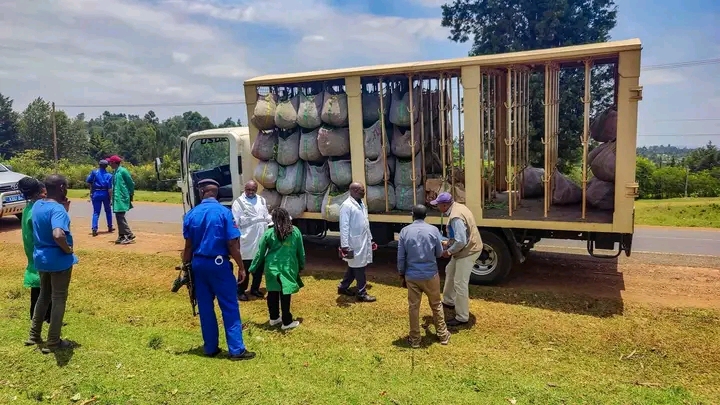
Five Tea Factory Clerks Arrested in Kericho as Government Cracks Down on Alleged Weighing-Scale Manipulation
The arrest of five factory clerks in Bureti over alleged falsification of tea-weighing scales has placed renewed focus on transparency and accountability in Kenya's tea industry. The operation followed complaints from farmers and was conducted by a multi-agency team involving the Tea Board of Kenya and the Weights and Measures Department. The case is significant because accurate weighing is fundamental to determining how much tea each farmer has delivered and, consequently, the records used in calculating earnings. Previous investigations in Bomet, Nyamira and Kiambu show that complaints about weighing practices have surfaced in several tea-growing regions over the years. For now, the Bureti arrests remain allegations under investigation. The next stage will be to establish through technical examinations, records and other evidence whether the scales were deliberately manipulated and whether farmers were financially affected. The government's intensified inspections could also result in further action if similar irregularities are discovered elsewhere.
Five clerks working at KTDA Holdings-linked and private tea factories have been arrested in Bureti Sub-County, Kericho County, following allegations that weighing scales used to measure tea delivered by farmers had been falsified. The arrests, reported on September 17, 2026, followed an impromptu multi-agency operation involving authorities responsible for the tea sector and weights and measures after farmers raised complaints about possible manipulation of the amount of tea recorded at buying centres.
The incident has renewed attention on the importance of accurate weighing in Kenya's tea industry, where the quantity of green leaf delivered by a farmer is directly connected to the farmer's earnings. When a weighing machine records a lower quantity than the actual amount delivered, the farmer can potentially lose income even though the farmer has produced and delivered the full quantity. The latest arrests therefore form part of a wider government effort to address complaints about weighing practices at tea-buying centres.
Agriculture Principal Secretary Paul Ronoh said the operation in Bureti was conducted after farmers complained about the alleged manipulation of weighing equipment. According to the report, Ronoh directed the Tea Board of Kenya, working together with the Department of Weights and Measures and multi-agency teams, to intensify inspections of weighing equipment in tea-growing areas.
The five clerks were arrested during an unannounced operation targeting tea-buying points in Bureti. Authorities are investigating allegations that the weighing scales had been falsified. The arrests do not by themselves establish guilt, and the suspects will be subject to the normal investigative and judicial process.
Why weighing scales are important to tea farmers
Weighing is one of the most important stages in the tea value chain. Farmers spend considerable time preparing their farms, picking tea leaves and transporting the produce to buying centres. Once the green leaf reaches the buying centre, it has to be weighed accurately so that the farmer receives a record corresponding to the quantity actually delivered.
Any discrepancy at this stage can have financial consequences. If a machine records less tea than was physically delivered, the farmer's production record can be reduced. Repeated discrepancies across many deliveries could potentially translate into substantial losses over time.
The government has therefore treated the integrity of weighing equipment as an important part of protecting farmers. The latest Bureti operation is not the first time authorities have investigated allegations of manipulation of tea weighing machines.
In August 2026, several tea factory clerks were arrested in Konoin, Bomet County, after farmers raised complaints about alleged theft of green leaf and manipulation of weighing scales at tea-buying centres. Officials from the Tea Board of Kenya, the Weights and Measures Department and security agencies participated in that operation.
The Konoin operation demonstrates that concerns over weighing are not confined to one tea-growing location. Authorities have been carrying out inspections in different tea-producing areas following complaints from farmers.
Government intensifies inspections
The latest Bureti arrests indicate that the government is moving beyond warnings and increasing physical inspections at buying centres. Impromptu operations are particularly significant because they allow officials to inspect equipment and procedures without giving operators advance notice.
The operation involved agencies with different responsibilities. The Tea Board of Kenya is responsible for regulatory oversight within the tea sector, while the Weights and Measures Department deals with the accuracy and verification of weighing equipment used for commercial transactions.
By working together, the agencies can examine both the tea-sector procedures and the equipment used to determine the quantity of farmers' produce.
The government has also made it clear that the issue is not simply about the machines themselves. Investigations can establish whether equipment was deliberately manipulated, whether the problem resulted from faulty equipment, or whether there were other circumstances affecting the readings.
Similar concerns have been reported before
Concerns about manipulated tea weighing scales have been documented in Kenya for several years. In March 2023, the Tea Board of Kenya and weights-and-measures officials seized a faulty tea weighing scale at Tombe Tea Factory in Nyamira County following complaints from farmers. Officials said the scale appeared to give readings lower than the quantity indicated by standard weights.
Another investigation in Githunguri, Kiambu County, in 2023 found allegations of a wider scheme involving factory clerks and some farmers. Kenya News Agency reported that preliminary tests of weighing scales indicated farmers could be losing approximately 1.4 kilograms for every 10 kilograms in some cases. Authorities confiscated manipulated machines and arrested some clerks during inspections.
These earlier cases provide context for the government's renewed inspections in Bomet and Kericho. They also show why farmers' complaints about weighing cannot simply be treated as isolated disputes between individual farmers and buying-centre employees.
Possible impact on farmers' earnings
For tea farmers, accurate weighing is closely linked to household income. A farmer may make multiple deliveries during the harvesting period, meaning even a small discrepancy at each delivery could accumulate.
The allegations in Bureti are consequently significant because the people responsible for weighing tea occupy a position of trust. Farmers depend on the buying-centre system to accurately record their produce.
If investigations establish that weighing equipment was deliberately altered, the authorities may need to determine how long the suspected manipulation had been taking place, how many farmers may have been affected and whether records can be reviewed to establish possible losses.
Such questions are likely to form part of any broader investigation following the arrests.
The role of the Tea Board of Kenya
The Tea Board has increasingly been involved in efforts to improve transparency in the tea sector. Officials have stressed that farmers should receive the proper value for the produce they deliver.
During the August operation in Konoin, Tea Board chief executive Willy Mutai said practices that deprive farmers of earnings through manipulation of weighing equipment should stop. The board also said it would continue working with security agencies and other government departments to strengthen compliance.
The Bureti operation is therefore part of a larger enforcement effort rather than an isolated police action.
The authorities' approach also places greater emphasis on farmers reporting suspicious practices. Farmers are encouraged to pay attention to the weighing process and raise concerns where the recorded weight appears inconsistent with the amount of produce delivered.
Legal consequences for manipulation of weighing equipment
The issue also comes at a time when Kenya is considering stronger legal measures against manipulation of commercial weighing and measuring equipment. A proposed Legal Metrology Bill, reported in August 2026, seeks to establish a new legal framework covering weighing and measuring equipment used in commercial transactions.
The proposed legislation would target practices such as tampering with weighing equipment, falsifying verification marks and using inaccurate equipment. The Star reported that the proposed law could provide for fines of between Sh10,000 and Sh5 million, imprisonment of up to five years, or both for certain offences involving false weighing or measuring equipment.
It is important to distinguish the proposed legislation from the current Bureti arrests: the arrests are based on existing investigative and legal processes, while the proposed bill represents a potential future legal framework.
What the arrests mean for tea-buying centres
The arrests could increase scrutiny of tea-buying centres in Bureti and other tea-growing areas. Factory managers and clerks may face greater pressure to ensure that weighing machines are properly maintained, verified and used according to the required procedures.
Regular inspection of equipment can also help distinguish deliberate manipulation from ordinary mechanical faults. A weighing scale may become inaccurate because of damage, poor maintenance or other technical problems, so investigations are important before assigning responsibility.
For farmers, the most important issue is that the quantity recorded at the buying centre should correspond with the actual amount delivered.
Farmers' concerns over tea-sector earnings
The weighing-scale controversy comes amid broader concerns about farmers' earnings in the tea industry. Agriculture PS Paul Ronoh has previously linked low farmer earnings to several factors, including operational costs and alleged corruption within parts of the tea sector.
In February 2026, Ronoh warned that corruption could extend from senior levels to factory clerks responsible for weighing tea. He also called for reforms intended to increase the share of tea proceeds reaching farmers.
The latest arrests therefore fit into a broader government campaign focused on accountability within the tea value chain.
What happens next
The five suspects are expected to undergo further investigations. Authorities will need to establish whether the weighing scales were actually manipulated, how the alleged manipulation was carried out, who may have been involved and whether farmers suffered financial losses.
The equipment involved may also be examined by specialists from the Weights and Measures Department. Such technical examination can help determine whether a scale was deliberately altered or was simply malfunctioning.
If investigators gather sufficient evidence, the suspects could face charges before a court. At that stage, the prosecution would have to prove the allegations in accordance with Kenyan law. Until then, the arrests should not be interpreted as a finding of guilt.
The authorities may also expand the inspections to other tea-buying centres, particularly in areas where farmers have reported similar concerns.
A warning to tea-sector officials
The Bureti arrests send a clear enforcement message to individuals involved in the weighing of farmers' produce. Officials handling weighing equipment are expected to ensure that the machines accurately reflect the quantity delivered.
The government has also demonstrated that complaints from farmers can trigger investigations and unannounced inspections. This could encourage more farmers to report suspected irregularities instead of remaining silent.
At the same time, factory management has a responsibility to ensure that weighing equipment is regularly checked and that clerks understand the procedures governing the measurement and recording of green leaf.

You Might Also Like
-
Deputy President Kithure Kindiki's September 17 visit to Maua was centred on the government's development agenda in Igembe South and the wider Meru County. His programme included inspection of the Sh100 million Nyambene Hospital expansion, the Maua Modern Market, and updates on larger countywide pro
-
A deadly fuel tanker accident near Paul Boit Secondary School in Turbo, Uasin Gishu County, has left at least two people dead and several others injured after an overturned petroleum tanker caught fire and exploded. The incident occurred along the busy Eldoret–Webuye highway after fuel reportedly
-
President William Ruto presides over the passing-out parade of newly trained GSU recruits at the National Police College, Embakasi ‘B’ Campus, Nairobi, after months of intensive training.
-
President William Ruto's visit to Homa Bay on Thursday, September 17, 2026, marked the conclusion of his Nyanza development tour. The visit combined inspection and commissioning of infrastructure with new government commitments. The key announcements included the KSh3.5 billion investment in 21 mod
-
Mama Ida Odinga's remarks about the first anniversary of Raila Odinga's death point toward a commemoration that will combine personal remembrance with efforts to preserve his broader public legacy. The Odinga family is preparing an inclusive programme around the week of October 15, while ODM has ann
-
The Mau evictees' return to their land remains one of Kenya's most complicated land and environmental questions. The latest Government action has focused on compensation and resettlement rather than a general return of evicted families into the protected Mau Forest. In August 2026, the Government an