GACHAGUA HOLDS TALKS WITH UN OFFICIAL ZAINAB BANGURA AMID GROWING POLITICAL CONCERNS IN KENYA
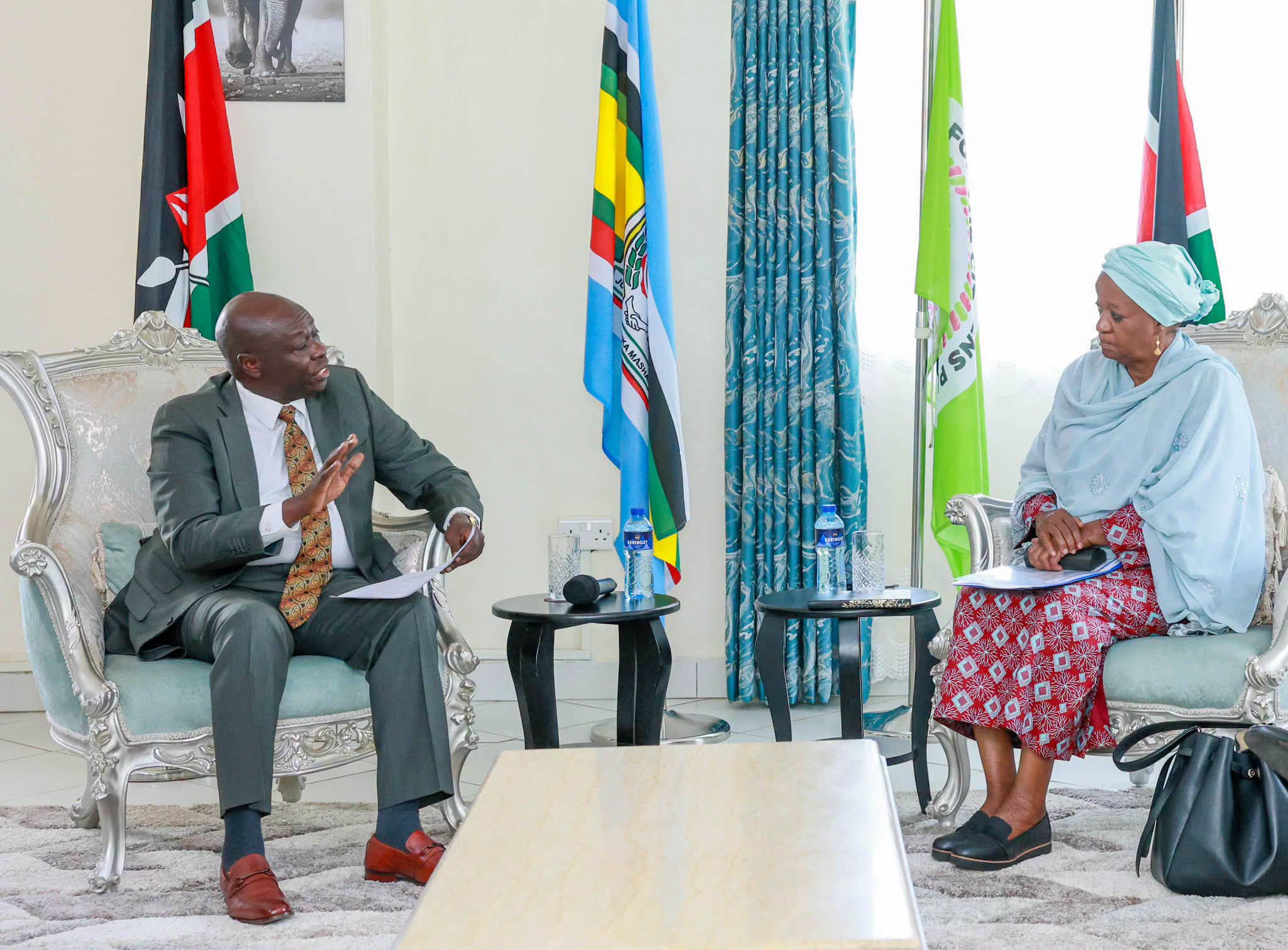
Former Deputy President Rigathi Gachagua has held discussions with United Nations Office at Nairobi Director-General Zainab Bangura, focusing on Kenya's political environment, human rights concerns, democratic governance and the country's engagement with international institutions. The meeting comes as political activity intensifies ahead of the 2027 General Election, with growing attention on electoral preparedness, the independence of the IEBC, protection of civil liberties and the need to uphold constitutional principles. The engagement also highlights the importance of international dialogue and cooperation in promoting democracy, accountability, peace and stability in Kenya.
Former Deputy President Rigathi Gachagua has met with Zainab Bangura, the Director-General of the United Nations Office at Nairobi, for discussions centred on Kenya's relationship with the United Nations and the country's continued engagement with the international organisation. The meeting provided an opportunity for the two leaders to exchange views on matters of mutual interest, particularly Kenya's role in international affairs, its cooperation with the United Nations and the importance of maintaining strong diplomatic relations with global institutions.
The engagement comes at a time when Kenya continues to play a significant role in regional and international diplomacy, hosting several United Nations agencies and serving as an important centre for multilateral cooperation in Africa. Nairobi remains a major diplomatic hub, bringing together international organisations, government representatives, development partners and other stakeholders involved in addressing global challenges.
Gachagua's meeting with Bangura also highlighted the importance of continued dialogue between Kenyan political leaders and representatives of international institutions. Such engagements provide opportunities to discuss issues affecting the country, strengthen mutual understanding and explore areas where cooperation can contribute to national and regional development.
Bangura, who serves as the Director-General of the United Nations Office at Nairobi, occupies a key position in coordinating the organisation's presence and operations in Kenya. Her office plays an important role in facilitating cooperation between the United Nations system, the Kenyan government and other stakeholders while supporting the organisation's broader objectives.
Kenya's relationship with the United Nations has developed over several decades, with the country hosting the United Nations Environment Programme and the United Nations Human Settlements Programme, among other international agencies. This presence has strengthened Nairobi's position as a major centre for global discussions on environmental protection, sustainable development, urbanisation, peace and security.
The meeting between Gachagua and Bangura therefore comes against a broader background of Kenya's longstanding involvement in multilateral diplomacy. The country has consistently participated in international discussions on development, peacebuilding, climate change, humanitarian assistance and regional stability.
The meeting took place in Nairobi on Monday, November 23, 2026, with Gachagua using the engagement to raise concerns about the country's political environment, the state of human rights and preparations for the 2027 General Election. The former Deputy President reportedly asked the United Nations to pay attention to what he described as increasing cases of human rights violations, political violence and concerns surrounding the conduct of electoral processes.
One of the key issues raised during the meeting was the need to safeguard democratic principles and ensure that constitutional freedoms are respected. Gachagua expressed concern over what he termed a growing disregard for the rule of law, arguing that developments in the country required attention from institutions mandated to promote democracy, accountability and the protection of fundamental rights.
He also brought up concerns regarding the Independent Electoral and Boundaries Commission (IEBC), particularly allegations of bias and the need to maintain public confidence in the electoral institution ahead of the next General Election. With Kenya expected to hold its presidential and other elective contests in August 2027, questions surrounding electoral preparedness, transparency and institutional independence have increasingly featured in political discussions.
Gachagua's engagement with the United Nations representative therefore comes at a time when political leaders are intensifying conversations about the country's democratic future. The former Deputy President wants international institutions to remain attentive to developments in Kenya, particularly issues relating to political freedoms, peaceful participation and the protection of citizens' constitutional rights.
The question of human rights remains an important subject in Kenya's governance discussions. The Constitution provides for fundamental freedoms, including freedom of expression, peaceful assembly, association and participation in political activities. These rights are essential in ensuring that citizens can express their opinions, engage in public affairs and participate in democratic processes without intimidation or discrimination.
The United Nations has consistently maintained a global mandate to promote human rights, peace, security and sustainable development. Through its various agencies and offices, the organisation works with governments, civil society groups and other stakeholders to advance international standards and support initiatives aimed at protecting human dignity.
For Kenya, engagement with the United Nations is particularly significant because of Nairobi's unique position within the international organisation. The city hosts the United Nations Office at Nairobi, which serves as an important centre for international diplomacy and multilateral cooperation.
Bangura's position places her at the centre of coordinating the United Nations' presence in Nairobi. She serves as an Under-Secretary-General and Director-General of UNON, having assumed the position in December 2019. Her responsibilities include overseeing the organisation's operations in Nairobi and supporting the work of various United Nations entities based in the Kenyan capital.
The meeting also comes against the backdrop of growing political activity as different leaders begin positioning themselves ahead of the 2027 elections. Political parties, opposition formations and government leaders have increasingly focused their attention on questions surrounding electoral preparedness, political competition and the credibility of institutions responsible for overseeing the voting process.
For Gachagua, raising these concerns with an international representative provides another platform through which he can communicate his position on Kenya's political situation. His remarks reflect his continued involvement in national political debates following his removal from the office of Deputy President.
Since leaving office, Gachagua has remained active in the country's political landscape, participating in discussions surrounding governance, accountability, leadership and the direction of the country. Through his political engagements, he has continued to raise questions about government decisions and the treatment of individuals and groups holding opposing political views.
His latest meeting with Bangura adds an international dimension to these engagements, particularly as the country approaches another election cycle. The involvement of international institutions in promoting democratic standards and supporting peaceful electoral processes is an issue that frequently attracts attention during election periods.
Kenya has a history of working with international partners on matters relating to governance, democracy and electoral administration. The United Nations and other development partners have previously supported initiatives aimed at strengthening institutions, encouraging peaceful political participation and promoting respect for human rights.
As the 2027 General Election approaches, discussions about the independence of electoral institutions are expected to remain prominent. The IEBC has a constitutional responsibility to organise and supervise elections, register voters, facilitate political competition and ensure that electoral processes are conducted in accordance with the law.
Public confidence in the commission is considered an important element of the electoral process. Political stakeholders have repeatedly emphasised the need for transparency, accountability and institutional independence to ensure that election results are accepted and disputes are addressed through established legal procedures.
Concerns about political violence and the protection of civil liberties are also likely to remain central to conversations surrounding the forthcoming elections. Kenya's political history demonstrates the importance of peaceful competition, responsible leadership and respect for constitutional institutions during election periods.
The United Nations, through its Nairobi office and wider international structures, provides a platform for engagement on these issues. However, the responsibility for implementing constitutional safeguards, protecting citizens and ensuring credible elections remains with Kenya's own institutions and relevant authorities.
Bangura's engagement with Kenyan political leaders also reflects the wider importance of maintaining communication between international organisations and different stakeholders within the country. Such interactions allow representatives of international institutions to understand the concerns being raised by political actors and other groups.
The meeting between Gachagua and Bangura is therefore expected to attract attention within the country's political circles, particularly because of the issues surrounding the 2027 General Election. It also highlights the increasing focus on international engagement as political leaders seek to communicate their positions on governance and democratic accountability.
While the specific outcomes of the meeting and any commitments made by the United Nations were not immediately detailed, Gachagua's request for international attention places human rights, political violence and electoral credibility at the centre of the discussion.
The engagement underscores the importance of protecting democratic institutions, upholding the rule of law and ensuring that political competition remains peaceful as Kenya prepares for the next General Election.
As the political environment continues to evolve, attention will remain on how government institutions, electoral authorities, political parties and international partners address concerns surrounding democracy and the protection of fundamental freedoms ahead of the 2027 polls.

You Might Also Like
-
Kenyan households and businesses are set to face changes in their November electricity bills following three tariff adjustments announced by the Energy and Petroleum Regulatory Authority (EPRA). The changes include a KSh3.54 per kilowatt-hour fuel cost charge, alongside foreign exchange and water re
-
Health Cabinet Secretary Aden Duale has reaffirmed Kenya's commitment to strengthening healthcare systems across Africa, saying the country will use its position on the Africa CDC Governing Board to champion local production of medicines and medical supplies, enhance cross-border health security and
-
The Ethics and Anti-Corruption Commission (EACC) has outlined several corruption-related cases scheduled to proceed in courts across Kenya this week, with various matters lined up for hearings, rulings, judgments and mentions. The proceedings form part of ongoing efforts to address corruption allega
-
A man from Nyando, Kisumu County, has been sentenced to life imprisonment after being convicted of defiling a three-year-old girl whom he allegedly lured into his house under the pretence of offering her tea in July 2025. The court found the prosecution had proved the case beyond reasonable doubt be
-
National Assembly Speaker Moses Wetangula has expressed interest in succeeding President William Ruto after the completion of his second term, declaring that he has the energy, experience and commitment required to lead the country. Wetangula says he is prepared to build on the development progress
-
President William Ruto and Democratic Republic of Congo (DRC) President Félix Tshisekedi have agreed to restore full diplomatic relations and strengthen cooperation between their two countries following high-level talks in Oyo, Republic of the Congo. The agreement was reached during the Quadriparti