



Gachagua Promises Tough Action Against Drug Trafficking Within First Year
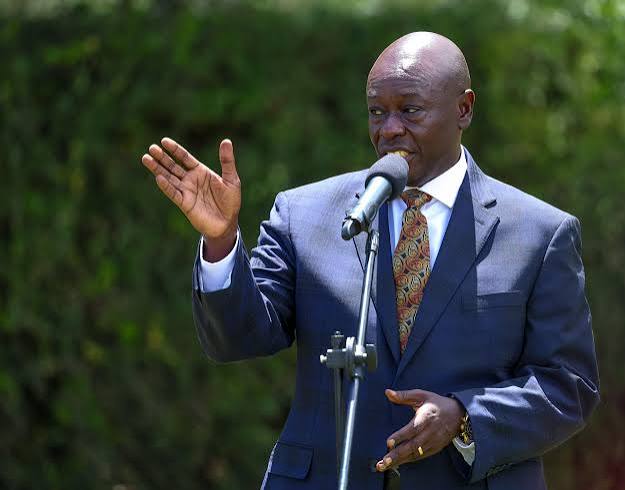
Former Deputy President Rigathi Gachagua has pledged to intensify the fight against drug trafficking, promising tougher border controls to prevent heroin, cocaine and cannabis from entering Kenya within the first year of his administration.

Saved Content

Former Deputy President Rigathi Gachagua has pledged to take firm action against the trafficking of hard drugs into Kenya, saying a government under his leadership would move aggressively to prevent narcotics from entering the country.

Gachagua said his administration would make the fight against drug trafficking a priority and would seek to strengthen controls at Kenya’s borders to stop substances such as heroin, cocaine and cannabis sativa from being brought into the country.

He made the commitment while outlining areas he says his administration would address within its first year in office. According to Gachagua, tackling the movement of illicit drugs would require strong political commitment, enhanced security operations and greater vigilance at the country's entry points.

“I have given a firm commitment that within one year of our administration, we shall not allow hard drugs like heroin, cocaine and cannabis sativa through our borders,” Gachagua said.

The statement places drug trafficking among the issues Gachagua says can be confronted through decisive government action. His remarks come amid continued concerns over the trafficking and consumption of narcotics in different parts of Kenya.

Focus on Kenya's Borders

Gachagua's proposal centres on preventing illegal drugs from entering Kenya through land, sea and air routes. The country's geographical position and extensive transport networks have historically made it a transit point for illicit drugs moving within the region.

Kenyan security agencies have previously reported that traffickers exploit unofficial entry points along some of the country's borders. A parliamentary report on national security noted that narcotics traffickers had exploited ungazetted entry points along Kenya's borders with Ethiopia, Tanzania and Uganda to smuggle drugs into the country and, in some cases, move them onward to other destinations.

The report also documented arrests and drug seizures involving heroin, cocaine, cannabis and other substances during the period under review.

Gachagua's proposed approach therefore places significant emphasis on border surveillance and enforcement. Such an approach would require cooperation between security agencies operating at border crossings, airports, ports and major transport routes.

The Directorate of Criminal Investigations' Anti-Narcotics Unit says its mandate includes prevention, detection, investigation and prosecution of drug trafficking. The unit is deployed at entry and exit points, including airports, borders, seaports and major highways, and targets major drug traffickers and organised criminal networks.

Growing Concern Over Drug Abuse

The former Deputy President's remarks also come against the backdrop of concerns over drug and substance abuse in Kenya, particularly among young people.

The National Authority for the Campaign Against Alcohol and Drug Abuse, NACADA, reported in May 2026 that traditional illicit drugs, including cannabis, heroin and cocaine, remain present in Kenya's drug-use landscape.

The authority's 2026 wastewater analysis also identified emerging new psychoactive substances, synthetic drugs, dangerous adulterants and evidence of small-scale clandestine laboratories. NACADA said the findings point to an evolving drug situation requiring coordinated and data-driven interventions.

The issue therefore extends beyond the interception of drugs at borders. Authorities also have to address local distribution networks, drug consumption, rehabilitation, treatment and prevention.

Enforcement and Rehabilitation

While Gachagua's statement focuses heavily on keeping drugs out of the country, Kenya's existing anti-narcotics framework involves several approaches.

The Directorate of Criminal Investigations says its Anti-Narcotics Unit works to identify and dismantle major drug trafficking networks while also investigating and prosecuting those involved in the illegal drug trade.

NACADA, meanwhile, has responsibilities relating to prevention, public awareness and interventions addressing alcohol and drug abuse.

This means that achieving the objective outlined by Gachagua would involve more than increased security checks. It would potentially require coordination among police, intelligence agencies, customs officials, border authorities, health agencies and institutions involved in rehabilitation.

The Coast and Drug Trafficking

Drug trafficking has previously been identified as a major concern along Kenya's Coast region. In February 2024, while serving as Deputy President, Gachagua directed regional security officials to intensify action against narcotics traffickers and illicit alcohol dealers.

At the time, he called for the arrest and prosecution of drug barons and described the Coast as a transit region and destination for hard drugs.

His latest pledge therefore continues a position he has expressed previously regarding the need for stronger action against narcotics trafficking.

A One-Year Target

A notable element of Gachagua's latest statement is the one-year timeline.

Rather than presenting the fight against drug trafficking solely as a long-term objective, he has committed his proposed administration to taking action within its first 12 months.

The pledge comes as Gachagua has recently outlined several areas where he says a future administration could deliver significant changes within its first year.

In September 2026, he also said a government with strong presidential leadership could make significant progress in tackling corruption within 12 months.

His latest remarks on narcotics similarly frame the first year as a period for implementing major government interventions.

However, stopping the movement of illicit drugs completely would involve challenges beyond political declarations. Drug trafficking is a transnational activity involving organised networks, multiple transportation routes and actors operating across national boundaries.

Kenya's security agencies have consequently relied on investigations, intelligence gathering, international cooperation, surveillance and prosecution as part of the broader response.

The Challenge of Border Security

Kenya shares land borders with several countries and also has a long Indian Ocean coastline. This creates multiple routes that security agencies must monitor.

Official security reports have previously identified the exploitation of unofficial border crossing points as one of the challenges facing anti-narcotics operations.

Strengthening border control could therefore involve increasing surveillance, improving intelligence sharing and expanding the capacity of officers stationed at official and vulnerable crossing points.

Technology could also play a role in identifying suspicious movements and improving the tracking of trafficking networks.

At the same time, authorities would need to distinguish between legitimate cross-border movement and criminal activity to ensure that stronger enforcement does not unnecessarily disrupt lawful trade and travel.

Protecting Young People

Another important dimension of the drug debate is the impact of substance abuse on young people.

NACADA's strategic planning documents have previously highlighted concerns over cannabis use, heroin and the growing abuse of prescription medicines. The authority reported evidence of heroin use spreading beyond traditional hotspots into counties including Nakuru, Uasin Gishu, Kisumu, Isiolo, Nyeri and Kiambu.

The authority's 2026 research further identified poly-drug use and emerging synthetic substances, suggesting that the drug landscape is changing.

For policymakers, this means that border enforcement would form only one part of a wider response.

Prevention programmes, public education, treatment facilities, rehabilitation services and support for recovering users would also remain important components of efforts to reduce the social impact of drug abuse.

Gachagua's Political Commitment

Gachagua's latest declaration presents drug control as one of the areas he says would receive firm attention under an administration led by him.

His commitment is specifically focused on preventing heroin, cocaine and cannabis sativa from entering Kenya through its borders within the first year of his administration.

The pledge now puts attention on how such a target could be translated into concrete policies, including increased border surveillance, stronger intelligence operations, cooperation with neighbouring countries and action against organised trafficking networks.

It also raises questions about how success would be measured, given that drug trafficking can shift from one route to another when enforcement pressure increases.

For now, Gachagua has made the commitment clearly: his proposed administration would make the fight against hard drugs a priority and seek to prevent their entry into Kenya within its first year.

The wider national challenge remains significant. Official reports continue to document drug trafficking, seizures and arrests, while NACADA's latest research indicates that Kenya's drug situation is evolving with the emergence of new substances and changing patterns of abuse.

Gachagua's pledge therefore places the spotlight on border security and narcotics control as part of the broader political debate ahead of Kenya's next election cycle. The effectiveness of any future strategy would ultimately depend on its implementation, resources, inter-agency coordination and ability to address both the supply of illicit drugs and the demand that sustains the market.


Gachagua Promises Tough Action Against Drug Trafficking Within First Year

Former Deputy President Rigathi Gachagua has pledged to take firm action against the trafficking of hard drugs into Kenya, saying a government under his leadership would move aggressively to prevent narcotics from entering the country.

Gachagua said his administration would make the fight against drug trafficking a priority and would seek to strengthen controls at Kenya’s borders to stop substances such as heroin, cocaine and cannabis sativa from being brought into the country.

He made the commitment while outlining areas he says his administration would address within its first year in office. According to Gachagua, tackling the movement of illicit drugs would require strong political commitment, enhanced security operations and greater vigilance at the country's entry points.

“I have given a firm commitment that within one year of our administration, we shall not allow hard drugs like heroin, cocaine and cannabis sativa through our borders,” Gachagua said.

The statement places drug trafficking among the issues Gachagua says can be confronted through decisive government action. His remarks come amid continued concerns over the trafficking and consumption of narcotics in different parts of Kenya.

Focus on Kenya's Borders

Gachagua's proposal centres on preventing illegal drugs from entering Kenya through land, sea and air routes. The country's geographical position and extensive transport networks have historically made it a transit point for illicit drugs moving within the region.

Kenyan security agencies have previously reported that traffickers exploit unofficial entry points along some of the country's borders. A parliamentary report on national security noted that narcotics traffickers had exploited ungazetted entry points along Kenya's borders with Ethiopia, Tanzania and Uganda to smuggle drugs into the country and, in some cases, move them onward to other destinations.

The report also documented arrests and drug seizures involving heroin, cocaine, cannabis and other substances during the period under review.

Gachagua's proposed approach therefore places significant emphasis on border surveillance and enforcement. Such an approach would require cooperation between security agencies operating at border crossings, airports, ports and major transport routes.

The Directorate of Criminal Investigations' Anti-Narcotics Unit says its mandate includes prevention, detection, investigation and prosecution of drug trafficking. The unit is deployed at entry and exit points, including airports, borders, seaports and major highways, and targets major drug traffickers and organised criminal networks.

Growing Concern Over Drug Abuse

The former Deputy President's remarks also come against the backdrop of concerns over drug and substance abuse in Kenya, particularly among young people.

The National Authority for the Campaign Against Alcohol and Drug Abuse, NACADA, reported in May 2026 that traditional illicit drugs, including cannabis, heroin and cocaine, remain present in Kenya's drug-use landscape.

The authority's 2026 wastewater analysis also identified emerging new psychoactive substances, synthetic drugs, dangerous adulterants and evidence of small-scale clandestine laboratories. NACADA said the findings point to an evolving drug situation requiring coordinated and data-driven interventions.

The issue therefore extends beyond the interception of drugs at borders. Authorities also have to address local distribution networks, drug consumption, rehabilitation, treatment and prevention.

Enforcement and Rehabilitation

While Gachagua's statement focuses heavily on keeping drugs out of the country, Kenya's existing anti-narcotics framework involves several approaches.

The Directorate of Criminal Investigations says its Anti-Narcotics Unit works to identify and dismantle major drug trafficking networks while also investigating and prosecuting those involved in the illegal drug trade.

NACADA, meanwhile, has responsibilities relating to prevention, public awareness and interventions addressing alcohol and drug abuse.

This means that achieving the objective outlined by Gachagua would involve more than increased security checks. It would potentially require coordination among police, intelligence agencies, customs officials, border authorities, health agencies and institutions involved in rehabilitation.

The Coast and Drug Trafficking

Drug trafficking has previously been identified as a major concern along Kenya's Coast region. In February 2024, while serving as Deputy President, Gachagua directed regional security officials to intensify action against narcotics traffickers and illicit alcohol dealers.

At the time, he called for the arrest and prosecution of drug barons and described the Coast as a transit region and destination for hard drugs.

His latest pledge therefore continues a position he has expressed previously regarding the need for stronger action against narcotics trafficking.

A One-Year Target

A notable element of Gachagua's latest statement is the one-year timeline.

Rather than presenting the fight against drug trafficking solely as a long-term objective, he has committed his proposed administration to taking action within its first 12 months.

The pledge comes as Gachagua has recently outlined several areas where he says a future administration could deliver significant changes within its first year.

In September 2026, he also said a government with strong presidential leadership could make significant progress in tackling corruption within 12 months.

His latest remarks on narcotics similarly frame the first year as a period for implementing major government interventions.

However, stopping the movement of illicit drugs completely would involve challenges beyond political declarations. Drug trafficking is a transnational activity involving organised networks, multiple transportation routes and actors operating across national boundaries.

Kenya's security agencies have consequently relied on investigations, intelligence gathering, international cooperation, surveillance and prosecution as part of the broader response.

The Challenge of Border Security

Kenya shares land borders with several countries and also has a long Indian Ocean coastline. This creates multiple routes that security agencies must monitor.

Official security reports have previously identified the exploitation of unofficial border crossing points as one of the challenges facing anti-narcotics operations.

Strengthening border control could therefore involve increasing surveillance, improving intelligence sharing and expanding the capacity of officers stationed at official and vulnerable crossing points.

Technology could also play a role in identifying suspicious movements and improving the tracking of trafficking networks.

At the same time, authorities would need to distinguish between legitimate cross-border movement and criminal activity to ensure that stronger enforcement does not unnecessarily disrupt lawful trade and travel.

Protecting Young People

Another important dimension of the drug debate is the impact of substance abuse on young people.

NACADA's strategic planning documents have previously highlighted concerns over cannabis use, heroin and the growing abuse of prescription medicines. The authority reported evidence of heroin use spreading beyond traditional hotspots into counties including Nakuru, Uasin Gishu, Kisumu, Isiolo, Nyeri and Kiambu.

The authority's 2026 research further identified poly-drug use and emerging synthetic substances, suggesting that the drug landscape is changing.

For policymakers, this means that border enforcement would form only one part of a wider response.

Prevention programmes, public education, treatment facilities, rehabilitation services and support for recovering users would also remain important components of efforts to reduce the social impact of drug abuse.

Gachagua's Political Commitment

Gachagua's latest declaration presents drug control as one of the areas he says would receive firm attention under an administration led by him.

His commitment is specifically focused on preventing heroin, cocaine and cannabis sativa from entering Kenya through its borders within the first year of his administration.

The pledge now puts attention on how such a target could be translated into concrete policies, including increased border surveillance, stronger intelligence operations, cooperation with neighbouring countries and action against organised trafficking networks.

It also raises questions about how success would be measured, given that drug trafficking can shift from one route to another when enforcement pressure increases.

For now, Gachagua has made the commitment clearly: his proposed administration would make the fight against hard drugs a priority and seek to prevent their entry into Kenya within its first year.

The wider national challenge remains significant. Official reports continue to document drug trafficking, seizures and arrests, while NACADA's latest research indicates that Kenya's drug situation is evolving with the emergence of new substances and changing patterns of abuse.

Gachagua's pledge therefore places the spotlight on border security and narcotics control as part of the broader political debate ahead of Kenya's next election cycle. The effectiveness of any future strategy would ultimately depend on its implementation, resources, inter-agency coordination and ability to address both the supply of illicit drugs and the demand that sustains the market.


You Might Also Like

Stay Connected

Get Newsletter