



Government Launches Emergency Verification for Mau Forest Evictees as Compensation Process Enters Final Stage
The government's verification and compensation programme for Mau Forest evictees represents an attempt to resolve a dispute that has lasted for many years. The verification process was crucial because it enabled authorities to identify affected families and create a beneficiary list before releasing public funds. The process has now culminated in a Sh2.6 billion payout to 13,000 families, with each receiving Sh200,000. The development is significant because it addresses one of the major complaints raised by Mau evictees: the long wait for government assistance after displacement. At the same time, compensation does not erase the historical, environmental and legal questions surrounding the Mau Forest. For the government, the priority now is to ensure that the forest remains protected while compensated families are able to rebuild sustainable lives outside the protected ecosystem. For the evictees, the key issue will be whether the money received can genuinely help them establish permanent homes and livelihoods. The Mau Forest story therefore enters a new phase. After years of evictions, protests, political debate, court cases and verification exercises, the government says it is closing the compensation chapter. The real measure of success, however, will be whether affected families can finally achieve stability while the Mau ecosystem is successfully restored and protected for future generations.
The Kenyan Government has intensified efforts to resolve the long-running plight of families displaced from the Mau Forest, with the verification and identification of affected households becoming a central part of the compensation process. The exercise is aimed at ensuring that people who genuinely suffered displacement during the Mau Forest evictions are identified, documented and considered for government assistance.
The development comes after years of uncertainty among thousands of families who were removed from areas considered part of the Mau Forest ecosystem. The evictions were carried out as part of efforts to protect the Mau Forest Complex, one of Kenya's most important water towers, but they also left many families struggling to rebuild their lives outside the forest.
Recent developments have now seen the government move from verification and identification to actual compensation. On August 26, 2026, President William Ruto announced a Sh2.6 billion payout to 13,000 Mau Forest evictee families, with each beneficiary receiving Sh200,000. The President made the announcement at Sogoo in Narok South during his tour of Narok County.
Why the verification exercise became necessary
The verification process was important because the Mau Forest eviction crisis affected a large and sometimes difficult-to-document population. Over the years, different figures have been given concerning the number of people and families affected by evictions.
In 2025, the government began a more systematic exercise to identify and verify people who had been displaced. Reports at the time indicated that more than 14,000 evictees had been vetted as authorities worked towards fulfilling compensation commitments.
The verification was intended to establish who had actually been affected, where they had lived, when they were removed and whether they qualified for assistance. Such a process is particularly important when public funds are involved because the government needs to establish an accurate list of beneficiaries and prevent duplication, fraud or payments to people who were not affected.
In May 2025, President Ruto directed Interior Principal Secretary Raymond Omollo to work with deputy county commissioners and local leaders to identify affected families. The government said the move followed a boundary verification exercise that had helped clarify ownership and settlement patterns in the Mau Forest area.
The latest Sh2.6 billion compensation
The biggest development in the process came on August 26, 2026, when the government released Sh2.6 billion for 13,000 families.
Each beneficiary received Sh200,000 through M-Pesa. The money was presented as compensation intended to help affected families rebuild their lives outside the protected forest area.
The calculation is straightforward:
13,000 families × Sh200,000 = Sh2.6 billion.
President Ruto described the payment as the final phase of efforts to resolve the Mau eviction issue. According to reports, he said the government considered the payment an important step towards closing what had been a painful and politically sensitive chapter.
This latest payment also follows an earlier intervention in which 2,000 families received Sh300,000 each in 2023 to help them leave the forest and purchase land elsewhere.
What the emergency verification was supposed to achieve
The verification process served several purposes.
First, it was meant to establish the identity of genuine evictees. Since the Mau issue has existed for many years, records had to be checked against information provided by residents, local administrators and community leaders.
Second, the exercise was designed to determine the number of affected households. Compensation programmes require an official beneficiary register. Without such a register, there is a risk of disputes over who qualifies.
Third, verification was necessary to reduce fraud and duplication. If a family was registered more than once, or if people who were not affected were included, government resources could be diverted away from genuine victims.
Fourth, the process was expected to help the government understand the current circumstances of displaced families. Some families moved to temporary settlements, while others relocated to different parts of Narok and neighbouring counties.
Finally, verification helped provide a foundation for compensation and other forms of assistance.
The history behind the Mau evictions
The Mau Forest Complex has been at the centre of Kenya's environmental and political debates for decades.
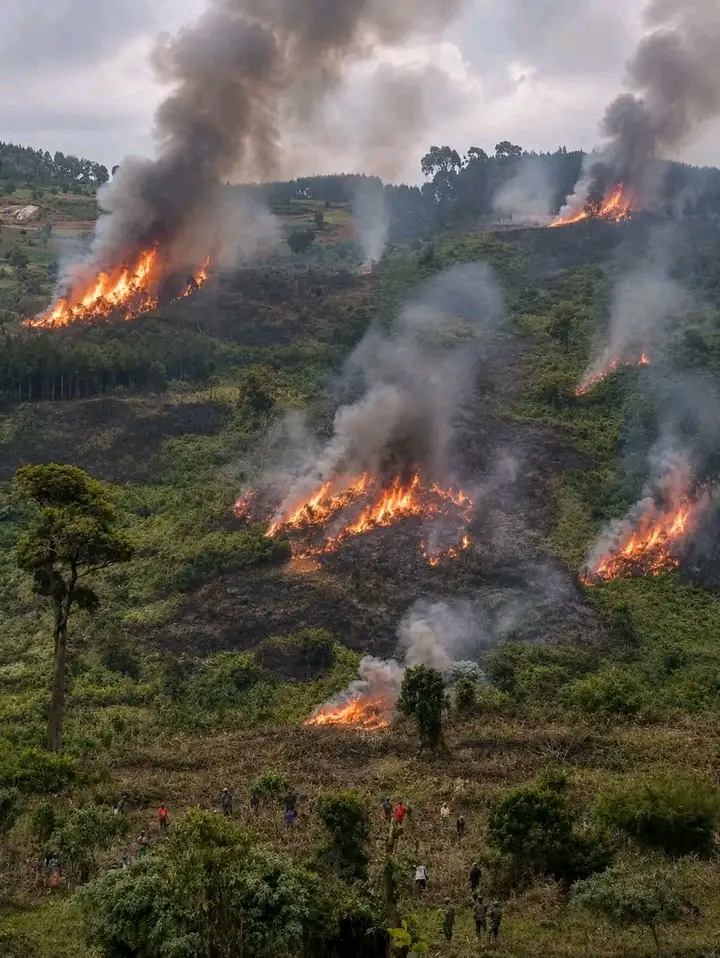
The forest is an important water catchment and supports numerous rivers and ecosystems. The government has repeatedly argued that settlement and agricultural activities inside protected sections of the forest have contributed to environmental degradation.
At the same time, thousands of families had lived in or around the affected areas for many years. Some families claimed to have documentation or historical claims to land, while the government maintained that some settlements were irregular.
Large-scale evictions took place at different periods, including 2018 and 2019. Human Rights Watch reported that more than 50,000 people were evicted from Mau Forest lands from 2018 onwards and documented serious concerns about conditions faced by some displaced families.
The humanitarian consequences became particularly severe for families who lost homes, farms, businesses and other sources of livelihood.
For many evictees, the central issue was not simply the loss of a house. Families also lost access to agricultural land, meaning they lost an important source of food and income.
Government's conservation argument
The government has consistently maintained that protecting the Mau Forest is necessary because of its importance as a water tower.
The Mau ecosystem supports water systems that benefit millions of people and contributes to agriculture, wildlife and other economic activities.
In 2025, the government announced additional measures aimed at strengthening protection of the forest. President Ruto also said that the forest should not be used as a political tool and that encroachment would not be allowed to continue.
The government has therefore attempted to combine two objectives: protecting the forest while addressing the plight of people who were removed from it.
This distinction is important because compensation does not necessarily mean that the government is allowing former occupants to return to protected forest land.
Instead, the current approach has been to compensate eligible families and support them in rebuilding their lives outside the forest.
Earlier compensation efforts
The current Sh2.6 billion programme did not emerge suddenly.
In 2023, the government provided Sh300,000 to 2,000 families living in tents in the Mau Forest. The money was intended to encourage them to leave the forest and acquire land elsewhere.
President Ruto later announced that additional evictees would receive compensation.
In March 2026, he announced compensation for another 12,000 evictees, according to reports. The eventual programme covered 13,000 families who received Sh200,000 each in the August 2026 payout.
This progression demonstrates why verification was important. The government had to distinguish between groups that had already received assistance and those still awaiting compensation.
Concerns among evictees
Despite the latest payments, the Mau Forest issue has not been without controversy.
Some evictees have argued that compensation has taken too long. Families affected by the evictions have spent years waiting for assistance while dealing with the consequences of displacement.
There have also been disagreements over who should be included on official lists.
The verification process therefore became particularly sensitive. A person left off the list could potentially miss out on government compensation, while including someone who did not qualify could create accusations of corruption or favouritism.
That is why transparency in beneficiary identification remains important.
Local administrators, community leaders and government officials have all played roles in identifying affected households.
The legal dimension
The Mau evictions have also generated legal disputes.
In August 2026, the Narok Environment and Land Court dismissed a petition filed by more than 40,000 Mau Forest evictees challenging their treatment during the eviction process. The court also dealt with questions surrounding land titles and subdivisions in sections of the forest.
The legal disputes demonstrate that the Mau question is much broader than compensation alone. It involves land ownership, environmental protection, historical settlement, government policy and the rights of displaced people.
Consequently, the Sh2.6 billion compensation programme represents only one component of a much larger historical dispute.
What the payment means for affected families
For families that have received the money, the Sh200,000 payment could provide an opportunity to restart their lives.
The money can potentially help with purchasing or securing alternative land, rebuilding homes, restarting small businesses, paying school-related expenses or investing in farming and other income-generating activities.
However, Sh200,000 may not be sufficient to replace everything a family lost during displacement. Land prices, construction costs and the cost of establishing a new livelihood can be considerably higher.
For that reason, the long-term success of the programme will depend not only on whether money reaches beneficiaries but also on whether families can establish sustainable livelihoods.
The environmental significance
The government is also linking the compensation programme to a broader Mau Forest restoration strategy.
The Mau Forest Complex Integrated Conservation and Livelihood Improvement Programme is designed to combine forest restoration with livelihood improvement. Government officials have described the Mau as one of Kenya's most important water towers and argued that conservation and community welfare need to advance together.
This approach recognizes that environmental conservation can create social problems if communities affected by conservation measures are not adequately supported.
The government therefore faces the challenge of ensuring that protecting the forest does not simply transfer economic hardship from one group to another.
What happens next?
With the latest payout, the government has indicated that it considers the main compensation programme for the 13,000 identified families substantially concluded.
President Ruto said the payment marked the final stage in addressing the particular group of evictees covered by the programme.
Nevertheless, questions remain about people who claim they were affected but were not included in the verified list.
There is also the broader question of how Kenya will prevent future disputes over settlement in protected forest areas.
The government's position is that the Mau must remain protected, while affected families should receive assistance outside the forest.

You Might Also Like
-
The current debate over alleged plans to rig Kenya's 2027 General Election has placed the IEBC under renewed public and political scrutiny. The commission has firmly rejected allegations that it intends to manipulate the election, describing previous claims as reckless, misleading and baseless. Th
-
The death of Martina Chepkemoi Rutto, a Kiswahili teacher at Lalagin Secondary School in Bureti Sub-County, has shocked her family and the wider education community in Kericho. She had been reported missing before her body was discovered in Kericho town. Preliminary reports indicate that she had suf
-
Alex Kiprotich is more than the journalist whose name dominated Kenya's news cycle on September 2, 2026. He is a veteran Standard Group journalist whose career has included investigative reporting, regional newsroom leadership, news editing and senior editorial responsibilities. His reported abduct
-
Kenya Railways' latest land-identification activities mark a significant stage in the development of the Naivasha–Kisumu–Malaba SGR extension. As of September 2, 2026, officials are undertaking field identification and mapping of land along the proposed corridor, following earlier government not
-
Elvis Opiyo died on August 11, 2026, at his rented apartment in Umoja Two, Nairobi, at the age of 37. Police treated his death as a suspected suicide, while a post-mortem reportedly established poisoning as the cause of death. His death occurred while he was facing allegations connected to an acid a
-
The planned Nedbank takeover of NCBA represents a major turning point for the Kenyatta and Ndegwa families and for Kenya's banking industry. The two families have historically been among NCBA's most significant shareholders, with the Ndegwas holding approximately 14.94 percent through First Chartere