



Governor Mutai Fires Back at Opposition in Kipkelion, Defends Government Projects During Stanley Kemboi Burial
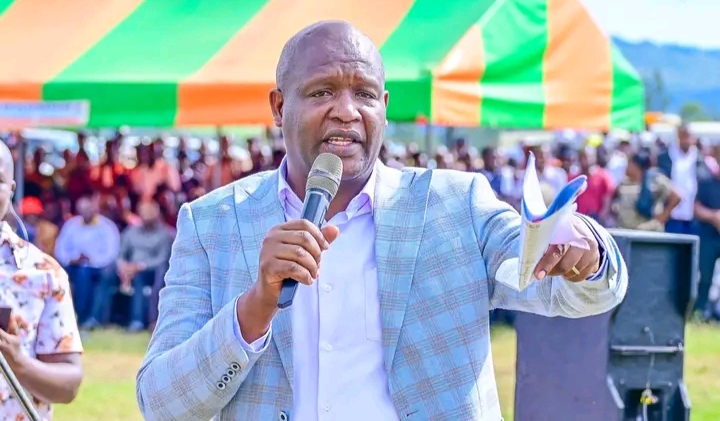
Kericho Governor Dr Erick Mutai used the burial ceremony of Stanley Kemboi in Kipkelion on Tuesday, September 29, 2026, to criticise political leaders he accused of opposing government development projects. Mutai argued that political differences should not stand in the way of programmes aimed at improving residents’ lives, highlighting ongoing investments in roads, healthcare, education, electricity and agricultural infrastructure across Kericho County. His remarks came amid growing political debate over the implementation, impact and accountability of government projects as Kenya approaches the 2027 General Election.
Kericho Governor Dr Erick Mutai used the burial ceremony of Stanley Kemboi in Kipkelion West on Tuesday, September 29, 2026, to address the political debate surrounding development projects being implemented by the national and county governments. The governor criticised political actors whom he accused of opposing government projects, arguing that development initiatives should be supported when they are intended to improve the lives of residents.
The burial took place at Kaula Village in Kipkelion West Sub-County, where family members, friends, colleagues, local leaders and residents gathered to bid farewell to Kemboi, a senior clinician who worked at Kericho County Referral Hospital. The County Government of Kericho confirmed that Kemboi served as the Senior Clinician and Head of the Non-Communicable Disease Centre before his death in a tragic road accident.
While the primary purpose of the gathering was to mourn Kemboi and comfort his family, Governor Mutai also used the occasion to speak about development and politics in the region.
Mutai questions opposition to development projects
Mutai's remarks focused on what he portrayed as resistance by some political leaders to projects being undertaken by the government. He argued that political differences should not become an obstacle to projects that are meant to benefit ordinary citizens.
The governor's comments come at a time when Kericho County has been witnessing increased government activity, with several infrastructure and service-delivery projects either being launched, inspected or planned across different parts of the county.
In September, President William Ruto undertook a development tour of Kericho during which several projects in Kipkelion and neighbouring areas were launched or inspected. According to the Kericho County Government, the programme included the launch of the Kipkelion East Last Mile Connectivity Project, the Sabunit, Kapkondor, Furaha and Hill Tea Access Road, as well as construction of the 34-kilometre Panda Pilis, Kampala, Bokoiyot and Mabasi Road. The President also inspected Kapkatet Stadium and commissioned Kapkatet Market.
These projects have placed development at the centre of political discussions in the South Rift region.
Mutai has repeatedly presented infrastructure, health, education, agriculture and economic projects as important components of his administration's development agenda.
Kipkelion projects take centre stage
Kipkelion has been among the areas receiving attention from both the county and national governments.
In August, the Kericho County Government announced plans to allocate five acres of land next to Kipkelion Sub-County Hospital for the establishment of a Kenya Medical Training College campus. The county said the proposed institution would expand access to medical training while creating opportunities for young people and strengthening the health workforce in the region.
The project is particularly significant because it would link medical education with an existing health facility, allowing students to gain practical experience while reducing the cost of developing separate infrastructure.
The county government has also listed the Kipkelion Maize Milling Plant among projects expected to promote value addition and improve opportunities for farmers. Other programmes include health-centre projects and market development initiatives.
Earlier in the year, road infrastructure was another major focus. The county commissioned roads connecting communities in Chepseon Ward, including the Chebitet Forest–Silibwet Village road and the Koibarak–Lamayat–Chebitet County roads. County officials said the projects were intended to improve rural accessibility and facilitate movement of agricultural produce to markets.
Governor links development to political responsibility
Against this background, Mutai's remarks at Kemboi's burial placed political opposition to government programmes under scrutiny.
The governor's message was that leaders should focus on the interests of residents rather than allowing political disagreements to interfere with development.
His comments also reflect the increasingly political environment ahead of the 2027 General Election, when national and county leaders are expected to defend their development records and explain their positions on government programmes.
However, opposition to a government project can take different forms. Political leaders may question the cost, implementation, procurement process, location, quality or expected benefits of a project. Such criticism does not necessarily mean that the project itself is opposed.
For residents, the central issue is often whether a project is completed on time, delivers the promised services and provides value for public resources.
Mutai's broader development agenda
Governor Mutai has continued to highlight infrastructure, healthcare, agriculture, water and education as important areas of development in Kericho.
The county government recently reported that its Cabinet had approved several initiatives under the 2026/27 financial year. These included the Roret Pineapple Processing Plant, Kipkelion Maize Milling Plant, operationalisation of health centres and completion of Sondu Market.
The county has also been conducting development tours in different parts of Kipkelion. On September 8, Mutai led county officials to Kamasian Ward, where they commissioned the Murau ECDE Twin Centre and Chebitet ECDE Centre. The county said the facilities would bring early-childhood education services closer to children living in the area.
Such projects form part of the political context in which the governor has been defending the county administration's record.
Burial of Stanley Kemboi
Despite the political remarks, the gathering remained primarily a funeral ceremony for Kemboi.
The County Government of Kericho described him as a dedicated medical professional who served residents with commitment and compassion. He was the Senior Clinician and Head of the Non-Communicable Disease Centre at Kericho County Referral Hospital.
The county said his death following a road accident was a significant loss to his family, colleagues and the wider community. His funeral service was held at Kaula Village in Kipkelion West after a night vigil at his home.
His work in healthcare was particularly significant given the increasing burden of non-communicable diseases and the need for specialised services within county health facilities.
Political debate continues
Mutai's comments in Kipkelion demonstrate how development projects have increasingly become part of political debate in Kericho.
For the governor and government supporters, projects such as roads, electricity connections, markets, health facilities and education infrastructure represent tangible improvements that should receive support regardless of political affiliation.
For critics, however, government projects can legitimately be subjected to public scrutiny over implementation, expenditure and impact.
The disagreement therefore extends beyond whether development should take place. It also involves questions about who should implement projects, how public money should be spent, which areas should receive priority and how residents can hold leaders accountable.
As Kenya moves closer to the 2027 elections, such debates are likely to become more prominent across counties.
In Kipkelion, Mutai's message was clear: political differences should not, in his view, prevent residents from benefiting from development projects. His remarks came as the region continues to experience increased government investment in roads, electricity, healthcare, education and agricultural infrastructure.
The burial of Stanley Kemboi consequently became both a moment of mourning and an opportunity for the governor to make a wider political and development argument. The discussion over government projects is expected to continue as residents assess the progress, benefits and challenges associated with the various initiatives being undertaken across Kericho County.
You Might Also Like
-
President William Ruto says Kenya will take a stake in the proposed Dangote East Africa Refinery and contribute its assets to the project, stressing that the country will invest and not expect anything for free.
-
Ugandan President Yoweri Museveni has praised Aliko Dangote as an African investor committed to developing the continent, while criticising leaders he says prioritise foreign interests over African development.
-
Prime Minister Abiy Ahmed's message during the Dangote East Africa Petroleum Refinery groundbreaking was centred on energy security, Ethiopia's access to additional fuel supplies, regional trade, industrialisation, investment and opportunities for young Africans. He described the Lamu refinery as a
-
Former Nigerian President Olusegun Obasanjo's attendance at the September 30, 2026 groundbreaking of the Dangote East Africa Petroleum Refinery in Lamu added historical and continental significance to the ceremony. His presence alongside President William Ruto, Aliko Dangote and other African leader
-
President William Ruto's September 30, 2026 groundbreaking ceremony with Aliko Dangote marks a major new chapter in Kenya's energy and industrial development. The proposed Sh2.2 trillion, 700,000-barrel-per-day Dangote East Africa Petroleum Refinery is expected to supply petroleum products to Kenya
-
The EPRA report released on September 29 provides a broad assessment of Kenya's energy and petroleum sectors for the year ended June 30, 2026. Its findings show record electricity demand, increased generation, continued dominance of renewable energy, rising household electricity consumption, higher