IEBC Raises Concerns Over Cost and Logistics of Livestreaming All 50,000 Polling Stations
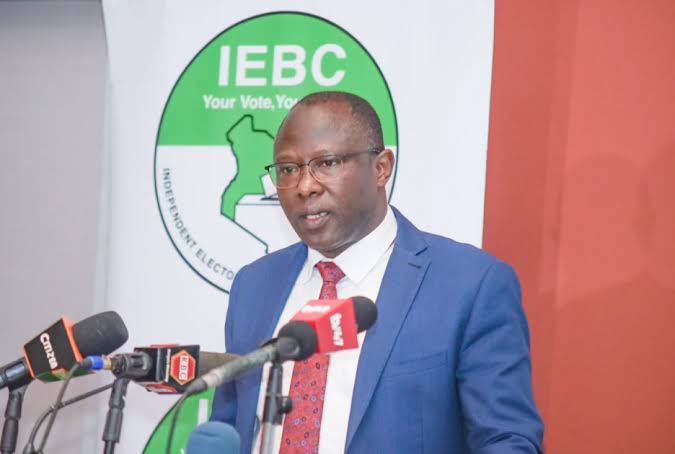
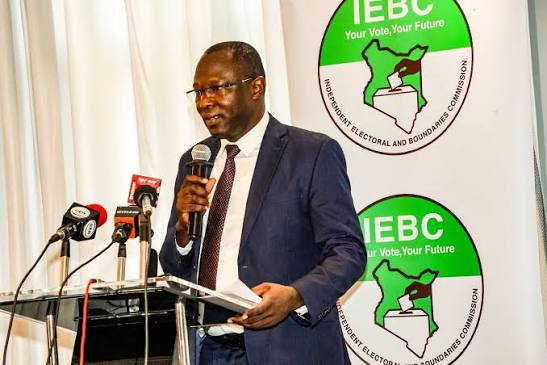
IEBC Chairperson Erastus Ethekon has raised concerns over the financial and logistical challenges of livestreaming election proceedings across all 50,000 polling stations ahead of the 2027 General Election. He says implementing the proposal would significantly increase election expenditure, particularly due to the cost of purchasing cameras, installing the necessary equipment and ensuring reliable livestreaming across the country. Ethekon further notes that the exercise would require adequate time to procure the equipment, train personnel and deploy operators to polling stations nationwide. The remarks come amid growing public calls for greater transparency and accountability in the electoral process, with Kenyans seeking measures that would strengthen confidence in the management of elections. As preparations for the 2027 polls continue, the debate raises important questions about balancing transparency, technological investment and the responsible use of public resources while safeguarding the secrecy of the ballot.
The Independent Electoral and Boundaries Commission (IEBC) has raised concerns over the financial and logistical implications of livestreaming election proceedings across all 50,000 polling stations in Kenya, warning that the proposal could significantly increase the cost of conducting the 2027 General Election.
IEBC Chairperson Erastus Ethekon says implementing such an arrangement would require substantial financial resources, specialised equipment and adequate preparation to ensure that the exercise is carried out effectively across the country.
The proposal comes amid growing public interest in transparency and accountability in the electoral process, with Kenyans calling for measures that would strengthen confidence in the management, counting and transmission of votes.
Livestreaming proceedings at every polling station has been discussed as one of the possible ways of allowing citizens to follow election activities as they happen. Supporters of the idea argue that giving the public access to polling station proceedings could improve transparency and reduce suspicion surrounding the electoral process.
However, Ethekon has indicated that rolling out the proposal nationwide would not be a simple undertaking, particularly because of the number of polling stations involved and the resources needed to equip each location.
With approximately 50,000 polling stations expected to be covered, the commission would need to acquire a large number of cameras and other necessary equipment. The procurement process alone would require significant planning, funding and time before the devices could be installed and tested.
The commission would also have to consider the technical requirements needed to ensure that livestreaming works reliably in different parts of the country. Kenya has polling stations located in urban centres, rural communities and remote areas, some of which may face challenges involving electricity supply and internet connectivity.
Ensuring that all these locations can transmit live footage without interruptions would require a coordinated technical arrangement. The commission would need to assess the available infrastructure and determine what additional facilities would be necessary to support the exercise.
Ethekon has also pointed out that the proposal would require the recruitment, training and deployment of personnel to operate the cameras and manage the livestreaming process. This would introduce another layer of responsibility for the commission as it prepares for the next General Election.
The personnel would need to understand how to operate the equipment, manage technical interruptions and ensure that the livestreaming process does not interfere with the normal conduct of voting activities.
Training would be particularly important because polling stations are spread across different regions, meaning that the commission would have to prepare a large workforce and coordinate their deployment before election day.
The proposed livestreaming arrangement would therefore require the commission to develop clear operational guidelines governing how the cameras would be installed, who would operate them and how the footage would be transmitted and monitored. Such guidelines would be necessary to avoid confusion and ensure that the technology supports rather than disrupts the electoral process.
The commission would also need to establish a system for monitoring livestreaming activities from different polling stations. This would involve technical teams responsible for identifying and responding to challenges such as equipment failure, interrupted internet connections and power outages.
In the event of technical difficulties, the commission would need alternative arrangements to ensure that the failure of a livestreaming system does not affect voting, counting or the announcement of results at the polling station.
The financial implications are also likely to remain an important consideration as preparations for the 2027 elections continue. Kenya's electoral process involves several activities, including voter registration, the acquisition of election materials, recruitment and training of election officials, voter education and the deployment of personnel across the country.
Introducing a nationwide livestreaming system would add another expenditure to the commission's preparations. The cost would not be limited to purchasing cameras, as the project would also require installation, maintenance, technical support, internet services and the management of the equipment throughout the election period.
The commission would also have to consider whether the equipment could be used for future elections or whether additional resources would be required to maintain and upgrade the systems. Proper planning would be necessary to ensure that public funds are used responsibly while addressing the demand for greater transparency.
The debate over livestreaming has emerged at a time when the management of elections and the credibility of results remain major issues of public interest. Kenyans have increasingly called for electoral processes that can be independently observed and easily understood by voters, political parties, candidates and other stakeholders.
For many citizens, access to information from polling stations is considered an important part of building trust in the electoral system. Livestreaming could potentially allow members of the public to observe certain stages of the election without having to be physically present at every polling station.
It could also provide an additional source of information for observers and stakeholders seeking to follow the conduct of elections in different parts of the country. However, the effectiveness of such a system would depend on its design, reliability and the safeguards put in place to protect the integrity of the process.
There would also be a need to establish clear limits on what can be captured and broadcast. Election officials must be able to perform their duties without unnecessary interference, while voters must be able to cast their ballots freely and privately.
The secret ballot is a fundamental principle of democratic elections. Any livestreaming arrangement would therefore need to protect voters from being recorded while marking their ballot papers or undertaking activities that could compromise their privacy.
The commission would have to ensure that cameras are positioned in a way that allows the public to observe relevant proceedings without exposing the choices made by individual voters. Protecting the secrecy of the ballot would remain essential regardless of the technology adopted.
Another consideration would be the management of footage after it has been transmitted. The commission would need to determine how recordings would be stored, who would have access to them and how they could be used when questions arise concerning the conduct of an election.
Clear rules would help prevent the misuse of footage, including the circulation of misleading clips taken out of context. They would also provide a framework for handling complaints and reviewing relevant material where necessary.
The discussion further highlights the wider challenge facing the IEBC as it prepares for the 2027 General Election. The commission must balance demands for transparency with the practical realities of conducting a nationwide election involving millions of voters and thousands of polling stations.
While technology can improve access to information, its introduction must be supported by adequate infrastructure, trained personnel and reliable systems. A technology-driven electoral process can only deliver the intended benefits when the equipment works effectively and election officials understand how to use it.
The commission will also need to communicate clearly with Kenyans about the measures it intends to implement to promote transparency. Public understanding of the electoral process is important in reducing misinformation and ensuring that citizens receive accurate information about how elections are conducted.
The question of livestreaming is therefore part of a broader conversation about the measures needed to strengthen confidence in the next election. Stakeholders are likely to continue examining different approaches that could improve openness while ensuring that election preparations remain financially and operationally manageable.
For the IEBC, the challenge will be to evaluate the proposal against the available resources, the time remaining before the election and the technical demands involved in covering all polling stations.
Ethekon's remarks indicate that the commission considers nationwide livestreaming a major undertaking that would require careful preparation rather than a straightforward addition to existing election procedures.
As discussions continue, Kenyans will be watching how the commission addresses calls for greater transparency while managing the cost of delivering a credible election. Any decision on livestreaming will need to consider the expectations of voters, the need to protect ballot secrecy and the practical requirements of operating the system across the country.

You Might Also Like
-
**HEADLINE:** IEBC CHAIRPERSON ETHEKON QUESTIONS PRACTICALITY AND COST OF LIVESTREAMING RESULTS FROM 50,000 POLLING STATIONS **NEWS ARTICLE:** Independent Electoral and Boundaries Commission (IEBC) Chairperson Erastus Ethekon has questioned the practicality of livestreaming electoral activi
-
The meeting convened by Interior Cabinet Secretary Kipchumba Murkomen, attended by PS Raymond Omollo, IG Douglas Kanja, DIG Eliud Lagat, DIG Gilbert Masengeli and leaders from Isiolo and Garissa, marks an important government intervention following the recent deadly inter-community clashes. The eig
-
Football Kenya Federation (FKF) has partnered with the Kenya Red Cross Society in an agreement valued at approximately KSh54 million aimed at strengthening medical preparedness and emergency response across Kenyan football. The collaboration seeks to improve the safety and welfare of players, coache
-
President William Ruto has announced an increase in Hustler Fund borrowing limits for approximately 4.5 million Kenyans who have demonstrated responsible repayment behaviour. The move is aimed at expanding access to affordable credit, supporting small-scale traders and entrepreneurs, and strengtheni
-
The 17th anniversary celebrations of Joyful Women Organization at State House on November 24, 2026, mark an important chapter in Kenya's efforts to promote women's economic independence. With President William Ruto leading the celebrations, the occasion recognises an organisation that began with app
-
By combining KIMC's expertise in media and communication with TSC's responsibility for teacher development, the initiative seeks to prepare educators for emerging learning areas under the Competency-Based Education curriculum. The training in Media Technology, Theatre and Film, Creative Arts, Music