



Joy Turns to Heartbreak: Kiambu Mother Who Gave Birth to Quintuplets Loses Four Babies
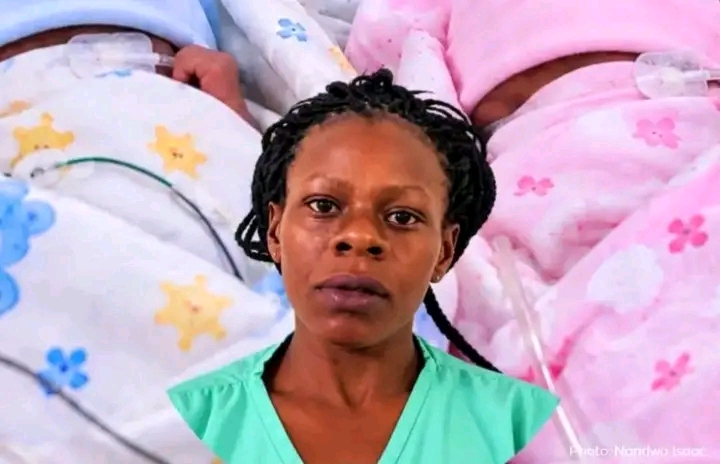
The story of Mercy Kanini of Juja, Kiambu County, is both extraordinary and heartbreaking. She made headlines after delivering five babies through normal delivery at Thika Level Five Hospital, an event described as extremely rare in Kenya. The babies were subsequently transferred to Kenyatta National Hospital because they were born prematurely and had extremely low birth weights. Tragically, reports on September 15, 2026, confirmed that four of the five newborns had died, leaving one surviving baby. The case highlights the dangers associated with extreme prematurity and multiple pregnancies while also demonstrating the importance of specialised newborn healthcare. For Kanini and her husband, what began as an extraordinary moment of happiness has become a period of profound grief. The surviving baby remains at the centre of the family's hopes, while Kenyans have continued sending messages of condolence and encouragement. The family will need compassion, privacy and appropriate support as they mourn the four children they have lost and continue caring for the surviving child. Most importantly, the case should remind the public that behind every medical headline is a family experiencing real emotions. While Kanini's natural delivery was remarkable, the deaths of four of her babies show the immense challenges faced by families dealing with extreme prematurity and high-risk multiple births.
A heartbreaking story has emerged from Juja in Kiambu County after a mother who recently made headlines for giving birth to five babies through normal delivery lost four of the newborns. The mother, identified in reports as Mercy Kanini, had delivered the quintuplets at Thika Level Five Hospital in what was described as an exceptionally rare birth in Kenya. What began as a moment of extraordinary happiness for Kanini and her family quickly turned into a devastating tragedy after the premature babies were transferred to Kenyatta National Hospital (KNH) for specialised neonatal care. Reports published on September 15, 2026, indicate that four of the five infants subsequently died, leaving one surviving baby.
The remarkable birth
Mercy Kanini, a resident of Juja in Kiambu County, attracted national attention after delivering five babies through normal vaginal delivery at Thika Level Five Hospital. The delivery was unusual because quintuplet pregnancies are medically challenging and are frequently managed through Caesarean section because of the risks associated with multiple births.
According to reports, Kanini arrived at the hospital when one of the babies was already beginning to be delivered. Medical staff initially considered taking her to theatre for a Caesarean section. However, after further assessment, the medical team determined that she could deliver the remaining babies normally.
She eventually delivered all five babies without undergoing a Caesarean section. The delivery was celebrated as an extraordinary achievement, with Kiambu Governor Kimani Wamatangi reportedly describing it as one of only a handful of such cases recorded in Kenya.
The birth initially brought immense happiness to Kanini and her husband, Evans Murirya Nyahanga. Reports said the couple already had two children, meaning the arrival of the quintuplets would bring their total number of children to seven.
The family had expected a large family—but not the tragedy
The family had been celebrating the arrival of the five newborns and appealing for support because raising five babies at the same time would place significant financial and practical demands on the household.
Reports indicated that the couple had initially expected four babies, making the arrival of a fifth child an additional surprise. The news attracted attention from Kenyans, with many people expressing excitement and offering messages of support to the family.
The father, Evans Murirya Nyahanga, expressed happiness over the birth and appealed to the county government and well-wishers to support the family as they prepared to raise the five children.
Unfortunately, the family would soon face a much more difficult reality.
The babies were born prematurely
One of the most important factors in understanding the tragedy is that the quintuplets were born prematurely and had extremely low birth weights.
Reports indicate that the babies weighed between approximately 630 grammes and 800 grammes. Such weights are extremely low for newborns and can be associated with significant medical challenges. The infants therefore required highly specialised neonatal care and monitoring.
Premature babies may have underdeveloped lungs and other organs, making it difficult for them to breathe and maintain essential body functions without medical assistance. They can also have difficulty maintaining body temperature, feeding and fighting infections.
The fact that five premature babies were born at the same time created an especially demanding medical situation.
Transfer to Kenyatta National Hospital
After the babies were delivered at Thika Level Five Hospital, they were transferred to Kenyatta National Hospital in Nairobi for specialised care.
The transfer was necessary because extremely premature newborns may require advanced neonatal intensive care, including respiratory support, specialised feeding, continuous monitoring and treatment for complications associated with premature birth.
According to reports, all five infants were moved to KNH because of their very low birth weights and need for specialised treatment.
The family's hopes were therefore placed on the specialised medical team caring for the babies.
Four babies die
The situation took a tragic turn when reports emerged that four of the five babies had died.
The deaths transformed what had been a celebrated medical and family milestone into a painful period of mourning for Kanini, her husband and their wider family.
Reports published on September 15 said that four of the premature infants had died after being transferred to KNH, while one baby remained alive.
At the time of the reports, detailed individual medical explanations for each infant's death had not been publicly provided. It is therefore important not to attribute the deaths to a particular complication without confirmation from the medical authorities or the family.
What is clear from the available reports is that the babies were extremely premature and had exceptionally low birth weights, factors that can make survival particularly difficult.
A painful contrast
The tragedy is especially painful because the birth had initially been celebrated as an extraordinary achievement.
Just a day earlier, reports were focusing on Kanini's rare natural delivery of five babies. She had spoken about her happiness after learning that she had successfully delivered all five.
Her husband was also celebrating the arrival of the children and seeking assistance from well-wishers.
Within a short period, however, the family's situation changed dramatically.
Instead of preparing for life with five newborns, the parents were forced to mourn four children while hoping that the remaining baby would survive.
The story has therefore generated significant sympathy from Kenyans, many of whom have shared messages of condolence and prayers for the surviving child and the grieving parents.
The medical risks of quintuplet pregnancies
The case also highlights the enormous medical challenges associated with multiple pregnancies.
A quintuplet pregnancy means that five babies develop in the mother's womb at the same time. The pregnancy places significant demands on the mother's body and increases the likelihood of premature delivery.
The babies also have less space and fewer resources available to them compared with a single pregnancy. As a result, multiple pregnancies have a higher risk of premature birth and low birth weight.
Prematurity itself can expose newborns to numerous complications.
These can include breathing difficulties because the lungs may not have fully developed, difficulties regulating body temperature, feeding problems, infections and complications affecting other organs.
Very premature infants often require care in neonatal intensive care units, where they can receive continuous monitoring and specialised treatment.
In Kanini's case, the reported birth weights of between 630 and 800 grammes demonstrate just how medically vulnerable the babies were.
Why specialised neonatal care matters
The case has also drawn attention to the importance of neonatal services in Kenya.
When babies are born extremely prematurely, their survival can depend on access to trained neonatal specialists, incubators, ventilators and other forms of specialised equipment.
Hospitals handling high-risk pregnancies therefore need adequate maternity and neonatal facilities.
Thika Level Five Hospital was able to manage the extraordinary delivery, while the transfer to KNH provided access to higher-level specialised neonatal services.
The situation illustrates how different levels of Kenya's healthcare system can become involved in managing complicated pregnancies and premature births.
The surviving baby
Following the deaths of four babies, attention has shifted to the remaining child.
Reports available on September 15 did not provide a detailed medical assessment of the surviving baby's condition. The child is nevertheless expected to require continued specialised medical care because the baby was also part of the premature quintuplet pregnancy.
The family and members of the public have expressed hope that the surviving infant will overcome the medical challenges associated with extreme prematurity.
For the parents, the situation is particularly difficult because they must simultaneously cope with bereavement and remain focused on the wellbeing of their surviving child.
Calls for support
Before the tragedy, the family had already appealed for assistance because raising five newborns would require substantial resources.
With four children now having died, the nature of the family's needs has changed. Beyond financial assistance, the parents may need emotional and psychological support as they process the loss of four children.
Bereavement following the death of a newborn can be particularly painful, and the circumstances of this case make the loss even more difficult because the family had initially experienced extraordinary excitement and public attention.
Messages from Kenyans have focused on encouraging the family and praying for the surviving baby.
The story also calls for sensitivity when reporting on newborn deaths.
Because the family has suffered a major loss, speculation about what caused the deaths should be avoided unless confirmed by qualified medical professionals.
The available reports establish that the babies were premature, had extremely low birth weights and were transferred to KNH for specialised care. However, a complete medical explanation of the individual causes of death would require information from the hospital or the family.
It is also important to protect the dignity and privacy of the parents during such a difficult period.
A story of joy, tragedy and hope
Mercy Kanini's experience has brought together several important aspects of maternal and newborn healthcare in Kenya.
Her delivery demonstrated the extraordinary capabilities of healthcare workers at Thika Level Five Hospital. Delivering five babies naturally is a rare occurrence and required careful medical management.
However, the deaths of four of the newborns demonstrate that successful delivery does not necessarily mean that premature babies are out of danger.
For extremely premature infants, the hours and days following birth can be critical. Their survival may depend on their gestational age, birth weight, organ development, medical complications and access to specialised neonatal care.
In Kanini's case, the family moved from celebrating five newborns to mourning four of them in a very short period.

You Might Also Like
-
The KUPPET protest and calls for justice in Kericho have brought renewed attention to the death of teacher Martina Chepkemoi Ruto. Her disappearance, followed by the recovery of her body near the Kimugu River and reports of multiple chest stab wounds, has left her family, colleagues and the communit
-
Former Migori Governor Okoth Obado is back in the Milimani High Court on September 16, 2026, for sentencing following his conviction over the 2018 murder of Rongo University student Sharon Otieno. Obado, alongside his former personal assistant Michael Juma Oyamo and former Migori County official Cas
-
The announcement that Nairobi will host the 2029 World Athletics Championships has been met with considerable excitement in Eldoret, particularly among upcoming athletes, coaches and residents who identify strongly with Kenya's athletics tradition. Young athletes see the championships as a potentia
-
 President Ruto's reaction to Nairobi winning the 2029 World Athletics Championships has centred on national pride, Africa's historic opportunity and recognition of Kenya's athletics heritage. He has described the victory as belonging to Kenya, Africa and generations of athletes who have made the cou
 -
The 15th Mara Day celebrations concluded on Tuesday, September 15, 2026, at Bomet Stadium, bringing together Kenyan and Tanzanian leaders, environmental experts, conservation organisations and local communities to discuss the protection of the Mara River ecosystem. Key leaders included EAC Affairs a
-
President William Ruto's September 15, 2026 visit to Siaya marks the third day of his current Nyanza development tour and represents one of the most politically significant stages of the regional visit. The day is centred on Dhogoye Bridge, Sihayi-Bar Ober-Sega Road, Alego Usonga Affordable Housing