



Juja Quintuplet Tragedy: Mercy Kanini Loses Her Fifth Baby as All Five Newborns Die at KNH
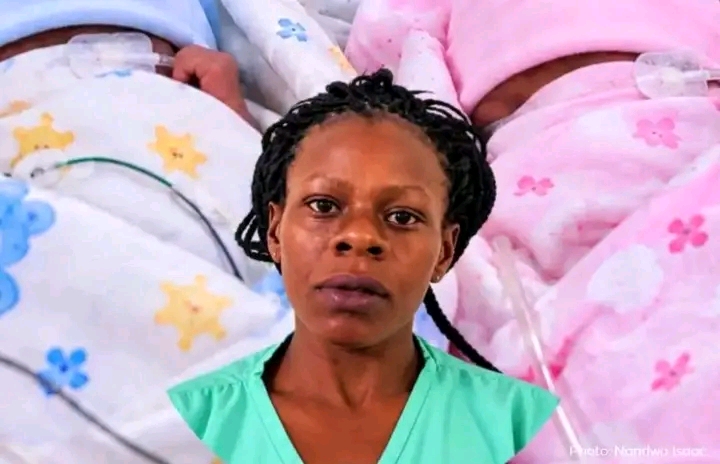
Mercy Kanini, a 28-year-old mother from Juja, Kiambu County, has been left devastated after losing all five babies she delivered in a rare quintuplet birth at Thika Level Five Hospital. The babies, born at about 25 weeks and weighing between 600 and 800 grammes, were extremely premature and were transferred to Kenyatta National Hospital for specialised neonatal care. Four of the babies died earlier while receiving treatment, and the fifth and final surviving baby, a boy, also died on September 16, 2026. The tragedy has drawn attention to the serious health risks associated with extreme prematurity and the importance of specialised neonatal care for very-low-birth-weight babies.
Mercy Kanini, a mother from Juja in Kiambu County, has suffered a devastating loss after all five babies she delivered in a rare quintuplet birth died following complications linked to extreme prematurity. The final surviving baby, a boy, died at Kenyatta National Hospital (KNH) on Wednesday, September 16, 2026, after the other four babies had already died while receiving specialised neonatal care. KNH confirmed that all five newborns, who had been transferred from Thika Level Five Hospital, had died.
The tragedy has brought an abrupt end to what had initially been celebrated as an extraordinary birth. Kanini, aged 28 according to several reports, had delivered five babies through normal vaginal delivery at Thika Level Five Hospital. The delivery attracted national attention because quintuplet births are extremely rare, and delivering all five babies naturally is an unusual occurrence.
A rare quintuplet pregnancy
Mercy Kanini's pregnancy was considered high-risk because she was carrying five babies. Reports indicate that her pregnancy had reached only about 25 weeks and six days when she went into labour. At this stage, the babies were extremely premature, meaning their organs, particularly their lungs, were not sufficiently developed to function normally outside the womb.
According to Kiambu County Executive Committee Member for Health Services Dr Elias Maina, Kanini went into labour at approximately 1am and was admitted to Thika Level Five Hospital at around 7am with established labour. Three obstetric scans had indicated that she was carrying quintuplets.
The babies were eventually delivered within a very short period. The first baby, a boy, was delivered at approximately 10:45am, followed by four girls. The fifth and final baby was delivered at around 10:56am. Kanini remained stable after the delivery.
The newborns weighed between approximately 600 and 800 grammes. Reports have given individual weights of about 600g, 630g, 715g, 720g and 800g. Such extremely low birth weights are associated with significant risks because premature babies have immature organs and often require intensive neonatal support.
The delivery that initially brought joy
Before the tragedy unfolded, Kanini and her husband, Evans Nyamhanga, were celebrating what appeared to be a remarkable blessing for their family.
Kanini had previously given birth to two children, a boy and a girl. The quintuplets represented her third pregnancy. Her husband described the arrival of five babies as a miracle, particularly because the family had been expecting four babies according to earlier information.
Kanini herself later described being happy after discovering that she had delivered all five babies. Medical staff had initially considered a Caesarean section, but after examining her condition, they allowed her to continue with normal delivery. She subsequently delivered all five babies vaginally.
The successful delivery was particularly notable because quintuplet pregnancies carry substantial risks for both the mother and babies. The babies are frequently born prematurely and may require immediate access to neonatal intensive care.
The babies' condition after birth
Although the delivery itself was successful, the condition of the five newborns remained extremely fragile.
The babies were born at roughly 25 weeks and weighed less than one kilogramme each. According to medical specialists quoted in reports, babies born at such an early stage of pregnancy face major challenges involving breathing, feeding, maintaining body temperature and fighting infections.
Their lungs were not fully developed. Premature babies can struggle to breathe independently because the lungs may not yet produce enough surfactant, a substance that helps keep the air sacs open. Some extremely premature newborns require continuous positive airway pressure or mechanical ventilation.
The babies also faced difficulties maintaining their body temperatures and receiving adequate nutrition. Their immature digestive systems can make normal feeding difficult, while their undeveloped immune systems increase their vulnerability to infections.
Because of these challenges, the five babies required a level of neonatal care that was beyond what could adequately be provided at Thika Level Five Hospital.
Transfer to Kenyatta National Hospital
After being stabilised at Thika Level Five Hospital, the five newborns were transferred to Kenyatta National Hospital in Nairobi. The transfer was carried out because KNH had specialised neonatal intensive care facilities capable of handling extremely premature babies.
According to reports, the babies left Thika Level Five Hospital at around 10:30pm on September 13 after receiving initial stabilisation. They were transported in ambulances and accompanied by their parents.
At KNH, the babies were admitted for specialised care. Medical teams, including neonatologists, nurses and other healthcare professionals, worked to support the newborns.
However, their extreme prematurity and very low birth weights presented enormous medical challenges.
The first four deaths
The family’s happiness quickly turned into grief.
Two of the four girls died within approximately two hours of arriving at KNH, according to KNH Clinical Director Joel Lesan. Two other girls subsequently died two days later. The babies' deaths were attributed to complications associated with extreme prematurity, including immature lungs.
The deaths left the baby boy as the only surviving member of the quintuplets.
For the family, the situation became particularly painful because the birth had initially generated widespread happiness and public attention. What had started as a rare medical success had become a fight to save the last surviving newborn.
The final baby becomes the family's last hope
After the deaths of the four girls, the baby boy remained under specialised care at KNH.
For a short period, the family and members of the public continued hoping that the boy would survive. Medical teams continued providing specialised treatment as they attempted to manage the complications associated with his extreme prematurity.
However, that hope was eventually lost.
On September 16, KNH confirmed the death of the fifth and final surviving baby. The announcement meant that none of the five children survived.
The development transformed the story from one of a rare quintuplet birth into a profound family tragedy.
Why extremely premature babies face serious risks
Medical specialists have explained that the survival of extremely premature babies depends on several factors, including gestational age, birth weight, lung development and access to specialised neonatal care.
The smaller and more premature a baby is, the greater the medical challenges can become. At around 25 or 26 weeks, babies may require continuous monitoring and respiratory support.
Breathing is one of the biggest challenges. Immature lungs may not be capable of supplying enough oxygen without medical assistance. Babies may require CPAP, surfactant treatment or mechanical ventilation.
Feeding can also be difficult because extremely premature babies may not have fully developed swallowing and digestive functions. They can initially require nutrition through specialised methods before they are able to take breast milk safely.
Maintaining body temperature is another challenge. Very small premature babies lose heat quickly because they have little body fat and an immature ability to regulate temperature.
Infections are also a major danger because premature babies have immature immune systems. Even an infection that might be manageable in an older child can become life-threatening in an extremely premature newborn.
Questions and concerns surrounding the case
The deaths have also generated public discussion about the care and transfer of extremely premature babies.
Before the fifth baby died, members of Kanini's family raised concerns about the circumstances surrounding the transfer from Thika to KNH. Her sister, Catherine Mutiso, spoke to journalists about how the babies were transported in ambulances. The family questioned aspects of the transfer and called attention to the difficulties involved in moving fragile premature newborns.
These concerns should be distinguished from established medical findings. The available reports confirm the deaths and the babies' extreme prematurity, but questions raised by relatives about the transfer are allegations and concerns that would require proper investigation before responsibility could be established.
The central medical fact remains that the babies were born at an extremely early stage of pregnancy and with exceptionally low birth weights.
Support for the family
Before the deaths, Kanini's husband had appealed for assistance because raising five newborns would have placed enormous financial and practical demands on the family.
The family had also received attention from Kiambu County authorities. Governor Kimani Wamatangi had been mentioned in connection with support for the family, including provision of an ambulance.
Following the deaths, the family's needs have changed dramatically. Instead of preparing for the enormous responsibility of raising five premature children, the parents are now faced with mourning the loss of all five newborns.
Reports have also indicated that public figures, including comedian and philanthropist Eric Omondi, have expressed concern and called for support for the grieving family.
A tragedy that highlights Kenya's neonatal-care challenges
The Mercy Kanini case has also drawn attention to the broader issue of neonatal healthcare in Kenya.
Specialised neonatal intensive care units are essential for babies born extremely prematurely. Such units require trained neonatologists, neonatal nurses, incubators, ventilators, oxygen systems, monitoring equipment, medicines and other specialised resources.
The case demonstrates how quickly the condition of extremely premature babies can change. Even after successful delivery and transfer to a specialised hospital, survival cannot always be guaranteed.
Medical specialists have stressed that extremely low birth weight does not automatically mean that a baby cannot survive. There have been cases of very small premature babies surviving with intensive medical care. However, the risks increase considerably as gestational age and birth weight decrease.
A family now mourning five children
For Mercy Kanini and Evans Nyamhanga, the events of September 2026 have been an extraordinary emotional journey.
They entered hospital expecting the arrival of their children and experienced the shock and happiness of discovering five babies had been born. The successful normal delivery initially appeared to be a remarkable medical and personal achievement.
Within days, however, the family experienced the deaths of all five children.
The loss of the fifth and final baby on September 16 ended the family's remaining hope. KNH confirmed that all five babies had died after receiving specialised neonatal care.
The case is therefore likely to remain an important story in Kenya's public discussion about premature births, neonatal intensive care, emergency referrals and support for families facing complicated pregnancies.
Most importantly, Mercy Kanini's story is now one of profound bereavement. Behind the headlines about a rare quintuplet birth is a mother and father who had hoped to welcome five children into their family and are instead being forced to grieve the loss of all five.
The tragedy also serves as a reminder that successful delivery does not necessarily mean the end of danger for extremely premature newborns. For babies born around 25 weeks and weighing between 600 and 800 grammes, the days immediately following birth can be critical, requiring highly specialised care and constant medical attention.
Latest confirmed position: Earlier reports on September 15 stated that four babies had died and that the fifth, a boy, remained alive at KNH. KNH subsequently confirmed on September 16 that the fifth baby had also died, meaning all five of Mercy Kanini's quintuplets have now died.

You Might Also Like
-
Kenya's current milk shortage is putting pressure on consumers, farmers, processors and retailers. Formal milk deliveries have declined, while prolonged dry conditions have reduced pasture and increased the cost of animal feeds. At the retail level, some areas have recorded substantial price increas
-
The differences between KNUT and KUPPET over Junior School largely arise from competing interpretations of where Junior School teachers belong within Kenya's changing education system. KUPPET has consistently emphasised that Junior School teachers perform a post-primary teaching role and should the
-
Interior CS Kipchumba Murkomen's disclosure that 1,189 people have been jailed for political goonism since 2022 has brought renewed attention to the problem of politically linked violence in Kenya. The figure consists of 1,053 men and 136 women, according to information presented to the Senate. Th
-
Kericho and Bomet are seeing the kind of rainfall activity forecast for parts of the Rift Valley, while Nandi has a stronger indication of showers and thunderstorms later today. Narok is currently less likely to receive significant rain today, although rainfall is expected in the wider county over t
-
The High Court has deferred the sentencing of former Migori Governor Okoth Obado and his two co-convicts, Michael Juma Oyamo and Caspal Obiero, in the Sharon Otieno murder case to November 27, 2026. The court made the decision after hearing submissions from the parties involved.
-
President William Ruto's Migori visit today, Wednesday, September 16, 2026, has focused heavily on infrastructure and economic development while also carrying a strong political message. The President launched the Kanyawanga-Kwoyo-Madiaba Road project in Awendo, inspected the Stella-Sibuoche-Gogo R