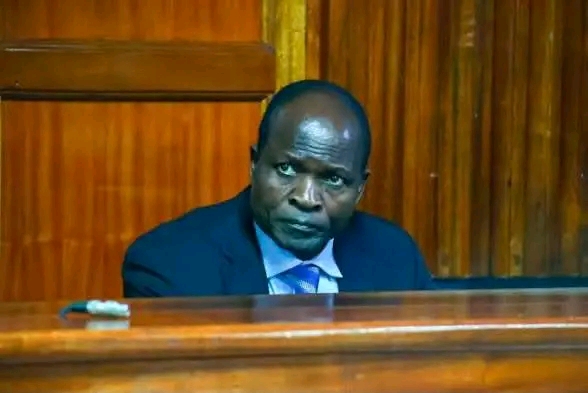
JUSTICE FOR SHARON OTIENO! Former Migori Governor Okoth Obado Jailed for 25 Years Over Shocking Murder Case
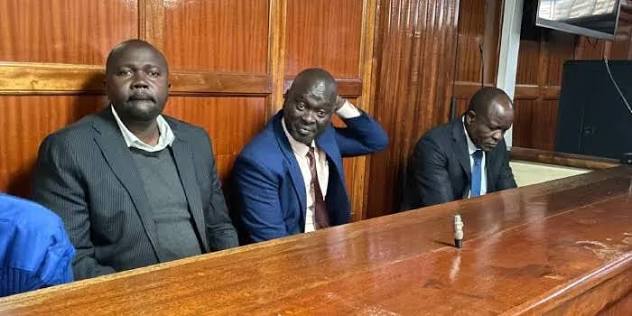
The decision delivered by Justice Cecilia Githua on November 27, 2026, brings a significant chapter of the nearly eight-year legal battle to a close. Obado's former personal assistant Michael Oyamo received an equal 25-year sentence, while former Migori County Clerk Caspal Obiero was sentenced to 18 years. The court established that the murder involved planning and coordination, with the three men playing different roles in the criminal enterprise. Despite appeals for leniency from Obado's defence and Sharon's family, the judge maintained that the seriousness of the offence required substantial prison sentences.
Former Migori Governor Okoth Obado has been sentenced to 25 years in prison for the murder of former Rongo University student Sharon Otieno, bringing a major development in one of Kenya's most closely followed murder cases.The sentence was delivered on Friday, November 27, 2026, by High Court Judge Cecilia Wairimu Githua at the Milimani Law Courts in Nairobi. Obado's former personal assistant, Michael Juma Oyamo, was also sentenced to 25 years in prison, while former Migori County Clerk Caspal Ajwang Obiero received an 18-year prison sentence.
The ruling follows the conviction of the three men on July 23, 2026, after the court found that the prosecution had established their involvement in Sharon's murder beyond reasonable doubt.
The case dates back to September 2018, when Sharon, a 26-year-old university student who was seven months pregnant, was abducted and later found murdered in Homa Bay County. Her death shocked the country, attracted widespread public attention and raised serious questions about the safety of women, abuse of political power and accountability for serious crimes.
The sentencing represents an important moment for Sharon's family, the justice system and Kenyans who have followed the case for nearly eight years.According to the court, the murder involved planning, coordination and different responsibilities played by the accused persons. The judge described Obado as the principal architect of the criminal enterprise that resulted in Sharon's death.
The court found that Obado supplied the motive, instigated the killing and provided financial resources to facilitate the plan. His former personal assistant, Oyamo, was found to have played a central role in coordinating and facilitating the execution of the plan.
Obiero was found to have provided logistical assistance and helped conceal evidence.
The judge maintained that the seriousness of the offence required a substantial custodial sentence. She explained that punishment must reflect the gravity of the crime and serve the interests of justice.
The court therefore rejected the request for a non-custodial sentence, concluding that probation or another community-based punishment would not adequately address the seriousness of the murder.During the trial, the prosecution presented evidence linking Oyamo to the events that preceded Sharon's disappearance.
The court found that he played a significant role in facilitating and coordinating the operation that led to her murder.
According to the judgment, Oyamo helped arrange meetings and communicated with Sharon before the abduction. His involvement went beyond simply carrying out instructions, with the court finding that his actions were important to the execution of the criminal plan.
The judge considered his participation and the seriousness of the offence before imposing the 25-year sentence.
The sentence demonstrates that the court considered the individual responsibility of each accused person rather than treating the three men as having identical roles.Although the judge considered his responsibility comparatively lower than that of Obado and Oyamo, the court found that his involvement was sufficiently serious to warrant a custodial sentence.
His 18-year sentence brings the total number of years imposed on the three convicts to 68.
The different sentences reflect the court's assessment of their respective levels of responsibility in the murder.On September 3, 2018, Sharon was abducted alongside journalist Barrack Oduor, who was working for the Nation Media Group.
The two had reportedly gone to meet Oyamo after arrangements had been made for a meeting. However, what was expected to be an ordinary meeting turned into a frightening incident when armed men allegedly took control of the situation.
Barrack Oduor managed to escape from the moving vehicle, but Sharon remained in the hands of her abductors.
Her body was discovered the following day in a thicket near Kodera Forest in Homa Bay County.
The discovery shocked Kenyans, particularly because Sharon was carrying an unborn child. The circumstances of her death raised concerns about violence against women and the vulnerability of individuals involved in complicated personal relationships.During the trial, the prosecution presented evidence linking Oyamo to the events that preceded Sharon's disappearance.
The court found that he played a significant role in facilitating and coordinating the operation that led to her murder.
According to the judgment, Oyamo helped arrange meetings and communicated with Sharon before the abduction. His involvement went beyond simply carrying out instructions, with the court finding that his actions were important to the execution of the criminal plan.
The judge considered his participation and the seriousness of the offence before imposing the 25-year sentence.
The sentence demonstrates that the court considered the individual responsibility of each accused person rather than treating the three men as having identical roles.Although the judge considered his responsibility comparatively lower than that of Obado and Oyamo, the court found that his involvement was sufficiently serious to warrant a custodial sentence.
His 18-year sentence brings the total number of years imposed on the three convicts to 68.
The different sentences reflect the court's assessment of their respective levels of responsibility in the murder.On September 3, 2018, Sharon was abducted alongside journalist Barrack Oduor, who was working for the Nation Media Group.
The two had reportedly gone to meet Oyamo after arrangements had been made for a meeting. However, what was expected to be an ordinary meeting turned into a frightening incident when armed men allegedly took control of the situation.
Barrack Oduor managed to escape from the moving vehicle, but Sharon remained in the hands of her abductors.
Her body was discovered the following day in a thicket near Kodera Forest in Homa Bay County.
The discovery shocked Kenyans, particularly because Sharon was carrying an unborn child. The circumstances of her death raised concerns about violence against women and the vulnerability of individuals involved in complicated personal relationships.Her mother reportedly appealed for leniency, expressing that imprisoning Obado would bring additional emotional suffering to the family.
However, the court maintained that the decision on punishment had to be guided by the law and the seriousness of the offence.
Justice Githua explained that the responsibility to support Sharon's children should continue regardless of whether Obado was in prison.
The judge also warned against establishing a situation where people convicted of serious crimes could avoid appropriate punishment by promising financial assistance to victims' families.Retribution: Ensuring that those responsible face consequences for their actions.The judge emphasised the need for punishment to serve several objectives, including:
Deterrence: Discouraging other people from committing similar crimes.
Denunciation: Demonstrating society's rejection of brutal and planned killings.
Protection of the community: Upholding public safety and confidence in the justice system.
The judge concluded that a non-custodial sentence would not adequately reflect the seriousness of the offence.
Consequently, Obado was ordered to serve 25 years in prison.What the Sentencing Means for Kenya's Justice System
Obado's 25-year sentence carries significance beyond the individuals involved in the case.
First, the ruling reinforces the principle that political influence and public positions do not place individuals above the law.
Obado previously served as the governor of Migori County, a position that gave him considerable political influence. However, his former position did not prevent the criminal proceedings from continuing or the court from imposing a custodial sentence after conviction.Second, the case highlights the importance of protecting women from violence and ensuring that allegations of serious crimes are investigated and prosecuted.
Sharon's murder attracted national attention because of the circumstances surrounding her death and the fact that she was pregnant.
Third, the case demonstrates the importance of witness testimony and forensic evidence in criminal investigations.
The survival and testimony of journalist Barrack Oduor provided important information about the circumstances surrounding the abduction.
Finally, the decision sends a message that reconciliation, forgiveness and financial promises do not automatically remove criminal responsibility.

You Might Also Like
-
Martha Karua's renewed declaration of her 2027 presidential ambitions marks an important development in Kenya's political preparations ahead of the next General Election. Through her People's Liberation Party and the "Simama na Kenya, Simama na Martha" mobilisation campaign, she is seeking to attrac
-
Bomet East MP Richard Yegon has threatened legal action against individuals and online platforms circulating alleged AI-generated videos and images linking him to the disappearance of nominated MP Sabina Chege's mobile phone. Addressing the National Assembly, Yegon denied any involvement in the inci
-
The Directorate of Criminal Investigations (DCI) and the Anti-Doping Agency of Kenya (ADAK) have signed a Memorandum of Understanding aimed at strengthening the fight against doping-related offences in the country. The partnership will enhance intelligence sharing, coordinated investigations and pro
-
The lawyer representing the family of slain former Rongo University student Sharon Otieno has questioned how former Migori Governor Okoth Obado will continue offering financial assistance to the family while serving his 25-year prison sentence for her murder. The concerns have renewed attention on t
-
President William Ruto is set to resume his Western Kenya development tour on Saturday, November 28, visiting Busia, Bungoma, Kakamega and Vihiga counties in a four-day programme running until December 1, 2026. The tour will feature the launch and commissioning of various development projects target
-
More than 380,000 students enrolled in public universities and colleges across Kenya could face disruptions to their education following a major funding shortfall at the Higher Education Loans Board (HELB). The board has revealed that it requires an additional KSh86.7 billion to meet its financial o