



Kenya Deaf Community Raises Voice Ahead of 2027 Elections: KNAD Demands Equal and Inclusive Polls
As Kenya moves toward the 2027 General Election, the Kenya National Association of the Deaf and other Deaf organisations are seeking an electoral process in which communication barriers do not prevent citizens from exercising their democratic rights. The key areas include Kenyan Sign Language interpretation, accessible voter education, accurate registration of Deaf voters, trained election officials, accessible polling stations, participation of Deaf people in election-management structures and equal access to political information. The issue is not simply about what happens on election day. It covers the entire electoral cycle, from registration and civic education to campaigning, voting and participation in public affairs. With the IEBC already engaging disability organisations and preparing its systems for 2027, the coming months will be important for translating these recommendations into practical measures. The objective expressed through these consultations is that Deaf Kenyans should be able to participate in the 2027 polls with access to information, dignity, independence and the same democratic protections available to other citizens.
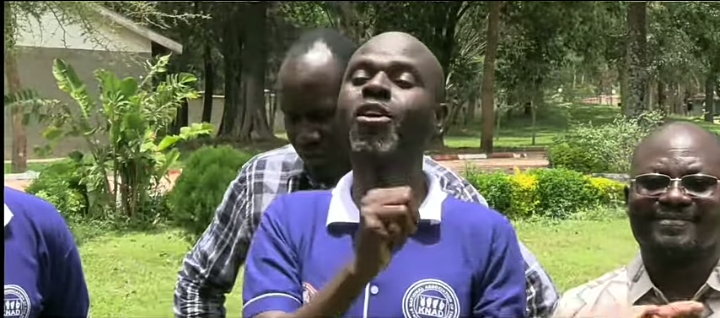
The Kenya National Association of the Deaf (KNAD) has continued to advocate for greater inclusion of Deaf Kenyans in public affairs, including the electoral process ahead of the 2027 General Election. The association's concerns centre on ensuring that Deaf voters are not excluded by communication barriers when registering as voters, receiving election information, attending voter-education sessions or casting their ballots.
Recent engagement between electoral authorities and organisations representing Deaf Kenyans has placed accessibility firmly within preparations for the 2027 polls. In December 2025, the Independent Electoral and Boundaries Commission (IEBC) held an engagement forum with the Nairobi Association of the Deaf to hear about challenges experienced by persons with disabilities in electoral participation. Among the recommendations presented were accessible voter education, accurate registration and data on Deaf voters, sign-language interpretation at polling stations and election officials trained in Kenyan Sign Language.
Demand for equal participation
One of the central issues for the Deaf community is the right to participate in elections on an equal basis with other Kenyans. For KNAD and other Deaf organisations, inclusion should not simply mean allowing Deaf voters into polling stations. It should cover the entire electoral cycle.
This includes voter registration, voter verification, civic education, access to information about candidates and political parties, understanding voting procedures and communicating with election officials on polling day.
The IEBC has acknowledged that accessibility must be considered when preparing for the 2027 election. The Commission's engagement with disability organisations provides an opportunity to identify problems before election day and develop practical solutions.
Kenyan Sign Language in voter education
A major demand concerns the availability of electoral information in Kenyan Sign Language (KSL).
The Constitution recognises sign language as one of Kenya's official languages, and Parliament has continued working on legislation intended to strengthen the use and regulation of Kenyan Sign Language. During parliamentary debate in June 2026, KNAD was acknowledged for its contribution to the development of the Kenyan Sign Language legislation.
For the 2027 election, the use of KSL can be particularly important during voter-education campaigns. Information about registration deadlines, verification of voter details, polling procedures and voter rights needs to reach Deaf citizens in forms they can understand.
Accessible communication can include KSL interpretation, captioning, visual demonstrations, simplified written information and accessible digital content.
Sign-language interpreters at polling stations
Another important demand is the availability of qualified sign-language interpreters or appropriately trained personnel at polling stations where they are needed.
The Deaf community has told electoral authorities that communication difficulties can arise when voters interact with polling officials. In recommendations presented during IEBC consultations, Deaf representatives called for qualified sign-language interpreters and police officers trained in Kenyan Sign Language. They also proposed the appointment of Deaf officers within the IEBC to coordinate services for Deaf voters.
Such measures are intended to make it easier for voters to understand instructions and seek assistance without unnecessary communication barriers.
At the same time, electoral assistance must protect the secrecy and independence of the vote. The objective is to provide communication support without compromising a voter's privacy or freedom to make an individual electoral choice.
Accurate registration of Deaf voters
KNAD and disability advocates have also highlighted the importance of accurate voter registration and data.
Knowing where voters with specific accessibility requirements are located can help IEBC plan appropriately. This can assist the Commission in determining where interpreters, accessible voter-education materials and specially trained officials may be required.
The IEBC has already indicated that it is working toward registering millions of eligible voters ahead of the 2027 General Election. The Commission's electoral preparations include an objective of registering at least 28.5 million eligible voters.
For Deaf voters, registration should therefore be accompanied by systems that identify accessibility requirements while respecting citizens' privacy and rights.
Representation within election management
Another issue raised by persons with disabilities is representation within election-management structures.
During discussions involving persons with disabilities in Kiambu, participants proposed greater representation of people with disabilities in election-officiating teams. They also recommended sign-language interpreters at polling stations, while IEBC officials indicated that such proposals could be forwarded for consideration.
Greater participation of Deaf people as election officials, observers and civic-education facilitators could provide practical knowledge of the challenges faced by Deaf voters.
It would also demonstrate that Deaf Kenyans can participate not only as voters but as active contributors to the democratic and electoral process.
Participation beyond voting
The 2027 election debate also goes beyond the question of casting a ballot.
Deaf Kenyans have the right to participate in political and public life, including engaging with political parties, attending public meetings, seeking elective positions and contributing to policy discussions.
Article 54 of the Constitution provides protections for persons with disabilities, including measures relating to political participation and representation. The Persons with Disabilities Act also contains provisions concerning participation in political and public life and accessibility of voting procedures and facilities.
Consequently, accessibility should also apply to political campaigns and public forums. Candidates and political parties can play a role by ensuring that important campaign messages are available in KSL, captioned and presented in other accessible formats.
The role of technology
Technology is increasingly important in electoral communication. Election information is now distributed through websites, social-media platforms, television, mobile phones and other digital platforms.
For Deaf voters, digital accessibility can make information easier to obtain, but only if content is properly designed. Videos with captions, KSL interpretation and clear visual information can help reduce communication barriers.
The recently advanced Kenyan Sign Language legislation also recognises the importance of accessibility in media and telecommunications. Parliamentary discussions have included provisions concerning captioning, transcripts and accessibility for Deaf, hard-of-hearing and Deafblind people.
Early preparation for 2027
The timing of the discussions is significant because Kenya is already in the preparation phase for the 2027 General Election.
IEBC has published an electoral calendar and begun preparations for the August 10, 2027 election. The Commission has also been engaging stakeholders on voter education and inclusion. organisations, early engagement means accessibility problems can potentially be addressed before polling day rather than being discovered when voters arrive at polling stations.
This makes consultation between KNAD, other Deaf organisations, IEBC, the National Council for Persons with Disabilities, political parties and other stakeholders important.
The wider significance
The demands surrounding Deaf participation in the 2027 elections are part of a broader discussion about inclusive democracy in Kenya.
A democratic election requires citizens to have meaningful access to information and the ability to participate in the process. For Deaf Kenyans, communication is a central part of that requirement.
The recent engagement between IEBC and disability organisations shows that the concerns are already part of electoral preparations. Recommendations include accessible voter education, improved registration data, sign-language interpretation, trained officials and stronger representation of persons with disabilities in election structures.
You Might Also Like
-
Deputy President Kithure Kindiki's call for Mount Kenya elders to take a leading role in fighting illicit drinks comes amid an intensified national crackdown on illegal alcohol. The government's approach involves police raids, closure of unlicensed outlets, investigations into suspected counterfeit
-
The agro-business expo during Day Three of World Tourism Week at the University of Eldoret has highlighted an important opportunity for the Rift Valley: using agriculture as part of the region's tourism story. By connecting farmers, entrepreneurs, food producers, hospitality businesses, students, i
-
Deputy President Kithure Kindiki's visit to Nyeri County on September 25, 2026, has placed the issue of Mt Kenya unity at the centre of his public message. He urged leaders and residents not to allow political differences to create permanent divisions between communities and rejected attempts to spl
-
President William Ruto's meeting with FIFA President Gianni Infantino in New York focused on strengthening the partnership between Kenya and FIFA and accelerating football development in the country. The discussions covered regional technical centres for young players, the FIFA Arena project, a mode
-
President William Ruto’s engagement with Prince Rahim Aga Khan reflects the long-standing partnership between Kenya and the Aga Khan institutions. The relationship has contributed to important sectors including healthcare, education, economic development, climate resilience and community empowerme
-
President William Ruto's visit to the WNBA game in Brooklyn and his subsequent meeting with NBA Deputy Commissioner Mark Tatum placed Kenyan basketball on an international platform. The visit was especially significant because Ruto was there to support Madina Okot, the Kenyan player representing th