



Kenya Opens New Fuel Gateway to Rwanda as 40,000 Tonnes of Petrol and Diesel Arrive Through Mombasa
Kenya has begun a new chapter in regional petroleum trade after a 40,000-tonne consignment of petrol and diesel arrived at the Port of Mombasa for onward transportation to Rwanda through the Northern Corridor. The shipment marks the implementation of a new Kenya-Rwanda petroleum supply arrangement aimed at increasing Rwanda's access to international fuel markets through Mombasa and Kenya's pipeline infrastructure. The development is expected to strengthen the role of the Port of Mombasa and the Kenya Pipeline Company in regional fuel transportation, while giving Rwanda an additional supply route alongside its existing petroleum corridors. The first shipment is also significant for Kenya's efforts to expand its position as a regional logistics and energy hub and increase petroleum transit business through the Northern Corridor.
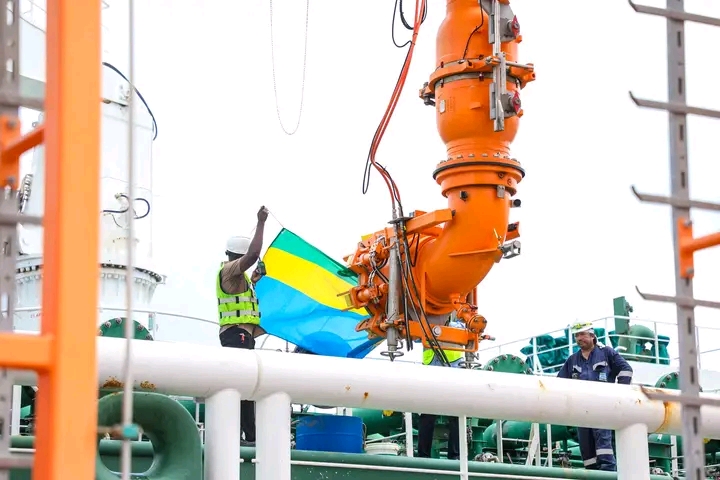
Kenya has begun a new phase of petroleum trade with Rwanda after a 40,000-metric-tonne shipment of refined petroleum products arrived at the Port of Mombasa, marking the activation of a new supply route for the landlocked East African country. The consignment, which arrived aboard the MT Sea Wolf at Kipevu Oil Terminal 2 on September 29, 2026, is being described by officials as a major development in Kenya-Rwanda energy cooperation.
The shipment contains Automotive Gas Oil (AGO), commonly known as diesel, and Premium Motor Spirit (PMS), or petrol. According to Kenyan officials, the volume is equivalent to close to one month of Rwanda's petroleum consumption. The products are being handled through Kenya's port, pipeline and storage infrastructure before continuing to Rwanda through the Northern Corridor.
A major change in Rwanda's fuel supply route
Rwanda is a landlocked country and therefore depends on neighbouring countries and transport corridors to access international petroleum markets. For many years, a large proportion of Rwanda's fuel imports have been routed through Tanzania's Central Transport Corridor and the Port of Dar es Salaam.
Kenya is now seeking to increase its role in supplying Rwanda by using the Port of Mombasa and the Kenya Pipeline Company (KPC) network.
Before the new arrangement, Kenya reportedly accounted for only about 10 per cent of Rwanda's petroleum import market, while Tanzania handled the overwhelming majority. The new agreement is therefore intended to substantially increase the amount of fuel passing through Kenya to Rwanda.
The arrival of the MT Sea Wolf represents the first major shipment under the new framework agreed between the two countries.
How the new arrangement works
The new system does not necessarily mean that Kenya is producing the fuel itself. Instead, Rwanda can source bulk petroleum products internationally and use Kenya's infrastructure to bring those products through Mombasa and transport them inland.
Kenya and Rwanda signed a Memorandum of Understanding on June 29, 2026, establishing the framework for Rwanda's importation of refined petroleum products through the Northern Corridor. The arrangement was accompanied by a tripartite agreement involving the governments of Kenya and Rwanda and the Rwanda National Energy Company (RNEC), as well as a Transport and Storage Agreement between RNEC and KPC.
Under the arrangement, Mombasa serves as the maritime entry point. Once petroleum products are discharged at the port, Kenya's petroleum infrastructure can be used for transportation and storage before the products continue towards Rwanda.
This makes the development more accurately described as Rwanda's fuel imports being transported through Kenya, rather than Kenya manufacturing and exporting the fuel.
The significance of the 40,000-tonne shipment
The first shipment is significant because it demonstrates that the agreements signed earlier in the year have moved from the planning stage to actual operations.
The 40,000 tonnes of petrol and diesel represent a substantial volume of petroleum products. Rwanda's officials have indicated that the shipment is approximately equivalent to one month's national consumption.
Kenya's Energy and Petroleum Cabinet Secretary Opiyo Wandayi said the arrival demonstrated Kenya's readiness to serve as Rwanda's gateway to international energy markets through the Northern Corridor. He also said the new arrangement could result in a dramatic increase in petroleum volumes moving through Kenya.
Earlier agreements projected that Rwanda-bound petroleum products transiting through Kenya could rise more than tenfold, from tens of thousands of cubic metres annually to more than 500,000 cubic metres per year.
Some reports have cited different baseline figures and projected volumes, so the exact annual target should be understood as a projection rather than an amount already achieved.
What Kenya stands to gain
The agreement could strengthen Kenya's position as an important petroleum logistics hub in East Africa.
The Port of Mombasa already handles petroleum imports for Kenya and several countries in the region. KPC's pipeline network connects Mombasa with major inland storage and distribution points, including Nairobi, Nakuru, Eldoret and Kisumu. The company has identified regional petroleum transit as an important part of its business.
More Rwanda-bound cargo would therefore mean greater utilisation of Kenya's:
Port facilities
Oil terminals
Pipeline infrastructure
Petroleum storage facilities
Transport services
Customs and regulatory systems
Inland logistics networks.
The increased activity could also generate additional revenue for companies and agencies involved in handling, transporting and storing petroleum products.
For Kenya, the development is consequently about more than fuel. It is also about strengthening the country's role in regional trade and logistics.
Benefits for Rwanda
For Rwanda, the new route provides another option for obtaining petroleum products from international markets.
The Rwandan government has said the agreement is intended to improve security and continuity of fuel supplies, reduce logistical bottlenecks and make fuel imports more predictable.
Having more than one major supply route can also provide greater flexibility. If disruptions affect one corridor, alternative infrastructure can become particularly important.
The Rwandan government has also linked the arrangement to its wider strategy of diversifying petroleum import routes and ensuring reliable energy supplies for economic and industrial activity.
Because fuel is essential to transportation, agriculture, manufacturing, construction and many other sectors, the reliability of petroleum supplies has implications across the wider economy.
Northern Corridor gets renewed importance
The development also gives fresh significance to the Northern Corridor, the major transport route linking the Port of Mombasa with landlocked countries in East and Central Africa.
The corridor already serves countries including Uganda and parts of the Democratic Republic of Congo, while Kenya's petroleum infrastructure has the capacity to support regional fuel flows.
The new Rwanda arrangement could therefore increase the strategic importance of Mombasa as a gateway for petroleum products destined for landlocked markets.
Kenyan officials have described the development as an example of East African integration because infrastructure in one country is being used to support the economy of another.
Competition with Tanzania
One of the most important aspects of the development is the renewed competition between the Northern Corridor through Kenya and the Central Corridor through Tanzania.
Rwanda had increasingly relied on Tanzania for its petroleum imports, with the Port of Dar es Salaam serving as an important gateway.
Kenya's new arrangement seeks to recapture part of that market by offering Rwanda access to Mombasa and KPC's infrastructure. The Standard reported that Kenya has been pursuing Rwanda's petroleum transit market for years, while Rwanda had previously shifted much of its imports towards Tanzania.
The competition between the two corridors could encourage improvements in efficiency, reliability, storage and transportation as East African countries seek to attract regional transit business.
Role of the Kenya Pipeline Company
KPC is central to the new arrangement.
The company operates much of Kenya's petroleum pipeline infrastructure, enabling imported products received at the coast to be moved inland more efficiently than relying entirely on road transportation.
Under the agreement with RNEC, KPC is responsible for elements including transportation, storage, scheduling and handling of Rwanda-bound petroleum products.
The use of pipeline infrastructure is particularly important because petroleum products can be moved in large quantities without placing the entire burden on road tankers.
Kenya has also offered Rwanda favourable storage arrangements. According to The Standard, Rwanda-owned petroleum products can remain in KPC storage facilities for up to 90 days, compared with the standard 35-day period for other oil companies, under an arrangement intended to improve the economics of the new route.
What it means for East Africa
The development comes at a time when East African countries are seeking stronger regional economic integration and more resilient supply chains.
Reliable fuel supplies are essential to regional trade. Trucks transporting goods across borders require diesel, industries depend on petroleum products, and agricultural activities rely heavily on fuel-powered machinery and transportation.
A more integrated petroleum network could therefore contribute to smoother movement of goods and people across the region.
Rwanda's use of Mombasa also demonstrates how infrastructure located in coastal countries can support the economies of landlocked states.
Kenya's wider petroleum ambitions
The Rwanda deal comes as Kenya is simultaneously positioning itself as a major regional energy and petroleum hub.
The country continues to rely heavily on imported refined petroleum products. At the same time, plans for a proposed large-scale refinery in Lamu are intended to eventually increase regional refining capacity and reduce dependence on imported refined products.
Reuters reported on September 30, 2026, that construction of the proposed $16 billion Lamu refinery is expected to begin, with the project intended to serve the wider East African market.
The Rwanda fuel route and the proposed refinery are therefore part of a broader conversation about Kenya's future role in the regional energy market, although they are separate projects.
Looking ahead
The arrival of the first 40,000-tonne shipment is only the beginning of the new Kenya-Rwanda petroleum arrangement. The major test will be whether the corridor can maintain reliable deliveries and attract significantly larger volumes over time.
Both countries will need efficient coordination among ports, pipeline operators, regulators, customs authorities, transport companies and fuel distributors.
For Rwanda, the priority will be maintaining reliable and competitively priced access to petroleum products. For Kenya, the opportunity lies in increasing the use of Mombasa and its petroleum infrastructure while strengthening its role as a regional logistics centre.
The September 29 arrival of the MT Sea Wolf has consequently marked an important step in the two countries' energy relationship. With 40,000 tonnes of petrol and diesel now entering through Mombasa for Rwanda, Kenya has demonstrated that the Northern Corridor can once again play a much larger role in Rwanda's petroleum supply chain.
The longer-term significance will depend on whether projected volumes materialise and whether the route can consistently provide the efficiency, reliability and supply security that both governments expect.

You Might Also Like
-
President William Ruto says Kenya will take a stake in the proposed Dangote East Africa Refinery and contribute its assets to the project, stressing that the country will invest and not expect anything for free.
-
Ugandan President Yoweri Museveni has praised Aliko Dangote as an African investor committed to developing the continent, while criticising leaders he says prioritise foreign interests over African development.
-
Prime Minister Abiy Ahmed's message during the Dangote East Africa Petroleum Refinery groundbreaking was centred on energy security, Ethiopia's access to additional fuel supplies, regional trade, industrialisation, investment and opportunities for young Africans. He described the Lamu refinery as a
-
Former Nigerian President Olusegun Obasanjo's attendance at the September 30, 2026 groundbreaking of the Dangote East Africa Petroleum Refinery in Lamu added historical and continental significance to the ceremony. His presence alongside President William Ruto, Aliko Dangote and other African leader
-
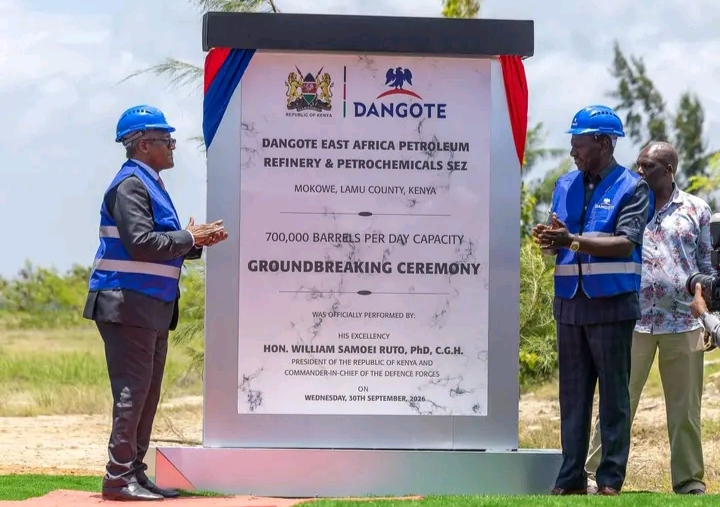
President William Ruto's September 30, 2026 groundbreaking ceremony with Aliko Dangote marks a major new chapter in Kenya's energy and industrial development. The proposed Sh2.2 trillion, 700,000-barrel-per-day Dangote East Africa Petroleum Refinery is expected to supply petroleum products to Kenya
-
The EPRA report released on September 29 provides a broad assessment of Kenya's energy and petroleum sectors for the year ended June 30, 2026. Its findings show record electricity demand, increased generation, continued dominance of renewable energy, rising household electricity consumption, higher