Kenya Pipeline Company Confirms Pius Mwendwa as New CEO, Ending Acting Tenure in Major Leadership Announcement
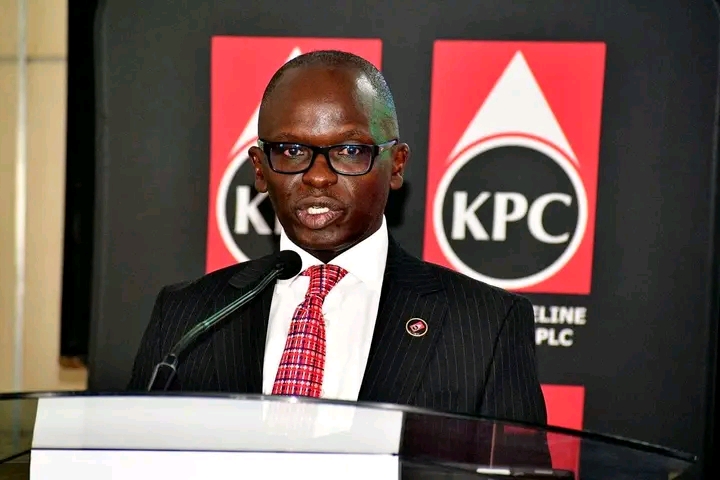
The confirmation of Pius Mwendwa as the substantive Managing Director and Chief Executive Officer of Kenya Pipeline Company marks a significant milestone for one of Kenya's most important energy infrastructure institutions.Approved by the Board of Directors on November 26, 2026, and effective immediately, the appointment brings an end to his acting tenure, which began on April 8, 2026. Mwendwa brings more than 16 years of experience at KPC, having served as Chief Accountant, Corporate Finance Manager and General Manager (Finance). Before joining the corporation, he worked at Nation Media Group for more than a decade. His academic qualifications include a Master of Commerce in Finance from Strathmore University and a Bachelor of Commerce in Finance from the Catholic University of Eastern Africa. He is also a Certified Public Accountant of Kenya and an ICPAK member. The Board has expressed confidence in his ability to use his financial expertise, leadership experience and institutional knowledge to advance the company's growth strategy.
Kenya Pipeline Company (KPC) has officially confirmed Pius Mwendwa as its new Managing Director and Chief Executive Officer, bringing an end to his tenure as the acting head of one of Kenya's most important energy infrastructure institutions. The appointment, which took effect immediately following the company's Board of Directors meeting on Thursday, November 26, 2026, marks a significant development in the leadership of the corporation responsible for transporting and handling petroleum products across the country.
The announcement has attracted attention within Kenya's business and energy sectors because of the strategic importance of Kenya Pipeline Company to the country's economy. Mwendwa has been serving as Acting Managing Director since April 8, 2026, following the departure of his predecessor, Joe Sang.
His confirmation represents an important transition from temporary leadership to a substantive appointment. It also places responsibility for the company's future growth, financial performance, infrastructure development and operational efficiency in the hands of an individual who has spent more than 16 years working within the organisation.The Board's Decision to Confirm Pius Mwendwa
The Kenya Pipeline Company Board of Directors approved Mwendwa's appointment during a meeting held on Thursday, November 26, 2026.
The decision formally confirmed him as the Managing Director and Chief Executive Officer, ending the period during which he had been overseeing the corporation in an acting capacity.His confirmation represents an important transition from temporary leadership to a substantive appointment. It also places responsibility for the company's future growth, financial performance, infrastructure development and operational efficiency in the hands of an individual who has spent more than 16 years working within the organisation.
According to the company's announcement, the Board expressed confidence in Mwendwa's extensive leadership experience, financial expertise and understanding of KPC's operations. The Board believes these qualities will help him implement the company's growth strategy and strengthen operational excellence.In its announcement, the Board highlighted his leadership experience, financial background and familiarity with the company's internal operations as important reasons for its confidence in his ability to lead the institution.
The Board's decision is particularly significant because Kenya Pipeline Company operates in a highly strategic sector that requires effective management, accountability and long-term planning.
Petroleum products remain essential to Kenya's transport industry, manufacturing activities, electricity generation and other economic sectors. Consequently, the leadership of KPC has an important responsibility to ensure that petroleum transportation and storage infrastructure operates efficiently.
Mwendwa's appointment therefore goes beyond an ordinary management change. It gives him the responsibility of steering a major national energy infrastructure company through its next phase of development.Pius Mwendwa's Professional Background and Career at KPC
Pius Mwendwa is an experienced finance professional whose career at Kenya Pipeline Company spans more than a decade and a half.
He joined the corporation in August 2010 as Chief Accountant. His appointment marked the beginning of a career in which he progressively took on greater responsibilities within the organisation.
During his time at KPC, he occupied several senior management positions, gaining experience in financial management, corporate administration and commercial operations.Some of the key positions he has held include:Chief Accountant: He was involved in the company's accounting and financial management functions.
Corporate Finance Manager: He gained further experience in corporate financial planning and management.
General Manager (Finance): He provided executive oversight of Finance and Accounts, Revenue and Commercial Services, and Information and Communications Technology (ICT).
His experience in these departments gave him an understanding of how different sections of the corporation contribute to its overall performance.His Experience Before Joining Kenya Pipeline Company
Before joining Kenya Pipeline Company, Mwendwa worked at Nation Media Group (NMG) for more than ten years.
During his time at the media organisation, he served in different capacities and eventually rose to the position of Group Management Accountant.
His experience at Nation Media Group provided him with exposure to financial management in a large corporate environment.
Working in an organisation with multiple business operations requires financial accountability, effective resource allocation and strong administrative systems.
These experiences likely contributed to the professional foundation he later developed at Kenya Pipeline Company.
His career therefore reflects experience gained in both the media and energy infrastructure sectors.These qualifications are particularly relevant to his new responsibilities because KPC requires strong financial oversight and sound corporate management.
A chief executive of a major infrastructure company must understand financial reporting, investment decisions, expenditure management and the long-term sustainability of business operations.
His academic training and professional experience will be important as the company pursues its commercial and infrastructure development objectives.
The combination of his educational background and long service at KPC was among the factors highlighted in the company's assessment of his suitability for the position.He assumed the acting Managing Director position on April 8, 2026, following the departure of former Managing Director Joe Sang.
The transition placed him in charge of overseeing the company's activities while its leadership arrangements were being addressed.
During his acting tenure, he continued overseeing an organisation with extensive financial, commercial and operational responsibilities.
His eventual confirmation demonstrates that the Board has decided to give him the substantive leadership position.
The decision also provides greater certainty regarding the company's management structure and long-term leadership direction.
Leadership stability is important for institutions operating in strategic sectors because major infrastructure investments and organisational reforms often require several years to implement.The development marked a major change in the ownership structure of the corporation and introduced a wider shareholder base.
The transition to public ownership through the Nairobi Securities Exchange means that the company's financial performance, corporate governance and management decisions will attract increased attention from investors.
The new CEO will therefore be expected to balance the interests of shareholders with the company's responsibility to provide essential energy infrastructure services.
Investors will be interested in the company's profitability, revenue growth, operational efficiency and ability to deliver sustainable returns.
At the same time, Kenyans will continue expecting KPC to maintain reliable petroleum infrastructure and support national energy security.What the Board Expects from the New CEO
The KPC Board has expressed confidence that Mwendwa's extensive leadership experience, financial expertise and understanding of the organisation will support the continued implementation of the company's growth strategy.
This statement highlights several expectations surrounding his appointment.
First, operational excellence.
The company expects him to strengthen operational performance and ensure that its infrastructure and services function efficiently.As CEO, he will be responsible for translating the company's long-term objectives into practical programmes and measurable results.
Fourth, institutional stability.
His familiarity with KPC's internal structures could help maintain continuity while the company implements its strategic priorities.
Fifth, corporate governance.
As a listed company, KPC must maintain appropriate governance standards and provide confidence to investors, employees, regulators and the wider public.
These expectations will form an important part of the assessment of his leadership in the coming months and years.Mwendwa's appointment could provide continuity in the company's management because he has already worked in several senior positions and understands its operations.
His financial background may also help strengthen investment planning and commercial decision-making.
However, the success of his leadership will ultimately depend on the results achieved by the corporation.
Kenyans and investors will be interested in seeing improvements in service delivery, infrastructure reliability, financial performance and corporate accountability.Digital systems can help improve operational monitoring, financial reporting, maintenance planning and overall efficiency.
His previous oversight of ICT functions could provide useful experience in this area.
Environmental protection and safety will also remain important.
The company must ensure that its operations meet appropriate safety standards while protecting communities and the environment around its infrastructure.
These are responsibilities that require cooperation between executive management, technical departments and relevant regulatory institutions.
Mwendwa's experience gives him a foundation from which to address these issues, although the actual results of his leadership will become clearer through the company's performance.

You Might Also Like
-
Martha Karua's renewed declaration of her 2027 presidential ambitions marks an important development in Kenya's political preparations ahead of the next General Election. Through her People's Liberation Party and the "Simama na Kenya, Simama na Martha" mobilisation campaign, she is seeking to attrac
-
Bomet East MP Richard Yegon has threatened legal action against individuals and online platforms circulating alleged AI-generated videos and images linking him to the disappearance of nominated MP Sabina Chege's mobile phone. Addressing the National Assembly, Yegon denied any involvement in the inci
-
The Directorate of Criminal Investigations (DCI) and the Anti-Doping Agency of Kenya (ADAK) have signed a Memorandum of Understanding aimed at strengthening the fight against doping-related offences in the country. The partnership will enhance intelligence sharing, coordinated investigations and pro
-
The lawyer representing the family of slain former Rongo University student Sharon Otieno has questioned how former Migori Governor Okoth Obado will continue offering financial assistance to the family while serving his 25-year prison sentence for her murder. The concerns have renewed attention on t
-
President William Ruto is set to resume his Western Kenya development tour on Saturday, November 28, visiting Busia, Bungoma, Kakamega and Vihiga counties in a four-day programme running until December 1, 2026. The tour will feature the launch and commissioning of various development projects target
-
More than 380,000 students enrolled in public universities and colleges across Kenya could face disruptions to their education following a major funding shortfall at the Higher Education Loans Board (HELB). The board has revealed that it requires an additional KSh86.7 billion to meet its financial o