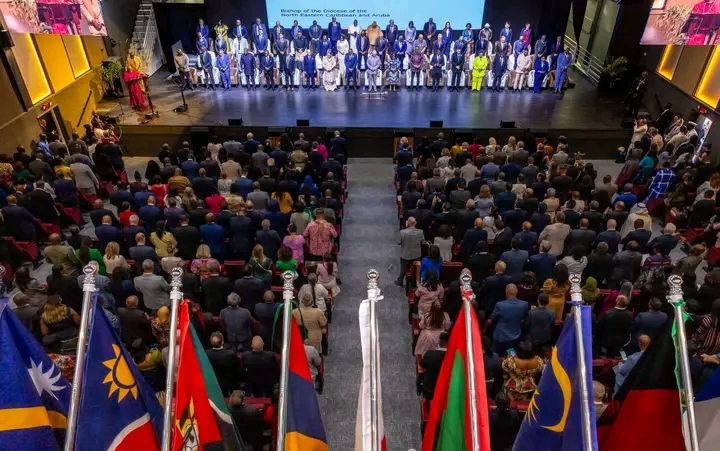
Kenya Pushes for Expanded Trade and Investment Opportunities Across the Commonwealth at 28th CHOGM Summit in Antigua
Deputy President Kithure Kindiki's message at the 28th Commonwealth Heads of Government Meeting in Antigua and Barbuda reflects Kenya's determination to strengthen international trade, attract foreign investment and expand economic partnerships. By advocating for increased trade within the Commonwealth, Kenya hopes to open more markets for local businesses, attract international investors and create opportunities for economic growth. The government is particularly interested in partnerships in infrastructure, energy, tourism, technology and the blue economy, while also promoting value addition, entrepreneurship and employment opportunities for young people and women.
Deputy President Professor Kithure Kindiki has reaffirmed Kenya's commitment to advocating for increased trade, investment and stronger economic partnerships among Commonwealth member states during the 28th Commonwealth Heads of Government Meeting (CHOGM) taking place in St John's, Antigua and Barbuda. Kindiki said Kenya is keen to strengthen economic cooperation within the Commonwealth by encouraging countries to expand trade, attract investment and establish partnerships that can accelerate economic growth and create employment opportunities for their citizens.
The Deputy President is representing President William Ruto at the four-day international summit, which is bringing together leaders and representatives from 56 Commonwealth member countries. The meeting, which runs from November 1 to 4, 2026, is being held under the theme "Accelerating Partnerships and Investment for a Prosperous Commonwealth." The theme reflects the importance of strengthening economic relationships, promoting sustainable development and creating new opportunities for businesses across member countries. Kenya pushes for increased trade within the Commonwealth
One of the major issues Kenya is championing at the summit is the need to increase trade among Commonwealth countries. Kindiki has emphasised the importance of using the organisation's economic potential to create stronger commercial relationships and expand opportunities for member states.
The Commonwealth brings together 56 independent countries across Africa, Asia, the Caribbean, Europe and the Pacific, representing approximately 2.7 billion people. This population provides a substantial market for goods and services produced by member countries.
Kenya believes that stronger trade relationships within this network could provide local businesses with access to new markets, encourage the movement of goods and services and strengthen economic cooperation.Kindiki's participation provides an opportunity for Kenya to present itself as an investment destination and engage countries, international institutions and business leaders interested in investing in emerging markets.
The government wants to attract investors who can provide financial resources, modern technology, expertise and skills to support the country's development agenda.
Kenya is particularly interested in investment opportunities in infrastructure, energy, tourism, technology and the blue economy.
These sectors have significant potential to support economic transformation, increase productivity and create employment opportunities for young people.
Infrastructure investment, for example, can improve transport networks, strengthen connectivity between counties and reduce the cost of moving goods from production areas to markets.In the energy sector, Kenya is interested in partnerships that can strengthen electricity generation, expand access to reliable power and support renewable energy development.
The tourism industry also offers opportunities for international investment through hotel development, tourism infrastructure, hospitality services and the promotion of Kenya as a destination for international visitors.
By engaging Commonwealth partners, Kenya hopes to attract investors who can participate in projects that generate long-term economic benefits.
The Foreign Affairs Ministry has indicated that Kenya will use investment and business engagements at the summit to promote investment-ready projects, advance value addition and strengthen enterprise development. Small and medium-sized enterprises play an important role in Kenya's economy because they provide employment, support household incomes and contribute to economic activities across different sectors.
However, many businesses face challenges when attempting to expand beyond the domestic market.
Some struggle to access international financing, while others lack the technology, information and business connections required to compete with established international companies.
Kenya wants to use the Commonwealth platform to encourage partnerships that can help address these challenges.
Increased cooperation could allow Kenyan entrepreneurs to connect with international investors, identify new markets and benefit from technology transfers and business development programmes.
The government is also interested in promoting value addition so that Kenyan products can compete more effectively in international markets.Countries within the Commonwealth have different economic strengths, natural resources, technologies and development experiences.
Kenya believes that these differences can be transformed into opportunities through cooperation.
African countries can benefit from partnerships with more industrialised economies, while countries in Asia and the Caribbean can explore opportunities in agricultural production, tourism, technology and other areas.
For Kenya, stronger relationships with Commonwealth countries could help diversify export markets and reduce overdependence on a limited number of trading partners.For Kenya, stronger relationships with Commonwealth countries could help diversify export markets and reduce overdependence on a limited number of trading partners.
The government also wants to encourage partnerships that allow Kenyan companies to participate in regional and international supply chains.
This would enable local producers to supply goods and services to businesses operating in other Commonwealth countries.
The Commonwealth's economic potential therefore goes beyond the movement of goods. It also includes investment, knowledge sharing, technology development and cooperation between private-sector institutions.Kenya calls for fairer access to international finance
Another important issue being advanced by Kenya is the need for fairer access to international financing, particularly for developing countries.
Many African countries face challenges in financing major development projects because of high borrowing costs, debt obligations and limited access to affordable long-term capital.
Kenya wants Commonwealth countries to work together in promoting reforms that can make international financial systems more supportive of developing economies.
The government believes that developing countries should have access to financing arrangements that allow them to invest in infrastructure, healthcare, education, energy and other essential sectors.Focus on employment opportunities for young people and women
Kenya's economic priorities at the Commonwealth summit also include expanding opportunities for young people and women.
Youth unemployment remains an important development challenge, making investment and enterprise development essential to the country's economic future.
Kenya believes that international partnerships should provide opportunities for skills development, entrepreneurship, technology training and access to employment.
Cooperation with other Commonwealth countries could help Kenyan young people acquire skills that are relevant to changing labour markets.Cooperation with other Commonwealth countries could help Kenyan young people acquire skills that are relevant to changing labour markets.
The technology sector, in particular, offers opportunities for young people to participate in digital businesses, innovation and international service delivery.
Women-owned businesses are also expected to benefit from stronger economic cooperation.
Access to financing, international markets and business development programmes could help women entrepreneurs expand their enterprises and create employment.
Kenya wants economic partnerships to support inclusive growth by ensuring that the benefits of increased trade and investment reach different sections of society.
This is particularly important for small businesses and entrepreneurs who may not have the resources to compete independently in international markets.The 28th Commonwealth Heads of Government Meeting provides Kenya with an opportunity to strengthen its diplomatic influence and build relationships with countries that share common economic and development interests.
The government is using the gathering to promote Kenya's national priorities while contributing to discussions on challenges affecting developing countries.
The meeting also provides a platform for discussing international cooperation, peace, security, climate resilience and sustainable economic development.
Kenya wants Commonwealth countries to adopt practical approaches that can strengthen cooperation and produce measurable outcomes.
The summit's theme places partnerships and investment at the centre of discussions, reflecting the importance of cooperation between governments, private-sector institutions and international development partners.Beyond trade and investment, Kenya is also using its participation in the summit to advance other national and international interests.
One of the priorities is seeking support for Supreme Court Judge Lady Justice Njoki Ndung'u's candidature for election to the International Criminal Court for the 2027–2036 term.
Kenya's delegation is also interested in ensuring that Africa's concerns are represented in discussions involving international financial reforms, development financing and climate change.
This demonstrates the broader role of the Commonwealth meeting as a platform for diplomatic engagement and cooperation.
Through such engagements, Kenya hopes to strengthen its relationships with member countries and increase support for its development objectives.

You Might Also Like
-
Former Deputy President Rigathi Gachagua has expressed his ambition to build a strong political movement, saying he hopes to emulate the late Raila Odinga’s political organisation and grassroots mobilisation. Gachagua has highlighted the importance of creating a movement that brings together leade
-
Education Cabinet Secretary Julius Migos Ogamba's visit to Kibra on Wednesday morning, November 4, demonstrates the government's continued commitment to monitoring the 2026 KCSE examinations and protecting their credibility. By witnessing the opening of the KNEC examination container and overseeing
-
Kenyan Professor Phoebe Okowa has been re-elected as a judge of the International Court of Justice (ICJ) for another nine-year term, extending Kenya’s representation at the United Nations’ principal judicial organ until 2036. Her re-election marks a significant achievement for Kenya and its lega
-
The recovery of the second body from the collapsed Eastleigh building is a painful reminder of the devastating consequences of the October 23 disaster. As rescue teams continue clearing the rubble, families remain anxious about their missing relatives and are calling for faster efforts to establish
-
Police and Kenya Pipeline Corporation officials have uncovered a suspected major fuel-siphoning syndicate in Migadini, Changamwe, Mombasa County, after discovering an illegal connection to the corporation’s main petroleum pipeline inside a condemned building. The discovery has raised concerns over
-
A Narok man has been sentenced to life imprisonment after being convicted of sexually abusing his 10-year-old daughter on several occasions between 2024 and February 2026 in the Bulla Kipangas area of Narok Central. The sentence was delivered by Chief Magistrate H. Nyaberi following a successful pro