



Kenya weather forecast: 8–14 September 2026
The latest weather outlook provides a mixed picture for Kenya. Most parts of the country are expected to remain generally dry, while selected areas—especially parts of Lamu, Kilifi, Tana River, Mombasa, Kwale, Narok and Bomet—have a higher likelihood of rainfall. Afternoon showers and thunderstorms may also affect several counties in western Kenya, the Rift Valley and central highlands. At the same time, northern and northeastern counties are expected to experience some of the country's highest temperatures, while highland counties could have notably cold nights. Strong winds are another factor to watch, particularly in northern, southeastern and coastal areas. For farmers, the dry spell provides an opportunity to prepare for the October–December short-rains season. For residents in flood-prone areas, it is a reminder to maintain drainage systems before the rains become more widespread. Travellers, fishermen and outdoor workers should also monitor daily updates because localized weather conditions can change quickly. The safest approach is to combine this weekly outlook with KMD's daily and county-specific forecasts, particularly before making decisions involving farming, travel, outdoor events or water-related activities.
Kenya weather forecast: 8–14 September 2026
The Kenya Meteorological Department (KMD) has issued its latest seven-day weather forecast for 8–14 September 2026, indicating that most parts of Kenya are expected to remain generally dry, although several areas will experience showers and thunderstorms. The forecast comes as the country approaches the October–December (OND) short-rains season, making this an important period for farmers, travellers, livestock keepers and communities living in areas vulnerable to flooding. KMD's official website lists the seven-day forecast for 8–14 September and also provides county-specific forecasts for the same period.
General weather situation
The dominant weather pattern this week is expected to be dry conditions across much of Kenya. This means many counties will experience sunny or partly cloudy conditions, with rainfall being relatively localized rather than widespread.
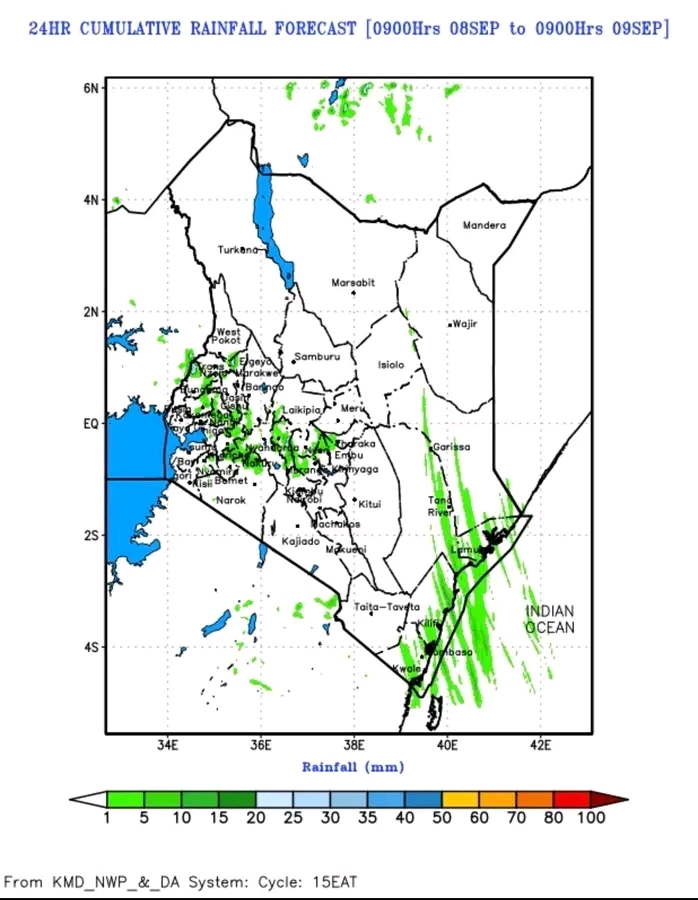
According to reports based on the latest KMD forecast, rainfall is expected particularly in parts of Lamu, Kilifi, Tana River, Mombasa, Kwale, Narok and Bomet. Consequently, residents in these areas should not assume that the general dry conditions will apply everywhere within their counties. Weather can vary considerably from one locality to another, especially in counties covering large geographical areas.
The forecast is particularly significant because September is a transitional period. The country is moving away from the relatively cooler and drier period toward the October–December rainfall season. KMD has therefore encouraged farmers to use the relatively dry period to prepare their farms, acquire inputs and make appropriate plans ahead of the expected rains.
Areas likely to receive rainfall
Although most parts of the country are expected to remain dry, KMD has identified several counties where rainfall is more likely.
Along the Coast, morning showers are expected in parts of Kwale, Mombasa, Kilifi, Tana River and Lamu. The coastal region can experience localized showers even when surrounding areas remain dry, so residents should continue monitoring short-term forecasts and local weather changes.
Parts of Narok and Bomet are also among the areas expected to receive rainfall during the week. These showers are important for agricultural communities because they can provide useful moisture to farms, although farmers should distinguish these isolated showers from the more established rainfall expected later in the season.
There is also a possibility of afternoon showers and thunderstorms in several counties, including Baringo, Bungoma, Busia, Siaya, Kakamega, Vihiga, Nandi, Elgeyo-Marakwet, Bomet, Kisumu, Kericho, Nyamira, Kisii, Migori, Narok, Nakuru, Uasin Gishu and Trans Nzoia.
Parts of Meru, Tharaka-Nithi, Embu, Kirinyaga, Murang'a, Nyeri, Kiambu, Nairobi, Nyandarua and Laikipia may also experience afternoon showers.
Night-time showers are possible in parts of Kilifi, Mombasa, Kakamega and Bungoma. People travelling or working outdoors in these areas should therefore pay attention not only to daytime conditions but also to evening and overnight forecasts.
Western Kenya and the Rift Valley
The western region normally has considerable rainfall variability because of its elevation and proximity to Lake Victoria. During this forecast period, isolated afternoon showers and thunderstorms are possible in counties such as Bungoma, Busia, Kakamega, Vihiga, Siaya, Nandi, Kisumu, Kericho, Kisii, Nyamira and Migori.
Parts of the Rift Valley, including Bomet, Narok, Nakuru, Baringo, Uasin Gishu, Trans Nzoia and Elgeyo-Marakwet, may also receive afternoon rainfall.
Thunderstorms can develop relatively quickly. Where they occur, residents should take precautions against lightning, strong winds and temporarily poor visibility. Farmers should also monitor fields and drainage channels, particularly in areas where intense local rainfall could produce runoff.
The fact that rainfall is expected in some western and Rift Valley counties does not mean the entire region will receive rain. KMD's county forecasts are designed to provide more localized information because weather conditions can differ significantly even between neighbouring locations. KMD describes its county forecasts as localized predictions intended to support agricultural planning, disaster management and daily activities.
Nairobi and Central Kenya
Nairobi and parts of Central Kenya are also included among areas that could receive afternoon showers during the week. The areas mentioned include Kiambu, Murang'a, Nyeri, Kirinyaga, Embu, Meru, Tharaka-Nithi, Nyandarua and Laikipia.
This means residents should expect predominantly dry periods but remain prepared for occasional changes, particularly during the afternoon.
For Nairobi residents, localized rainfall can quickly affect traffic, pedestrian movement and drainage systems. People travelling during afternoon hours should therefore consider checking the latest forecast before beginning long journeys.
The temperatures in the highland areas are also expected to be significantly lower at night than in many lowland areas. KMD's September outlook indicates that some parts of the central highlands can experience night temperatures below 10°C.
Coast region
The Coast is one of the regions with a higher likelihood of rainfall during the forecast period. Parts of Mombasa, Kilifi, Kwale, Lamu and Tana River are expected to receive showers.
Coastal communities should therefore be prepared for localized morning and afternoon rainfall. Residents in low-lying areas should remain attentive to drainage conditions, especially when showers become heavy.
The Coast will also continue experiencing relatively warm conditions. September is generally a warm period in the region, and temperatures can remain high even when there are occasional showers.
Northern and northeastern Kenya
The northern and northeastern parts of Kenya are expected to remain largely dry, although conditions will vary from one county to another.
Counties such as Garissa, Wajir, Mandera, Turkana, Marsabit, Isiolo and Samburu are generally associated with warmer conditions during this period. KMD's September outlook indicates that some northern and northeastern areas could record particularly high daytime temperatures.
The latest forecast indicates daytime temperatures of more than 30°C in parts of Kilifi, Tana River, Lamu, Garissa, Wajir, Isiolo, Marsabit and Turkana. Mandera is expected to be among the hottest locations, with a maximum around 38°C, while Lodwar could reach about 37°C and Garissa and Wajir around 36°C.
People living in these hot areas are advised to drink sufficient water, avoid unnecessary exposure to intense afternoon heat and take care of vulnerable people and livestock.
Temperature differences across the country
One of the most notable features of Kenya's weather this week is the large difference between daytime temperatures in the hot lowlands and nighttime temperatures in the highlands.
While some areas may record temperatures above 30°C during the day, parts of the highlands could experience nighttime temperatures below 10°C. Areas identified in the September outlook include parts of Meru, Tharaka-Nithi, Kirinyaga, Murang'a, Nyeri, Nyandarua, Laikipia, Nakuru, Narok, Taita-Taveta and Kajiado.
This contrast is a reminder that Kenya's weather is strongly influenced by altitude. High-altitude regions can remain cool even when lowland areas are experiencing considerable heat.
Implications for farmers
The forecast has important implications for agriculture.
Because most of the country is expected to remain generally dry, farmers should use the period to prepare their farms and agricultural inputs ahead of the OND short rains. Preparation could include clearing farms, repairing terraces and drainage channels, sourcing seeds and fertilizer where appropriate, and planning planting activities according to local forecasts.
Farmers should, however, avoid making major planting decisions based solely on a single rainfall event. The beginning of scattered showers does not necessarily mean that the full short-rains season has started.
KMD has indicated that the country is approaching the OND season, which is a major rainfall period for many parts of Kenya. Earlier seasonal outlook information indicated that wetter conditions were expected to increase toward October and continue into November in many areas.
Flood and storm preparedness
Even though the country is generally expected to be dry, KMD has advised people living in flood-prone areas to remain alert and keep drainage channels clear. This is important because localized heavy rainfall can cause flooding even during a generally dry period.
Residents should avoid blocking drainage channels with rubbish and should be cautious when crossing flooded roads or rivers. Motorists should reduce speed during heavy rainfall because visibility can deteriorate and roads can become slippery.
People should also take lightning precautions during thunderstorms. When thunder is heard, outdoor activities should be suspended and people should seek shelter inside safe buildings rather than remaining in open fields.
Winds and coastal conditions
KMD's September outlook also warns of periods of strong southerly, southeasterly and easterly winds, with speeds exceeding 25 knots in parts of several counties, including areas of Marsabit, Turkana, Samburu, Isiolo, Wajir, Mandera, Garissa, Tana River, Kitui, Makueni, Kajiado, Taita-Taveta, Kwale, Mombasa, Kilifi and Lamu.
These conditions can affect transport, agricultural activities and marine activities along the coast. Fishermen and other people working on the Indian Ocean should pay particular attention to official marine weather advisories.
*What Kenyans should expect*
Overall, the message from the latest Kenya Meteorological Department forecast is that Kenya will experience predominantly dry weather between 8 and 14 September 2026, with rainfall concentrated in selected parts of the Coast and Rift Valley and isolated afternoon showers in several western, central and highland counties.
The forecast should not be interpreted as meaning that every part of the country will be completely dry. Localized showers and thunderstorms remain possible, and weather conditions can change rapidly. KMD itself provides daily, seven-day and county-specific forecasts, allowing the public to obtain more detailed information for particular locations.

You Might Also Like
-
President William Ruto's assent to the four Bills today represents an important development in Kenya's legislative and governance landscape. The National Council for Population and Development Bill, Air Passenger Service Charge Amendment Bill, Public Finance Management Amendment Bill 2025 and Trust
-
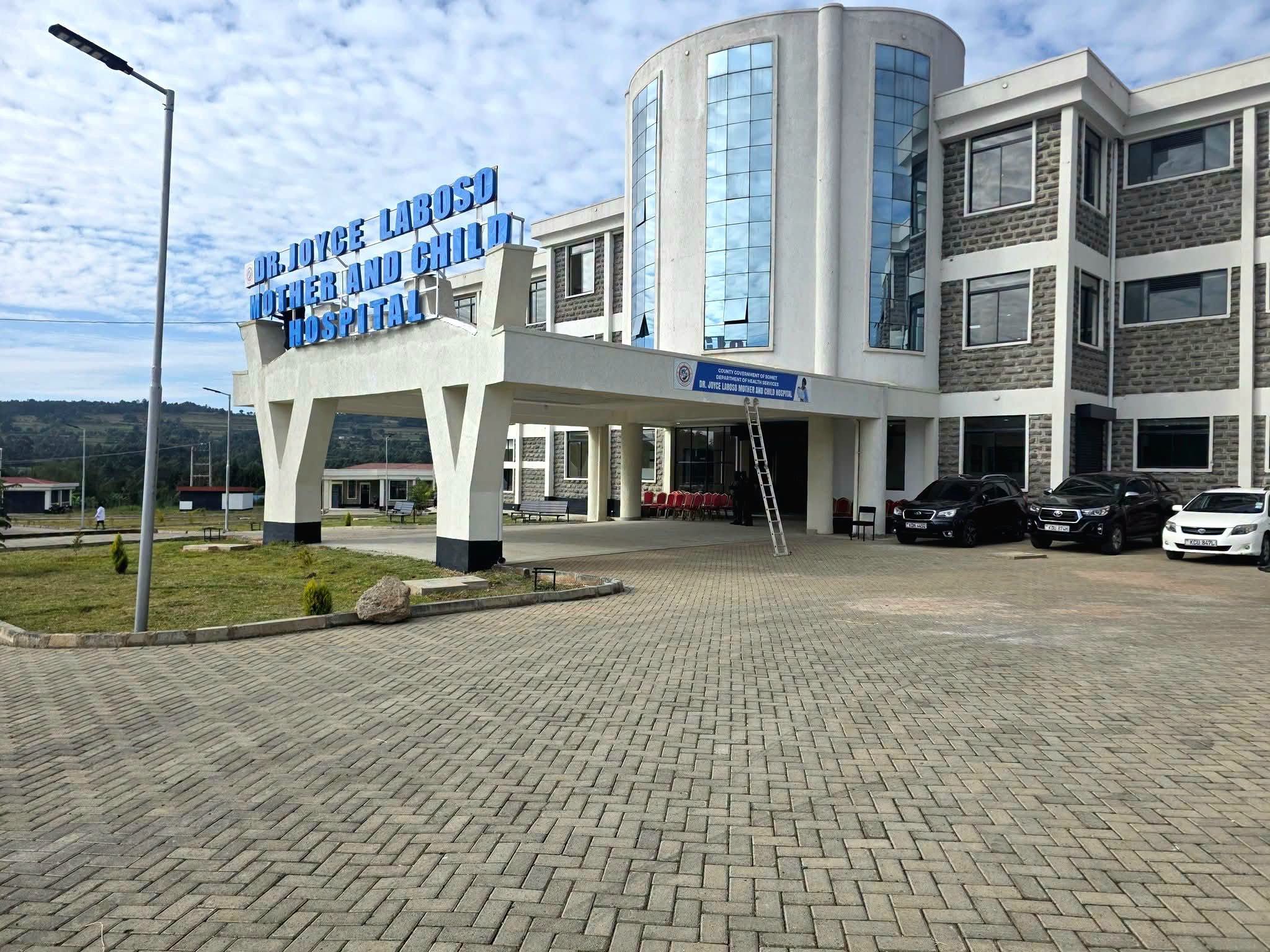
The September 7, 2026 prayers and dedication of the Dr Joyce Laboso Memorial Mother and Child Wellness Centre marked an important moment in Bomet's healthcare journey. The dedication church service, scheduled for 7:30 a.m. at the hospital grounds, provided an opportunity to pray for the institution
-
The gathering of Burundian nationals at their embassy in Nairobi is one of the most visible consequences of Kenya's new crackdown on certain foreign-operated small-scale businesses. Some Burundians are seeking emergency travel documents because they want to return home, while others are seeking cla
-
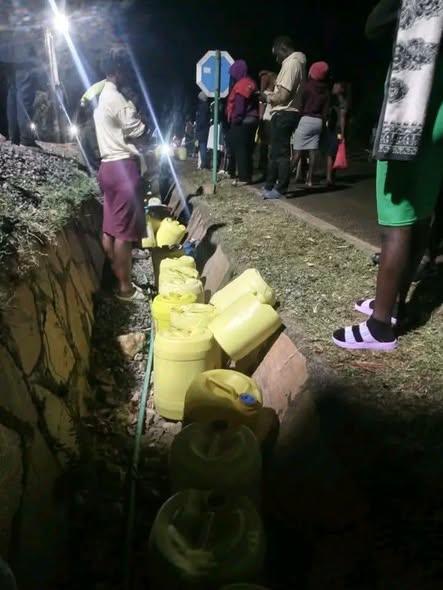
Bomet’s worsening water shortage is forcing students and residents to fetch water late at night as limited supply and low daytime pressure make access increasingly difficult. The situation is disrupting daily routines and raising concerns over safety and access to essential water services.
-
This major healthcare facility aimed at improving medical services for mothers and children in Bomet County. Named in honour of the late Dr. Joyce Laboso, the centre represents a lasting investment in better healthcare for families and future generations.
-
The mpox outbreak in Kenya remains an active public-health concern as of 7 September 2026. Today's reports indicate that Kenya has recorded 1,298 confirmed cases, with the disease spreading to 40 counties. The Ministry of Health has flagged seven counties as high-risk, with Nairobi among the areas r