



Kilimani Fire Outbreak: Several Vehicles Destroyed in Overnight Garage Blaze as Owners Count Heavy Losses
The Kilimani fire of September 7–8, 2026, is a major incident that has left mechanics and vehicle owners facing substantial losses. The blaze occurred at a garage off Ole Dume Road and involved numerous vehicles as well as petrol and other highly flammable materials. Nairobi County emergency teams responded after receiving a distress call and fought the blaze for more than four hours before bringing it under control. Reports indicate that more than 50 vehicles were destroyed, although the final assessment is still expected to provide a clearer picture of the damage. Fortunately, no deaths were reported, but the economic consequences for mechanics, vehicle owners and businesses connected to the garage could be significant. The incident has also revived broader concerns about fire preparedness in Nairobi's garages and workshops. Proper storage of fuel and other flammable materials, safe electrical systems, accessible emergency routes, adequate firefighting equipment and regular safety inspections can all help reduce the likelihood of similar disasters. For now, the cause of the Kilimani fire remains under investigation. Until authorities release their findings, it is important for the public to rely on confirmed information and avoid spreading unverified claims. The incident is a reminder that fire safety is a shared responsibility involving business owners, workers, property owners, residents and government agencies. Preventing another tragedy will require not only effective emergency response but also stronger emphasis on fire prevention, workplace safety and preparedness across Nairobi's garages and other high-risk businesses.
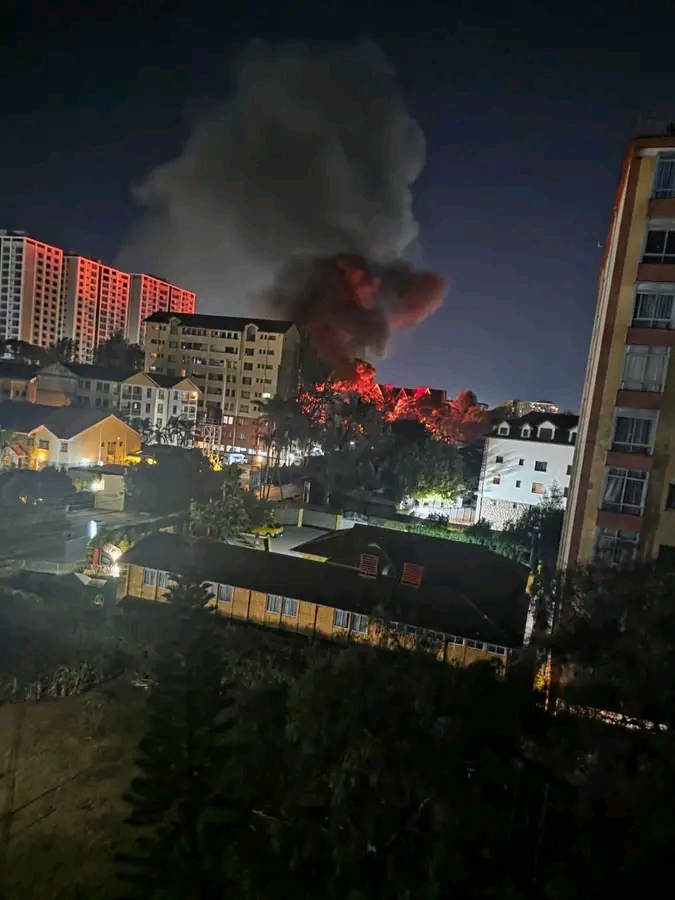
A major fire outbreak in Kilimani, Nairobi, has left mechanics and vehicle owners counting significant losses after flames swept through a garage off Ole Dume Road during the night of Monday, September 7, into Tuesday, September 8, 2026. The incident has attracted attention because of the large number of vehicles affected and the difficulty emergency teams experienced in containing the blaze.
Reports published on September 8 indicate that more than 50 vehicles were destroyed or extensively damaged, although the final number and value of the losses are still being established. Importantly, Nairobi police said no lives were lost in the incident, while investigations into the cause of the fire are continuing.
*Where the fire occurred*
The fire broke out at a garage located off Ole Dume Road in the Kilimani area of Nairobi. Some reports identify the facility as being around Muringa Road, off Ole Dume Road.
The garage was reportedly a busy facility serving a large number of mechanics and vehicle owners. According to Nairobi County Chief Officer for Customer Engagement and Citizen Service Geoffrey Mosiria, the garage had more than 200 mechanics, highlighting the scale of economic activity at the site.
Because vehicles were packed within the premises, the fire had a large amount of combustible material to feed on. The situation became even more dangerous because petrol and other highly flammable materials were reportedly present at the garage.
This combination made the emergency operation particularly challenging.
How the fire was discovered
The fire broke out during the night, with emergency services receiving a distress call through Nairobi's emergency response system.
According to county officials, the distress call prompted the immediate dispatch of fire engines and emergency response teams to the scene. Geoffrey Mosiria visited the location and coordinated with disaster management officers, mechanics and members of the surrounding community as efforts were made to bring the fire under control.
The nighttime timing of the incident may also have complicated the situation because fewer people would ordinarily be working at the garage compared with daytime hours. Nevertheless, people in the area responded as emergency teams arrived.
Firefighters battled the flames for more than four hours
One of the most significant details emerging from the incident is that emergency teams took more than four hours to contain the fire.
Mosiria explained that the operation was difficult because the blaze involved vehicles, petrol and other highly flammable materials. Firefighters therefore had to work carefully while attempting to prevent the flames from spreading to additional property and surrounding areas.
The presence of fuel creates an especially serious hazard during a garage fire. Petrol vapour can ignite rapidly, while oils, lubricants, plastics, rubber tyres, vehicle interiors and other workshop materials can intensify a blaze.
As a result, firefighters were not simply dealing with burning vehicles. They were also dealing with a potentially dangerous environment containing multiple sources of fuel.
The Standard reported that several vehicles were reduced to shells, with some apparently burned beyond repair.
More than 50 vehicles reportedly destroyed
The extent of the destruction has emerged as one of the biggest concerns following the Kilimani fire.
The Star reported that more than 50 vehicles were destroyed in the blaze, with some reportedly reduced to ashes.
Other reports have described the number more generally as "several vehicles," meaning the final official assessment may still change as owners and mechanics inspect the site.
Some of the vehicles were reportedly customer cars that had been brought to the garage for repair or maintenance. This makes the incident particularly painful because many vehicle owners may not have anticipated that their cars would be exposed to such a major loss while undergoing repairs.
For mechanics, the damage could extend beyond vehicles. Garages typically contain tools, spare parts, diagnostic equipment, compressors, machinery, oils and other equipment. Destruction of these items can make it difficult for affected mechanics to immediately resume their businesses.
Mechanics and vehicle owners counting losses
The financial impact of the fire is expected to be substantial.
Vehicle owners whose cars were destroyed now face the difficult task of determining whether their vehicles can be repaired or whether they are total losses. Mechanics, meanwhile, may have lost both customer vehicles and their own equipment.
Several media reports have described the losses as running into millions of Kenyan shillings, although the precise financial value has not yet been officially established.
Determining the total loss will require several factors to be considered, including:
The number of vehicles destroyed.
The market value of each vehicle.
The extent of damage to partially affected vehicles.
The value of spare parts.
Tools and garage equipment destroyed.
Business interruption suffered by mechanics.
Possible insurance coverage.
Other property damaged by the fire.
The final figure could therefore be significantly different from early estimates.
Cause of the fire remains unknown
Another major issue surrounding the Kilimani incident is the question of what caused the fire.
As of the latest reports available on September 8, the cause had not been established. Police and relevant authorities are expected to investigate the circumstances surrounding the outbreak before reaching a conclusion.
It is important not to speculate about the cause before investigators release their findings.
A fire at a garage can have numerous possible causes, including electrical faults, welding or mechanical work, fuel-related incidents, equipment failure or other accidental circumstances. However, none of these possibilities should be presented as the cause of the Kilimani fire unless confirmed by investigators.
Some early online reports have used terms such as "arson," but these claims should be treated cautiously because the more established reports available today state that the cause remains under investigation.
No deaths reported
Despite the scale of the fire, one of the most important positive developments is that no deaths were reported.
The Star quoted Nairobi police boss Issa Mohamud as saying that no lives were lost.
This is significant because garage fires involving petrol and vehicles can quickly become extremely dangerous.
The absence of reported fatalities does not, however, reduce the seriousness of the incident. Many people have suffered substantial economic losses, and affected vehicle owners and mechanics now face the difficult process of assessing the damage and determining their next steps.
*Role of the Nairobi County emergency teams*
Nairobi County emergency response teams played a central role in containing the blaze.
According to county officials, the emergency centre received the distress call and dispatched fire engines. Firefighters then worked for several hours to bring the situation under control.
Geoffrey Mosiria also praised the disaster management officers and acknowledged the contribution of local residents and mechanics who assisted during the emergency operation.
The response illustrates the importance of having functional emergency services in densely populated parts of Nairobi.
For a fire involving dozens of vehicles and flammable substances, rapid response is critical. A delay could potentially allow flames to spread to neighbouring buildings, businesses, homes or other facilities.
Renewed concerns about fire safety in Nairobi garages
The Kilimani fire is also likely to renew discussions about fire safety in Nairobi's garages and informal vehicle repair yards.
Garages can contain numerous combustible materials, including petrol, diesel, engine oil, lubricants, plastics, rubber, paint, electrical components and other chemicals.
If these materials are stored incorrectly, a small ignition source can potentially become a major fire within a short period.
Fire safety experts and authorities may therefore need to pay closer attention to issues such as:
Safe storage of fuel and oils.
Availability of fire extinguishers.
Clear emergency access routes.
Electrical wiring and equipment.
Proper separation of ignition sources from flammable materials.
Emergency evacuation procedures.
Regular fire-safety inspections.
Training of mechanics and workers on emergency response.
The incident demonstrates that fire prevention is just as important as firefighting.
*The importance of insurance*
The Kilimani fire also highlights the importance of insurance for vehicle owners and businesses.
Vehicle owners whose cars are comprehensively insured may have a possible avenue for compensation, depending on their policies and the circumstances of the incident. Mechanics and garage owners may similarly have insurance covering equipment, premises or business interruption.
However, insurance claims generally require documentation and assessment.
Affected owners may need to obtain police reports, photographs, vehicle ownership documents, insurance details and other evidence required by their insurers.
Those whose vehicles were at the garage should therefore document the damage carefully and follow the relevant official and insurance procedures.
Community response
The incident also demonstrated the role of the local community during emergencies.
Reports indicate that residents and mechanics assisted emergency personnel as they worked to control the fire.
Community assistance can be valuable, but large fires involving fuel and other hazardous materials are extremely dangerous. Members of the public should avoid entering burning premises or attempting to fight major fires without appropriate equipment and training.
The safest response is normally to alert emergency services, move away from danger and provide responders with useful information about the location and possible hazards.
What happens next
The next major stage will be investigations and assessment.
Authorities are expected to establish what caused the fire, determine the full extent of the destruction and identify any safety concerns that may have contributed to the incident.
Vehicle owners and mechanics will also begin assessing their losses.
The exact number of destroyed vehicles, their combined value and the total cost of damage should become clearer as authorities and owners complete their assessments.
The cause of the fire is particularly important because establishing whether the incident resulted from an accident, equipment failure, electrical fault, negligence or another factor could influence subsequent investigations and any insurance or legal proceedings.

You Might Also Like
-
President William Ruto's signing of the Kenya-Italy-GKSD health partnership on September 8, 2026, marks an important development in Kenya's efforts to expand healthcare infrastructure. The programme will provide for 15 hospitals in 15 counties — 13 Level 5 county referral hospitals and two Level 6
-
President William Ruto’s visit to Kericho County is therefore an important development event for the region. Governor Dr Eric Mutai, local leaders and residents have welcomed the President as he undertakes a tour focused on development and the implementation of government projects. The projects e
-
President William Ruto's visit to Bomet today is one of the county's major development events of 2026. Governor Prof. Hillary Barchok and other leaders have welcomed the President, while residents have been preparing to turn out and participate in the historic tour. The visit begins with an inspect
-
The inspection of Itembe Airstrip by Davis Chirchir, coming just ahead of President William Ruto's arrival in Bomet, places the airstrip at the centre of the President's development tour. The facility is undergoing a major rehabilitation involving a 1,000-metre asphalt runway, taxiways, an apron, d
-
The flagging off of approximately 99,000 metric tonnes of fertiliser, equivalent to about two million 50kg bags, by Agriculture PS Dr Kipronoh Rono alongside KTDA Holdings National Chairman Enos Njeru at the Port of Mombasa is an important development for Kenya's tea industry. The exercise is inten
-
Felix Koskei's speech in Londiani on September 7, 2026, was largely centred on reassuring residents about the future of the proposed Sh8 billion Londiani Referral Hospital. His most important message was clear: the government says the hospital will be constructed in Londiani and has not been moved