



Kindiki’s 2027 Election Promise: “Kenyans Will Get a Free, Fair and Credible Vote”
Deputy President Kithure Kindiki's latest assurance is that Kenya will hold the 2027 General Election on schedule and that the poll will be free, fair and verifiable. He has linked this commitment to respect for the Constitution, democracy, the rule of law and independent electoral institutions. Kindiki has also urged development partners interested in supporting the democratic process to work through formal channels, including supporting the electoral commission, civil society and accredited observers. At the domestic level, he has repeatedly called on political leaders and citizens to embrace tolerance, reject violence and allow political competition to take place peacefully. With political mobilisation already increasing ahead of 2027, the credibility of the election will depend on how electoral institutions, political parties, candidates, security agencies, observers and voters conduct themselves throughout the process. Kindiki's statement places the government's commitment to a peaceful and credible election on record, while the coming months will provide opportunities for institutions and political actors to demonstrate how those commitments are implemented in practice.
Deputy President Kithure Kindiki has assured Kenyans, development partners and the international community that the 2027 General Election will be conducted on schedule and will be free, fair, peaceful and verifiable. His remarks come at a time when political activity is increasing across the country, with parties and political leaders already positioning themselves ahead of the next national elections.
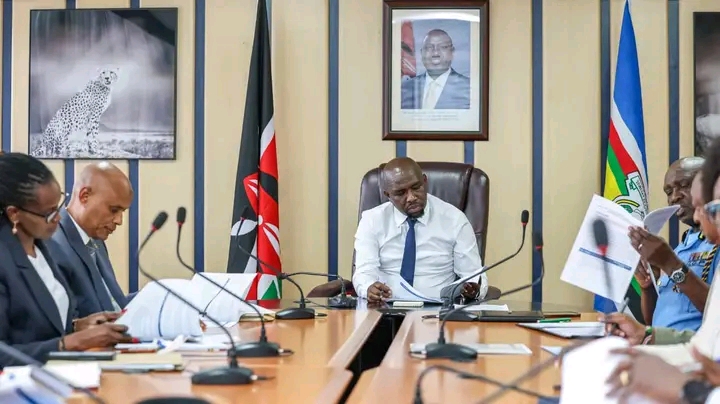
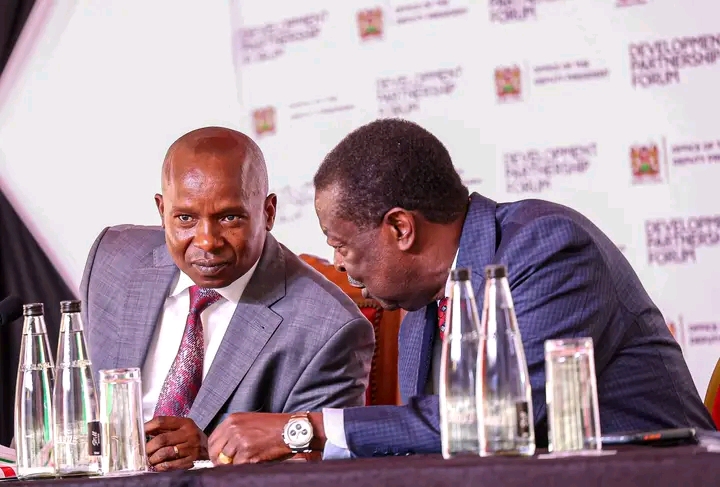
Kindiki made the assurance while co-chairing the 15th Development Partnership Forum at the Official Residence in Karen, Nairobi, alongside United Nations Resident Coordinator Dr Garry Conille and Germany's Ambassador to Kenya Sebastian Groth. The meeting brought together government officials, development partners, representatives of international and humanitarian organisations, independent commissions and other stakeholders.
Commitment to constitutional democracy
In his address, Kindiki emphasized that Kenya remains a constitutional democracy and that the government is committed to respecting the country's democratic institutions. He said elections would continue to be held according to the Constitution and existing electoral laws.
The Deputy President said the government under President William Ruto believes in democracy, the rule of law and the constitutional order. He assured the international community that the 2027 elections would not be conducted through shortcuts or arrangements outside the established legal framework.
His message was significant because development partners and international organisations often participate in electoral processes through activities such as voter education, observation, technical support and assistance to civil-society organisations. Kindiki encouraged partners interested in supporting democracy and elections to do so through established procedures.
He specifically pointed to the Independent Electoral and Boundaries Commission (IEBC), civil-society organisations and accredited election observers as some of the channels through which development partners can contribute to the electoral process.
Kindiki rejects election interference claims
The Deputy President has previously addressed allegations that the government could interfere with the 2027 election. In May 2026, while speaking in Kisii County, he rejected claims of a plan to manipulate the election and said the Kenya Kwanza administration supported free, fair and transparent elections.
Kindiki argued that the government should be judged through its record of service delivery and development rather than through manipulation of the electoral process. He maintained that the electorate should ultimately determine the country's leadership through the ballot.
The remarks came amid political debate over the credibility of the 2027 elections. Some opposition figures and other political actors have raised concerns about the possibility of electoral interference, while government officials have rejected those concerns.
The Deputy President's latest assurance therefore forms part of a broader government message that the next election should be conducted through constitutional institutions and procedures.
The role of IEBC
A major part of the 2027 election debate is the role of the IEBC. Kenya's electoral commission is constitutionally responsible for managing elections and referendums.
Kindiki has repeatedly referred to the importance of an independent electoral body. In his May remarks, he pointed to the 2022 election and said the electoral process and institutions played an important role in ensuring that the election outcome was determined through the established process.
The Deputy President has also urged political actors to respect the commission's mandate rather than attempting to influence it. His comments place the question of institutional independence at the centre of preparations for the 2027 polls.
For an election to command public confidence, the electoral process involves more than voting on election day. It also includes voter registration, verification of the voters' register, nomination of candidates, campaign regulations, polling, counting, transmission and declaration of results, as well as mechanisms for resolving disputes.
Call for peaceful political competition
Kindiki has also been calling for political tolerance as the country moves closer to the 2027 elections.
In August, he urged residents in the Mt Kenya region to tolerate political differences and warned against allowing political competition to destroy social relationships or national peace. He said political competition is temporary, while communities and the nation remain beyond individual elections.
The Deputy President's position is that competing political leaders should be allowed to campaign and present their records and policies, while voters should make their choices peacefully.
He has similarly encouraged political actors to avoid violence, destruction of property, political insults and ethnic mobilisation. According to his remarks, disagreements over political leadership should not turn communities against one another.
This message has become increasingly relevant as political mobilisation intensifies ahead of the 2027 elections.
Political activity ahead of 2027
Kenya has already entered a period of increased political activity even though the formal campaign period for the 2027 election has not yet begun.
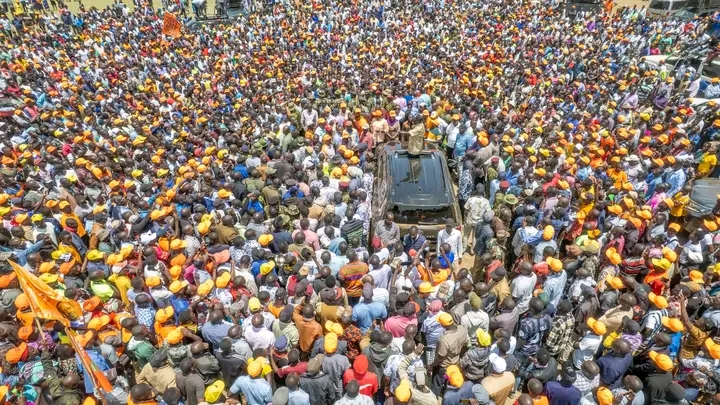
Political parties and leaders are holding meetings, building alliances and mobilising supporters in different parts of the country. The Independent Electoral and Boundaries Commission has set May 29, 2027 as the earliest date for presidential candidates to formally begin campaigning, according to reporting cited in recent political coverage.
The increasing political activity has made calls for peaceful competition particularly important.
Different political groups are already presenting competing visions for the country's future. Supporters of the Kenya Kwanza administration are highlighting government programmes and development projects, while opposition figures are challenging the government's record and calling for political change.
The existence of competing political positions is part of the democratic process, but the credibility of the eventual election depends on political actors accepting the rules governing competition.
Respect for voters' decisions
Another important element of Kindiki's message is respect for the decision of voters.
In his earlier comments on the 2027 election, he said the decision of the electorate must be respected.
This principle is central to electoral democracy. Candidates and political parties compete for votes, but the electoral process must provide citizens with the opportunity to make their choices without intimidation, violence or unlawful interference.
Kindiki has therefore presented the government's position as one in which political competition should be determined by voters rather than by manipulation of electoral institutions.
He has also encouraged politicians to focus on their records, policies and development plans.
Development partners encouraged to participate
During the Development Partnership Forum, Kindiki did not ask international partners to stay away from Kenya's electoral process. Instead, he encouraged those wishing to participate to use formal and recognised channels.
He identified support for the electoral commission, civil society and election observation as appropriate avenues for participation.
Election observation can provide an additional layer of transparency by allowing accredited observers to monitor various stages of the electoral process and report their findings.
International development partners can also support areas such as democracy education, institutional strengthening and peaceful political participation, provided such activities comply with Kenyan law and the established electoral framework.
Human rights and freedoms
Kindiki also linked the government's election commitment to the broader protection of democratic freedoms.
He described Kenya as a vibrant democracy and pointed to the country's tradition of open political engagement. He said Kenyans should continue to enjoy freedoms guaranteed by law as the country prepares for the 2027 polls.
This includes the broader principle that citizens should be able to participate in political activities within the law, while political parties should be able to organise and mobilise supporters peacefully.
The protection of political freedoms is particularly important during election periods because campaigns involve competing views, public meetings, political messaging and criticism of those in power.
Concerns surrounding electoral credibility
Despite Kindiki's assurances, concerns about the credibility of the 2027 election remain part of Kenya's political debate.
Opposition leaders and some civil-society voices have questioned whether electoral institutions will remain sufficiently independent and whether all political actors will respect the rules.
Recent political discussions have also included concerns about inflammatory political rhetoric and allegations surrounding the integrity of voter registration and election preparations. These concerns are contested, and the relevant institutions are responsible for addressing factual questions about the electoral process.
The existence of such concerns makes transparency particularly important in the period leading to the election.
The importance of peaceful elections
Kenya's political history has demonstrated the importance of peaceful electoral competition. Elections can generate intense political emotions, particularly when presidential, parliamentary and county positions are being contested simultaneously.
Kindiki's message is that political disagreements should not result in violence or destruction.
His call for peaceful competition also extends to political supporters. Campaigns involve ordinary citizens, and maintaining peace requires both political leaders and their supporters to respect the rights of people who hold different political opinions.
Government's message to the international community
Kindiki's speech at the Development Partnership Forum was also directed toward Kenya's international development partners.
By assuring them that the 2027 election will be held on schedule and according to constitutional requirements, he sought to communicate confidence in Kenya's democratic institutions.
He said there would be no compromise on the credibility of the election and invited partners interested in supporting democracy to participate through recognised channels.
This is particularly important because international organisations and development partners often monitor political developments closely in countries approaching major elections.
What Kenyans will be watching
As preparations for the 2027 General Election continue, several issues are likely to remain important to Kenyan voters.
These include the independence and preparedness of the IEBC, accuracy of the voters' register, voter registration and identification, security during campaigns and voting, access to political rallies, the conduct of political parties, the role of technology in elections, the counting and transmission of results, and the mechanisms available to resolve electoral disputes.
The conduct of political leaders will also matter. Calls for peaceful competition and tolerance will need to be reflected in actual political activities across the country.

You Might Also Like
-
Kenya's current milk shortage is putting pressure on consumers, farmers, processors and retailers. Formal milk deliveries have declined, while prolonged dry conditions have reduced pasture and increased the cost of animal feeds. At the retail level, some areas have recorded substantial price increas
-
The differences between KNUT and KUPPET over Junior School largely arise from competing interpretations of where Junior School teachers belong within Kenya's changing education system. KUPPET has consistently emphasised that Junior School teachers perform a post-primary teaching role and should the
-
Interior CS Kipchumba Murkomen's disclosure that 1,189 people have been jailed for political goonism since 2022 has brought renewed attention to the problem of politically linked violence in Kenya. The figure consists of 1,053 men and 136 women, according to information presented to the Senate. Th
-
Kericho and Bomet are seeing the kind of rainfall activity forecast for parts of the Rift Valley, while Nandi has a stronger indication of showers and thunderstorms later today. Narok is currently less likely to receive significant rain today, although rainfall is expected in the wider county over t
-
The High Court has deferred the sentencing of former Migori Governor Okoth Obado and his two co-convicts, Michael Juma Oyamo and Caspal Obiero, in the Sharon Otieno murder case to November 27, 2026. The court made the decision after hearing submissions from the parties involved.
-
President William Ruto's Migori visit today, Wednesday, September 16, 2026, has focused heavily on infrastructure and economic development while also carrying a strong political message. The President launched the Kanyawanga-Kwoyo-Madiaba Road project in Awendo, inspected the Stella-Sibuoche-Gogo R