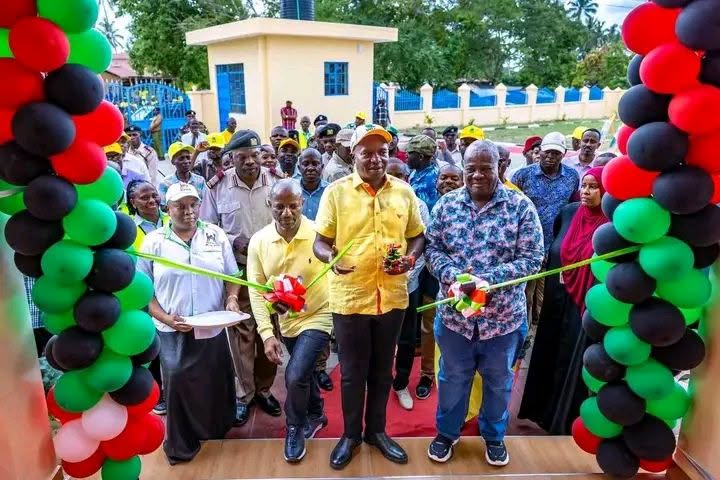
KINDIKI COMMISSIONS SH52 MILLION RABAI HUDUMA CENTRE IN KILIFI, ANNOUNCES 50 COMPUTERS AND MODERN RECORDING STUDIO TO EMPOWER LOCAL YOUTH IN ICT, MUSIC AND CREATIVE ARTS
Deputy President Kithure Kindiki has officially commissioned the Sh52 million Rabai Huduma Centre in Kilifi County, in a move aimed at bringing essential government services closer to residents while creating new opportunities for young people. During the launch, Kindiki announced plans to equip the facility with 50 computers and establish a modern recording studio to support youth interested in information and communication technology, music production and the creative arts. The initiative is expected to provide aspiring musicians, content creators and digital entrepreneurs with access to resources that can help them develop their talents and acquire practical skills. The computers will also create opportunities for young people to improve their digital literacy and explore emerging opportunities in the technology sector. The new facility is expected to ease access to government services by reducing the need for residents to travel long distances in search of assistance. The investment further highlights the government's focus on decentralising public services and expanding youth empowerment initiatives across the country. Kindiki's announcement underscores the growing importance of technology and creative industries in supporting innovation, entrepreneurship and employment opportunities among Kenya's young population.
Deputy President Kithure Kindiki has officially commissioned the Sh52 million Rabai Huduma Centre in Kilifi County, marking another step in the government's efforts to expand access to public services while creating opportunities for young people to develop skills in technology, music and the creative arts.
During the commissioning ceremony, Kindiki announced plans to equip the facility with 50 computers and establish a modern recording studio aimed at supporting young people interested in information and communication technology, music production and other creative industries.
The initiative is expected to provide residents of Rabai and neighbouring areas with improved access to government services while opening new opportunities for youth to explore their talents and acquire practical skills that can support their economic activities.
The establishment of the Rabai Huduma Centre forms part of the government's broader efforts to bring essential public services closer to citizens, reducing the challenges associated with travelling long distances to access government offices.
Huduma Centres have been established across different parts of the country to provide citizens with convenient access to a wide range of government services under one roof.
Through the centres, Kenyans can access various services from different government departments without having to visit multiple offices to complete administrative procedures.
The commissioning of the Rabai facility is expected to improve service delivery in the area by providing residents with a central point where they can seek assistance and complete government transactions more conveniently.
For many residents, particularly those living in rural communities, accessing government services has previously involved additional transport expenses, long journeys and time spent moving between different offices.
The new facility is expected to reduce some of these difficulties by bringing services closer to the people and improving the efficiency of public administration.
The Sh52 million investment also reflects the government's intention to expand public service infrastructure beyond major towns and urban centres.
By establishing Huduma Centres in different parts of the country, the government aims to ensure that residents from various regions can access essential services without facing unnecessary geographical barriers.
Kindiki's announcement of 50 computers for the Rabai Huduma Centre also places particular emphasis on the role of digital technology in expanding opportunities for young people.
Access to computers and digital learning facilities has become increasingly important as more services, educational opportunities and economic activities move towards online platforms.
The proposed equipment is expected to provide young people with an opportunity to improve their computer literacy, acquire digital skills and familiarise themselves with technologies that are increasingly required in the modern employment environment.
Digital literacy has become an important requirement in many professional fields, with employers and institutions increasingly expecting individuals to understand basic computer operations, online communication and the use of digital applications.
For young people who may not have access to computers at home or in their communities, the proposed facility could provide an important opportunity to gain practical experience.
The computers are also expected to support learning activities and provide a platform through which interested youth can explore areas such as graphic design, digital content creation, online business and other technology-related skills.
With the expansion of the digital economy, young people are increasingly finding opportunities to generate income through online platforms, freelance services and technology-based enterprises.
However, limited access to equipment, reliable internet connectivity and relevant training continues to present challenges for many aspiring digital entrepreneurs.
The government's proposed investment in computer facilities is therefore expected to contribute towards addressing some of these challenges by providing additional opportunities for digital engagement.
Apart from technology, the planned establishment of a modern recording studio is another major component of the youth empowerment initiative announced by the Deputy President.
The recording studio is expected to provide a platform for young people interested in music production, audio recording and other creative activities.
The creative industry has continued to attract interest among young Kenyans, with many using music, entertainment, digital media and content production to showcase their talents and pursue economic opportunities.
However, developing a successful creative career often requires access to professional equipment, technical expertise and suitable production facilities.
For emerging musicians and content creators in areas such as Rabai, the cost of accessing professional recording studios can be a major challenge.
Some upcoming artists are forced to travel to larger towns to access recording services, while others struggle to raise the money required to produce quality music.
The proposed modern recording studio is expected to help address some of these limitations by bringing production facilities closer to aspiring artists.
It could also create opportunities for young people to learn different aspects of music production, including sound recording, editing, mixing and other technical skills associated with the entertainment industry.
The facility is expected to support individuals who wish to pursue careers in music and creative production while encouraging the development of local talent.
Beyond music, creative industries have expanded to include photography, videography, film production, digital storytelling, advertising and online entertainment.
These areas offer opportunities for young people to use their creativity and technical abilities to develop businesses and provide services to individuals, organisations and companies.
The proposed recording studio could therefore serve as part of a broader effort to encourage youth participation in the creative economy.
The initiative also highlights the importance of providing young people with practical opportunities rather than focusing exclusively on traditional employment pathways.
Across the country, many young people continue to face difficulties securing formal employment after completing their education.
As a result, there has been growing interest in entrepreneurship, digital businesses and creative activities as alternative ways of generating income.
Providing access to technology and creative facilities could help aspiring entrepreneurs develop their skills, improve their products and explore new markets.
The Rabai Huduma Centre is therefore expected to serve not only as a government service delivery facility but also as an important point of opportunity for residents interested in developing their professional and creative abilities.
The government's approach also reflects the growing recognition that youth empowerment requires investment in infrastructure, training and access to modern equipment.
While access to computers and recording facilities can provide an important starting point, their effectiveness will also depend on how the resources are managed and made available to the intended beneficiaries.
Training programmes, mentorship opportunities and partnerships with professionals in the technology and entertainment sectors could further strengthen the impact of the proposed facilities.
Such arrangements would help ensure that young people acquire practical knowledge that can be translated into employment, entrepreneurship and other economic activities.
The commissioning also brings attention to the broader role of Huduma Centres in improving the relationship between citizens and government institutions.
By providing several services under one roof, the centres are intended to make public administration more accessible, efficient and convenient.
They also offer an opportunity to improve coordination between government departments and reduce the time citizens spend seeking different services.
For residents of Rabai and surrounding communities, the new centre is expected to provide a more convenient location for accessing government assistance and completing various administrative processes.
The investment in the facility further demonstrates the importance of decentralising public services to ensure that communities outside major urban areas also benefit from government infrastructure.
As the government continues to expand its service delivery network, the availability of modern facilities at the local level is expected to play an important role in improving accessibility.
The addition of youth-focused digital and creative facilities also introduces another dimension to the purpose of the Rabai Huduma Centre.
Rather than concentrating exclusively on administrative services, the planned computers and recording studio are intended to create opportunities that can benefit young people beyond their interaction with government offices.
The announcement by Kindiki comes at a time when technology and creative industries are increasingly becoming important contributors to economic activities and employment opportunities.
Young people with digital skills can explore different career paths, including online marketing, graphic design, software-related services and digital entrepreneurship.
Similarly, those with creative abilities can develop careers in music, film, photography and other entertainment-related activities.
Access to suitable facilities can help reduce some of the financial and geographical barriers that prevent talented individuals from developing their potential.
The Sh52 million Rabai Huduma Centre is therefore expected to play an important role in bringing public services closer to residents while supporting the government's wider youth empowerment objectives.
The provision of 50 computers and a modern recording studio represents an additional investment in opportunities for young people to acquire practical skills and explore different areas of the economy.
As the facility begins its operations, attention will also focus on how effectively the available resources will be utilised to benefit residents and the surrounding communities.
The successful implementation of the proposed youth empowerment facilities could provide a platform for emerging musicians, digital entrepreneurs and other creative professionals to develop their talents.
The commissioning of the Rabai Huduma Centre highlights the government's efforts to combine improved access to public services with investments aimed at expanding opportunities for young people.
Through the Sh52 million facility, the government seeks to strengthen service delivery in Rabai while providing additional support for residents interested in technology, music and the creative arts.
The announcement of 50 computers and a modern recording studio further places youth development at the centre of the initiative, with the aim of giving young people access to resources that can help them build skills, nurture their talents and explore opportunities in the growing digital and creative economy.

You Might Also Like
-
Kenya is moving closer to being declared Ebola-free following the recovery and discharge of all nine confirmed patients who tested positive for Bundibugyo Virus Disease. Health Cabinet Secretary Aden Duale has confirmed that the final 11 contacts also completed their mandatory 21-day monitoring peri
-
Kenyan tea farmers and exporters are expected to benefit from renewed business opportunities following Sudan’s decision to lift its ban on tea imports from Kenya. The move paves the way for the resumption of tea shipments to the Sudanese market, which has traditionally been an important destinatio
-
Kenya has made a major breakthrough in its fight against the Ebola virus after Health Cabinet Secretary Aden Duale announced that the last patient receiving treatment for the disease had been discharged from hospital. The announcement marks an important milestone in the country's efforts to contain
-
The destruction of two classrooms at the school in Tilito village, Kipkelion East Constituency, following heavy rainfall and strong winds has left residents concerned about the future of learning facilities in their community. The incident, which occurred on November 9, 2026, also affected the schoo
-
Prime cabinet secretary Musalia Mudavadi opens national forum on county public service boards.His call for merit-based recruitment, performance-based promotions, independent public service boards and proper wage-bill management highlights the need for stronger human resource systems across all 47 co
-
A new report by the National Council on the Administration of Justice (NCAJ) has revealed that nearly one in three convicted inmates in Kenya's prisons is serving a sentence for a sexual offence. Data from the State Department for Correctional Services indicates that 11,108 out of approximately 37,0