



Kindiki Sounds Alarm in Mt Kenya, Vows Tough Crackdown on Illicit Brew
Deputy President Kithure Kindiki's call for Mount Kenya elders to take a leading role in fighting illicit drinks comes amid an intensified national crackdown on illegal alcohol. The government's approach involves police raids, closure of unlicensed outlets, investigations into suspected counterfeit products, action against illegal distilleries and prosecution of people found responsible. Recent operations in Murang'a and other areas show that enforcement activity is continuing. For Mount Kenya, the issue remains both a security and social concern. Kindiki's message is that government enforcement must be supported by elders, parents, community leaders and residents. The long-term success of the campaign will depend on whether authorities can consistently disrupt the supply chains behind illicit alcohol while communities address the social factors that encourage consumption. It will also depend on licensing enforcement, public awareness, rehabilitation and accountability among officials responsible for enforcing the law. For families across Mount Kenya, the central issue is protecting young people and communities from unsafe alcohol and the wider consequences of substance abuse. The renewed government commitment places the fight against illicit brew firmly among the region's ongoing public safety priorities.
Deputy President Kithure Kindiki has called for intensified efforts to fight illicit alcohol in the Mount Kenya region, urging community elders and local leaders to take an active role in protecting young people from the effects of illegal and unsafe drinks.
Kindiki’s latest remarks come at a time when the government has stepped up enforcement against illicit alcohol manufacturers, distributors and sellers across the country. The issue has remained particularly sensitive in Mount Kenya, where leaders and residents have repeatedly raised concerns about the impact of illicit brews on families, young people, livelihoods and community development.
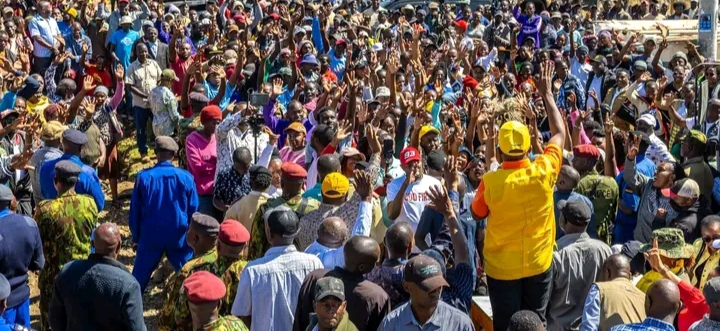
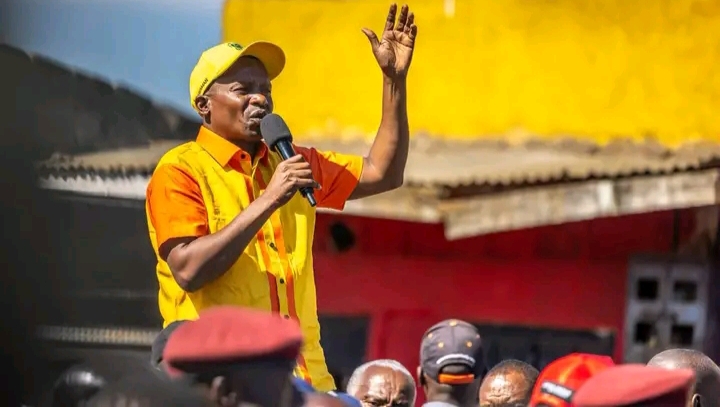
During a recent engagement with Mount Kenya elders at Kirigiti Stadium in Kiambu County, Kindiki urged the elders to lead the fight against illicit drinks in the region. The meeting brought together elders from communities including Kikuyu, Embu, Mbeere and Meru and focused on regional unity and development.
Kindiki calls for community involvement
Kindiki's message places responsibility for addressing illicit alcohol not only on police officers and government agencies but also on community leaders and families.
The Deputy President asked elders to take the lead in educating young people about the dangers associated with illicit drinks. He has also called for communities to reject practices that expose young people to alcohol and other substances.
His remarks come against the background of a wider government campaign against illicit alcohol. Earlier, while serving as Interior Cabinet Secretary, Kindiki described illicit alcohol, drugs and substance abuse as major threats to national security and called for sustained enforcement against manufacturers, sellers and distributors.
The current approach therefore combines security operations with community involvement. Authorities are expected to identify illegal brewing and distribution networks, while communities are encouraged to provide information and discourage the sale and consumption of dangerous alcohol.
Why illicit brew remains a major concern
Illicit brew refers broadly to alcoholic products manufactured, distributed or sold outside the requirements of Kenyan law. Such products can include unlicensed traditional brews, counterfeit alcoholic products and alcohol manufactured using unsafe or prohibited substances.
The danger is particularly serious when consumers cannot establish what ingredients have been used to manufacture a drink or whether the product has undergone the required safety and quality checks.
Recent enforcement operations illustrate the problem. In September, police in Maragua, Murang’a County, arrested a bar owner and seized several suspected counterfeit alcoholic products. Authorities said the authenticity of tax stamps and standards marks would be examined with the assistance of the Kenya Revenue Authority and the Kenya Bureau of Standards.
The operation also highlighted another problem: some businesses allegedly operate without the required liquor licences. Authorities said the premises involved in the Maragua operation lacked a valid liquor licence and that investigations were continuing.
Crackdown targets manufacturers and suppliers
The government’s campaign is increasingly focusing on the people behind the supply chain rather than only targeting consumers.
Interior Cabinet Secretary Kipchumba Murkomen recently said security agencies were intensifying operations against manufacturers, suppliers and transporters involved in the illegal liquor trade. He warned that individuals found culpable would face prosecution.
Murkomen, speaking in Nyeri County, said authorities had already arrested some suspects and closed factories allegedly involved in the production of illicit alcohol.
He also identified what he described as a growing challenge involving second-generation alcohol. According to Murkomen, some businesses that appear legitimate may allegedly misuse licences or operate hidden sections where substandard alcohol is produced.
This means that the government crackdown is not limited to traditional brewing centres. Authorities are also examining licensed-looking facilities, distribution networks and other points through which illegal products can enter the market.
Mount Kenya at the centre of the debate
The illicit alcohol issue has had a particularly strong presence in political and social discussions in Mount Kenya.
The region has previously witnessed government operations aimed at closing illegal drinking establishments and dismantling brewing networks. In 2024, Kindiki, then serving as Interior Cabinet Secretary, ordered a continuous nationwide crackdown after deaths linked to poisonous alcohol in Mwea, Kirinyaga County. Kenya News Agency reported that 17 people had died in the Kangai area during that incident.
At the time, Kindiki directed security teams to work with county governments to review liquor licences and close outlets that were operating illegally.
He also promised frequent unannounced visits to the Mount Kenya region to assess the progress of the operation.
The history of those operations shows that the current campaign is part of a longer-running government effort rather than a completely new policy.
Government reports thousands of closures
The wider national crackdown has produced significant enforcement figures.
Recent government figures cited by Capital FM and other media indicate that 18,650 liquor outlets had been closed across the country. The reported figure included 12,150 outlets operating without licences and 6,500 licensed premises that authorities said had breached the Alcoholic Drinks Control Act. Fourteen illegal distilleries were also reportedly shut down.
Police operations have also involved the seizure and destruction of illegal alcohol.
For example, in a September operation in Kahawa West, Nairobi, police destroyed 1,500 litres of suspected kangara and 35 litres of chang'aa and dismantled equipment allegedly used for illegal brewing.
These operations demonstrate the government's effort to disrupt the production stage, rather than allowing illegal alcohol to reach consumers.
The role of the police and local administration
Kindiki's call comes with an expectation that police officers, chiefs, assistant chiefs and other national government administration officials will remain active on the ground.
Local administrators are often in a better position to identify locations where illegal alcohol is being produced or sold because they interact directly with communities.
However, enforcement also requires accountability. The government has previously warned that officials who facilitate illicit alcohol businesses or fail to act against known illegal operations may face disciplinary or criminal action.
This is important because an effective crackdown depends not only on arresting brewers but also on preventing illegal businesses from obtaining protection or escaping enforcement.
Protecting young people
One of the main concerns raised by government officials is the effect of alcohol abuse on young people.
Kindiki has previously warned that illicit alcohol and drug abuse could create a generational crisis if authorities do not act quickly.
The concern is that alcohol addiction can interfere with education, employment, family relationships and economic productivity.
For families, the consequences may include financial difficulties when money is diverted toward alcohol consumption. Young people who become dependent on alcohol may also struggle to remain in school or maintain stable employment.
The issue therefore goes beyond law enforcement. It also involves education, counselling, rehabilitation, parental responsibility and economic opportunities for young people.
Families and elders have a role
Kindiki's appeal to elders is significant because traditional and community leaders remain influential in many parts of Mount Kenya.
Elders can help communities identify social problems, encourage dialogue and communicate directly with families and young people.
They can also help promote responsible behaviour without relying exclusively on police enforcement.
The Interior Ministry has similarly emphasized the role of parents. Murkomen recently urged parents to take greater responsibility for guiding their children and warned that government intervention cannot replace parental supervision and counselling.
This suggests that the government's approach increasingly combines enforcement with prevention.
Licensing and regulation
Another important part of the crackdown is ensuring that businesses selling alcohol comply with licensing requirements.
Licensed establishments are expected to operate according to the law, including observing requirements relating to the sale and distribution of alcoholic beverages.
Authorities have been carrying out inspections to determine whether businesses possess valid licences and whether the products they sell meet required standards.
The Maragua operation demonstrates how licensing, tax compliance and product standards can become part of a single enforcement operation. Police seized suspected counterfeit alcohol while KRA and KEBS were brought in to verify tax stamps and standards marks.
Political debate around the crackdown
The fight against illicit alcohol has also become part of wider political discussions in Mount Kenya.
Former Cabinet Secretary Moses Kuria recently criticised Kindiki's handling of the issue, arguing that former Deputy President Rigathi Gachagua had been more forceful in fighting illicit brews during his tenure. That is Kuria's political assessment, rather than an independently established conclusion.
Gachagua had previously made the issue a prominent part of his public engagements in the region. In 2023, he directed police and chiefs in Mount Kenya to take action against illicit brews and gave them a short timeframe to address the problem.
The current government, however, continues to point to ongoing enforcement operations and arrests as evidence that the campaign remains active.
Kindiki's wider Mount Kenya agenda
The illicit brew campaign comes as Kindiki has increasingly taken on a prominent role in Mount Kenya affairs.
On September 19, 2026, elders from Mount Kenya endorsed him as the region's spokesperson during a meeting at Kirigiti Stadium. The elders emphasized unity among communities in the region and development.
Kindiki used the gathering to urge leaders to avoid divisions and called on elders to help stop young people from being used in violent activities.
His appeal for elders to lead the fight against illicit drinks therefore forms part of a broader call for community leadership and social stability.
The challenge ahead
Despite the intensified crackdown, eliminating illicit alcohol is likely to require sustained enforcement.
Illegal alcohol businesses can adapt when individual brewing sites are closed. If enforcement only targets small sellers while larger suppliers and manufacturers remain active, the supply chain can continue operating.
Authorities therefore face the challenge of following the entire chain from manufacturing and transportation to distribution and retail.
There is also a need to ensure that enforcement is conducted within the law, with suspects investigated and prosecuted through due process.
At the same time, communities need accessible rehabilitation and counselling services for people already affected by alcohol dependency.

You Might Also Like
-
As Kenya moves toward the 2027 General Election, the Kenya National Association of the Deaf and other Deaf organisations are seeking an electoral process in which communication barriers do not prevent citizens from exercising their democratic rights. The key areas include Kenyan Sign Language inter
-
The agro-business expo during Day Three of World Tourism Week at the University of Eldoret has highlighted an important opportunity for the Rift Valley: using agriculture as part of the region's tourism story. By connecting farmers, entrepreneurs, food producers, hospitality businesses, students, i
-
Deputy President Kithure Kindiki's visit to Nyeri County on September 25, 2026, has placed the issue of Mt Kenya unity at the centre of his public message. He urged leaders and residents not to allow political differences to create permanent divisions between communities and rejected attempts to spl
-
President William Ruto's meeting with FIFA President Gianni Infantino in New York focused on strengthening the partnership between Kenya and FIFA and accelerating football development in the country. The discussions covered regional technical centres for young players, the FIFA Arena project, a mode
-
President William Ruto’s engagement with Prince Rahim Aga Khan reflects the long-standing partnership between Kenya and the Aga Khan institutions. The relationship has contributed to important sectors including healthcare, education, economic development, climate resilience and community empowerme
-
President William Ruto's visit to the WNBA game in Brooklyn and his subsequent meeting with NBA Deputy Commissioner Mark Tatum placed Kenyan basketball on an international platform. The visit was especially significant because Ruto was there to support Madina Okot, the Kenyan player representing th