



Kipkelion Elders Rally Behind Ruto, Thank President for Londiani Referral Hospital Project
The meeting by Kipkelion elders to appreciate President William Ruto over the proposed Londiani Referral Hospital reflects the deep importance the community attaches to the project. For years, residents have looked forward to a major referral facility that could improve access to specialised healthcare and reduce the burden of travelling long distances for treatment. The project has also been surrounded by concerns about delays and, more recently, reports of possible relocation. However, recent statements attributed to government representatives have maintained that the Londiani project remains in Londiani, while a separate referral facility is proposed at Chelimo. The elders' appreciation therefore comes with significant expectations. They want the government's commitment to translate into visible construction, modern medical facilities, adequate equipment and properly staffed services. For the people of Kipkelion and Londiani, the hospital represents more than buildings and equipment. It represents improved access to healthcare, faster emergency response, new economic opportunities and the possibility of making Londiani a major healthcare centre in the South Rift. The community's message is consequently one of appreciation, but also anticipation. After years of waiting, residents will ultimately judge the project by what happens on the ground: when construction begins, how quickly it progresses and when patients can finally walk through the doors of a fully operational Londiani Referral Hospital.
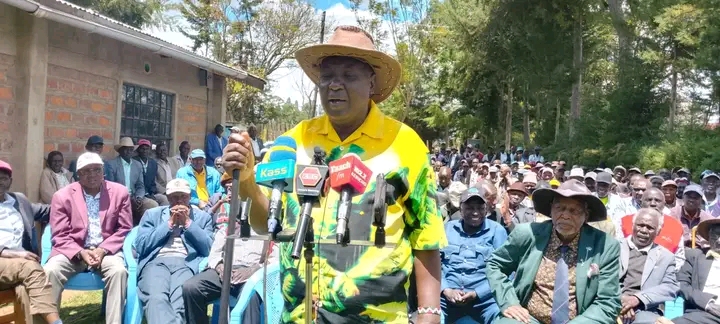
Kipkelion elders have renewed their appreciation for President William Ruto over the proposed establishment of the Londiani Referral Hospital, describing the project as an important investment that could significantly transform healthcare services in the larger Kipkelion area and the wider South Rift region.
The elders’ engagement comes after years of discussions, expectations and concerns surrounding the proposed hospital. The facility has been presented as a major healthcare project for Londiani, with residents arguing that its strategic location would improve access to specialised medical services and reduce the need for patients to travel long distances to referral facilities in other towns.
The Londiani hospital project has a long history. Parliamentary records show that the proposed referral hospital had already been a subject of concern years ago because of delays in its construction. In a 2022 National Assembly debate, the proposed facility was described as a project intended to serve Londiani and the larger Kericho County, with concerns raised over patients and ambulances travelling to other counties for specialised treatment.
Elders recognise the President's commitment
The meeting by Kipkelion elders is significant because community elders have remained important voices in discussions concerning major development projects in the region.
Their message of appreciation reflects the importance attached to the hospital by residents who have waited for many years for the project to become a reality.
For the elders, the proposed hospital is not simply another government construction project. They see it as a facility capable of addressing some of the healthcare challenges experienced by communities in Londiani, Kipkelion East, Kipkelion West and neighbouring areas.
The proposed hospital could provide residents with greater access to specialised medical services without requiring them to travel to distant referral facilities.
The project is also expected to have wider social and economic implications. A major hospital normally requires medical professionals, support staff, suppliers, transport services and other businesses. As a result, its establishment could contribute to economic activity around Londiani.
A project residents have waited for
The appreciation from the elders must also be understood against the background of the long delay surrounding the project.
In 2022, parliamentary records indicated that the proposed Londiani referral hospital had already taken many years without being constructed. The facility was described as being intended to serve Londiani and the wider Kericho County.
That history explains why recent developments surrounding the hospital have generated considerable interest among residents.
The community has repeatedly called for the government to move beyond announcements and ensure that construction becomes visible on the ground.
The issue has also attracted attention because of concerns over whether the project would remain in Londiani.
Concerns over possible relocation
One of the most sensitive issues surrounding the hospital has been reports suggesting that the project could be moved from Londiani to another location.
Recent reporting by The Standard said residents became concerned after the reported programme for President Ruto's planned development tour listed a proposed University of Kabianga Teaching and Referral Hospital at Chelimo Estate while the Londiani project was not included. Residents interpreted the omission as a possible indication that the Londiani project could be abandoned or relocated.
However, the concerns about relocation have been disputed by government and political leaders.
Felix Koskei, according to a September 2026 report, reassured residents in Londiani that the proposed Sh8 billion Londiani Referral Hospital would remain in Londiani and had not been moved to Kericho town. The report also said Koskei and Kipkelion East MP Joseph Cherorot explained that Kericho County could have another major referral facility at Chelimo, meaning the two projects should not necessarily be treated as competing projects.
This clarification has been important because it addresses one of the biggest concerns that had emerged among residents.
Why Londiani is considered important
The location of the proposed hospital is central to the debate.
Community representatives have argued that Londiani is strategically positioned to serve a wide population. The area is connected to major roads, making it accessible to residents and motorists travelling through the region.
The strategic location also has implications for emergency healthcare.
Accidents occurring along major highways can require immediate medical attention, and a well-equipped referral facility in Londiani could potentially reduce the distance that critically injured patients have to travel before accessing specialised treatment.
The importance of healthcare infrastructure in Londiani was highlighted during previous emergencies. A Kericho County Assembly report on the 2023 Londiani accident documented how victims were taken to Londiani Sub-County Hospital before some patients were referred to Nakuru and Kericho facilities. The report also described limitations at the local morgue at the time.
The experience demonstrated the importance of having sufficiently equipped healthcare facilities capable of handling emergencies involving large numbers of patients.
The elders' role
The involvement of elders adds a community dimension to the hospital discussion.
Elders traditionally play an important role in bringing communities together, providing guidance and communicating community concerns to leaders.
Their meeting therefore provides an avenue for the community to express appreciation while also emphasising the importance of completing the project.
The elders' position can be understood as a call for cooperation between the national government, county government, local leaders and residents.
Their appreciation of President Ruto's role does not remove the need for continued monitoring of the project. For residents, the ultimate measure of success will be the physical construction and eventual operationalisation of the hospital.
Healthcare transformation
If fully implemented and equipped, the Londiani Referral Hospital could change the way residents access specialised healthcare.
At present, patients requiring services that are unavailable at lower-level facilities may need referrals to larger hospitals.
Such referrals can create financial and logistical difficulties for families.
Patients may need transport, accommodation and additional support when travelling to distant towns. For emergencies, long journeys can also create additional challenges.
A properly equipped referral hospital closer to the community could therefore make specialised healthcare more accessible.
The project could potentially provide services in areas such as surgery, maternity care, emergency treatment, diagnostics and other specialist departments, depending on the final design, funding and level of services established by the government.
It is important, however, not to assume that all specialist services will immediately be available. The eventual services will depend on the hospital's construction, equipment, staffing and operational arrangements.
Economic benefits
Beyond healthcare, the hospital could become an economic centre for Londiani.
Large public hospitals employ doctors, nurses, clinical officers, laboratory professionals, pharmacists, cleaners, security personnel, administrators and other workers.
The facility would also create demand for supplies and services.
Businesses around Londiani could benefit from increased activity as patients, relatives, healthcare workers and visitors use the town.
Accommodation facilities, restaurants, transport operators, pharmacies and shops could all experience increased demand.
For a growing town, such an investment could therefore have consequences beyond the health sector.
The importance of funding
Another major issue is funding.
Construction of a large referral hospital requires substantial financial resources. The government must provide funding for buildings, medical equipment, utilities, roads, water, sanitation and other infrastructure.
There must also be adequate funding for staffing and operations once the hospital is completed.
Previous reports have placed the proposed project at a significant financial value. Recent reporting has described the proposed Londiani Referral Hospital as an Sh8 billion project.
The large financial requirement illustrates why residents and elders are interested not only in announcements but also in implementation.
Appreciation and expectations
The elders' decision to thank President Ruto therefore comes at a significant moment.
Their appreciation recognises the government's stated commitment to the hospital while simultaneously keeping attention focused on the need for implementation.
For the community, the project represents years of expectations.
Residents have repeatedly heard discussions about the facility and now want to see construction progress.
The appreciation can consequently be viewed alongside continued expectations for transparency, timelines and accountability.
The community will want to know when construction begins, how the project will be financed, what facilities will be included and when the hospital will become operational.
A wider benefit to the South Rift
The proposed hospital is also important beyond Kipkelion.
A referral facility in Londiani could serve patients from neighbouring parts of Kericho and potentially surrounding counties, depending on its eventual capacity and referral arrangements.
This is particularly important because healthcare facilities do not necessarily serve only people from the immediate administrative area where they are located.
A major referral hospital can become a regional institution.
That is why the Londiani project has attracted attention from residents, elders and political leaders for several years.
The need to maintain unity
The elders' meeting also demonstrates the importance of community unity when pursuing development projects.
Rather than allowing disagreements over location or politics to overshadow healthcare needs, community leaders can focus on ensuring that the project benefits residents.
Recent reports show that the hospital issue had generated strong emotions, including concerns about possible relocation.
At the same time, assurances from government representatives that the Londiani project remains in Londiani have helped clarify the position reported by those leaders.
The next stage is therefore likely to be closely watched by the community.
What residents will be watching
Following the elders' meeting, several issues are likely to remain important.
First is the commencement of actual construction.
Second is the release and management of funds.
Third is confirmation of the hospital's final location and design.
Fourth is the timeline for completion.
Fifth is the level of medical services and equipment that will eventually be provided.
Finally, residents will want assurance that the completed facility will receive adequate personnel and operational funding.
These issues will determine whether the proposed hospital delivers the transformation residents have anticipated.

You Might Also Like
-
UDA Secretary General Hassan Omar has criticised former President Uhuru Kenyatta over his claim that Raila Odinga won the 2022 election, insisting that President William Ruto legitimately won the contest.
-
Bomet University students have taken to the streets over unresolved welfare concerns, including water shortages, Chepkosa Dam, delayed bridge works, inadequate security lighting and rising accommodation costs.
-
Deputy Inspector General Eliud Lagat's engagement in Nakuru has placed youth involvement, community safety and professional policing at the centre of the security conversation. His strongest warning was directed at young people whom he urged not to accept money to act as political goons or fight on
-
Former President Uhuru Kenyatta has handed over the leadership of the Jubilee Party to Fred Matiang’i ahead of the party’s National Delegates Convention. Uhuru says he will remain a Jubilee member and serve in a senior advisory role.
-
PS Beatrice Inyangala has drawn attention to a serious concern in Kenya's education sector, citing research that 90 per cent of students have experienced violence either as victims or perpetrators. She said the research showed that women represented 65 per cent of those affected, compared with 35 pe
-
Interior Cabinet Secretary Kipchumba Murkomen has launched the Kenya National Mediation Hub, an initiative aimed at strengthening peaceful conflict resolution, dialogue and preventive security in schools, colleges, TVET institutions and universities. Launched at the University of Nairobi under the J