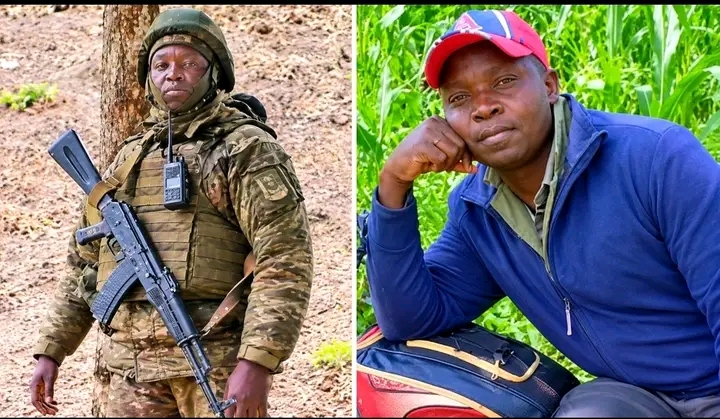
Kisii Family in Agony as Son Is Reportedly Killed in Russia-Ukraine War, Appeals for Answers and Return of His Body
The reported death of 38-year-old Matiabe Onchari has left his family in Nyamondo Village, South Mugirango, Kisii County, facing grief, confusion and uncertainty. Having left home in search of better employment opportunities, he reportedly ended up in the Russian military and disappeared from communication with his relatives before reports emerged that he had been killed in February. His family is now appealing to President William Ruto, Musalia Mudavadi and other government officials to intervene, establish his whereabouts and help recover his remains if his death is confirmed. The case highlights the growing human cost of the Russia-Ukraine war and the need for stronger protection of Kenyans seeking employment abroad.
The family, from Nyamondo Village in South Mugirango, is struggling to come to terms with the disturbing information that their 38-year-old relative reportedly died in February while serving in the Russian military. However, the family says it has not received official confirmation of his death, and his body has not been located.
The heartbreaking incident has once again drawn attention to the growing number of Kenyans who have travelled abroad after being promised employment opportunities, only to find themselves caught up in the Russia-Ukraine conflict.
Onchari's family wants the government, particularly the Ministry of Foreign and Diaspora Affairs, to investigate the circumstances surrounding his disappearance, establish whether he is truly dead and help bring his remains home if the reports are confirmed.How Matiabe Onchari left Kisii in search of employment
Onchari reportedly left Nyamondo Village alongside a friend after receiving information about possible employment opportunities in Qatar.Like many young Kenyans facing economic difficulties and limited employment opportunities, he hoped that travelling abroad would help him secure a stable income and improve the living conditions of his family.
His relatives reportedly understood that he was travelling to Qatar to work as a driver. The opportunity appeared promising because he would be able to earn money, support his wife and children and assist his parents.
However, the journey allegedly took a different direction after he arrived at Jomo Kenyatta International Airport.
According to his wife, Beatrice Nyanchama, the family was informed that the destination had changed and that they were travelling to Russia instead of Qatar.Onchari had previously worked as a boda boda rider in his village, meaning that joining a foreign military force was a significant departure from the civilian life he had known.
His family is now questioning how an individual who had reportedly travelled in search of civilian employment ended up in a foreign military operation.
The circumstances surrounding his recruitment, the people who facilitated his travel and the nature of the employment agreement are among the issues that relatives want investigated.After arriving in Russia, he reportedly began sending photographs to his family showing himself and other individuals wearing military uniforms.
These photographs raised concerns among his relatives because they suggested that he was no longer pursuing the civilian employment opportunity they had initially expected.
However, the family says communication eventually stopped.
His wife explained that they lost contact with him around February, leaving them uncertain about his safety and whereabouts.
The situation became even more distressing when someone who had reportedly travelled with him recently informed the family that Onchari had been killed in February.Unfortunately, the person who allegedly delivered the information could not establish where his body was located.
This has left the family facing an extremely difficult situation because they have received reports of his death without having the opportunity to confirm what happened or identify his remains.
For his wife, children and parents, the absence of reliable information has made the grieving process even more painful.
They are now demanding answers about the circumstances surrounding his disappearance and whether the authorities can establish his actual status.Onchari's parents, David Minyonga and Rosia Bosori, are among the family members who are struggling to understand what happened to their son.
His mother has expressed deep sadness over the reports, saying she still hopes that her son could be alive somewhere in Russia.
She has appealed directly to President William Ruto to help establish his whereabouts and ensure that the family receives reliable information.
Her appeal reflects the desperation of parents whose children travel abroad hoping to improve their lives but later disappear without clear communication.His father, David Minyonga, has also asked the government to follow up on the matter and establish what happened to his son.
The family believes that the Kenyan government has a responsibility to assist citizens who find themselves in dangerous situations while working or living abroad.
They want authorities to establish whether Onchari was officially enlisted in the Russian military, which unit he served in, where he was deployed and what happened during the reported military operation in which he allegedly lost his life.Challenges involved in identifying and returning bodies from Ukraine
One of the biggest challenges facing Kenyan families whose relatives are reportedly killed in the war is locating and identifying their remains.
The fighting has taken place in areas where access is extremely difficult, particularly in territories affected by continued military operations.
Some bodies may remain in areas controlled by opposing forces, while others may be recovered and held by authorities without immediate identification.
During his appearance before senators, Mudavadi explained that some remains believed to belong to Kenyan nationals were in Ukrainian custody.
He mentioned four Kenyans whose remains had reportedly been identified by Ukrainian intelligence:
Simon Gitau.
Clinton Mogesa.
Dennis Obwori.
Eric Mwangi.
The government indicated that DNA testing could be necessary to establish the identities of some remains before they can be returned to their families.
This is particularly important because families may receive information about the deaths of their relatives without having access to photographs, official death certificates or physical remains.
In Onchari's case, the family has received information from someone who reportedly travelled with him, but the whereabouts of his body remain unknown.
Consequently, the authorities will need to establish his military records, investigate the circumstances of his disappearance and seek confirmation from the relevant foreign authorities.The circumstances surrounding Onchari's journey have renewed concerns about recruitment networks targeting unemployed Kenyans with promises of attractive jobs abroad.
Many young people leave the country hoping to secure employment in countries such as Qatar, Saudi Arabia, Russia and other destinations.
However, the Onchari case highlights the importance of verifying employment opportunities before travelling.
His family says he left Kisii expecting to pursue employment in Qatar, but reportedly ended up in Russia and later appeared in photographs wearing military clothing.
This raises important questions about whether he understood the nature of the employment arrangement, whether he voluntarily agreed to join the Russian military and whether he was properly informed about the risks.The government has previously warned Kenyans against falling victim to fraudulent overseas employment schemes.
During his parliamentary appearance, Mudavadi said the government was strengthening measures to prevent deceptive recruitment.
These measures include improving pre-departure orientation, educating workers about employment contracts and rights, and verifying recruitment agencies and job opportunities.
He also informed senators that some military-related recruitment had taken place privately without the knowledge of the Kenyan government.
The government further reported that Kenya had secured its inclusion on a Russian stop list intended to prevent additional recruitment of Kenyan nationals into the military operation. Questions surrounding the responsibility of recruitment agencies
The Onchari family's experience also raises questions about the responsibility of people and agencies involved in arranging overseas employment.
Families often depend on information provided by recruitment agents, friends and intermediaries when making decisions about international employment.
In some cases, prospective workers are promised attractive salaries, accommodation, travel arrangements and other benefits.
However, when the actual destination or nature of employment differs from what was initially communicated, workers may find themselves in difficult circumstances.The Ministry of Foreign and Diaspora Affairs plays an important role in assisting citizens facing emergencies abroad.
Kenyan embassies are expected to help families trace missing relatives, communicate with foreign authorities and provide guidance on legal and consular procedures.
However, families affected by the Russia-Ukraine recruitment crisis want a more effective response system.
They want a reliable mechanism through which relatives can report missing family members and receive regular updates about investigations.
During the October parliamentary discussions, senators raised concerns about families who lose contact with their relatives and do not know whether they are dead, captured or still fighting.The family wants a dignified burial for their son
For the Onchari family, the most urgent concern is establishing the truth.
His wife, children, parents and other relatives are waiting for information that could finally explain what happened after he travelled abroad.
The family wants to know whether the reports of his death are accurate, where he disappeared and whether his remains can be located.
If he is confirmed dead, they want the government to assist in bringing his body home.
For the Abagusii family, burial is an important cultural and family responsibility. They want an opportunity to give their relative a dignified farewell rather than remain uncertain about his fate.

You Might Also Like
-
DCP Deputy Party Leader Cleophas Malala has dismissed claims that he is being sidelined within the party, insisting that he remains confident in his leadership position. He has maintained that the growing influence of Nyandarua Senator John Methu does not threaten his role in the political outfit. H
-
Jubilee Party leader Fred Matiang’i has urged opposition leaders to embrace inclusivity as they pursue plans to form a united opposition ahead of the 2027 General Election. He has warned that sidelining certain political players could trigger internal disagreements, weaken the coalition and deepen
-
The funeral of Bernard Kiplangat Ngetich in Kipkelion became an important moment for leaders from Kericho County to raise concerns about insecurity and accountability within security institutions. Led by Senator Aaron Cheruiyot, the leaders demanded that the DCI investigate allegations that some of
-
Education Cabinet Secretary Julius Migos Ogamba has announced that 1,048,355 candidates are sitting the 2026 KCSE examinations, marking a historic milestone as the number surpasses one million for the first time in Kenya’s examination history. The candidature represents a 5.27% increase from the 9
-
Aden Duale's development engagements in Garissa, including presiding over the groundbreaking of the KMTC project and inspecting affordable housing developments, have placed healthcare education and decent accommodation at the centre of the county's development agenda. His condemnation of the heckli
-
The supervision of KCSE examination distribution by Education Cabinet Secretary Julius Migos Ogamba at Borabu Sub-County in Nyamira County marks an important moment as Kenya begins the 2026 main written national examinations. With 1,048,355 candidates registered, the country faces a major responsib