



Koitalel Samoei University Rises From the Ground: Nandi Hills Awaits President Ruto’s Landmark Launch
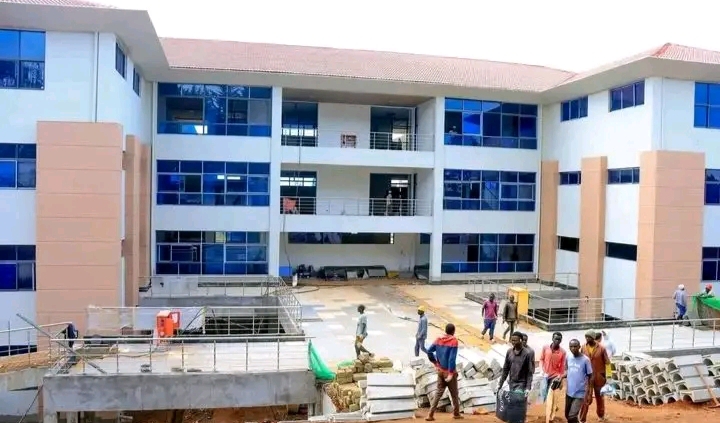
The Koitaleel Samoei University College main campus in Nandi Hills is now approaching a major milestone after years of delays. The latest September 2026 reports place construction at about 85 per cent, with an administration block and 14 lecture halls forming key components of the development. Finishing works, including flooring, painting, ceilings, electrical installations, plumbing, waterproofing and landscaping, are underway. The project began with the laying of its foundation stone in 2017 and later went through a period of stalled construction before works resumed in 2025. The revival has renewed expectations among residents that the long-awaited Nandi Hills campus will finally become operational. Beyond providing university facilities, the project is expected to expand access to higher education, support sports science and talent development, create employment opportunities and stimulate businesses in Nandi Hills. With construction nearing completion, the next major steps will be finishing the remaining works, equipping the facilities, preparing for occupation and announcing the official commissioning arrangements.
The construction of the main campus of Koitaleel Samoei University College (KSUC) in Nandi Hills, Nandi County, has entered its final stages, reviving hopes that the long-awaited institution will soon become fully operational. The project, which had experienced delays and stalled construction in previous years, has gained renewed momentum, with the latest reports indicating that the campus is now about 85 per cent complete.
The development is significant not only because it will expand access to university education in Nandi County, but also because of the historical importance attached to the name Koitalel Arap Samoei. The institution is named after the legendary Nandi leader who resisted British colonial rule in the early 20th century. Its establishment has therefore been viewed by local leaders and residents as both an educational investment and a way of preserving an important part of Nandi's history.
Construction reaches about 85 per cent
According to an update issued in September 2026, Interior Principal Secretary Raymond Omollo said construction of the Nandi Hills campus had reached approximately 85 per cent completion. The project started in February 2025 under a 24-month programme and was targeted for completion in October 2026.
The campus is being developed with an administration block and 14 lecture halls, providing the basic infrastructure needed for the institution to expand its academic operations at the Nandi Hills site. Finishing works have been ongoing, including installation of terrazzo and tiled floors, wall painting, acoustic ceiling boards, second-fix electrical works, plumbing fittings and waterproofing. External painting and landscaping are also part of the final works.
The progress represents a major change from the situation in previous years when the project had stalled. In March 2025, the Kenya News Agency reported that construction had resumed after the site was handed over to a new contractor. The project had received Sh250 million during its first phase, while a further Sh900 million had been allocated for the second phase.
A project that had faced delays
The journey towards establishing the Koitalel Samoei University College main campus has been lengthy.
The idea of establishing a university institution named after Koitalel Samoei dates back more than a decade. According to the university's own historical account, consultations involving the Nandi County Government, the University of Nairobi and the local community were undertaken before the institution was formally established as a constituent college of the University of Nairobi.
The original foundation stone was laid on June 12, 2017, by then-President Uhuru Kenyatta, with William Ruto, who was then Deputy President, present at the ceremony. The University of Nairobi records that the proposed institution was intended to become a centre of excellence in areas including business, legal studies and sports.
However, the project subsequently experienced delays. By 2024, local leaders and residents were still calling for the stalled development to be revived. A Kenya News Agency report at the time said stakeholders had resolved a land-related issue that had affected progress and were seeking to have the main campus established at Nandi Hills.
The resumption of construction in 2025 consequently marked an important turning point.
What is being built?
The current project is focused on establishing the physical infrastructure required for the main campus at Nandi Hills.
The major components include the administration block and 14 lecture halls. The administration facilities are expected to provide offices and other institutional spaces required to manage the growing university, while the lecture halls will provide additional teaching capacity.
A separate construction report published in July 2026 described the administration and lecture-hall complex as a landmark six-storey development that was already at an advanced stage. The report noted that both external and internal finishes were progressing as the project moved towards completion.
The finishing stage is particularly important because completing the structural works alone does not make a university building ready for occupation. Electrical installations, plumbing, flooring, ceilings, painting, waterproofing, external works and landscaping must all be completed before the facility can properly serve students and staff.
Expected benefits to students
The new campus is expected to increase access to university education for students from Nandi County and neighbouring areas.
In March 2026, Education Cabinet Secretary Julius Ogamba said the institution had approximately 4,500 students and that the government was targeting an increase to about 6,000 students once the main campus was completed and fully operational. He also said the new facility would be adequately equipped before students occupied it.
The main campus is expected to accommodate up to approximately 1,500 students, according to the Education CS's March update. The current Mosoriot campus is also expected to continue playing a role, with education and commerce courses planned for that campus while the Nandi Hills facility accommodates a wider range of programmes.
This arrangement could allow the university college to expand its academic footprint without abandoning the existing campus.
Sports science and talent development
One of the notable areas associated with the institution is sports science.
When construction resumed in 2025, Principal Professor Winston Akala said the university's area of specialisation would include sports science. The decision was linked to Nandi's reputation as a major source of athletics talent in Kenya.
This could give the institution a distinctive role in supporting athletes and young people interested in sports-related careers.
Sports science can encompass areas such as athlete development, sports management, fitness, rehabilitation, exercise science and related academic research. For a county with a strong athletics culture, the development of specialised training and academic programmes could create opportunities for students who want to combine higher education with careers in sports.
Economic impact on Nandi Hills
The university project is also expected to have an impact beyond education.
The arrival of a growing student population normally creates demand for accommodation, transport, food, retail services, entertainment and other businesses. Recent reports on the Koitalel Samoei University project have specifically highlighted the potential for increased economic activity in Nandi Hills once the campus becomes operational.
This could be particularly important for Nandi Hills, where changes in the tea sector, including mechanisation of tea plucking, have affected employment opportunities. The university could introduce a new economic stream through students, lecturers, administrative staff, suppliers and visitors.
Local investors are therefore expected to have opportunities in areas such as hostels, rental housing, restaurants, shops, transport services and other businesses serving the university community.
The university council and local administration have reportedly been engaging communities and encouraging private investors and landowners to develop suitable student accommodation around the campus.
The importance of accommodation
Student housing will become increasingly important as the institution expands.
A university cannot rely entirely on its own accommodation facilities when student numbers increase. Private hostels and rental housing around Nandi Hills could therefore become an important part of the institution's expansion.
For local property owners, this may create opportunities to convert or develop buildings into student-friendly accommodation. At the same time, proper planning will be necessary to ensure that housing developments have access to water, electricity, sanitation, roads and security.
The expansion of the university could consequently encourage broader urban development around Nandi Hills.
Government commitment to completing stalled projects
The revival of Koitalel Samoei University College has also been presented as part of the government's broader effort to complete stalled public projects.
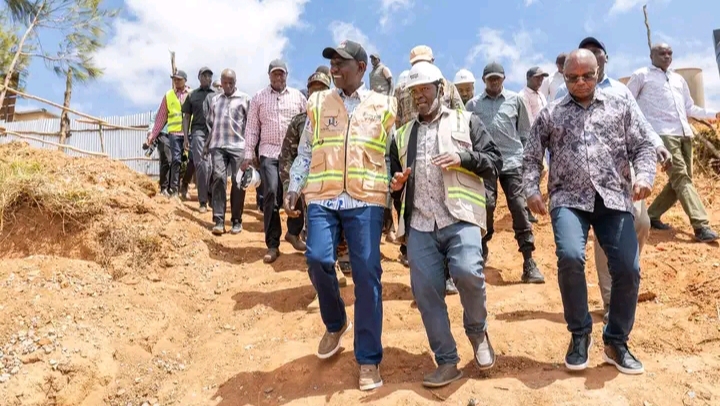
During his March 2026 inspection, Education CS Julius Ogamba said the government was committed to reviving stalled projects and ensuring that they eventually benefit citizens. At that stage, he reported construction progress of about 40 per cent and projected completion by November, with students expected to occupy the facility after it was equipped.
By September, subsequent reports were putting progress at approximately 85 per cent, suggesting substantial advancement during the intervening period.
About the anticipated presidential launch
The Koitalel Samoei project has attracted considerable political and community attention because the original foundation stone was laid by President Uhuru Kenyatta in 2017, when William Ruto was Deputy President.
There have also been expectations among local stakeholders that the completed institution could receive a high-profile official launch once construction and equipping are finished.
However, the latest sources I found confirm the construction progress and completion target but do not provide a verified September 2026 announcement giving a specific date for President William Ruto to officially launch the completed campus. It would therefore be more accurate to describe the facility as nearing completion and awaiting its official opening/commissioning arrangements rather than state a confirmed presidential launch date.
This distinction is important because construction completion, equipping, occupation and an official presidential commissioning are separate stages.
Historical significance of Koitalel Samoei
The university carries the name of one of the most prominent historical figures associated with the Nandi community.
Koitalel Arap Samoei was the Orkoiyot, or spiritual and political leader, of the Nandi during the period of resistance to British colonial expansion. His name has consequently become closely associated with resistance, leadership and the history of the Nandi people.
The University of Nairobi records that the original foundation stone was laid at a location associated with the historical events surrounding Koitalel Samoei.
For residents, therefore, the university represents more than classrooms and administrative offices. Its name connects the modern institution to the history and heritage of the area.
A new chapter for Nandi Hills
As construction approaches completion, attention is now shifting from the physical building to what happens after the contractors leave.
The institution will need to be fully equipped, staffed and prepared to receive students. Academic programmes will have to be supported by adequate teaching facilities, laboratories, libraries, ICT infrastructure and other services depending on the courses offered.
The university's ability to attract students and staff will also influence the wider growth of Nandi Hills.
Businesses are likely to monitor the completion of the project closely because a functioning university can create a stable market for goods and services. Local authorities and investors will similarly need to prepare for increased demand for roads, housing, sanitation, water and other urban services.

You Might Also Like
-
Dr Joyce Kithure's call for young people to use digital media for climate action places Kenya's youth at an important intersection between technology, environmental conservation and public advocacy. Speaking during the launch of the Youth Climate Policy and Advocacy Training programme at KISE, she
-
President William Ruto responds to Kalonzo Musyoka, saying the Tsiekuru road is among many infrastructure projects his administration is pursuing across the country.
-
Former Deputy President Rigathi Gachagua has pledged to intensify the fight against drug trafficking, promising tougher border controls to prevent heroin, cocaine and cannabis from entering Kenya within the first year of his administration.
-
President William Ruto's September 26, 2026 visit to Taita Taveta County focused on development, with particular attention to technical education, land ownership and infrastructure. The President laid the foundation stone for Wumingu Technical and Vocational College, participated in the Coast-wide t
-
Mike Bloomberg's discussions with President William Samoei Ruto bring attention to three important dimensions of Kenya's development agenda: healthier food choices, the clean-energy transition and ocean conservation. The front-of-package warning-label debate is focused on giving Kenyan consumers cl
-
President William Ruto's engagement with the Africa Finance Corporation and the establishment of AFC's Nairobi regional office represent an important development in Kenya's relationship with one of Africa's major infrastructure finance institutions. While AFC remains headquartered in Lagos, the ope