



Lamu Residents Protest, Demand Compensation Before Dangote Oil Refinery Groundbreaking
The protests and court case in Lamu have placed land rights and compensation at the centre of the debate surrounding the proposed Dangote oil refinery. The 133 residents involved in the case say they are not opposed to development but want their ancestral and community interests recognised before they lose their homes, farms and other property. They are asking for proper identification of affected residents, valuation, compensation and, where necessary, resettlement. At the same time, the government and Dangote Group continue preparing for the September 30 groundbreaking, highlighting the refinery's anticipated contribution to employment, industrial development and energy security. With the court ordering the parties to maintain the status quo on the disputed parcel until October 14, the land dispute is likely to remain an important issue even as the official groundbreaking proceeds. The developments in Lamu therefore present two issues that will need to be addressed alongside each other: the country's ambition to attract major industrial investment and the legal and economic rights of communities affected by such projects.
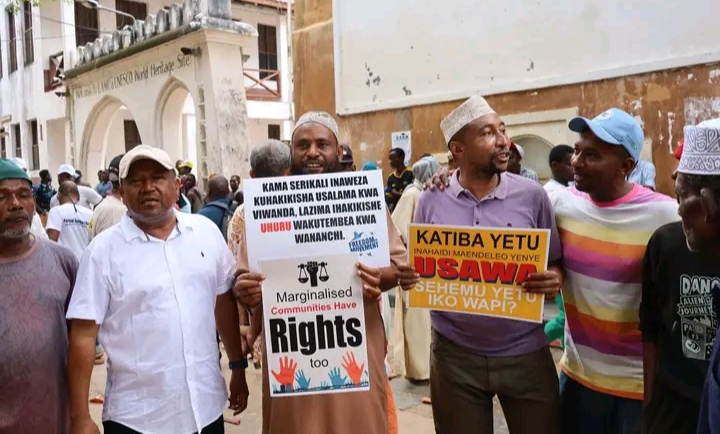
Residents of Lamu County have intensified their opposition to aspects of the planned Dangote East Africa Oil Refinery project, demanding that unresolved land and compensation grievances be addressed before construction activities proceed.
The dispute comes just days before the planned groundbreaking ceremony for the multibillion-shilling refinery, which is scheduled for September 30, 2026. President William Ruto is expected to lead the ceremony, while Nigerian businessman Aliko Dangote and other officials are expected to attend.
The proposed refinery, whose estimated investment has been reported at approximately Sh2.2 trillion, is expected to become a major energy and industrial project in Kenya. However, preparations for the project have coincided with protests and a court case by residents who say their land rights and livelihoods must be addressed before the development moves forward.
Residents seek compensation and recognition of land rights
At the centre of the dispute are 133 residents from Chandavai and the surrounding Magogoni/Mvinjeni area. The residents have moved to court seeking protection of what they describe as ancestral land that their families have occupied, cultivated and developed for generations.
According to court documents reported by several Kenyan media outlets, the residents say they have used portions of LR No. 13061 for farming and livestock keeping. They also say that homes, mosques, shrines and burial sites belonging to members of their families are located on the disputed land.
One of the central arguments presented by the residents is that the absence of formal title deeds should not automatically exclude them from compensation. They argue that their long-term occupation, customary or community interests and beneficial use of the land give them interests that should be recognised during any compulsory acquisition process.
The residents therefore want authorities to identify genuine occupants, conduct proper valuation and provide compensation or an appropriate resettlement arrangement before the land is taken for the refinery or related infrastructure.
Residents say development should not happen without compensation
The residents have stressed that their objection is not necessarily against development itself.
Their concern, according to reports from the court proceedings, is that major infrastructure projects should recognise the rights and livelihoods of people already living on the land.
The residents allege that construction-related activities have already affected crops, trees and other property. They further claim that government officials and machinery entered parts of the disputed land before the compensation question had been resolved.
The Star reported that the residents allege government officers and LAPSSET agents entered the land with bulldozers in August 2024 and destroyed crops and trees. They also claim that police and chiefs cleared one parcel on September 10, 2026, ahead of the planned presidential groundbreaking. These are allegations made by the petitioners and remain subject to determination through the legal process.
The residents are consequently asking for the process to recognise the people actually occupying and using the land rather than relying solely on information contained in formal land registers.
Court becomes the latest battleground
The land dispute has now moved beyond demonstrations, with the residents filing a case at the Malindi Environment and Land Court.
The petition names several respondents, including the Office of the President, the Ministry responsible for Defence, the State Department for Lands and Physical Planning, the Attorney General, the National Land Commission, the LAPSSET Corridor Development Authority, the Lamu County Government, Dangote Industries and contractors associated with the project.
The residents asked the court to stop further construction, excavation and ground-clearing activities on the disputed property until their concerns are addressed.
However, on September 28, the court did not grant the requested order stopping the planned groundbreaking. Instead, Justice Jane Onyango directed the parties to maintain the existing status quo on the disputed parcel until October 14, when the case is scheduled to be heard inter partes. The respondents were also directed to respond to the application.
This means the legal dispute remains active even as preparations for the official groundbreaking continue.
Dangote refinery remains scheduled for September 30
Despite the land dispute, preparations for the refinery's groundbreaking have continued.
A vessel carrying approximately 2,930 tonnes of project materials reportedly arrived at Lamu Port on September 26, providing a visible indication that preparations for the project are underway. The materials were reportedly delivered ahead of the groundbreaking ceremony.
The planned refinery is expected to have a processing capacity of approximately 700,000 barrels of crude oil per day once completed. Reuters reported on September 29 that Dangote Group said the court ruling over the land dispute would not prevent the official groundbreaking ceremony, although the ruling could affect some activities at the site.
The project is therefore moving forward while the land dispute is being handled through the courts.
Previous compensation disputes in Lamu
The current concerns are also linked to previous experiences involving major infrastructure developments in Lamu.
Residents have previously raised compensation issues connected to projects under the Lamu Port-South Sudan-Ethiopia Transport (LAPSSET) Corridor.
A recent report by Dawan Africa noted that Lamu fisherfolk staged protests in February 2024 over delayed compensation linked to the LAPSSET project. The compensation package reportedly amounted to Sh1.76 billion, with payments eventually made in June 2024.
That history has contributed to concerns among some residents that they could once again be displaced or have their livelihoods affected without receiving compensation promptly.
For communities whose economic activities depend on land, fishing, livestock and small-scale farming, compensation is not merely a financial question. It is connected to housing, food security, cultural sites, family heritage and the ability to rebuild livelihoods after relocation.
Community participation becomes a major issue
Another important issue raised by the dispute is community participation.
Residents argue that people directly affected by major infrastructure projects should be consulted before decisions affecting their property and livelihoods are implemented.
The demand comes at a time when the government is presenting the refinery as an important part of Kenya's industrialisation and energy strategy.
Deputy President Kithure Kindiki has said the refinery is expected to create employment and business opportunities for Lamu and the wider Coast region. He has also said the project could help reduce pressure on Kenya's foreign-exchange reserves by reducing dependence on imported petroleum products.
The government has also linked the refinery to wider plans for Lamu as an industrial, energy and logistics centre.
For local residents, however, the expected economic benefits do not remove the need to resolve questions about land ownership, compensation and resettlement.
Civil society also raises concerns
The compensation dispute is occurring alongside wider concerns raised by civil society groups regarding the refinery.
Earlier in September, Muslims for Human Rights (Muhuri) said it was not opposed to investment in Lamu but called for assurances regarding security, environmental protection, freedom of movement and the rights of residents.
Muhuri argued that major investment should be accompanied by meaningful community engagement and respect for constitutional rights. The organisation also raised concerns over security restrictions affecting movement along the Lamu-Malindi corridor.
These concerns illustrate that the refinery debate involves more than the construction of an industrial facility. It also touches on land, employment, environmental protection, security, community participation and the distribution of economic benefits.
What residents are asking for
The residents' demands can broadly be understood around several issues.
First, they want the government and project developers to identify people who have legitimate interests in the land.
Second, they want the affected property and livelihoods properly assessed and valued.
Third, they want compensation addressed before they are permanently displaced or before further activities destroy property and crops.
Fourth, they want an appropriate resettlement framework for people who may have to leave their homes.
Finally, they want their cultural and community interests recognised, particularly where homes, religious sites and family burial grounds are involved.
Their legal case seeks to establish whether the government's acquisition process adequately recognised these interests.
Government and investor position
The government has continued to promote the refinery as a major investment for Kenya and the region.
The project is expected to strengthen Lamu's role as an energy and logistics hub and could create employment and opportunities for local businesses.
Dangote Group has also maintained that the groundbreaking will proceed despite the legal challenge. Reuters reported that the company said the court decision would not halt the launch, although some site activities could be affected.
The difference between the government's development objectives and the residents' demands for compensation has therefore become one of the most important issues surrounding the project.
The October 14 court hearing will be important
The next significant development in the dispute is the October 14, 2026 inter partes hearing.
At that stage, the respondents will have an opportunity to respond formally to the residents' claims. The court will then consider the competing positions concerning the disputed land and the alleged impact of ongoing project activities.
The court's current status quo order means the land dispute remains legally active even though the planned groundbreaking has not been stopped at this stage.
The case could therefore have wider implications for how major infrastructure projects in Kenya address people occupying land under customary, community or other interests that may not always be reflected in formal title documents.

You Might Also Like
-
Ameliah Cherotich from Keringet, Kuresoi South, is battling a serious heart condition and urgently needs specialised treatment in India. Her family is seeking KSh 2.5 million and is appealing to leaders, well-wishers and the community for support.
-
The government is targeting the issuance of at least 500,000 more title deeds in the Coastal region, building on an ongoing programme aimed at strengthening land ownership, resolving historical disputes and improving security of tenure.
-
The latest NTSA developments show that Kenya's matatu sector is entering another phase of regulatory and professional reforms. The authority is currently emphasizing qualified drivers and crew, roadworthy vehicles, proper licensing, maintenance records, authorised routes and responsible management o
-
Kenyan TikTok personality Patrick Mbacio, popularly known as “Patrick The Truth,” has died after being found dead inside his home in Nakuru, bringing to an abrupt end the life of a social-media figure who rose to fame through viral videos about his relationships, lifestyle and interactions with
-
Aliko Dangote's journey has moved from commodity trading to one of Africa's largest industrial empires. His businesses now span cement, fertiliser, sugar, food products, petrochemicals, oil refining, logistics and related industries. Forbes currently estimates his wealth at approximately $31.4 billi
-
Lang’ata MP Jalang’o has announced a candle-lighting ceremony at Uhuru Park this Friday to commemorate the life and legacy of the late Raila Odinga.