Lawyer Questions How Okoth Obado Will Continue Supporting Sharon Otieno’s Children After 25-Year Jail Sentence
The lawyer representing the family of slain former Rongo University student Sharon Otieno has questioned how former Migori Governor Okoth Obado will continue offering financial assistance to the family while serving his 25-year prison sentence for her murder. The concerns have renewed attention on the family's future welfare and the challenges they may face following the court's decision, particularly regarding the financial support they have been receiving. The lawyer has raised questions about the sustainability of the arrangement and what the sentence means for the family's continued support.
A lawyer representing the family of slain former Rongo University student Sharon Otieno has raised concerns over how former Migori Governor Okoth Obado will continue providing financial support to the deceased's children following his sentencing to 25 years in prison for her murder.
The concerns emerged after the High Court at Milimani Law Courts in Nairobi sentenced Obado on Friday, November 27, 2026, bringing a significant development in the murder case that has attracted national attention since Sharon's death in September 2018.
The lawyer's concerns revolve around the welfare and future financial security of Sharon's children, who have been at the centre of discussions surrounding the appropriate sentence for the former governor.
During the sentencing proceedings, the family had appealed to the court to consider a non-custodial sentence for Obado, arguing that his continued financial assistance would help provide for the children left behind following Sharon's death.
The family's position placed the welfare of the children at the centre of the sentencing debate, with their representatives asking the court to consider the financial challenges they could face if Obado were sent to prison.
However, Justice Cecilia Wairimu Githua rejected the request for a non-custodial sentence, ruling that the seriousness of the offence and the circumstances surrounding Sharon's murder outweighed the mitigating factors presented by the defence.
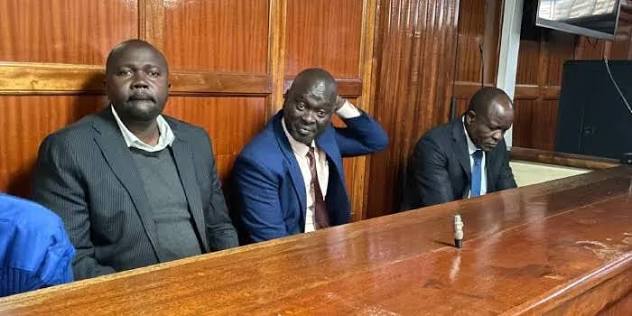
The judge sentenced Obado to 25 years in prison, while his former personal assistant, Michael Juma Oyamo, also received a 25-year jail term. Former Migori County Clerk Caspal Ajwang Obiero was sentenced to 18 years imprisonment.
The court maintained that the punishment for a serious criminal offence should not be determined primarily by the financial dependence of victims' families on the offender.
Justice Githua observed that although the family's concerns about the children's financial needs were understandable, such considerations could not override the court's responsibility to impose an appropriate sentence.
She further indicated that Obado's responsibility to support the children should ideally continue regardless of the prison sentence imposed.
The judge cautioned against establishing a precedent where individuals convicted of serious offences could avoid appropriate punishment by relying on financial assistance to victims' families as a basis for receiving lenient sentences.
The ruling therefore brought into focus the difficult balance between delivering justice for Sharon and addressing the welfare of the children who continue to depend on support from the adults responsible for their upbringing.
Sharon Otieno, a 26-year-old student at Rongo University, was murdered in September 2018 while seven months pregnant. Her death shocked the country and triggered an extensive investigation that eventually led to the prosecution of Obado and two of his former aides.
The case attracted widespread public attention because of the circumstances surrounding Sharon's killing and Obado's position as the then Migori County Governor.
The prosecution presented evidence linking the three accused persons to the murder, with the court eventually finding them guilty after a lengthy trial.
On July 23, 2026, Justice Githua convicted Obado, Oyamo and Obiero of Sharon's murder after finding that the prosecution had established its case beyond reasonable doubt.
During the trial, the court heard evidence from several witnesses and examined different forms of evidence relating to the circumstances surrounding Sharon's disappearance and subsequent death.
In her sentencing decision, the judge described Obado as the principal architect of the criminal plan that led to Sharon's murder. She stated that he provided the motive and financial resources used to facilitate the operation, while Oyamo played a key role in coordinating and facilitating its execution.
Obiero was also found to have played a role in providing logistical assistance connected to the events leading to the murder.
The court considered the individual responsibilities of the three convicts before determining their respective prison terms.
Before sentencing, Sharon's family made an emotional appeal to the court, asking the judge to consider Obado's continued financial responsibility towards the children.
The family expressed concern about the future of the children, arguing that they would face additional financial difficulties if the former governor received a lengthy custodial sentence.
Sharon's mother, Melida Auma, made an emotional plea asking the court not to send Obado to prison, saying the family had forgiven him and wanted him to continue helping raise the children.
She told the court that sending the former governor to prison would bring additional pain to the family, which had already endured years of suffering following Sharon's death.
Her appeal reflected the family's desire to secure financial stability for the children despite the circumstances surrounding their mother's murder.
Sharon's father, Douglas Zacharia Otieno, also addressed the court, expressing his feelings about the three accused persons and distinguishing his position towards Obado from that of the two co-accused.
The family's submissions presented the court with a difficult question concerning the relationship between reconciliation, financial responsibility and criminal punishment.
However, the prosecution maintained that the seriousness of the offence required a custodial sentence, arguing that the court needed to consider justice, deterrence and public confidence in the legal system.
Apart from rejecting the request for a non-custodial sentence, the court also declined to issue a compensation or restitution order in favour of Sharon's family.
Justice Githua acknowledged the financial burden experienced by the family following Sharon's death, including expenses incurred during funeral arrangements and the lengthy court proceedings.
However, she stated that the family had not presented sufficient supporting evidence to establish the full extent of the financial losses and damages suffered.
The judge maintained that compensation orders must be supported by adequate evidence to enable the court to determine the appropriate amount.
The decision means that the family will have to address the children's financial needs through other available arrangements rather than relying on a compensation order issued during the criminal proceedings.
The sentencing marks a significant development in a case that has remained before the courts for nearly eight years.
Sharon's murder in September 2018 triggered public outrage and extensive media coverage, with many Kenyans following the investigations and subsequent court proceedings.
Her death also highlighted concerns surrounding violence against women and the need for accountability when serious crimes are committed.
The conviction of Obado and his two former aides in July 2026 marked an important stage in the proceedings, with Friday's sentencing determining the prison terms each would serve.
Obado's 25-year sentence, alongside Oyamo's similar term and Obiero's 18-year imprisonment, brings a major chapter of the case to a close.
Nevertheless, questions surrounding the future of Sharon's children remain significant, particularly regarding their education, basic needs and long-term financial security.
The family's concerns have highlighted the challenges faced by children who lose a parent under difficult circumstances and depend on relatives or other responsible adults for their upbringing.
While the court maintained that Obado's financial responsibility should ideally continue despite his imprisonment, the practical arrangements for ensuring consistent support remain an important issue.
The case has therefore extended beyond the question of punishment to include the welfare of the children and the responsibilities that remain following Sharon's death.
As the family comes to terms with the outcome of the sentencing proceedings, attention is expected to remain on how the children will be supported and protected in the years ahead.
The ruling also reinforces the principle that reconciliation between families and financial assistance to victims cannot automatically determine the punishment imposed for serious criminal offences.
For Sharon's family, the conclusion of the sentencing proceedings represents another major moment in a painful journey that began with her murder in 2018.
The focus now shifts to the future of the children she left behind and the arrangements that will ensure their needs are addressed despite the imprisonment of the former governor.

You Might Also Like
-
Martha Karua's renewed declaration of her 2027 presidential ambitions marks an important development in Kenya's political preparations ahead of the next General Election. Through her People's Liberation Party and the "Simama na Kenya, Simama na Martha" mobilisation campaign, she is seeking to attrac
-
Bomet East MP Richard Yegon has threatened legal action against individuals and online platforms circulating alleged AI-generated videos and images linking him to the disappearance of nominated MP Sabina Chege's mobile phone. Addressing the National Assembly, Yegon denied any involvement in the inci
-
The Directorate of Criminal Investigations (DCI) and the Anti-Doping Agency of Kenya (ADAK) have signed a Memorandum of Understanding aimed at strengthening the fight against doping-related offences in the country. The partnership will enhance intelligence sharing, coordinated investigations and pro
-
President William Ruto is set to resume his Western Kenya development tour on Saturday, November 28, visiting Busia, Bungoma, Kakamega and Vihiga counties in a four-day programme running until December 1, 2026. The tour will feature the launch and commissioning of various development projects target
-
More than 380,000 students enrolled in public universities and colleges across Kenya could face disruptions to their education following a major funding shortfall at the Higher Education Loans Board (HELB). The board has revealed that it requires an additional KSh86.7 billion to meet its financial o
-
Three people have been confirmed dead, while two others sustained injuries following a tragic collision involving a trailer and a private car at ACK Salama along the Nairobi–Mombasa Highway. The injured victims were rushed to hospital for treatment, with one later transferred to Makindu Hospital f