Mudavadi Leads Major Prison Reform Push as Correctional Service Week Ends in Nairobi Alongside PS Salome Beacco
Prime Cabinet Secretary Musalia Mudavadi's leadership at the closing ceremony of Correctional Service Week 2026 in Nairobi placed rehabilitation, skills development, technology and environmental sustainability at the centre of discussions about Kenya's correctional future. Working alongside Principal Secretary Dr. Salome Muhia-Beacco and other stakeholders, the government highlighted the need to move beyond punishment and strengthen programmes that prepare offenders for responsible lives after release. The emphasis on vocational training, digital transformation and clean energy also demonstrated that correctional reform involves more than prison management. It touches on employment, public safety, environmental protection and the dignity of people within the justice system.
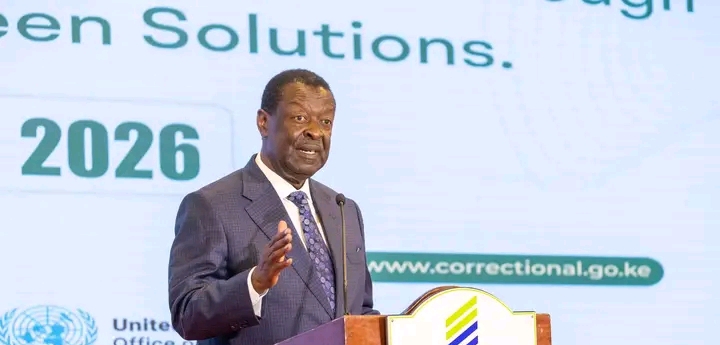
Prime Cabinet Secretary Musalia Mudavadi has presided over the closing ceremony of the fourth Correctional Service Week 2026 in Nairobi, calling for increased investment in rehabilitation programmes, skills development, technology and sustainable energy solutions to transform Kenya’s correctional institutions.
The ceremony was held on Thursday, October 15, 2026, at the Edge Convention Centre in Nairobi, with Dr. Salome Muhia-Beacco, the Principal Secretary for the State Department for Correctional Services, among the senior government officials in attendance. The event marked the conclusion of the three-day Correctional Service Week conference, which ran from October 13 to 15 under the theme “Transforming Correctional Services through Technology and Green Solutions.” Mudavadi Calls for Greater Investment in Rehabilitation
During the closing ceremony, Mudavadi emphasised the importance of investing in rehabilitation programmes that address the underlying causes of criminal behaviour and help offenders prepare for life outside prison.
He argued that effective correctional services should go beyond punishment by creating opportunities for personal transformation. According to his remarks, inmates should receive the support, education and practical training needed to become responsible members of society once they complete their sentences.
The Prime Cabinet Secretary observed that rehabilitation can contribute to employment creation, economic growth and safer communities. He maintained that when offenders acquire useful skills and access opportunities after release, they stand a better chance of rebuilding their lives instead of returning to criminal activities.Skills Development to Create Opportunities for Former Inmates
One of the major issues highlighted during the ceremony was the need to strengthen vocational training and practical skills development within correctional institutions.
Many people leaving prison face significant challenges as they attempt to rebuild their lives. Some struggle to find employment because of their criminal records, while others lack the financial resources, professional networks or technical skills needed to establish businesses.The adoption of digital systems could help institutions manage information more effectively, maintain accurate records and improve coordination among relevant departments.
Reliable information is particularly important in correctional services, where the management of inmate records, court-related documentation, rehabilitation programmes and release procedures requires accuracy and accountability.
Digitisation can also support better planning by enabling officials to access information that helps them identify operational challenges and allocate resources more effectively.
However, technology alone cannot resolve every challenge facing the correctional system. Its effectiveness depends on proper implementation, staff training, maintenance, data security and the availability of reliable infrastructure.Correctional Service Week 2026: A Platform for National Reforms
The fourth Correctional Service Week brought together correctional officers, government officials, practitioners, researchers and local and international partners to discuss practical solutions for improving Kenya's correctional system.
The conference was organised around the theme of transforming correctional services through technology and green solutions.
According to the official conference information, the event was designed to facilitate knowledge sharing, policy discussions, demonstrations of practical innovations and recognition of outstanding performance among correctional institutions and practitioners. Participants also had an opportunity to consider how reforms could be implemented in a manner that reflects Kenya's constitutional responsibilities and the country's broader development priorities.
Mudavadi urged stakeholders to ensure that the resolutions adopted during the conference were translated into practical action.
He emphasised that the success of reforms should be judged by implementation rather than announcements alone. He called for clear responsibilities, implementation frameworks and measurable outcomes to guide the process. The Importance of Human Rights and Dignity
The discussions during Correctional Service Week also drew attention to the need to preserve human dignity while improving the administration of correctional institutions.
People serving prison sentences remain entitled to fundamental rights and humane treatment, subject to lawful restrictions associated with their sentences and detention.
Rehabilitation programmes should therefore be designed to help inmates improve their behaviour, access appropriate education and training, maintain constructive family relationships where possible and prepare for their eventual return to society.Although the closing ceremony highlighted promising areas for reform, implementing the proposals will require sustained commitment and adequate resources.
One challenge is financing. Modern digital systems, vocational training facilities, clean-energy equipment and rehabilitation programmes all require investment.
The government must therefore determine how to prioritise available resources while ensuring that essential correctional services continue to operate effectively.
Another challenge is the successful reintegration of former inmates. Even after completing rehabilitation programmes, some individuals may encounter discrimination, unemployment and difficulties accessing housing or other essential services.What the Closing Ceremony Means for Kenya
The conclusion of Correctional Service Week 2026 marked an important opportunity for the government to renew its commitment to modernising the correctional system.
Mudavadi's message was that rehabilitation, skills development and employment opportunities should be recognised as important components of national development and public safety.
Meanwhile, Beacco's emphasis on technology and clean energy highlighted the need to build institutions that are more efficient, accountable and environmentally sustainable.Together, these priorities outline a reform agenda that seeks to balance institutional security with the rehabilitation of offenders and the responsible use of public resources.
If implemented effectively, the proposed measures could help correctional facilities provide better training opportunities, improve administrative processes, reduce reliance on polluting energy sources and strengthen support for people returning to their communities.
Nevertheless, the ultimate test will be whether the commitments made during the conference lead to improvements that can be measured in the daily operations of prisons and probation services.

You Might Also Like
-
The reported turnout of thousands of job seekers at Wajose Smart Wears in Kericho has highlighted the urgency of addressing unemployment and the intense competition for available opportunities. While the precise details of the recruitment exercise remain independently unverified, the wider employmen
-
The National Transport and Safety Authority (NTSA) has urged motorists whose Smart Driving Licences are ready for collection to pick them up from their designated centres. The authority has also warned Kenyans against dealing with brokers and unauthorised intermediaries who claim to offer assistance
-
President William Ruto's October 16, 2026, engagements in West Pokot and Trans Nzoia form part of his wider North Rift development tour ahead of Mashujaa Day celebrations on October 20. The published programme includes the issuance of 11,493 title deeds in West Pokot, commissioning the Kapenguriaâ€
-
Former Nairobi Provincial Commissioner Davis Nathan Chelogoi has been convicted in a KSh 1.35 billion land fraud case involving a 7.39-hectare parcel in Lower Kabete, Nairobi. The court found him guilty on five counts, including conspiracy to defraud, forcible detainer and forgery, following a trial
-
The participation of Dr Belio Kipsang in the Mashujaa Day thematic week panel discussion at Eldoret National Polytechnic highlights the importance of connecting national celebrations with practical issues affecting citizens. His contribution focused on border security, citizenship documentation, co
-
The reported site visit involving Roads and Transport Cabinet Secretary Davis Chirchir, Chepalungu MP Victor Koech and World Bank officials highlights the importance of rural road connectivity in Bomet County and the wider South Rift region. The proposed Chebole–Siongiroi–Labotiet–Gorgor impr