



Murkomen Condemns Abduction of Journalist Alex Kiprotich, Demands Swift Probe and Greater Protection for Journalists
Interior Cabinet Secretary Kipchumba Murkomen's remarks on September 3, 2026, represented a strong condemnation of the reported abduction of Standard Group Associate Editor Alex Kiprotich. Murkomen described the incident as “embarrassing” and “barbaric,” demanded a speedy investigation and said anyone responsible should face the full force of the law. He also urged Inspector General Douglas Kanja to strengthen protection for journalists, particularly as Kenya approaches another election period. His defence of journalists was notable because he acknowledged that media reports can sometimes be critical of government officials but insisted that disagreements must be addressed through legal channels rather than intimidation. Kiprotich was reportedly taken by armed men along the Gilgil-Nakuru highway before being found safe near Masinga Dam in Machakos County. The circumstances surrounding his disappearance remain the subject of investigation. The most important issue now is ensuring that the investigation is independent, professional and capable of establishing the facts. If individuals are found responsible for the alleged abduction, they should face due process and the law. At the same time, journalists across Kenya need an environment where they can investigate, report and criticise public officials without fear of violence or unlawful interference. The case has therefore become more than an individual security incident. It has become a test of Kenya's commitment to press freedom, accountability, the rule of law and the protection of journalists as the country moves toward the 2027 elections.
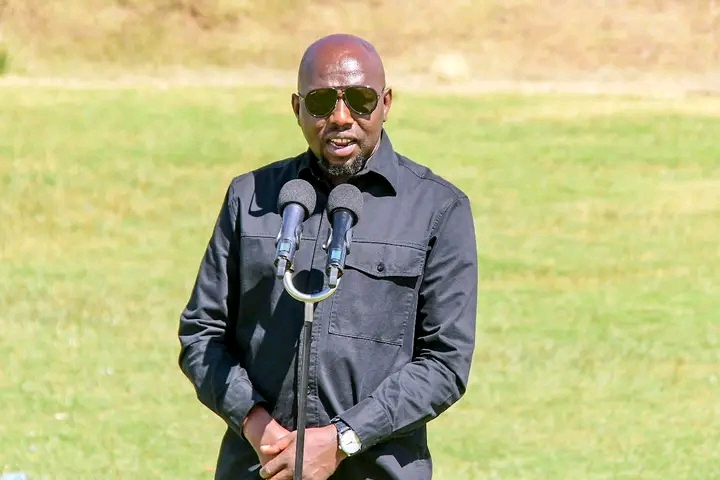
Kenya’s Interior and National Administration Cabinet Secretary Kipchumba Murkomen on Thursday, September 3, 2026, strongly condemned the reported abduction of Standard Group Associate Editor Alex Kiprotich, describing the incident as “embarrassing” and “barbaric.” Murkomen called for a speedy investigation to establish what happened, identify those responsible and ensure that anyone found culpable faces the full force of the law.
His remarks came amid growing public concern over the safety of journalists in Kenya, particularly as the country moves toward the 2027 General Election. Murkomen also called on Inspector General of Police Douglas Kanja to ensure journalists receive adequate security while carrying out their professional duties.
What Murkomen said about the abduction
Speaking in Elgeyo Marakwet County during the funeral service of his aunt, Mama Sokomo Chemeitoi KoJepkosgei, Murkomen said the reported abduction was unacceptable in a constitutional democracy. He described it as a barbaric act and insisted that those behind it should be subjected to the law.
Murkomen welcomed the decision by the Inspector General of Police to order investigations into the incident. He emphasized that the investigation should move quickly so that the circumstances surrounding Kiprotich's disappearance can be established.
The CS's response was significant because the Interior Ministry is responsible for national security and administration, while the National Police Service falls under the broader security framework overseen by the ministry. His call for an investigation therefore placed considerable emphasis on the responsibility of security agencies to establish the truth.
Murkomen also used the occasion to send a message directly to journalists. He assured media workers that the government should protect them as they perform their duties, particularly during a politically sensitive period.
Who is Alex Kiprotich?
Alex Kiprotich is an Associate Editor at the Standard Group, one of Kenya's major media organisations. He became the centre of national attention after he was reportedly seized by armed men along the Gilgil-Nakuru highway on Tuesday night, September 1, 2026.
According to reports, Kiprotich was travelling along the highway when masked or armed individuals allegedly intercepted him. His disappearance immediately caused concern among colleagues, family members and other members of the public.
He was later found safe in the Masinga area of Machakos County, more than 200 kilometres from where he was reportedly taken. Reports said he was found near Masinga Dam and was subsequently taken for medical assessment. He was described as shaken following the ordeal.
The circumstances of how he travelled from the Gilgil-Nakuru area to Masinga remain an important part of the investigation.
Reports of armed men and the search for Kiprotich
The reported incident generated an urgent search after Kiprotich could not be reached. His colleagues and family members became increasingly concerned about his whereabouts.
Reports subsequently indicated that he had been taken against his will and later found in Machakos County.
Reuters reported that dashcam footage showed masked men forcefully taking Kiprotich from his vehicle. The report also said his employer reported that the abductors demanded information about the newspaper's sources. These details are part of the allegations surrounding the case and should ultimately be tested through an independent investigation.
The fact that a senior journalist was reportedly intercepted while travelling has raised questions about the safety of media professionals outside their workplaces.
Murkomen's defence of journalists
One of the most notable parts of Murkomen's remarks was his defence of the media's role in Kenya.
The CS acknowledged that journalists sometimes publish reports that may criticise government officials, including himself. However, he stressed that disagreement with a journalist's reporting cannot justify intimidation, threats or violence.
Murkomen reportedly said that if he has a problem with a journalist, he would use legal channels rather than resort to intimidation.
This position is particularly important because journalists regularly investigate government activities, public expenditure, political affairs and security matters. In a democratic society, government officials and journalists will inevitably disagree on some issues.
The appropriate response to inaccurate or damaging reporting is therefore through professional complaints, corrections, civil proceedings or other lawful mechanisms rather than physical attacks.
Call for increased security during the election period
Murkomen also directed attention to the upcoming election period.
Kenya's elections traditionally generate intense political activity, meaning journalists often work in environments where tensions are high. Reporters cover political rallies, demonstrations, disputes, counting centres and other potentially sensitive events.
Murkomen called on Inspector General Douglas Kanja to provide journalists with adequate security so that they can perform their duties safely.
This request comes at an important time. Journalists need to be able to report from areas where political disagreements can quickly become confrontational.
Adequate security does not necessarily mean restricting journalists. Rather, it should help create an environment in which reporters, photographers, camera operators and editors can perform their work without fear of being attacked or intimidated.
Why the case has attracted national attention
The reported abduction has attracted significant attention because it involves a journalist working for a major national media organisation.
Journalists occupy a special position in society because they provide information that allows citizens to understand what is happening in government and communities. When a journalist is allegedly abducted or threatened, the concern extends beyond the individual involved.
It raises broader questions about press freedom, freedom of expression and the ability of the media to investigate controversial issues.
The Kenya National Commission on Human Rights (KNCHR) called for a prompt, independent, impartial and thorough investigation. The commission also warned that attacks and intimidation against journalists can undermine constitutional protections for freedom of expression and media independence.
The importance of an independent investigation
Murkomen's call for an investigation now puts the focus on security agencies to establish exactly what happened.
A credible investigation should answer several key questions.
First, investigators need to establish who intercepted Kiprotich and whether the individuals involved were civilians or connected in any way to security agencies.
Second, investigators need to determine why he was targeted.
Third, they need to establish where he was taken and what happened to him while he was missing.
Fourth, investigators need to establish whether there were people who planned or facilitated the incident.
Finally, any evidence obtained should be used to prosecute individuals responsible if criminal conduct is established.
Because the incident involves allegations of an abduction, investigators need to be particularly careful to protect evidence, witnesses and any available video footage.
Political controversy surrounding the case
The incident has also entered Kenya's political debate.
Former Deputy President Rigathi Gachagua has made allegations concerning the involvement of senior government officials in the incident. Those are serious allegations, but they remain allegations and should not be treated as established facts without evidence or findings from a competent investigation.
The government has a responsibility to ensure that the investigation is transparent enough to command public confidence.
Murkomen's public condemnation and call for a speedy investigation are therefore important, but the ultimate test will be whether investigators can establish the facts and whether appropriate action follows.
Police investigation
Inspector General Douglas Kanja had already ordered a thorough investigation into Kiprotich's reported abduction before Murkomen made his remarks.
However, Citizen Digital reported that officers investigating the case were waiting for Kiprotich to recover before recording his statement.
His statement could be an important part of the investigation because he may be able to provide information about what happened before, during and after the alleged abduction.
Other evidence could include CCTV footage, vehicle records, mobile-phone data, eyewitness accounts and dashcam footage.
The wider issue of journalist safety
Kiprotich's case has reopened discussions about the safety of journalists in Kenya.
Media workers sometimes operate in difficult environments. They may investigate corruption allegations, political conflicts, organised crime, public protests and security operations. Such assignments can expose them to threats from different actors.
The solution cannot simply be to tell journalists to avoid difficult stories. Journalism requires reporting on issues that are in the public interest.
Instead, journalists need proper institutional protection, responsible policing and effective legal mechanisms for dealing with threats.
Media organisations also have a responsibility to provide safety training and appropriate support for journalists working in high-risk environments.
What Murkomen's statement means
Murkomen's statement can be viewed from several angles.
First, it represents an official condemnation of the reported incident from the Cabinet Secretary responsible for the Interior docket.
Second, it places pressure on security agencies to investigate the matter.
Third, it reassures journalists that criticism of government officials should not result in violence or intimidation.
Fourth, it highlights the importance of journalist protection ahead of the 2027 elections.
Most importantly, Murkomen's remarks establish a principle that disagreements between government officials and journalists should be resolved through lawful mechanisms.
What happens next?
The next major development will be the outcome of the investigation.
Kenyans will want to know who was responsible, why Kiprotich was allegedly targeted and whether anyone within or outside government played a role.
The authorities will also be expected to explain what measures are being put in place to protect journalists.
For Kiprotich, his immediate wellbeing remains important. Being reportedly abducted is a traumatic experience, and his recovery should be respected while investigators conduct their work.
For the media industry, the incident is another reminder of the risks journalists can face while carrying out their responsibilities.

You Might Also Like
-
Aliko Dangote has confirmed September 30, 2026, as the groundbreaking date for his proposed Lamu oil refinery in Kenya. The project is estimated at roughly KSh2.2 trillion to KSh2.59 trillion depending on the components included, and the refinery is planned to process up to 700,000 barrels of crude
-
 The death of Nancy Akinyi Koiya, a 26-year-old mother of two and businesswoman from the Kisumu–Nandi border region, has left her family and community devastated. She reportedly disappeared after leaving her hotel and catering business at Kibigori Junction earlier this week. Her husband, Kiplagat K
 -
The latest HELB announcement by Education Cabinet Secretary Julius Ogamba is significant for thousands of Kenyan students preparing to join universities and TVET institutions. The government's decision to extend the 2026/2027 tertiary education funding application deadline to September 21, 2026, aft
-
FUNERALS WITHOUT BODIES: NEPAL FAMILIES MOURN LOVED ONES STILL MISSING AFTER DEVASTATING FLOODS
-
The trailer fire at Kipsitet along the Kericho–Kisumu Highway on September 3, 2026, has drawn attention to the dangers faced by long-distance transport operators and other road users. The trailer, reportedly travelling toward Uganda, caught fire shortly after being parked along the highway near Mo
-
Kenya Airways has disclosed that it lost more than US$7 million (about KSh905 million) in revenue and additional disruption-related costs following a three-day industrial action that severely disrupted aviation operations in Kenya. The airline cancelled 63 flights, recorded more than 160 delays, wit