



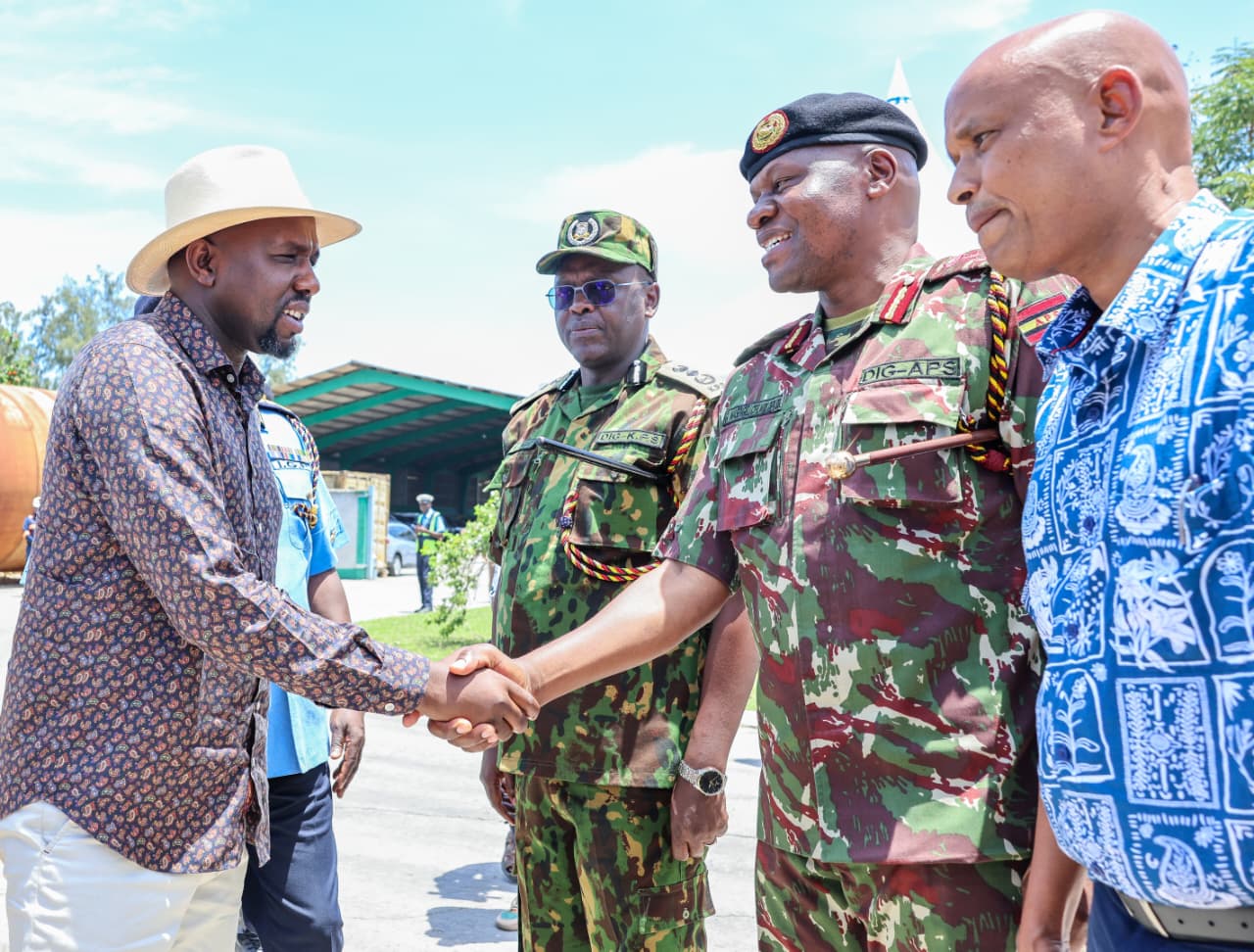
MURKOMEN LEADS DESTRUCTION OF SH8.2 BILLION METHAMPHETAMINE HAUL IN MOMBASA
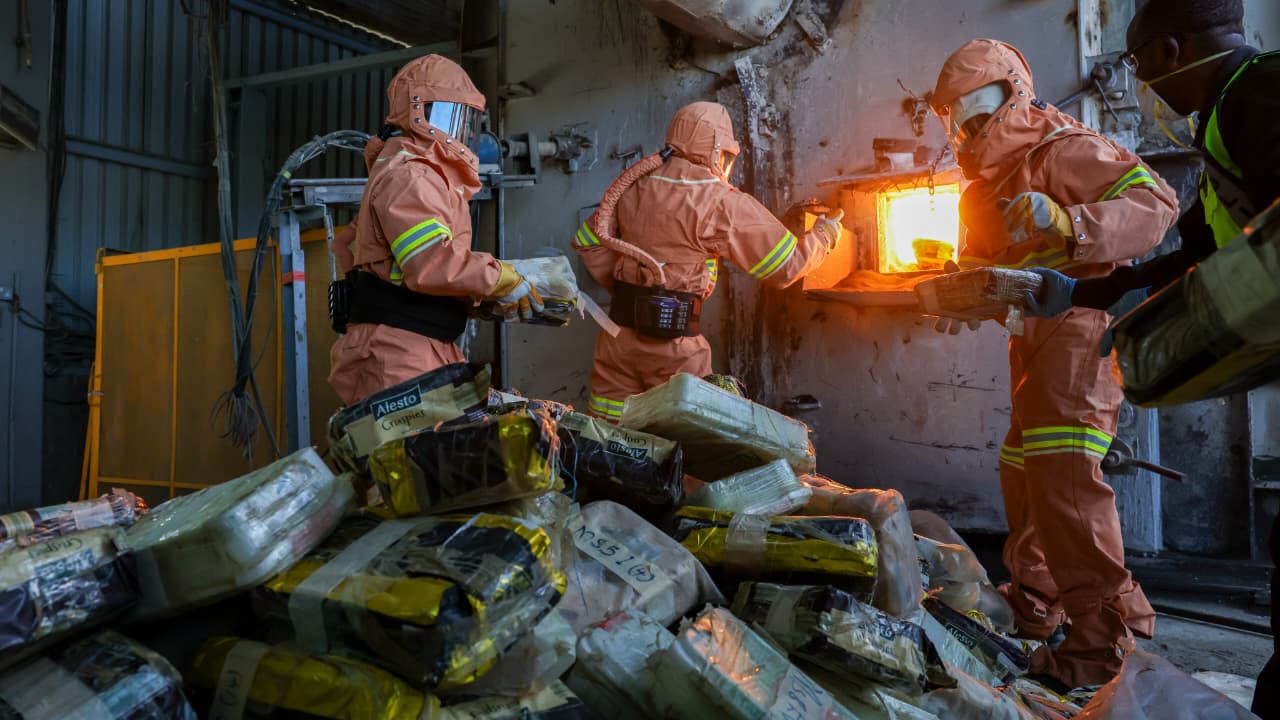
Interior CS Kipchumba Murkomen is overseeing the destruction of methamphetamine worth Sh8.2 billion at Bamburi Cement Factory in Mombasa. The more than one-tonne narcotics consignment was seized by a multi-agency security team in the Indian Ocean last year.
Interior Cabinet Secretary Kipchumba Murkomen has arrived at Bamburi Cement Factory in Mombasa to oversee the destruction of more than one tonne of methamphetamine valued at an estimated Sh8.2 billion.
The narcotics, weighing approximately 1,036 kilograms, were seized in October 2025 during a multi-agency maritime security operation in the Indian Ocean. The seizure was described by authorities as one of the major narcotics interceptions carried out along the Kenyan coast.
Murkomen arrived at the Bamburi facility on Thursday, September 24, 2026, where senior security and law-enforcement officials had gathered for the destruction exercise.
The operation has brought together officers from several security agencies, reflecting the multi-agency approach that was also used during the original interception of the narcotics.
Among the senior officials present are Inspector-General of Police Douglas Kanja, Deputy Inspector-General Eliud Lagat and other security officers involved in the fight against drug trafficking.
NARCOTICS INTERCEPTED IN THE INDIAN OCEAN
The methamphetamine was intercepted in October 2025 after Kenyan security agencies acted on intelligence concerning a vessel suspected of transporting narcotics through the Western Indian Ocean.
According to the Kenya Ministry of Defence, the Kenya Navy intercepted a non-registered vessel, identified as IGOR, approximately 630 kilometres east of Mombasa.
The operation resulted in the seizure of 1,024 kilograms of methamphetamine, with an estimated street value of Sh8.2 billion. The vessel was escorted to Mombasa, where the crew and the seized narcotics were handed over to the relevant authorities for investigations and prosecution.
The operation was conducted under the code name Operation Bahari Safi 2025.01 and involved cooperation between Kenyan security agencies and regional and international maritime security partners.
The Kenya Navy said the vessel had been under the watch of international drug-enforcement agencies before it was intercepted.
The operation also involved surveillance and information-sharing with regional maritime security centres, demonstrating the role of international cooperation in monitoring illegal activities within the Indian Ocean.
SIX SUSPECTS ARRESTED
Six Iranian nationals who were aboard the vessel were arrested following the interception.
The Directorate of Criminal Investigations later confirmed that the suspects were arraigned before the Shanzu Law Courts in connection with the trafficking of the narcotics.
The DCI identified the accused as Nia Jasem Darzadeh, Jadgal Nadeem Abdulgani, Baloch Hassan, Baloch Imran Mustafa, Baksh Rahim Goharam and Daryayi Imtiyaz, also known as Pamin.
The six were charged in connection with the trafficking of approximately 1,036.044 kilograms of methamphetamine valued at about Sh8.2 billion.
The suspects have remained subject to court proceedings as authorities pursue the criminal case.
The destruction of the narcotics is taking place alongside the ongoing legal process, with the seized drugs having been retained as exhibits during investigations and court proceedings.
FINAL TESTING BEFORE DESTRUCTION
Before the destruction exercise, authorities conducted preliminary tests on the seized substance.
Reports from the scene indicated that analyst Dennis Owino carried out a field test as officials completed the required procedures before the narcotics could be destroyed.
The testing formed part of the verification process surrounding the exhibit.
The Star reported that preliminary testing involved the application of reagents to samples of the substance as officials prepared for the destruction exercise.
Heavy security was also deployed around the Bamburi facility as senior security officials converged for the exercise.
The heightened security reflects the value and sensitivity of the consignment, as well as the importance of maintaining the integrity of the evidence and ensuring the safe handling and disposal of the narcotics.
MULTI-AGENCY SECURITY OPERATION
The seizure has highlighted the importance of cooperation between Kenya's security agencies in combating transnational organised crime.
The original operation involved the Kenya Navy and other agencies responsible for maritime security, with support from regional and international partners.
The Ministry of Defence said the operation demonstrated Kenya's commitment to combating narcotics trafficking and other forms of transnational crime within the Western Indian Ocean.
Kenya's coastline is strategically positioned along important maritime routes connecting Africa, the Middle East and Asia.
Security agencies have therefore continued to monitor maritime traffic and strengthen surveillance to prevent the country's waters from being used as a transit route for illegal commodities.
The seizure of the Sh8.2 billion consignment demonstrated the scale of the challenge facing authorities in the fight against international drug trafficking.
COURT CASE CONTINUES
The destruction of the narcotics comes as the case involving the six accused persons continues at the Shanzu Law Courts.
According to reports, the prosecution presented 12 witnesses before closing its case. The court subsequently found that the accused persons had a case to answer, allowing the proceedings to move to the defence stage.
The suspects face charges under Kenya's Narcotic Drugs and Psychotropic Substances (Control) Act.
The allegations against the accused persons remain subject to the ongoing court process, and their ultimate criminal liability will be determined through the judicial proceedings.
The destruction of the physical narcotics does not itself determine the outcome of the criminal case.
Instead, authorities have maintained that the disposal is being carried out through the appropriate legal and court-supervised procedures while the case proceeds.
KENYA'S FIGHT AGAINST NARCOTICS
The Sh8.2 billion seizure has become an important case in Kenya's broader campaign against narcotics trafficking.
Government agencies have repeatedly warned about the impact of illicit drugs on individuals, families and communities, while security agencies have continued to pursue networks involved in the trafficking and distribution of narcotics.
The National Authority for the Campaign Against Alcohol and Drug Abuse has also highlighted the need for coordinated action against drug trafficking and related forms of transnational organised crime.
The seizure demonstrated how intelligence sharing between Kenyan agencies and international partners can contribute to the interception of major drug consignments before they reach their intended destinations.
The government has also continued to strengthen surveillance at Kenya's ports of entry and exit, including maritime routes, in an effort to prevent illegal goods from entering the country.
MESSAGE TO DRUG TRAFFICKERS
The destruction exercise at Bamburi Cement Factory is expected to reinforce the government's message that Kenya will continue targeting narcotics trafficking networks operating within its territory and maritime space.
The large quantity of methamphetamine involved makes the operation particularly significant.
The Kenya Navy's interception of the vessel prevented the consignment from reaching its intended destination, although investigators have continued efforts to establish the broader network behind the shipment.
The authorities have also been working with international partners in efforts to understand the source and intended destination of the narcotics.
The case therefore extends beyond the seizure itself and highlights the international nature of drug trafficking networks operating across maritime routes.
A MAJOR SECURITY OPERATION
The destruction of the narcotics marks another stage in a case that began with an intelligence-led maritime interception nearly a year ago.
From the initial surveillance of the vessel to its interception in the Indian Ocean, the arrest of the crew, court proceedings and eventual disposal of the drugs, the operation has involved multiple security and justice institutions.
For the government, the exercise demonstrates the importance of maintaining cooperation among security agencies in dealing with complex criminal networks.
For Kenya's coastal security agencies, the operation also underscores the continuing need for vigilance along the country's maritime borders.
As Interior CS Kipchumba Murkomen leads the destruction exercise in Mombasa, attention remains focused both on the disposal of the Sh8.2 billion narcotics and on the ongoing court case involving the six accused persons.
The seizure remains one of the largest methamphetamine interceptions reported off Kenya's coast, while the destruction removes the massive consignment from circulation after it was held as evidence during the legal process.
The government has continued to emphasise intelligence-led operations, multi-agency cooperation and stronger maritime surveillance as key components of the fight against transnational drug trafficking.
The Mombasa operation therefore represents not only the destruction of a major narcotics consignment but also another chapter in Kenya's broader efforts to secure its coastline and disrupt international drug-trafficking networks.

You Might Also Like
-
Interior CS Kipchumba Murkomen has overseen the destruction of narcotics worth Sh8.2 billion at Bamburi Cement Factory in Mombasa, including more than 1,000kg of methamphetamine seized in the Indian Ocean last October.
-
Bomet Green Stadium hosted activities marking International Week of Deaf People, bringing together members of the Deaf community, families, advocates and other stakeholders to raise awareness about the rights, dignity, language and inclusion of Deaf people. The event highlighted the importance of Ke
-
Kipchoge Keino Stadium in Eldoret is undergoing a major transformation as the government accelerates preparations ahead of the 2026 Mashujaa Day celebrations scheduled for October 20. Defence Principal Secretary Patrick Mariru has toured the facility to assess progress and monitor the ongoing works,
-
UASU's announcement today marks a significant escalation in the ongoing dispute over lecturers' employment terms and the financing of public universities. The union has issued a seven-day strike notice and says lecturers could down their tools on October 2, 2026, unless the 2025–2029 CBA and relat
-
IEBC Commissioner Dr. Ann Nderitu has emphasized the importance of ensuring that Deaf Kenyans can participate fully and equally in the country’s electoral process as preparations for the 2027 General Election continue. The focus includes accessible voter education, Kenyan Sign Language interpretat
-
Eldoret's hosting of the 2026 UN Tourism Week and World Tourism Day celebrations places the North Rift firmly in the national tourism spotlight. With activities taking place mainly at the University of Eldoret, the celebrations are bringing together tourism, culture, sports, technology, artificial i