



Murkomen Reveals Shocking Number of ‘Goonism’ Convicts: 1,189 Jailed Since 2022
Interior CS Kipchumba Murkomen's disclosure that 1,189 people have been jailed for political goonism since 2022 has brought renewed attention to the problem of politically linked violence in Kenya. The figure consists of 1,053 men and 136 women, according to information presented to the Senate. The 1,189 are part of a much larger total of 121,870 youths incarcerated between 2022 and 2026 for various offences. Within the government's broader classification, 9,959 were imprisoned for criminal gang activities and 676 for violent extremism. Murkomen has presented the figures as evidence that security agencies are taking action against political violence and has warned against the recruitment of young people to disrupt political activities. With the 2027 elections approaching, the government's handling of political violence, the prosecution of offenders and the rehabilitation of young people who have served their sentences are likely to remain closely watched issues. At the same time, claims circulating online about Murkomen and the alleged recruitment of goons into the police should be treated cautiously: Africa Check found no evidence supporting one such widely circulated quotation and concluded that it was fabricated.
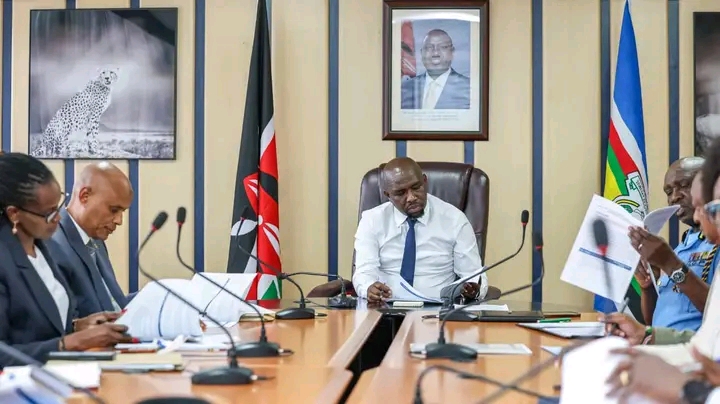
Interior Cabinet Secretary Kipchumba Murkomen has revealed that 1,189 people have been incarcerated for offences linked to political goonism since 2022, providing one of the clearest government statistics yet on the number of people who have faced custodial sentences in connection with political violence and related activities.
Murkomen gave the figures on September 16, 2026, when he appeared before the Senate to respond to questions concerning national security, criminal gangs, political violence and the broader security situation in Kenya. According to the figures presented to senators, the 1,189 people jailed for political goonism-related offences included 1,053 men and 136 women.
The disclosure comes at a politically sensitive time, with Kenya preparing for the 2027 General Election. Political gatherings and mobilisation have increasingly brought renewed attention to allegations that young people are sometimes recruited or organised to disrupt meetings, intimidate political opponents or engage in violence.
Murkomen's Senate disclosure
Murkomen told senators that the number of people incarcerated for political goonism was part of a larger population of young people who have gone through Kenya's correctional system for various offences.
Between 2022 and 2026, a total of 121,870 youths were incarcerated in correctional facilities across Kenya, according to figures presented by the Interior CS. Of this number, 109,745 were male while 12,125 were female.
The annual figures varied considerably. The government data showed that 23,676 youths were incarcerated in 2022, followed by 31,331 in 2023. The number reached 34,776 in 2024, before falling to 23,961 in 2025 and 8,126 in 2026, based on the period covered by the figures presented to the Senate.
Murkomen's statement therefore placed the 1,189 political-goonism convictions within a much larger picture of youth involvement in the criminal justice system.
1,189 jailed for political goonism
The specific figure that attracted attention was the 1,189 people imprisoned for political goonism.
According to the information given to the Senate, the 1,189 were part of 11,824 youths who had been imprisoned for offences involving criminal gangs, violent extremism and political goonism.
The breakdown was:
9,959 incarcerated for criminal gang activities;
676 incarcerated for violent extremism; and
1,189 incarcerated for political goonism.
The figures demonstrate that political goonism represents one component of a broader security challenge involving organised criminal activity and violence.
Importantly, the figures refer to people who were incarcerated following offences and court processes, rather than simply everyone arrested or accused of being a "goon". This distinction is significant because an arrest, accusation and conviction are different stages of the criminal justice process.
*What does "goonism" mean in this context?*
In Kenyan political discussions, the word "goon" is commonly used to describe individuals or groups accused of using violence, intimidation or disruption during political activities.
Africa Check has described the term as politically charged and noted that it is often used in Kenya in reference to disenfranchised young men allegedly exploited for political purposes. Such groups have been accused in various circumstances of infiltrating demonstrations and political rallies, attacking opponents, looting businesses or damaging property.
However, the term itself is not necessarily a precise legal offence. People can only be convicted on the basis of specific offences recognised by law. Consequently, Murkomen's figure should be understood as referring to people incarcerated for offences classified or reported by the government as being connected to political goonism.
Government's position on political violence
Murkomen has repeatedly said that the government intends to take action against people involved in political violence.
According to reports from his Senate appearance, he said the government was committed to tackling political violence and would continue pursuing individuals involved in criminal activities associated with political mobilisation.
He has also warned politicians against recruiting or deploying young people to cause disorder at political events.
In August 2026, Murkomen directed the National Police Service and the Directorate of Criminal Investigations to take a more preventive approach to political violence by acting on intelligence before suspected gangs reach political gatherings.
That approach is significant because it represents a shift from simply responding after violence occurs to attempting to identify and disrupt planned violence beforehand.
Earlier crackdown and arrests
The latest Senate figures follow an earlier government crackdown on people suspected of involvement in organised violence.
In April 2026, Murkomen said at least 300 suspected goons had been arrested in Nairobi and Kitale during a nationwide security operation. The reported figures included more than 100 arrests in Nairobi and more than 200 in Kitale.
Those arrests, however, should not automatically be equated with the 1,189 people later reported as having been jailed for political goonism. Arrests are allegations at an earlier stage of the criminal justice process, while imprisonment can follow prosecution and conviction.
This distinction is particularly important when discussing security operations because being arrested does not by itself establish guilt.
Concerns ahead of the 2027 elections
The government's disclosure comes as political activity increases ahead of the 2027 elections.
Kenya has a history of political violence during periods of intense political competition, and the use of groups accused of intimidating political opponents has remained a concern for security agencies, civil society organisations and election stakeholders.
Murkomen has therefore linked the crackdown on political goonism to the broader effort to maintain security during political mobilisation.
The Interior CS has warned that politicians should not use young people to create disorder. He has also said that people facilitating violence should face the law regardless of their political affiliations.
The Independent Electoral and Boundaries Commission (IEBC) has also raised concerns about political intolerance and groups allegedly hired to disrupt political opponents, with the electoral body indicating that its electoral code of conduct applies to political actors involved in such activities.
Sentences vary depending on offences
Murkomen also explained that sentences imposed on offenders vary according to the nature and seriousness of the offences involved.
The government data presented to the Senate indicated that sentences ranged from very short custodial terms to extremely lengthy sentences, including life imprisonment and, where applicable under Kenyan law, the death penalty.
The average definite custodial sentence for youth offenders was reported at approximately four and a half years.
This means that the 1,189 people should not be assumed to have received identical sentences. Their individual cases, charges, evidence, circumstances and court decisions would determine the punishment imposed.
Rehabilitation of young offenders
Murkomen's Senate presentation also included information about rehabilitation.
The Kenya Prisons Service has expanded programmes aimed at helping young offenders acquire skills that could assist them when they return to society.
Since 2022, 4,610 youths have reportedly completed rehabilitation and reintegration programmes. These programmes include counselling, psychosocial support, formal education, technical and vocational training, creative arts, tailoring, sports and recreational activities.
Technical skills offered include areas such as welding and fabrication, carpentry and joinery, electrical installation, masonry, plumbing, motor vehicle mechanics, coding and robotics, gaming and animation, and fashion and textile design.
The emphasis on rehabilitation is important because incarceration is not intended only as punishment. Reintegration programmes seek to reduce the possibility that offenders will return to criminal activity after completing their sentences.
Murkomen and allegations concerning government-sponsored goons
The issue of political goonism has also generated claims on social media about the government's alleged relationship with such groups.
One widely circulated claim in July 2026 alleged that Murkomen had said the government would incorporate goons into the National Police Service.
However, Africa Check found no evidence that Murkomen made that statement and described the quotation circulating online as fabricated. The fact-check organisation cited an earlier statement by Murkomen in which he said the government did not condone or work with goons or criminals and that police had instructions to deal with them.
This is an important distinction when discussing Murkomen's latest comments: the verified statements reported from his Senate appearance concern government enforcement against political violence and the number of people incarcerated, rather than an announcement that the government was recruiting goons into security agencies.
What the figures mean for Kenya
The revelation of 1,189 people jailed for political goonism provides an indication of the scale of the government's criminal justice response to political violence since 2022.
It also highlights the extent to which political violence can intersect with other security problems. The 1,189 political-goonism cases are significantly smaller than the 9,959 cases involving criminal gang activities in the broader category cited by Murkomen, while violent-extremism cases accounted for another 676.
For Kenya, the figures raise broader questions about how political parties, politicians, security agencies and communities can prevent young people from being drawn into violence during election periods.
The government's position is that people who participate in criminal violence must face the law. At the same time, the rehabilitation figures indicate an attempt to address what happens to offenders after incarceration.
As the country moves closer to the 2027 General Election, the issue of political goonism is therefore likely to remain an important part of discussions about security, political campaigns and peaceful elections.

You Might Also Like
-
Mama Ida Odinga's remarks about the first anniversary of Raila Odinga's death point toward a commemoration that will combine personal remembrance with efforts to preserve his broader public legacy. The Odinga family is preparing an inclusive programme around the week of October 15, while ODM has ann
-
The Mau evictees' return to their land remains one of Kenya's most complicated land and environmental questions. The latest Government action has focused on compensation and resettlement rather than a general return of evicted families into the protected Mau Forest. In August 2026, the Government an
-
The Kapiti Plains accident has left five people dead and seven others injured following a devastating collision between a Kinatwa Sacco Toyota Hiace matatu and an Isuzu FH lorry along the Nairobi–Mombasa Highway in Machakos County. The crash occurred at about 7:40 p.m. on Wednesday, September 16,
-
The Kisii accident of September 16, 2026, has left five people dead and around 20 injured, according to the latest reports. The crash occurred along the Kisii CBD–Daraja Mbili road near Chomachoma, after a lorry reportedly lost control and struck pedestrians and other road users. The injured were
-
The pushback against KAWU's latest strike threat has revealed a significant division within Kenya's aviation workforce. While KAWU leadership continues to raise concerns about unresolved labour matters, a section of aviation workers has publicly rejected another industrial action and called for dial
-
Kenya's current milk shortage is putting pressure on consumers, farmers, processors and retailers. Formal milk deliveries have declined, while prolonged dry conditions have reduced pasture and increased the cost of animal feeds. At the retail level, some areas have recorded substantial price increas