



Murkomen Takes Charge in Igembe as New National Police Reservists Pass Out in Major Security Boost
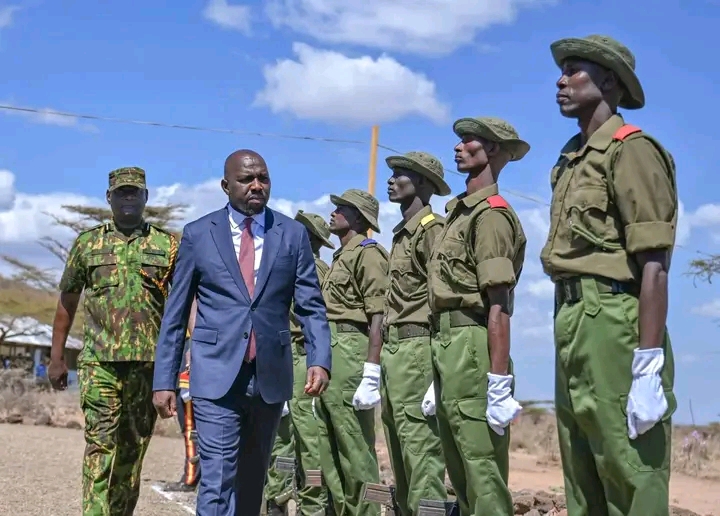
Kipchumba Murkomen's presence in Igembe today was centred on the passing-out of National Police Reservists at Magado in Igembe North, Meru County. The ceremony follows the government's recruitment and training of additional NPRs and comes alongside wider reforms aimed at strengthening community policing, police welfare, equipment and professional standards.
Interior Cabinet Secretary Kipchumba Murkomen was in Igembe North, Meru County, on Wednesday, September 23, 2026, where he presided over the passing-out parade of National Police Reservists (NPRs). The ceremony at Magado marked the completion of training by a new group of reservists who are expected to support the National Police Service in maintaining security within communities where they are deployed.
Murkomen presides over the Igembe ceremony
Murkomen's appearance in Igembe comes as the government continues to strengthen the National Police Service through additional recruitment, training, equipment and reforms. According to reports from the ceremony, the Interior CS arrived at Magado in Igembe North to preside over the passing-out parade, marking an important stage for the reservists who had undergone training.
The National Police Reserve is designed to provide additional policing capacity, particularly in areas where local knowledge and community participation can be important in addressing security challenges. NPR officers serve within the framework of the National Police Service and can be called upon to perform police duties within their areas of residence when required.
The Igembe ceremony therefore represents more than just a graduation event. It is also part of the government's wider effort to expand security capacity at the community level and ensure that areas requiring additional security personnel have access to trained reservists.
Who are the National Police Reservists?
National Police Reservists are Kenyan citizens who voluntarily serve alongside the National Police Service. They are different from regular police officers because their service is based on the National Police Reserve framework rather than ordinary salaried police employment.
The 2025 National Police Service Commission recruitment regulations provide requirements for people joining the Reserve. Among the requirements are Kenyan citizenship and residence in Kenya, being between 18 and 55 years of age, meeting integrity requirements under Chapter Six of the Constitution, having no criminal record and being willing to volunteer.
Recruitment is also not simply a matter of an individual applying and automatically being accepted. The Inspector-General of Police identifies the need for reservists and submits recommendations to the National Police Service Commission, which determines and approves appointments. Background checks and vetting are part of the process.
Training before deployment
The passing-out ceremony in Igembe demonstrates the importance attached to training before reservists begin or continue their operational responsibilities.
The National Police Service Act provides for the enlistment and training of Reserve police officers by the Inspector-General. However, the law does not establish one publicly fixed training period that applies to every NPR intake. The duration and content can therefore depend on the requirements established by the National Police Service for a particular group.
Training is particularly important because NPR officers can be required to perform police duties within their areas. They therefore need to understand their responsibilities, the limits of their authority and the legal framework governing policing.
Murkomen has previously spoken about the need to reorganise the NPR system, including establishing a clearer structure for service, payments, command and accountability. In a parliamentary debate in April 2025, he said he had decided to reorganise the National Police Reservists with a proper scheme of service and defined payments. He also raised concerns about reservists who were operating without adequate reporting structures.
Government expands NPR programme
The Igembe passing-out ceremony follows broader government efforts to increase the number of National Police Reservists.
On September 18, 2026, Murkomen said that 700 additional National Police Reservists had been recruited and were undergoing training at a training centre in Meru County. At the time, he indicated that their graduation was scheduled for the following week. The September 23 ceremony in Igembe therefore corresponds with the timeline he had announced.
The expansion is part of a broader security-sector programme that has also involved regular police recruitment, training and equipment improvements.
During the September 18 passing-out parade of General Service Unit recruits in Nairobi, Murkomen outlined several measures being undertaken by the government to strengthen the National Police Service. These included recruitment, training, police mobility, community policing, specialised equipment and human-resource reforms.
Focus on community-based security
One of the significant issues surrounding the NPR programme is community-based security.
Reservists are generally drawn from the communities where they live. This can provide them with familiarity with local circumstances, geographical conditions and community structures. Their local presence can therefore complement the work of regular police officers.
Murkomen has repeatedly highlighted the importance of involving communities in security management. On September 18, he said the government had expanded community participation through the Jukwaa la Usalama initiative. According to his remarks, county security committees had been instructed to involve groups such as motorcycle taxi operators, religious leaders, business people and young people in security discussions.
The NPR programme fits into this broader community-security approach because reservists can serve as a link between communities and the formal security system, subject to the applicable command and legal structures.
Murkomen's wider police reforms
The Igembe event also comes at a time when the Interior Ministry is reporting several changes within the National Police Service.
Murkomen recently said that 1,175 police vehicles had been replaced over the previous year, while another 2,232 vehicles were expected to be replaced within three months. He also said that 1,200 electric vehicles were expected to be delivered by the end of 2026.
The CS has also highlighted changes in police training. According to his September 18 remarks, the curriculum has been revised to incorporate human rights, constitutionalism, the rule of law and community policing.
Five regional training centres have also been upgraded, while field training campuses have been established at Isiolo and Magadi. The National Police College at Kiganjo is also being positioned to play a greater role in professional policing education.
These measures show that the Igembe NPR graduation is taking place within a much larger programme involving recruitment, professional training, equipment and organisational reforms.
NPRs and their terms of service
Unlike regular police officers who are employed under the established public-service structures, National Police Reservists serve voluntarily.
Under the 2025 regulations cited in current reporting, NPR officers are not entitled to a regular salary, although allowances may be provided as determined by the Commission. The regulations provide for a five-year term of service, which is non-renewable under those rules.
The government has nevertheless been working on the welfare and administrative arrangements surrounding NPRs. Murkomen said recently that NPR allowances were being paid promptly and that the government was working to enrol them in the Social Health Authority (SHA). He also said their kitting was being undertaken through the National Youth Service.
These issues are significant because adequate welfare, equipment and clear command structures are important for personnel expected to perform security duties.
Importance of the Igembe graduation
For the reservists graduating in Igembe, the passing-out parade represents the transition from training into active service under the National Police Reserve system.
The ceremony also carries significance for communities that depend on additional security personnel. Remote and rural areas can face security challenges that require personnel who understand local conditions and can work closely with residents.
However, the NPR system operates under the authority of the National Police Service and is subject to laws and regulations governing police officers. A Reserve officer can be required by the relevant county-level head of the National Police Service to perform police duties within the county where the officer resides. The Inspector-General can also call reservists out under specific circumstances provided for by law.
Accountability and professionalism
As the government expands the NPR programme, questions of accountability and professionalism remain important.
Murkomen himself has previously acknowledged concerns surrounding some NPRs and argued for clearer command and reporting structures. In Parliament in April 2025, he said some reservists were operating without reporting to anyone and stated that the government wanted to determine who qualifies to be an NPR, when an officer should retire and how reservists should be properly equipped and organised.
This makes the Igembe graduation significant not only because of the number of people completing training, but also because the government is attempting to formalise the way reservists are recruited, trained, equipped, supervised and deployed.
Broader security preparations
The expansion of the National Police Reserve comes as Kenya's security agencies prepare for several demands, including ordinary policing, community security and preparations for the 2027 General Election.
At the September 18 GSU graduation, Murkomen said the newly trained officers would strengthen the National Police Service's capacity to maintain security. He also discussed investments in specialised equipment, police mobility and recruitment.
The NPR programme is therefore one component of a wider security strategy rather than a replacement for the regular police service.
What the Igembe passing-out parade means
The passing-out of the NPRs in Igembe marks a new stage in the government's efforts to strengthen community-level security. The reservists who have completed their training are expected to operate within the National Police Service framework and support policing where their services are required.
For residents, the presence of trained reservists can mean an additional security resource within communities. For the government, the programme provides an avenue for increasing security personnel while making use of people who already live within the areas where they may be deployed.
For the reservists themselves, the ceremony marks the culmination of their training and the beginning of a period of voluntary service governed by the National Police Reserve regulations.
Murkomen's presence at Magado underlines the Interior Ministry's focus on the programme. His recent statements indicate that the government is simultaneously addressing NPR recruitment, allowances, health coverage, uniforms, training and command structures.
Overall, the September 23, 2026 passing-out ceremony in Igembe is part of Kenya's ongoing effort to strengthen policing through a combination of regular police officers, specialised units and community-based security personnel. The event also highlights the government's broader push to professionalise the National Police Service through improved training, equipment, welfare and accountability

You Might Also Like
-
 The Kenya Tourism Board (KTB) is intensifying efforts to promote Kenya as a leading tourism destination by showcasing the country’s diverse attractions, including wildlife, beaches, culture, adventure, sports, conferences and lesser-known destinations across the 47 counties. Through the Magical Ke
 -
Former Kenyan athlete Beatrice Murugi has received a new lifeline after being transferred to Kenyatta National Hospital (KNH) for specialised treatment following years of health and financial struggles. Reports published on September 23, 2026, indicate that Murugi, who previously competed profession
-
The Turbo tanker tragedy has become one of the major recent road accidents in the Eldoret area, with the death toll now standing at six according to the latest Citizen TV update available on September 23, 2026. What began as a road collision involving a fuel tanker escalated into a deadly fire aft
-
PS Agriculture Dr. Kipronoh Ronoh says agriculture remains the backbone of Kenya’s economy, supporting food security, livelihoods, employment and economic growth.
-
Today's Safaricom news is dominated by the government's legal challenge over the KSh204.3 billion sale of a 15 percent stake in Safaricom. The government is asking the Court of Appeal to overturn the High Court ruling that declared the transaction null and void and to suspend implementation of that
-
Bomet County has signed an MoU with Peek Vision to enhance eye screening, early detection and access to quality eye-care services across the county.